


Review of Cargraphic Loud exhaust & an audiophile's guide :-) to exhaust auditioning.


Registered User
Joined: Sep 2004
Posts: 220
From: CT USA
Rep Power: 32

Sorry I have not heard this or know any trustworthy ear who has. Would venture a guess from various postings that it's another medium sounding exhaust.
I vaguely recall the first generation had a farting sound (not kidding) on deceleration or something to that effect (anyone pls correct me as needed), but this has been fixed to best of my knowledge. How much are these going for these days do you know?
I vaguely recall the first generation had a farting sound (not kidding) on deceleration or something to that effect (anyone pls correct me as needed), but this has been fixed to best of my knowledge. How much are these going for these days do you know?
Hence, the Cargraphic Loud on my car.


Thread Starter
|
Registered User
Joined: Dec 2006
Posts: 3,116
From: Palos Verdes
Rep Power: 256

wow. a five year thread resurrection, and you didn't miss a beat. ( you la session guys  ) all kidding aside. i truly enjoyed reading this thread, the (car) graphic detail.....
how about those kanan dume tunnels for a lil "sound check?" huh?... scare a tourist daily, i say. cheers...
) all kidding aside. i truly enjoyed reading this thread, the (car) graphic detail.....how about those kanan dume tunnels for a lil "sound check?" huh?... scare a tourist daily, i say. cheers...
"Scare a tourist daily" at Kanan Dume Tunnel LOL & thanks for the chuckle. I assume you too know about the cleansing power of a proper tunnel sound check. I use a different tunnel though.
Yeah I have got glares of the "if look could kill" type in the past. Very uncomfortable moments at the Traffic Light at the end of the the tunnel when other cars catch up.
 Very awkward.
Last edited by cannga; Apr 6, 2013 at 12:30 AM.
Thread Starter
|
Registered User
Joined: Dec 2006
Posts: 3,116
From: Palos Verdes
Rep Power: 256
In other words, does a cross flow design have a characteristic sound signature, namely the deep rumbling sound? Or not really.
Registered User

Joined: May 2009
Posts: 7,984
From: la
Rep Power: 608
Thanks for the nice comment and am glad you've found my rambling entertaining enough.
"Scare a tourist daily" at Kanan Dume Tunnel LOL & thanks for the chuckle. I assume you too know about the cleansing power of a proper tunnel sound check. I use a different tunnel though.
Yeah I have got glares of the "if look could kill" type in the past. Very uncomfortable moments at the Traffic Light at the end of the the tunnel when other cars catch up. Very awkward.
"Scare a tourist daily" at Kanan Dume Tunnel LOL & thanks for the chuckle. I assume you too know about the cleansing power of a proper tunnel sound check. I use a different tunnel though.
Yeah I have got glares of the "if look could kill" type in the past. Very uncomfortable moments at the Traffic Light at the end of the the tunnel when other cars catch up.
Very awkward.yes, thanks. i've truly enjoyed recently having read many of your post(s) since migrating
into this room from the cheap(ER!) seats... they are as comprehensive, informationally as any i've read. this one is fit for mix magazine! in fact, your contributions seem to raise the level of discourse. the difference btw this room and the 996t room is probably akin to the changes in the cars LOL. ok, enough fawning.. but seriously who doesn't appreciate a guy that loves a good tunnel!? so, please carry on sir, i am being educated again in here and your love of the 997.1T is persuasive indeed. it may in fact, end up costing me. cheers
Thread Starter
|
Registered User
Joined: Dec 2006
Posts: 3,116
From: Palos Verdes
Rep Power: 256
Proof of my oft-mentioned audiophile "nuttiness" and the background for my hunt for the best exhaust sound: Theta Casablanca processor and Conrad Johnson tube pre-amp (yes those are vacuum tubes in the picture ), Linn Sondek turntable, Krell FPB 600 amp (and Classe CA400), Thiel CS5i speakers.
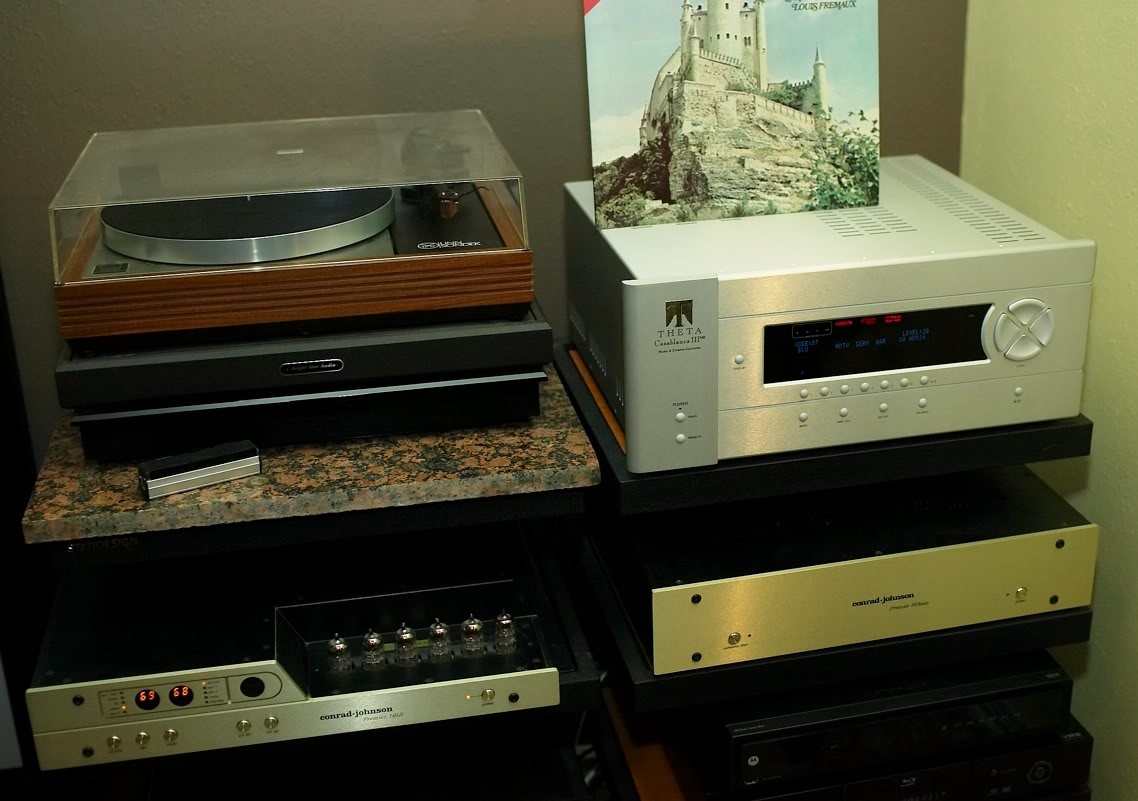
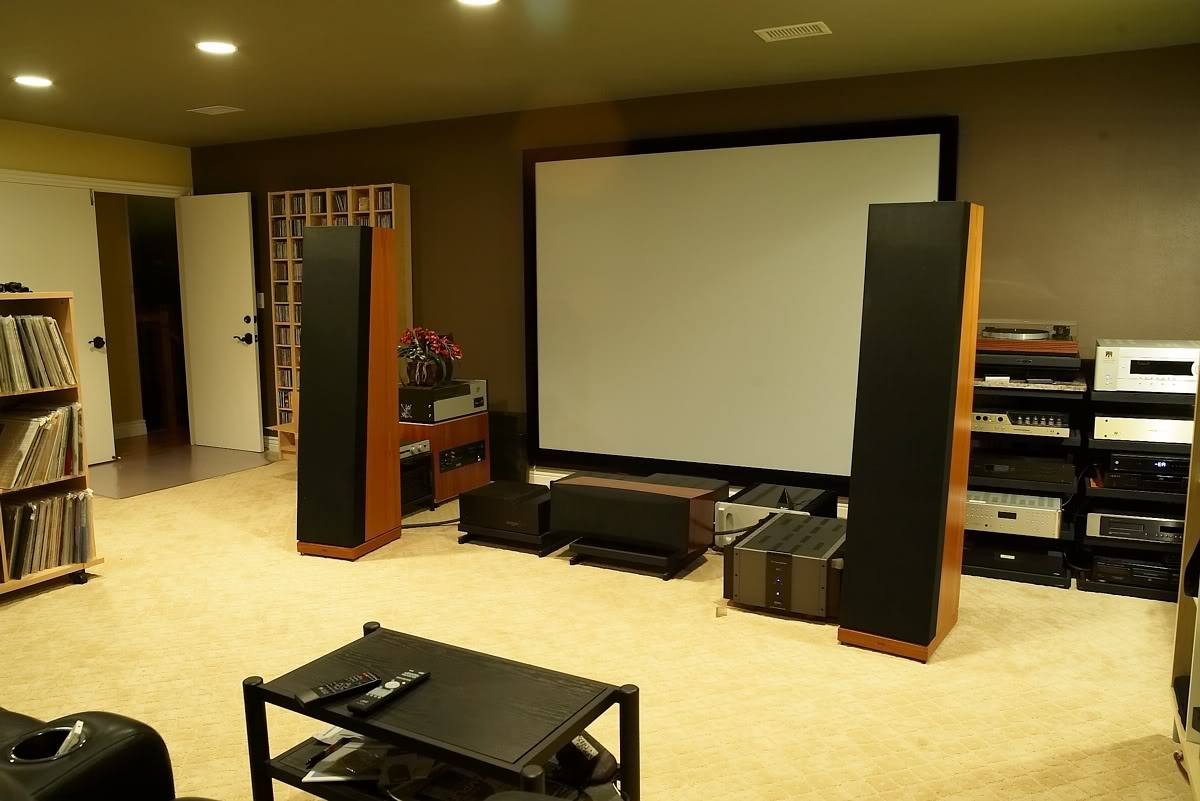
), Linn Sondek turntable, Krell FPB 600 amp (and Classe CA400), Thiel CS5i speakers.

Last edited by cannga; Apr 13, 2013 at 01:30 PM.
Thread Starter
|
Registered User
Joined: Dec 2006
Posts: 3,116
From: Palos Verdes
Rep Power: 256
The stock Turbo has a few things that I wanted to change (exhaust and suspension both too soft for my taste) and with some alterations, I now have a car that I think is a blast to drive - very quick in its reflex and fantastic sound - and an incomparable daily driver. I think you'll love yours too.
Thread Starter
|
Registered User
Joined: Dec 2006
Posts: 3,116
From: Palos Verdes
Rep Power: 256
Some level of anxiety as my car comes to the 6 year mark - the infamous California Smog Check is coming any time now. I found some basic information on Pre and Post Cat Sensor - a frequently discussed topic for those of us with modded ECU and after-market exhaust. As always anyone feel free to correct as needed; I am learning this as we go along and don't profess to be an expert.
Modern cars are all equipped with oxygen sensor. There are 2 oxygen sensors in any given exhaust;
1. One is positioned before the exhaust fume hits the catalytic converter, aka the pre-cat oxygen (O2) sensor, and
2. A second one after the catalytic, called the post cat (O2) sensor.
The 2 probes/sensors both measure oxygen but their functions are totally different.
Pre cat sensor senses whether the engine is running rich or lean by measuring whether oxygen is high (lean) or low (rich) in the exhaust fume, *before* it hits the cat converter. This information is fed back to the ECU where air fuel ratio is adjusted accordingly. In other words, the pre cat sensor is an important tool in engine management of AFR by the ECU. As you could tell by now, if this sensor is not working properly, problems await, with not just AFR and engine management, but with the catalytic converter as well. One example I've read about is a damaged pre cat sensor could cause rich fuel to rich the cat and cook it, literally.
Post cat sensor senses whether the catalytic converter is doing its job by measuring O2 level after the cat converter and use this information to determine whether the cat is doing its job cleaning up. The cat promotes conversion of the pollutants of combustion (carbon monoxide, hydrocarbon, and oxides of nitrogen) to more benign chemicals and this process consumes oxygen. Therefore if the cat is doing its job, the level of oxygen should be low downstream from it.
Basically in a properly function system, the level of oxygen should be high before the cat, and low after the cat. If levels of oxygen at the 2 positions are not consistent with this, you now have major headaches: the equally dreaded Check Engine Light (CEL) and failed Smog Test. Because of the different functions they serve, the post cat sensor is also known as the "monitor," and the pre cat sensor is also referred to as the lambda sensor.
It's common knowledge that the O2 sensor is there to monitor catalytic function; what I wasn't aware of, is that it also serves for engine management - it tells the ECU whether the mixture is running rich or lean. When you think of all the functions that these 2 sensors monitor and manage, it is remarkable that O2 is the *only* chemical that it's measuring. Lastly, how does it actually work? The sensor has 2 electrodes that gives off a voltage reading, when O2 is low it gives a high voltage around 0.8 v, when O2 is high it gives a low voltage around 0.2 v.
Modern cars are all equipped with oxygen sensor. There are 2 oxygen sensors in any given exhaust;
1. One is positioned before the exhaust fume hits the catalytic converter, aka the pre-cat oxygen (O2) sensor, and
2. A second one after the catalytic, called the post cat (O2) sensor.
The 2 probes/sensors both measure oxygen but their functions are totally different.
Pre cat sensor senses whether the engine is running rich or lean by measuring whether oxygen is high (lean) or low (rich) in the exhaust fume, *before* it hits the cat converter. This information is fed back to the ECU where air fuel ratio is adjusted accordingly. In other words, the pre cat sensor is an important tool in engine management of AFR by the ECU. As you could tell by now, if this sensor is not working properly, problems await, with not just AFR and engine management, but with the catalytic converter as well. One example I've read about is a damaged pre cat sensor could cause rich fuel to rich the cat and cook it, literally.
Post cat sensor senses whether the catalytic converter is doing its job by measuring O2 level after the cat converter and use this information to determine whether the cat is doing its job cleaning up. The cat promotes conversion of the pollutants of combustion (carbon monoxide, hydrocarbon, and oxides of nitrogen) to more benign chemicals and this process consumes oxygen. Therefore if the cat is doing its job, the level of oxygen should be low downstream from it.
Basically in a properly function system, the level of oxygen should be high before the cat, and low after the cat. If levels of oxygen at the 2 positions are not consistent with this, you now have major headaches: the equally dreaded Check Engine Light (CEL) and failed Smog Test. Because of the different functions they serve, the post cat sensor is also known as the "monitor," and the pre cat sensor is also referred to as the lambda sensor.
It's common knowledge that the O2 sensor is there to monitor catalytic function; what I wasn't aware of, is that it also serves for engine management - it tells the ECU whether the mixture is running rich or lean. When you think of all the functions that these 2 sensors monitor and manage, it is remarkable that O2 is the *only* chemical that it's measuring. Lastly, how does it actually work? The sensor has 2 electrodes that gives off a voltage reading, when O2 is low it gives a high voltage around 0.8 v, when O2 is high it gives a low voltage around 0.2 v.
Last edited by cannga; Apr 15, 2013 at 12:11 PM.
Registered User
Joined: May 2009
Posts: 7,984
From: la
Rep Power: 608
Thanks for the comment and good luck in your search. Take your time and my 2 key criteria would be low mileage and not too many mods, particular the one involving the ECU/engine. It's nice to have a pristine car from the start and only add the mods that are important to you.
The stock Turbo has a few things that I wanted to change (exhaust and suspension both too soft for my taste) and with some alterations, I now have a car that I think is a blast to drive - very quick in its reflex and fantastic sound - and an incomparable daily driver. I think you'll love yours too.
The stock Turbo has a few things that I wanted to change (exhaust and suspension both too soft for my taste) and with some alterations, I now have a car that I think is a blast to drive - very quick in its reflex and fantastic sound - and an incomparable daily driver. I think you'll love yours too.
 ) so i feel my patience will be rewarded, and i still hit boost daily, as is. but i had to endure this kind of depreciation with my last turbo, which was near where the 997.1t's are in value when i got it as a low mileage cpo car. not so today. my old 993 is probably worth more than my current 96t! it's just nuts.
i also noticed your concern about passing smog, and empathize. i JUST passed a cpl weeks ago, but not without issues, myself. i have found it can be dicey in these once modded ( as mine is ) or with hi flow exhaust etc. the key to the process i have found is getting the "readiness codes" to magically align all at once. i just passed but not before failing once on the "readiness" portion of the test. my emissions are fine and i'm only running 200 cel cats. still, to *pass*, essentially, i had to "reset" the car by running the car below 3k rpm for an hour
with my obd reader in one hand, shifter in the other. that's the key; the "readiness" codes. just try and ensure your codes are all "ready" BEFORE they hook up the sniffer or run the obd portion of the test. if it fails, ya gotta start over the whole process. passing CA smog in these cars is always some kind of *minor*? victory. good luck with it.nice setup btw. your setup ( presumably ) puts my old mcintosh and martin-logans ( are yours m-l's?? ) to shame! what IS it about this room!? lol. that said, i'm all about tubes and tunnels
Thread Starter
|
Registered User
Joined: Dec 2006
Posts: 3,116
From: Palos Verdes
Rep Power: 256
..i also noticed your concern about passing smog, and empathize. i JUST passed a cpl weeks ago, but not without issues, myself. i have found it can be dicey in these once modded ( as mine is ) or with hi flow exhaust etc. the key to the process i have found is getting the "readiness codes" to magically align all at once. i just passed but not before failing once on the "readiness" portion of the test. my emissions are fine and i'm only running 200 cel cats. still, to *pass*, essentially, i had to "reset" the car by running the car below 3k rpm for an hour with my obd reader in one hand, shifter in the other. that's the key; the "readiness" codes. just try and ensure your codes are all "ready" BEFORE they hook up the sniffer or run the obd portion of the test. if it fails, ya gotta start over the whole process. passing CA smog in these cars is always some kind of *minor*? victory. good luck with it.
nice setup btw. your setup ( presumably ) puts my old mcintosh and martin-logans ( are yours m-l's?? ) to shame! what IS it about this room!? lol. that said, i'm all about tubes and tunnels
with my obd reader in one hand, shifter in the other. that's the key; the "readiness" codes. just try and ensure your codes are all "ready" BEFORE they hook up the sniffer or run the obd portion of the test. if it fails, ya gotta start over the whole process. passing CA smog in these cars is always some kind of *minor*? victory. good luck with it.nice setup btw. your setup ( presumably ) puts my old mcintosh and martin-logans ( are yours m-l's?? ) to shame! what IS it about this room!? lol. that said, i'm all about tubes and tunnels
 ... Glad to run into another tube connoisseur on this forum and me too I am addicted. The speakers are Thiel CS5i, but yes I also have Martin Logan Monolith, which as you already know could be quite sublime with tubes. I alternate the Martin Logan with Magnaplanar 3.5 in my second system, which is all tube including the amp (VTL).
Very interesting that you mentioned readiness code; we were just talking about it on this thread a few days ago. Readiness code could be such a headache not just for Porsche but across many different car brands as well. A couple of questions on your experience please:
1. Did you find out what caused the not-ready reading in your car? Was it because of the tune in your car?
2. I don't believe readiness code is an exhaust problem, am I correct? Exhaust problem to best of my knowledge is related to the post cat O2 sensor triggering an alarm of inefficiency, whereas not-ready is more likely related to the tune?
3. What OBD reader did you use?
Last edited by cannga; Apr 15, 2013 at 12:13 PM.

Registered User
Joined: May 2009
Posts: 3,335
From: Rye, NY
Rep Power: 202
With some people buzzing about 1 year later delayed CEL's, I still hesitate a bit about getting an aftermarket exhaust, even though I've had them on every other car I've owned. Not sure there is really a "right" one either.
And always love to thread jack, especially when I just got back from the NY Audio Show. I'm running Jeff Rowland Concerto preamp with JR monoblocks and Aerial 7B speakers, fed from a PS Audio Perfect Wave DAC on all digital files - all uncompressed, of course! I also see the Aragon amp sitting in the front, center channel duty perhaps?
And always love to thread jack, especially when I just got back from the NY Audio Show. I'm running Jeff Rowland Concerto preamp with JR monoblocks and Aerial 7B speakers, fed from a PS Audio Perfect Wave DAC on all digital files - all uncompressed, of course! I also see the Aragon amp sitting in the front, center channel duty perhaps?
Registered User
Joined: May 2009
Posts: 7,984
From: la
Rep Power: 608
1. Did you find out what caused the not-ready reading in your car? Was it because of the tune in your car?
2. I don't believe readiness code is an exhaust problem, am I correct? Exhaust problem to best of my knowledge is related to the post cat O2 sensor triggering an alarm of inefficiency, whereas not-ready is more likely related to the tune?
3. What OBD reader did you use?
2. I don't believe readiness code is an exhaust problem, am I correct? Exhaust problem to best of my knowledge is related to the post cat O2 sensor triggering an alarm of inefficiency, whereas not-ready is more likely related to the tune?
3. What OBD reader did you use?

ok.. scanner. best 50 bucks ever. actron 9950(?). it isn't anywhere near the porsche pwis device, obviously, but it has proven invaluable in allowing me to read simple codes and perhaps even more importantly in our cars.. turn off CELS! that alone is worth, i dunno.. at least..50 bucks
( mods pls forgive the *active* link if that is verbotten ) it was merely included to illustrate the item.http://www.ebay.com/itm/Pocket-Scan-...item460e463228
you know can,.. i don't know for certain whether, in my case, the tune ( a very old yet stable and highly effective cargraphic 1.2 bar
tune ) is the cause for failing "readiness" codes, or the exhaust itself. but i suspect neither, though the cats would be my first choice for a "fail", were my numbers NOT within an acceptable emissions range.you probably know more about them than i, but my experience is simply that if they are NOT "ready" when you DO hook up to the machine for the OBD portion, that will fail you automatically, regardless of emissions output etc. which will then require you to drive around in circles
until you are able to RESET the "readiness".. which on this particular "actron" obd reader ( posted above for reference ) for our cars included:(1) Misfire = "ready"
(2) Fuel = "ready"
(3) Cat = "ready"
(4) Evap System = "ready"
(5) 02 sensor = "ready"
(6) Oxygen Sensor = "ready"
my issues had to do with not being able to get the "catalyst" and "02 sensor" and "oxygen sensor" to ready, simultaneously. that was the issue, some would be ready, others not. this required the aforementioned "reset" of the readiness through a procedure that was ( iirc? ) bmw developed for their cars onboard diagnostics, and works similarly on these cars. the trick is if you fail on any portion of this test, it's "do not pass go", etc. again, the reader is an invaluable tool, esp at $50 and will also turn off those infernal CEL's though again, if yoiu've turned off a CEL just prior to having the car sniffed or read the OBD info, it will fail on that basis alone, requiring a return trip with all codes set to "ready".
so, after all that, i am not at all sure why i didn't "pass", other than i do have a tune and exhaust.. and it's.. wait for it.. Kalifornia
anyway.. i hope this helps somewhat. i sure wish i had known all this seemingly superfluous yet highly salient stuff prior to my most recent smog test, but at least i had the reader which saved me from "guessing" when i was "ready" to re-test again!
add: if you do decide to get a cheap reader ( if you don't have one already..) these nice folks have deigned to warn *us* that this particular reader ( while perfectly safe to use ) suggests you neither touch the "cable" (?WTF?!) or if you do? to wash your hands immediately as it has lead residue on it.. those thoughtful chinese people!.. nice of them to point that out
so...good luck w your smog test! should you need the *reset* protocol, i can find it again, and will post.
add2:.. i now realize, all of the foregoing presupposes you don't already have a scanner ( let alone a proper durametric ) but i never had one ( or for that matter, a mechanic,.. now on my x'mas list ) while i still enjoyed a pcna warranty .. but after hearing of your speakers and seeming attention to detail.. surely you must already have a scanner.. and it's probably german lol
Last edited by '02996ttx50; Apr 15, 2013 at 06:52 PM.
Thread Starter
|
Registered User
Joined: Dec 2006
Posts: 3,116
From: Palos Verdes
Rep Power: 256
From Actron web site - how Actron defines differences between Scan Tool, Code Reader, and Code Scanner. For example Actron 9550 is a code reader, Actron 9575 is a Scan Tool.
>>>>>>>>>>>>
When your check engine light turns on, the vehicle actually stores information on the problem.
When you ignore a check engine light you risk:
Further engine damage
Poor gas mileage
Vehicle performance problems
Serious repair costs
Three common and very useful types of tools from Actron can assist you in diagnosing your vehicle and turn off the check engine light:
A Scan Tool can be used to read and erase trouble codes, display, record and play back LIVE diagnostic data and perform other tests allowed by the vehicle maker. We have scan tools that cover vehicles 1982 to present depending on required coverage. All Actron Scan Tools are CAN compliant.
A Code Reader can be used to read and erase diagnostic trouble codes as well as other additional features depending on the tool. These tools work on all vehicles 1996 and newer. All Actron Code Readers are CAN compliant.
A Code Scanner reads diagnostic trouble codes generated by the vehicle's system. Codes are displayed on the vehicle's dashboard and/or identified through audio prompts. These products work with 1981-1995 vehicles.
Actron Scan Tools and Code Readers are designed to communicate with cars and light-duty trucks which comply with US emission standards.
>>>>>>>>>>>>
When your check engine light turns on, the vehicle actually stores information on the problem.
When you ignore a check engine light you risk:
Further engine damage
Poor gas mileage
Vehicle performance problems
Serious repair costs
Three common and very useful types of tools from Actron can assist you in diagnosing your vehicle and turn off the check engine light:
A Scan Tool can be used to read and erase trouble codes, display, record and play back LIVE diagnostic data and perform other tests allowed by the vehicle maker. We have scan tools that cover vehicles 1982 to present depending on required coverage. All Actron Scan Tools are CAN compliant.
A Code Reader can be used to read and erase diagnostic trouble codes as well as other additional features depending on the tool. These tools work on all vehicles 1996 and newer. All Actron Code Readers are CAN compliant.
A Code Scanner reads diagnostic trouble codes generated by the vehicle's system. Codes are displayed on the vehicle's dashboard and/or identified through audio prompts. These products work with 1981-1995 vehicles.
Actron Scan Tools and Code Readers are designed to communicate with cars and light-duty trucks which comply with US emission standards.
Thread Starter
|
Registered User
Joined: Dec 2006
Posts: 3,116
From: Palos Verdes
Rep Power: 256
1. ok.. scanner. best 50 bucks ever. actron 9950(?). it isn't anywhere near the porsche pwis device, obviously, but it has proven invaluable in allowing me to read simple codes and perhaps even more importantly in our cars.. turn off CELS! that alone is worth, i dunno.. at least..50 bucks ( mods pls forgive the *active* link if that is verbotten ) it was merely included to illustrate the item.
.....
2. so...good luck w your smog test! should you need the *reset* protocol, i can find it again, and will post.
3. add2:.. i now realize, all of the foregoing presupposes you don't already have a scanner ( let alone a proper durametric ) but i never had one ( or for that matter, a mechanic,.. now on my x'mas list ) while i still enjoyed a pcna warranty .. but after hearing of your speakers and seeming attention to detail.. surely you must already have a scanner.. and it's probably german lol
( mods pls forgive the *active* link if that is verbotten ) it was merely included to illustrate the item......
2. so...good luck w your smog test! should you need the *reset* protocol, i can find it again, and will post.
3. add2:.. i now realize, all of the foregoing presupposes you don't already have a scanner ( let alone a proper durametric ) but i never had one ( or for that matter, a mechanic,.. now on my x'mas list ) while i still enjoyed a pcna warranty .. but after hearing of your speakers and seeming attention to detail.. surely you must already have a scanner.. and it's probably german lol
2. If you could please post the "protocal" here. We know it works in your car, so that's a start.
3. LOL. No I *am* guilty of buying many excessive toys, particularly when they are photography, audio, and hometheater related, but no, no OBD scanner yet. I will get the Actron because it's so inexpensive, and more importantly, it works for you. You hafe the smaller one, 9550, right? Thanks again.
Last edited by cannga; Apr 16, 2013 at 07:52 PM.
Registered User
Joined: May 2009
Posts: 7,984
From: la
Rep Power: 608
Thank you for the detailed (and helpful) response. As 997 Turbo's age and reach the 5 years mark, I suspect this topic of smog test is going to become more popular. It's by far the most scary topic I've come across, because the failures and solutions seem so convoluted, random, and confusing. There seemingly is no logic in the solution - "just do it *this* way."
) which had heretofore put me into the kind of apprehension vis a vis the car and it's relative * age*, of which you speak. but think of it this way, now YOU can mod and track the car with impunity yes of course, you're right. it is a code *reader*; not a scanner per se, and that distinction was not previously noticed by me. it has however, been able to help me with the most common codes and cel/mil's..and more importantly to me, whenever it's x'mas in july on the dashboard. anything that turns them OFF? until i can sort it, is good. but airbag lights and such, still need the proper porsche diagnostic pwiis? ( whatever..)
but here it is, i'm sure you've seen or heard of it? but it does work. though i would love to know why my car isn't *ready* when it is..very..
Start engine, idle cold for approx. 2 min, 10 secs.
Accelerate to 20-30 MPH, Maintain steady speed for approx 3 min, 15 secs.
Accelerate to 40-60 MPH, Maintain steady speed for approx 15 mins.
Decelerate and come to a stop. Idle in gear* for approx 5 mins.
i have now done this twice.. and it is best to keep that damn scan/reader/gizmo tool handy literally
while "resetting" should the need, arise. most important: following this protocol.. do NOT exceed 3k rpm.. or 60 mph. beyond that? it's piece of cake. provided you can find a place to drive the car at those speeds, for those durations, absent common impediments and distractions eg, other people. cheers.