


Modded 2009 ZR1 Video: 581 rwhp & 599 rw tq


Registered User

Joined: Mar 2008
Posts: 2,621
From: Norcal
Rep Power: 170


638 crank stock.

Thread Starter
|
Banned
Joined: Nov 2008
Posts: 183
From: Houston, TX
Rep Power: 31
Sorry I have been in Detroit and Scottsdale the last 10 days (Barrett Jackson). The ZR1 was in AZ too and it should be back at the shop tomorrow. We will try to run it down the track Saturday.

Registered User
Joined: Oct 2005
Posts: 2,621
From: Houston, TX
Rep Power: 237
 sweet! I am not so curious about the et but really curious about the MPH! Keep us updated!
Peter

Registered User
Joined: Jul 2006
Posts: 139
From: Northern Illinois
Rep Power: 33
Okay, now THIS is funny!!
Since I'm deployed, I don't have any of my email coming directly to me. It still all goes to my home in VA. Every couple of weeks or so my wife boxes up all of my magazines and sends them to me out here in a care package.
My point? Well, I was going through the magazines in the care package that I got a couple of ours ago..and what did I find?? A freakin' letter from the Director of Kleeman USA (famous Mercedes tuner) to European Car *****ing about people calculating engine HP from rwhp incorrectly. And....he's making the EXACT same argument in his letter that I am in this thread!
Read "Rant of the Month" in the attached picture from the Feb '09 issue of European Car.
Too funny!
Since I'm deployed, I don't have any of my email coming directly to me. It still all goes to my home in VA. Every couple of weeks or so my wife boxes up all of my magazines and sends them to me out here in a care package.
My point? Well, I was going through the magazines in the care package that I got a couple of ours ago..and what did I find?? A freakin' letter from the Director of Kleeman USA (famous Mercedes tuner) to European Car *****ing about people calculating engine HP from rwhp incorrectly. And....he's making the EXACT same argument in his letter that I am in this thread!
Read "Rant of the Month" in the attached picture from the Feb '09 issue of European Car.
Too funny!
Personally it doesn't matter to me if your engine makes 2000hp at the flywheel if only 500 is making it to the ground.

Registered User
Joined: Jul 2007
Posts: 556
From: CT
Rep Power: 58
Something everyone needs to keep in mind is that using the % method for figuring out crank HP is extremely inaccurate once you start moving away from a car’s stock HP level. Everyone continues to use the exact same percentage loss that the car had when the motor was stock, but drivetrain losses do not increase commensurately to HP increases. In other words, friction in the drivetrain does not increase correspondingly to power changes in the motor. It physically doesn’t work that way.
For example; we all agree that if a bone stock Z06 makes 440 rwhp (505 crank HP), it’s losing around approximately 12% of its power through the drivetrain, right? Now, let’s say you install a mild blower on the same car and the rwhp is increased to 600 rwhp on the same dyno. This is where most people automatically default to using the original 12% figure to determine the new crank HP. They would say that the car is now making 681 crank HP since 12% of 681 is 81. But again, friction losses in the drivetrain are not commensurate with HP increases in a motor. This way of figuring crank HP gets even more inaccurate when you start using % figures larger than 12% (i.e., 15% or 20%). The larger the % figure, the more innacurate it becomes.
A much more accurate method is to simply figure out the difference between the stock crank HP figure (using SAE ratings) and the stock rwhp number (assumning the same dyno is used before and after mods). In the case of the stock Z06 above, the difference is 65 HP (505-440=65). Thus, that same Z06 with the mild blower making 600 rwhp on the same dyno is making around 665 crank HP.
Now…if that same Z06 made 700 rwhp with more boost, you are now looking at approximately 765 crank HP, instead of 795 like the 12% formula says.
For example; we all agree that if a bone stock Z06 makes 440 rwhp (505 crank HP), it’s losing around approximately 12% of its power through the drivetrain, right? Now, let’s say you install a mild blower on the same car and the rwhp is increased to 600 rwhp on the same dyno. This is where most people automatically default to using the original 12% figure to determine the new crank HP. They would say that the car is now making 681 crank HP since 12% of 681 is 81. But again, friction losses in the drivetrain are not commensurate with HP increases in a motor. This way of figuring crank HP gets even more inaccurate when you start using % figures larger than 12% (i.e., 15% or 20%). The larger the % figure, the more innacurate it becomes.
A much more accurate method is to simply figure out the difference between the stock crank HP figure (using SAE ratings) and the stock rwhp number (assumning the same dyno is used before and after mods). In the case of the stock Z06 above, the difference is 65 HP (505-440=65). Thus, that same Z06 with the mild blower making 600 rwhp on the same dyno is making around 665 crank HP.
Now…if that same Z06 made 700 rwhp with more boost, you are now looking at approximately 765 crank HP, instead of 795 like the 12% formula says.
For years, I've been saying just what you said above.
(and I always meet resistance that fixates upon a %)
I do believe that the fixed amount changes just a bit from spinning the drivetrain quicker(notice I said "quicker", not "faster"), but the additional parasitics from added hp don't add as much to the overall loss.
Looking forward to seeing the results of your Z06 project, best of luck!
Registered User
Joined: Oct 2005
Posts: 2,621
From: Houston, TX
Rep Power: 237
FYI guys, this car ran a best of et of 11.0 and a best mph of 137.8 this past weekend...oh, and this was all on 20 inch stock wheels/tires.  If you ask me, 137.8 is A LOT more than 581 rwhp! Congrats John...
Peter
If you ask me, 137.8 is A LOT more than 581 rwhp! Congrats John...Peter

Registered User
Joined: Jun 2005
Posts: 8,509
From: Virginia, USA
Rep Power: 789
Okay, now THIS is funny!!
Since I'm deployed, I don't have any of my email coming directly to me. It still all goes to my home in VA. Every couple of weeks or so my wife boxes up all of my magazines and sends them to me out here in a care package.
My point? Well, I was going through the magazines in the care package that I got a couple of ours ago..and what did I find?? A freakin' letter from the Director of Kleeman USA (famous Mercedes tuner) to European Car *****ing about people calculating engine HP from rwhp incorrectly. And....he's making the EXACT same argument in his letter that I am in this thread!
Read "Rant of the Month" in the attached picture from the Feb '09 issue of European Car.
Since I'm deployed, I don't have any of my email coming directly to me. It still all goes to my home in VA. Every couple of weeks or so my wife boxes up all of my magazines and sends them to me out here in a care package.
My point? Well, I was going through the magazines in the care package that I got a couple of ours ago..and what did I find?? A freakin' letter from the Director of Kleeman USA (famous Mercedes tuner) to European Car *****ing about people calculating engine HP from rwhp incorrectly. And....he's making the EXACT same argument in his letter that I am in this thread!
Read "Rant of the Month" in the attached picture from the Feb '09 issue of European Car.
Here's some more info supporting my above arguments.
Motor Trend posted an article about the GT-R's actual HP #'s and in the article, they discuss how using a fixed percentage to figure out drivetrain loss is inaccurate since the drivetrain physically remains the same (which means the same loss is accrued regardless of increases in power), and that the only time you see an increase in drivetrain loss is when rpm is increased.
Originally Posted by Motor Trend
At the end of a pull, the computer instructs the operator to put the vehicle in neutral, the dyno then measures the rate at which all the rotating parts slow down, which is directly related to friction and inertia. Our instruments found the loss to be exponential -- as the speed grew so did the loss. We saw a loss of 23 hp at 50 mph and 84 hp at 100 mph. Over the three runs we saw a driveline loss range from 88 hp to 93 hp. Thus, there is no longer the need to guess at a percentage, Hyper Power Dynamometer measures it and gives you an actual figure generated by the engine and consumed by the driveline.
Here is an example of why using a fixed percentage number for drivetrain loss is flawed in calculating measured dyno horsepower:
Take a turbocharged vehicle, dyno runs put its output at 400 hp and 400 lb-ft of torque. Applying 15% for driveline loss yields an actual output of 460 hp and 460 lb-ft of torque. Now, take same vehicle, turn up the boost on the turbo. The dyno pulls now have the same exact vehicle rated at 600 hp and 600 lb-ft torque, apply 15% driveline loss, actual output is 690 hp and 690 lb-ft torque. Why does the loss increase with more horsepower? It's the same exact car, just with the boost now turned up. The loss should be the same; whatever the horsepower number is, it's the same driveline.
Here is an example of why using a fixed percentage number for drivetrain loss is flawed in calculating measured dyno horsepower:
Take a turbocharged vehicle, dyno runs put its output at 400 hp and 400 lb-ft of torque. Applying 15% for driveline loss yields an actual output of 460 hp and 460 lb-ft of torque. Now, take same vehicle, turn up the boost on the turbo. The dyno pulls now have the same exact vehicle rated at 600 hp and 600 lb-ft torque, apply 15% driveline loss, actual output is 690 hp and 690 lb-ft torque. Why does the loss increase with more horsepower? It's the same exact car, just with the boost now turned up. The loss should be the same; whatever the horsepower number is, it's the same driveline.
Last edited by Divexxtreme; Jan 26, 2009 at 06:48 AM.
Registered User
Joined: Jun 2007
Posts: 175
From: Virginia
Rep Power: 26
The force applied to the drivetrain has to have an equal and opposite force. I think most people relize you can't use a single percentage across the board, but there has still got to be more lost HP as power is increased, just not any where near as much as the initial drive train loss measurement.
Unless basic physics laws are defied by vehicle drivetrains?
Unless basic physics laws are defied by vehicle drivetrains?
Registered User
Joined: Feb 2008
Posts: 1,054
From: Northern Virginia
Rep Power: 78
Was it on a street tire? If so and at it's weight then that would put it on par with a 136/137 trap speed. 60' would tell the tale, happen to have the short time info? If numbers are right then my guess is a 2.1 or so 60' would equal the stated mph.
Last edited by Almo; Jan 26, 2009 at 09:29 PM.
Registered User
Joined: Jun 2005
Posts: 8,509
From: Virginia, USA
Rep Power: 789
I was supposed to have video from some airfield runs last week, but they got kicked off the airfield for not having the right permits.
Well, I was told they now have the correct permits and weather permitting, will be running the car tomorrow for some videos. After that, break-in should be totally complete and dynos should be completed a few days afterwards. The first dynos will be done on 93 octane and later on I'll have some on 100 octane.
Well, I was told they now have the correct permits and weather permitting, will be running the car tomorrow for some videos. After that, break-in should be totally complete and dynos should be completed a few days afterwards. The first dynos will be done on 93 octane and later on I'll have some on 100 octane.
Last edited by Divexxtreme; Jan 28, 2009 at 05:38 AM.
Registered User
Joined: Nov 2007
Posts: 3,190
From: L.A.
Rep Power: 276
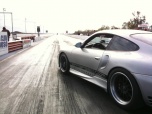
Very interested to see how the car will hook with that much power. I've seen TT Z06's before, they don't hook until 3rd gear but damn when they hook, it is amazing. The gear ratio on that car is insane. Pre-congrats on the build. We are still tweaking the turbos a little bit, I will have new 60-130's soon. Take care Scott.
I was supposed to have video from some airfield runs last week, but they got kicked off the airfield for not having the right permits.
Well, I was told they now have the correct permits and weather permitting, will be running the car tomorrow for some videos. After that, break-in should be totally complete and dynos should be copmpleted a few days afterwards. The first dynos will be done on 93 octane and later on I'll have some on 100 octane.
Well, I was told they now have the correct permits and weather permitting, will be running the car tomorrow for some videos. After that, break-in should be totally complete and dynos should be copmpleted a few days afterwards. The first dynos will be done on 93 octane and later on I'll have some on 100 octane.
Registered User
Joined: Apr 2008
Posts: 26
From: OKC/DFW
Rep Power: 20
Great trap speed.
And when it comes to horsepower, it's not a percentage basis even if the only thing you did was increase power and kept all the gears, diff, wheels, tires, brake rotors, hub bearings, clutch, flywheel, and rotating assembly the same.
It's actually the summation of inertia losses and minor friction losses that's soaking up the difference from crank to wheel. At least as far as my SAE textbook says so with some simplification and minor tweaking.
However, the percentage losses IS a good enuf approximate of an unknown car.
And when it comes to horsepower, it's not a percentage basis even if the only thing you did was increase power and kept all the gears, diff, wheels, tires, brake rotors, hub bearings, clutch, flywheel, and rotating assembly the same.
It's actually the summation of inertia losses and minor friction losses that's soaking up the difference from crank to wheel. At least as far as my SAE textbook says so with some simplification and minor tweaking.
However, the percentage losses IS a good enuf approximate of an unknown car.
Last edited by OKcruising; Jan 27, 2009 at 06:46 PM.