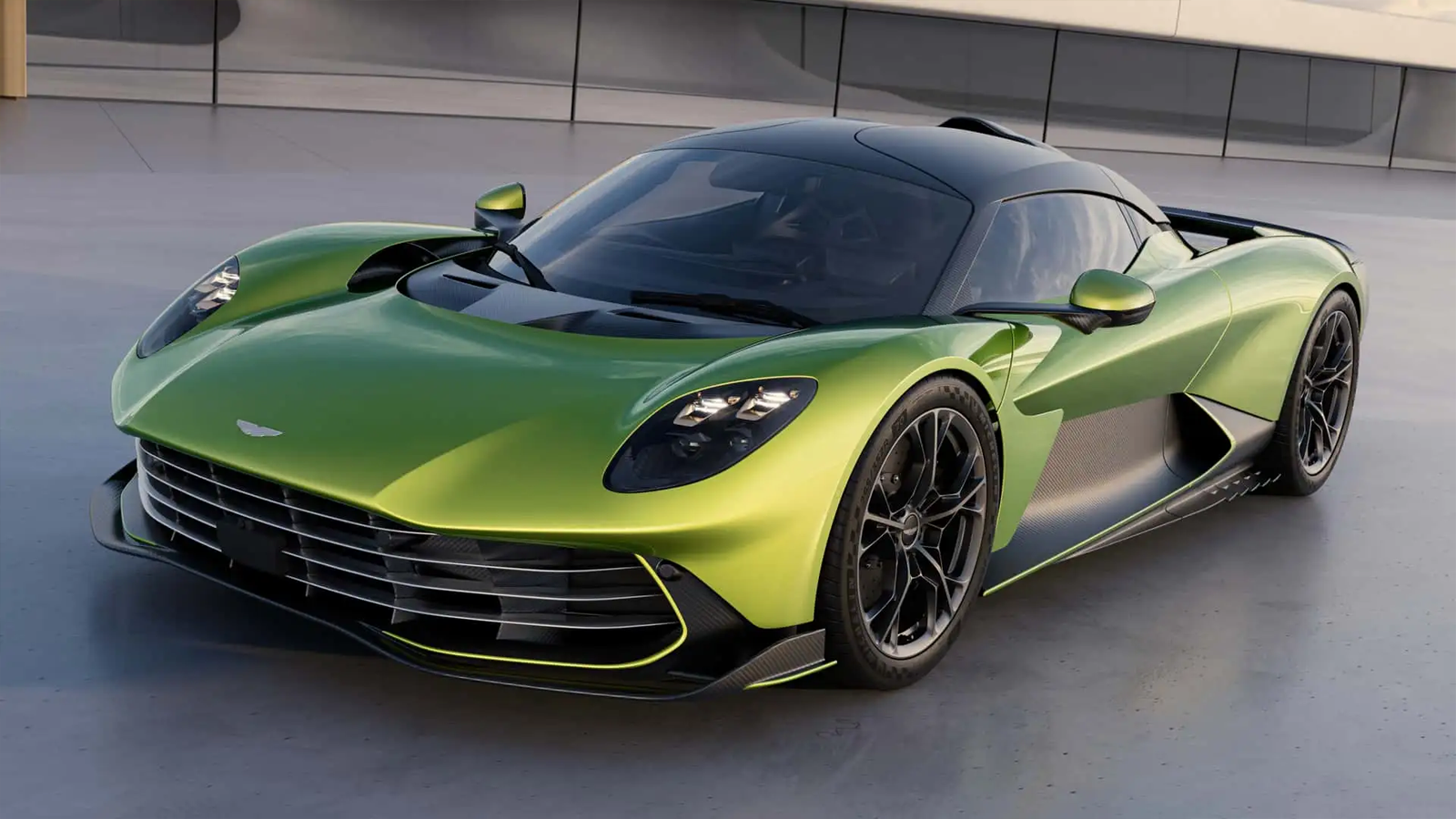
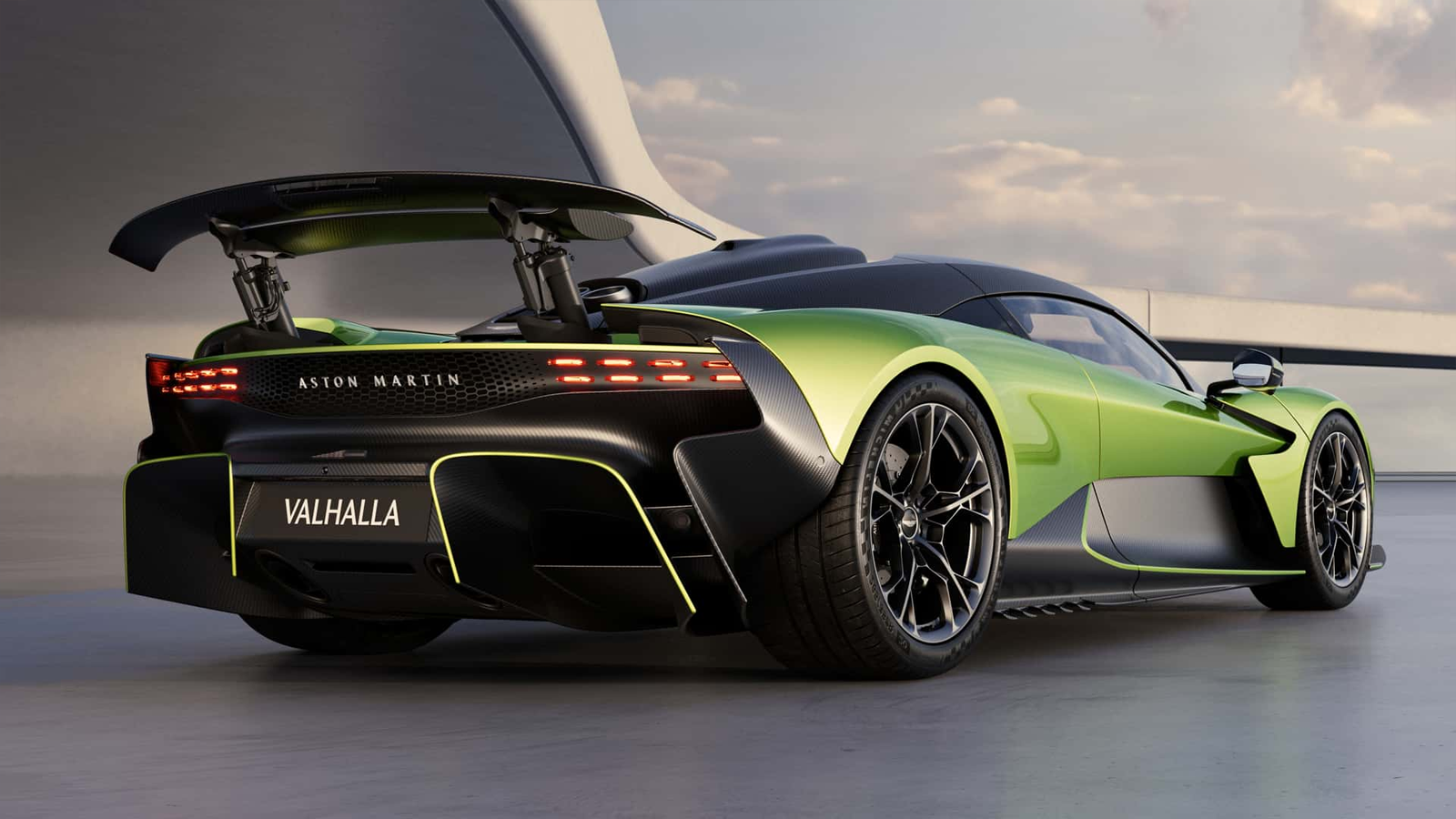
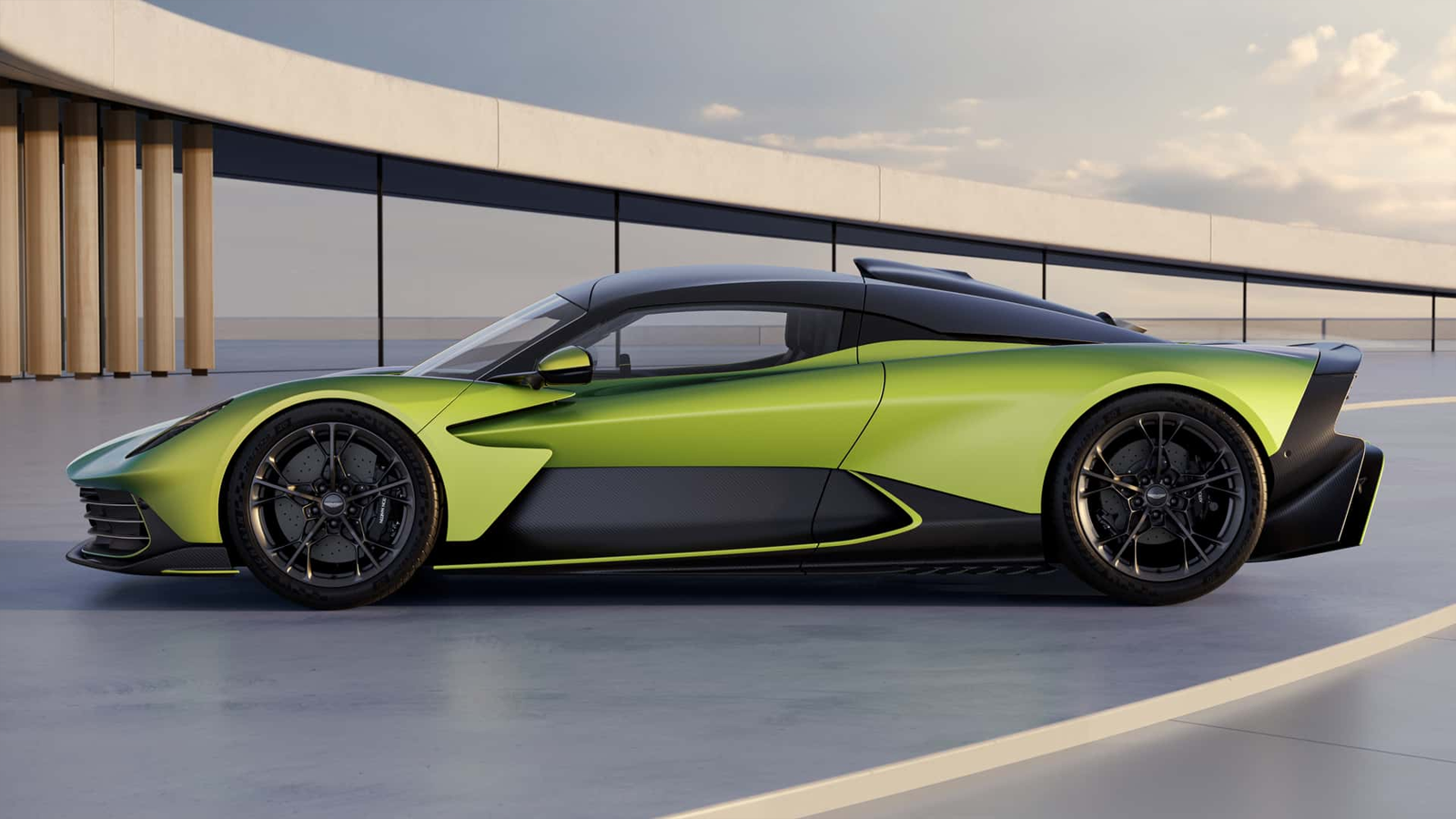
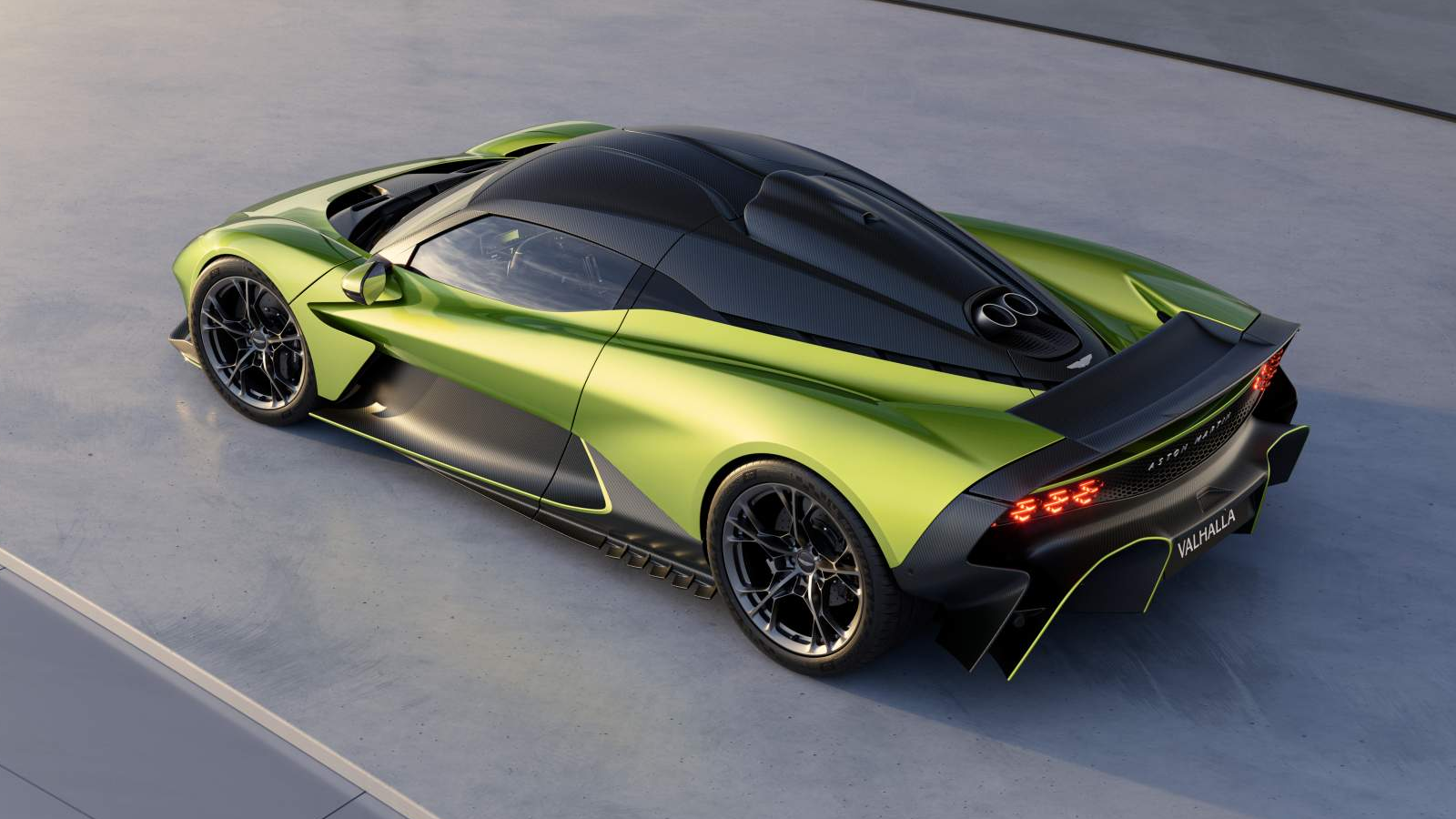
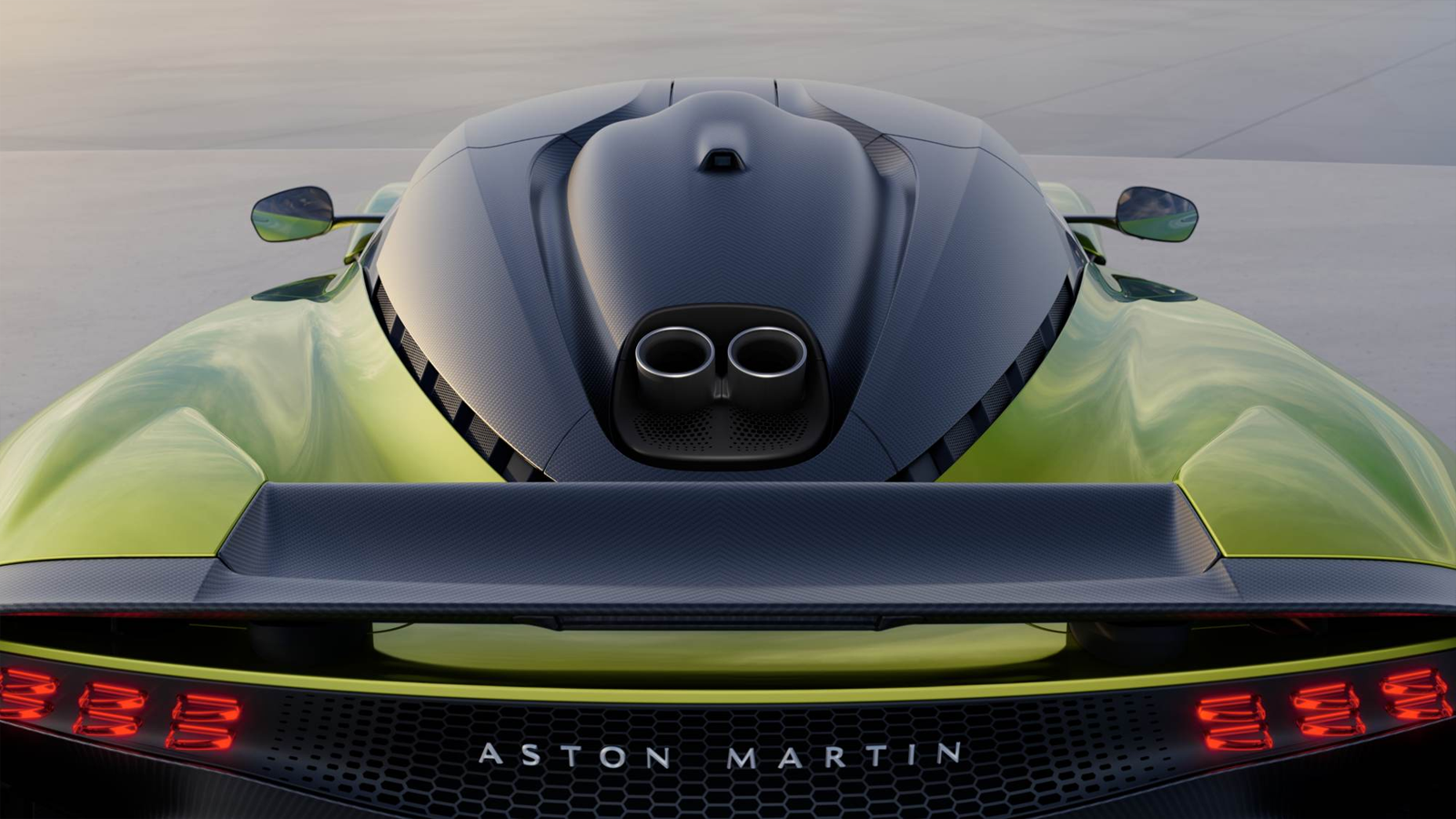
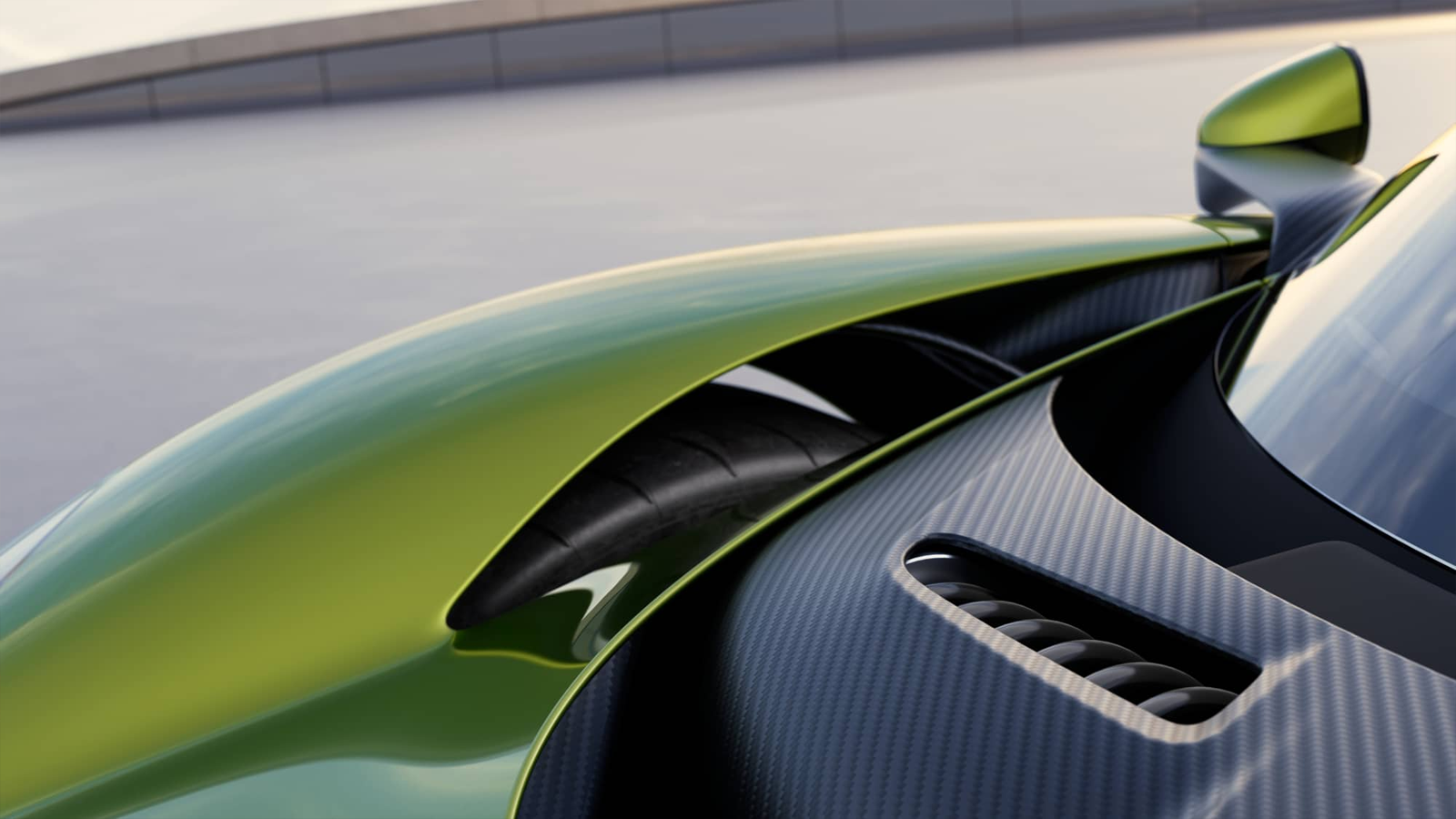
Bridging Formula 1 innovation and road-going practicality, the Valhalla set a new benchmark for Aston Martin.
Origins and Evolution
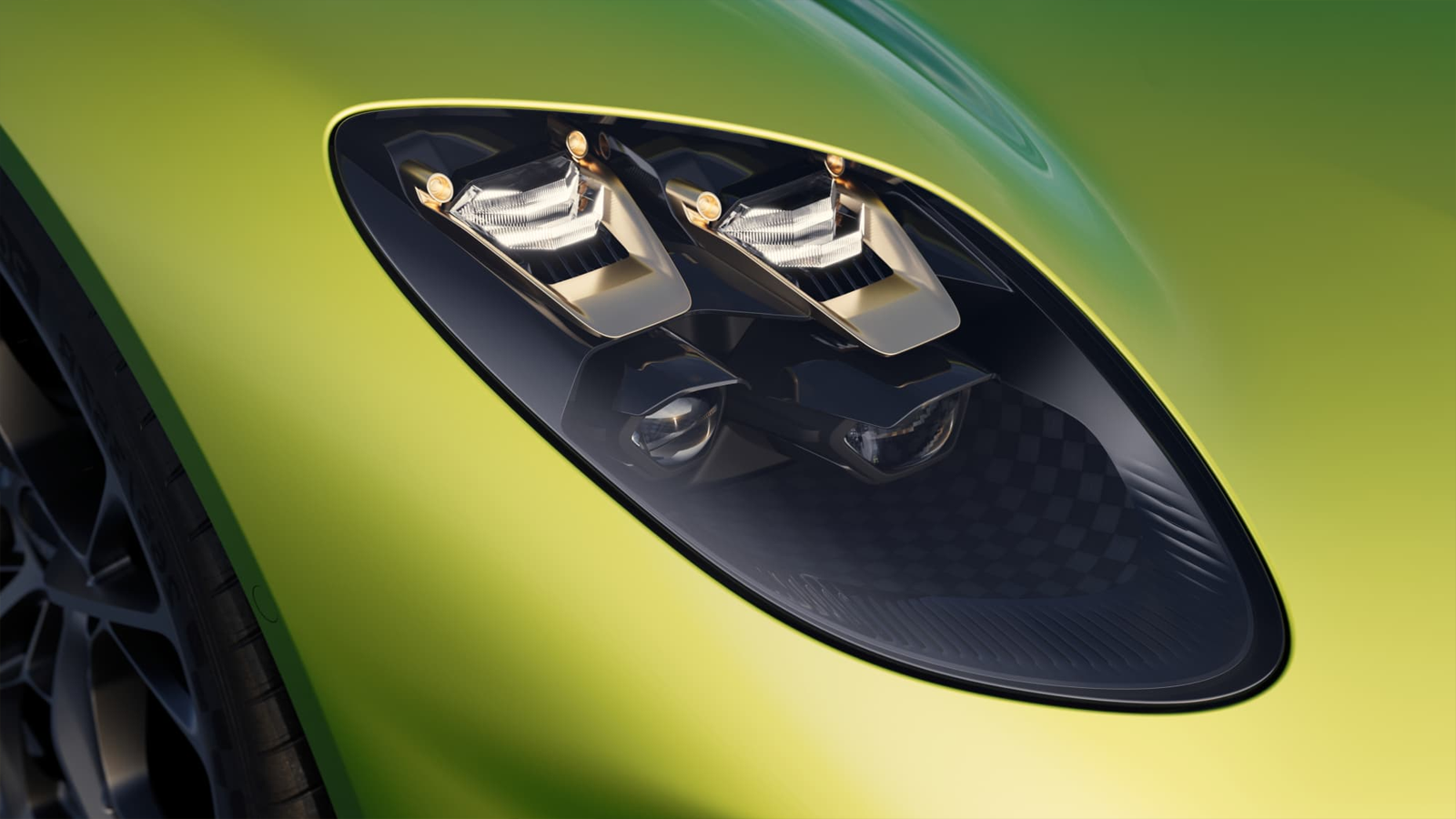
The Aston Martin Valhalla’s journey from concept to production has been dynamic and ambitious. Initially introduced as the AM-RB 003 concept at the 2019 Geneva Motor Show, its design evolved significantly over the years. While the basic shape stayed true to its origins, refinements like a larger grille, wider headlights, and sculpted aerodynamic features helped align the car with Aston Martin’s evolving design language.
Powertrain and Performance
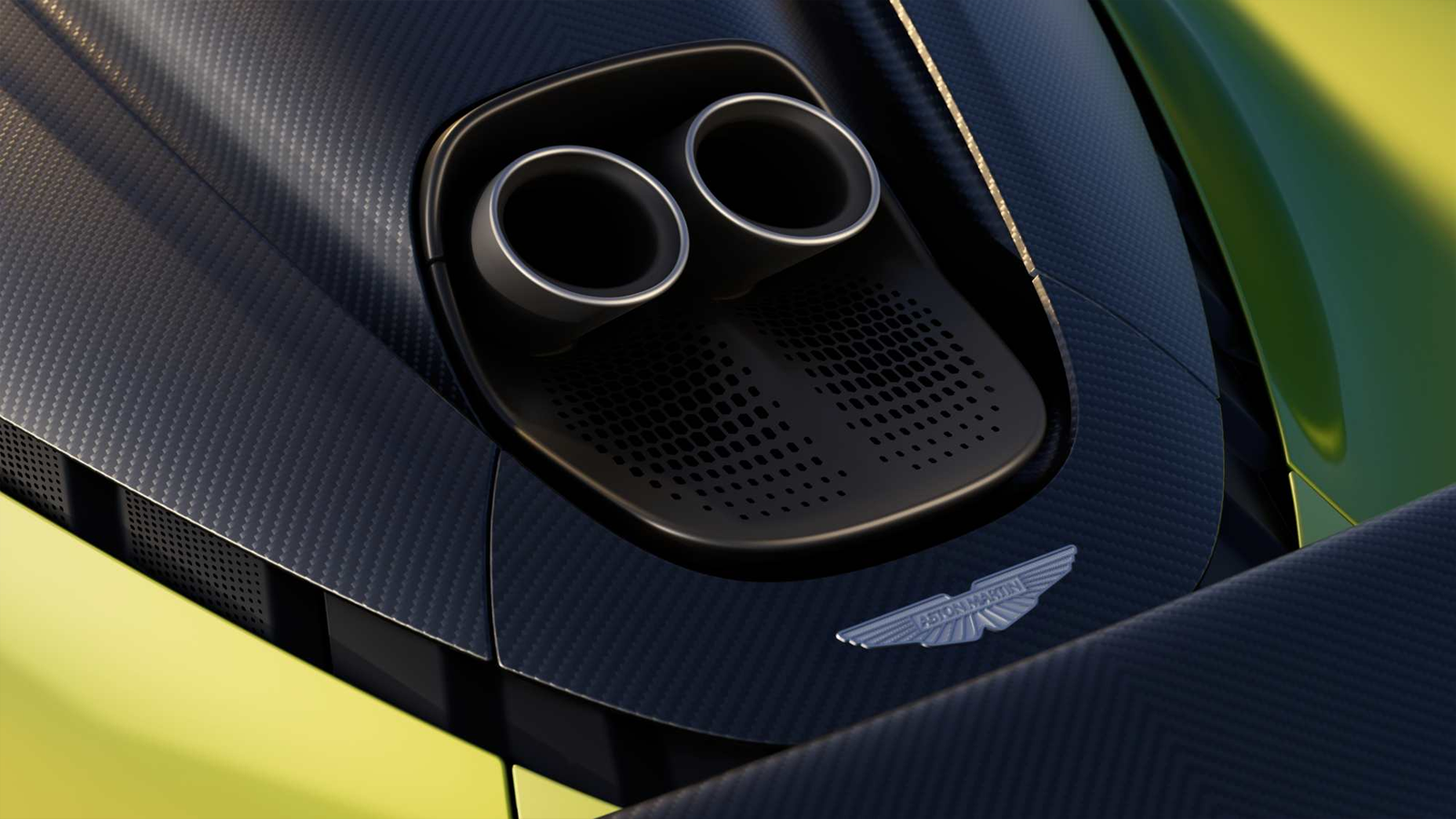
Central to the Valhalla’s performance is its advanced hybrid powertrain. Originally intended to feature an in-house V6, Aston Martin opted instead for a mid-mounted, twin-turbocharged 4.0-liter V8 sourced from Mercedes-AMG, extensively modified for performance. Key upgrades include a flat-plane crankshaft, custom camshafts, and redesigned exhaust manifolds, enabling the engine to produce 816 horsepower. This power is augmented by three electric motors—one integrated into the transmission and two driving the front wheels—resulting in a combined output of 1,064 horsepower.
The Valhalla rockets from 0 to 62 mph in a blistering 2.5 seconds and boasts an electronically limited top speed of 217 mph. The plug-in hybrid system allows for 9 miles of electric-only range, demonstrating an unusual blend of extreme performance and eco-conscious technology.
Aero Mastery: Precision-Driven Design
Aston Martin’s Formula 1 expertise directly influenced the Valhalla’s aerodynamic design. Its active aero system includes a deployable front wing, adaptive rear spoiler, and an integrated air brake. At speeds between 149 and 217 mph, the car generates up to 1,322 pounds of downforce, ensuring optimal stability and cornering grip.
These aero elements work seamlessly with the car's Integrated Vehicle Dynamics Control system, continuously adjusting to driving conditions for maximum performance and stability. This technology-driven approach enhances both track prowess and road usability.
Track-Ready Chassis and Braking
The Valhalla’s lightweight carbon monocoque chassis and aluminum subframes ensure structural rigidity without excessive weight. Its pushrod front suspension, derived from Formula 1, and a sophisticated five-link rear suspension deliver razor-sharp handling and exceptional stability.
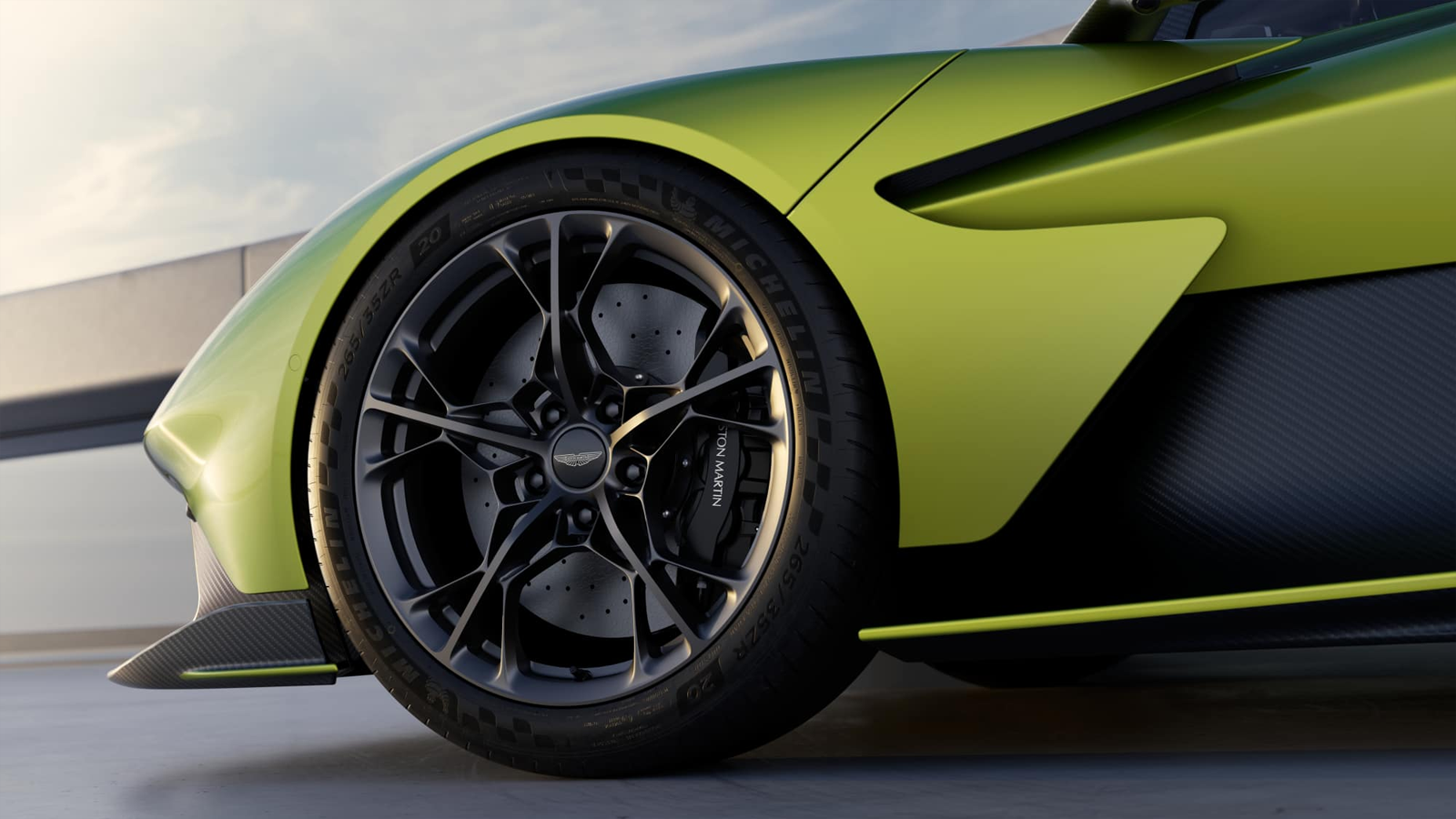
Stopping power comes from massive carbon-ceramic brakes—the largest ever fitted to an Aston Martin production car—featuring six-piston front and four-piston rear calipers. The advanced braking system ensures confidence-inspiring stopping performance even under extreme track conditions.
Interior: Race-Ready Yet Refined
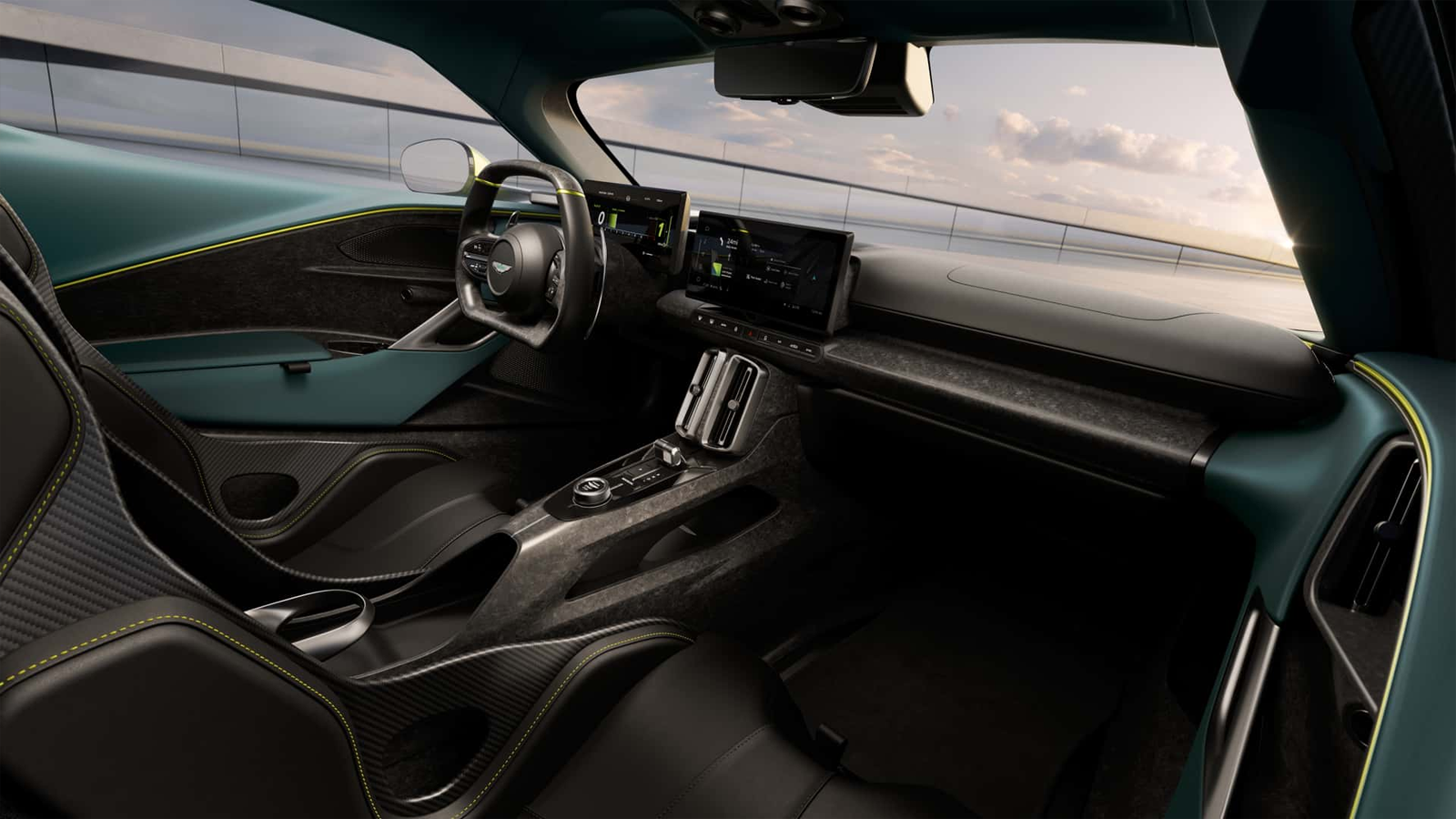
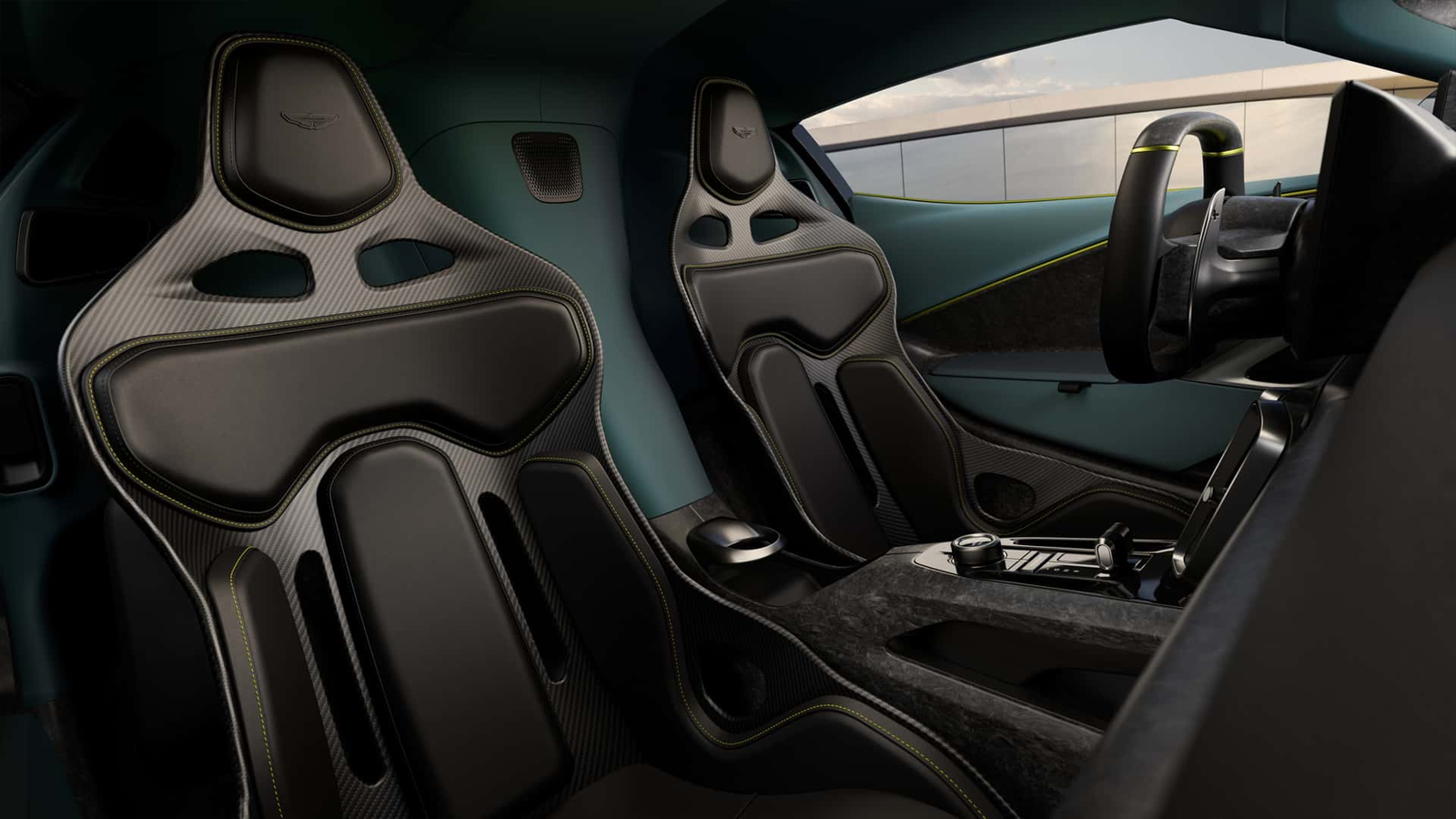
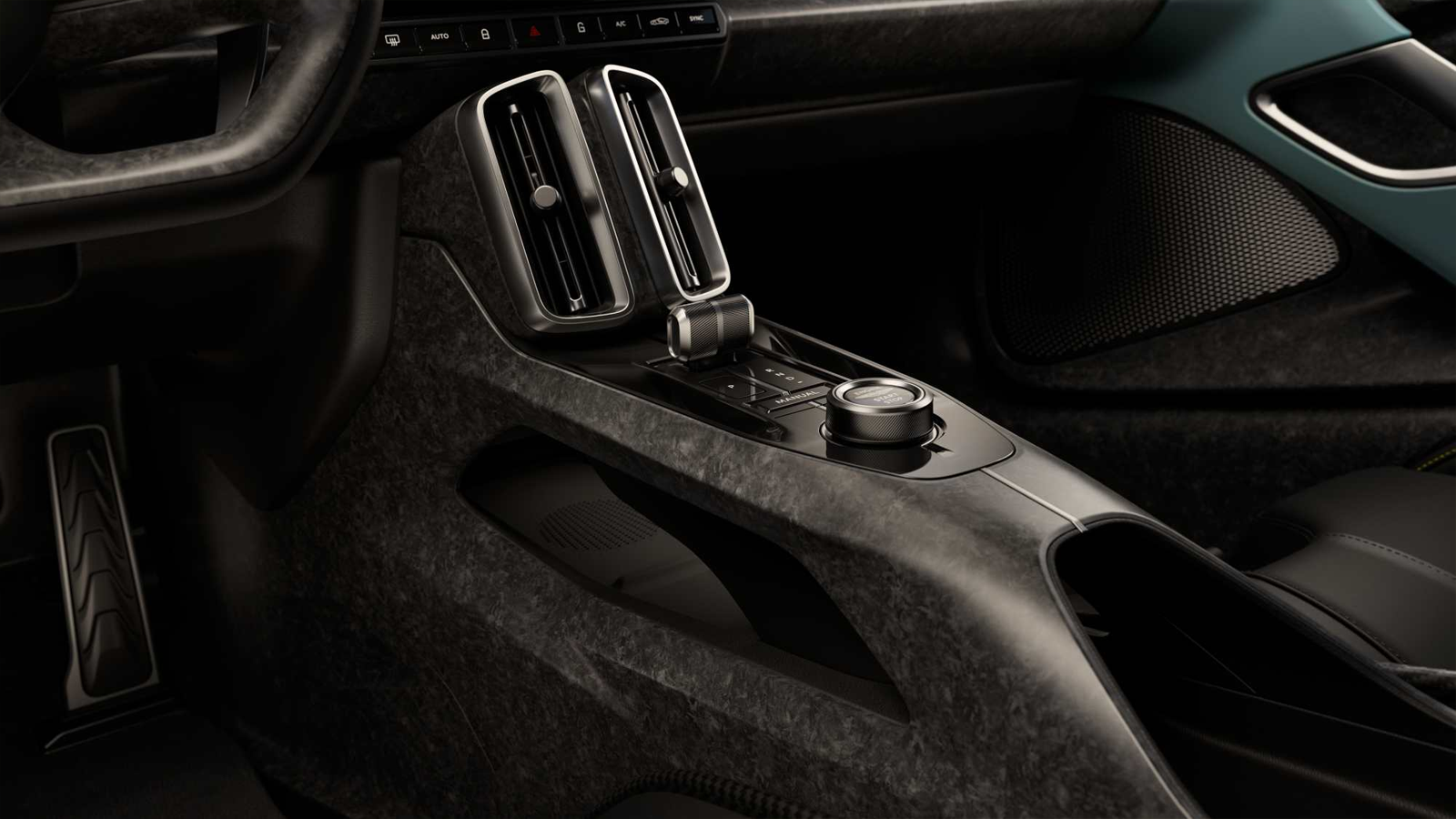
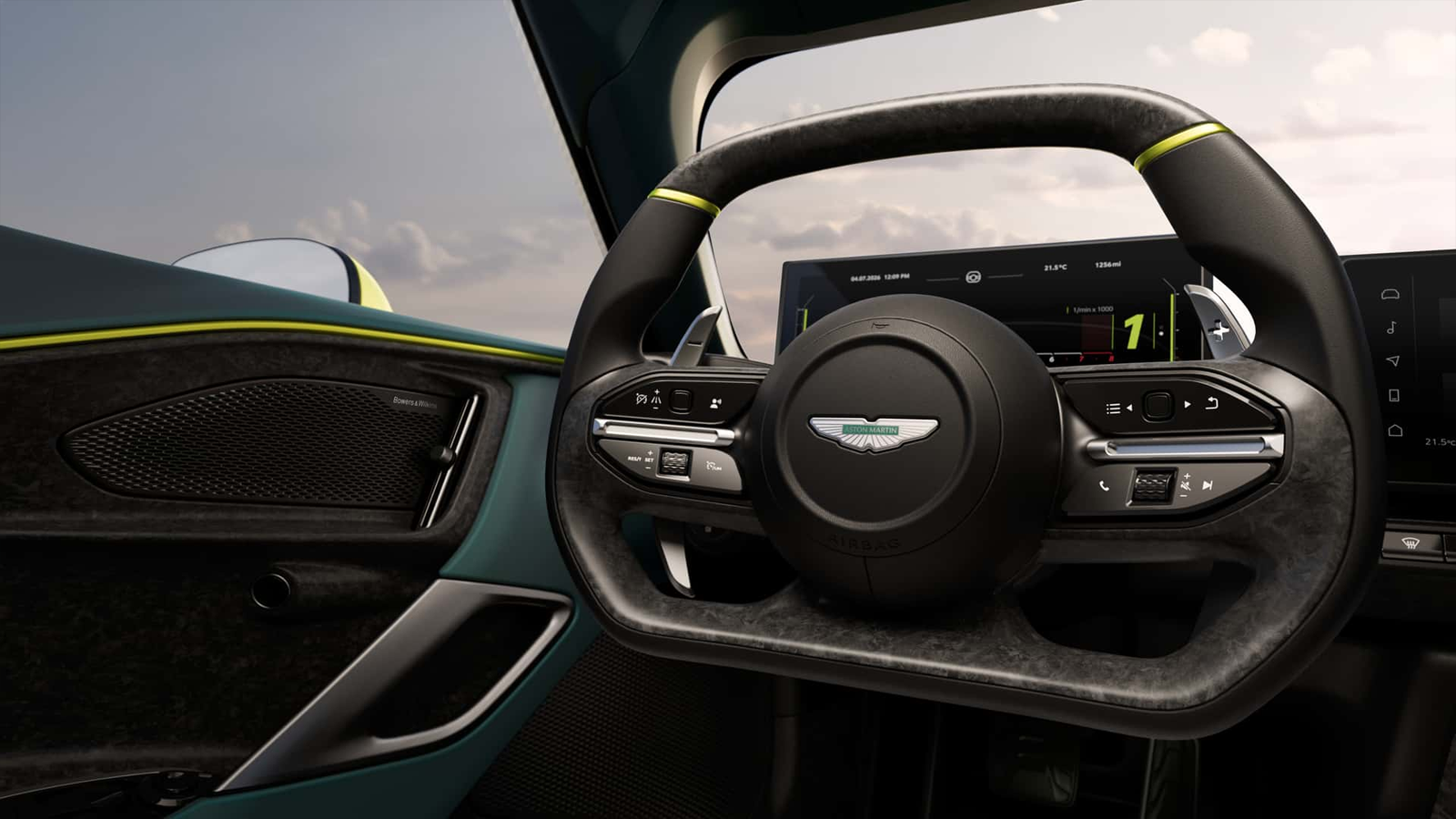
The Valhalla’s cockpit masterfully balances racing-inspired minimalism with luxurious touches. Exposed carbon fiber dominates the interior, while a Formula 1-style steering wheel and fixed carbon-fiber bucket seats emphasize the car’s track-oriented focus. Despite its bare-bones aesthetic, modern conveniences such as a Bowers & Wilkins stereo, Apple CarPlay, and advanced navigation ensure comfort and connectivity. Customizable upholstery options further allow owners to tailor the cabin to their preferences, blending bespoke luxury with racing precision.
Production and Exclusivity
Limited to just 999 units, the Valhalla is set to enter production in the second quarter of 2025. Initially estimated at $800,000, its final cost is expected to exceed that figure due to enhanced specifications and limited availability. This fusion of exclusivity, advanced technology, and motorsport heritage ensures the Valhalla’s place as a landmark in Aston Martin’s illustrious history. Its creation marks a bold step forward, cementing Aston Martin’s reputation as a manufacturer of world-class performance cars.
Click through to see more photos of the Valhalla---->
Aston Martin Valhalla
Aston Martin Valhalla
Aston Martin Valhalla
Aston Martin Valhalla
Aston Martin Valhalla
Aston Martin Valhalla
Aston Martin Valhalla