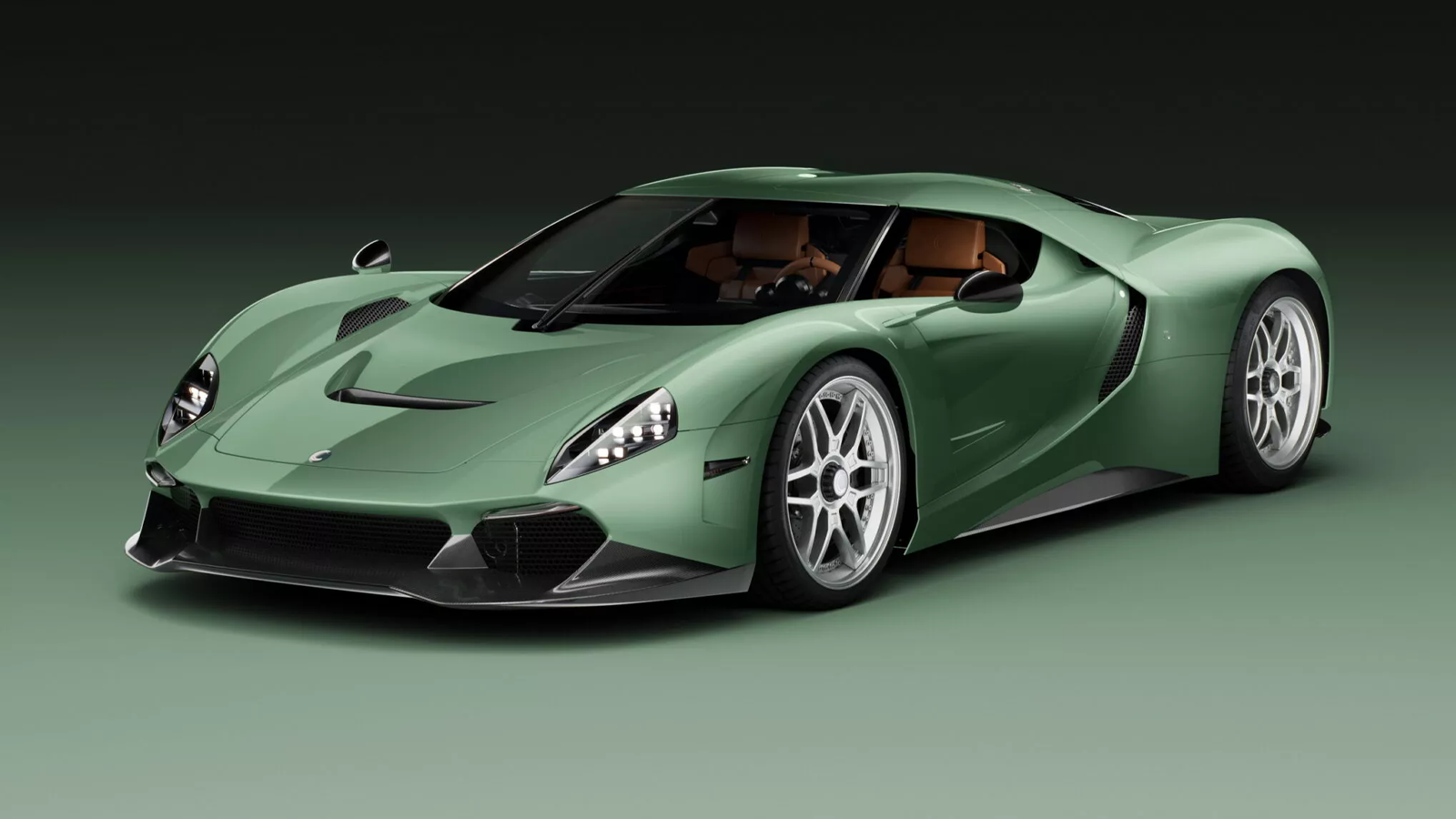
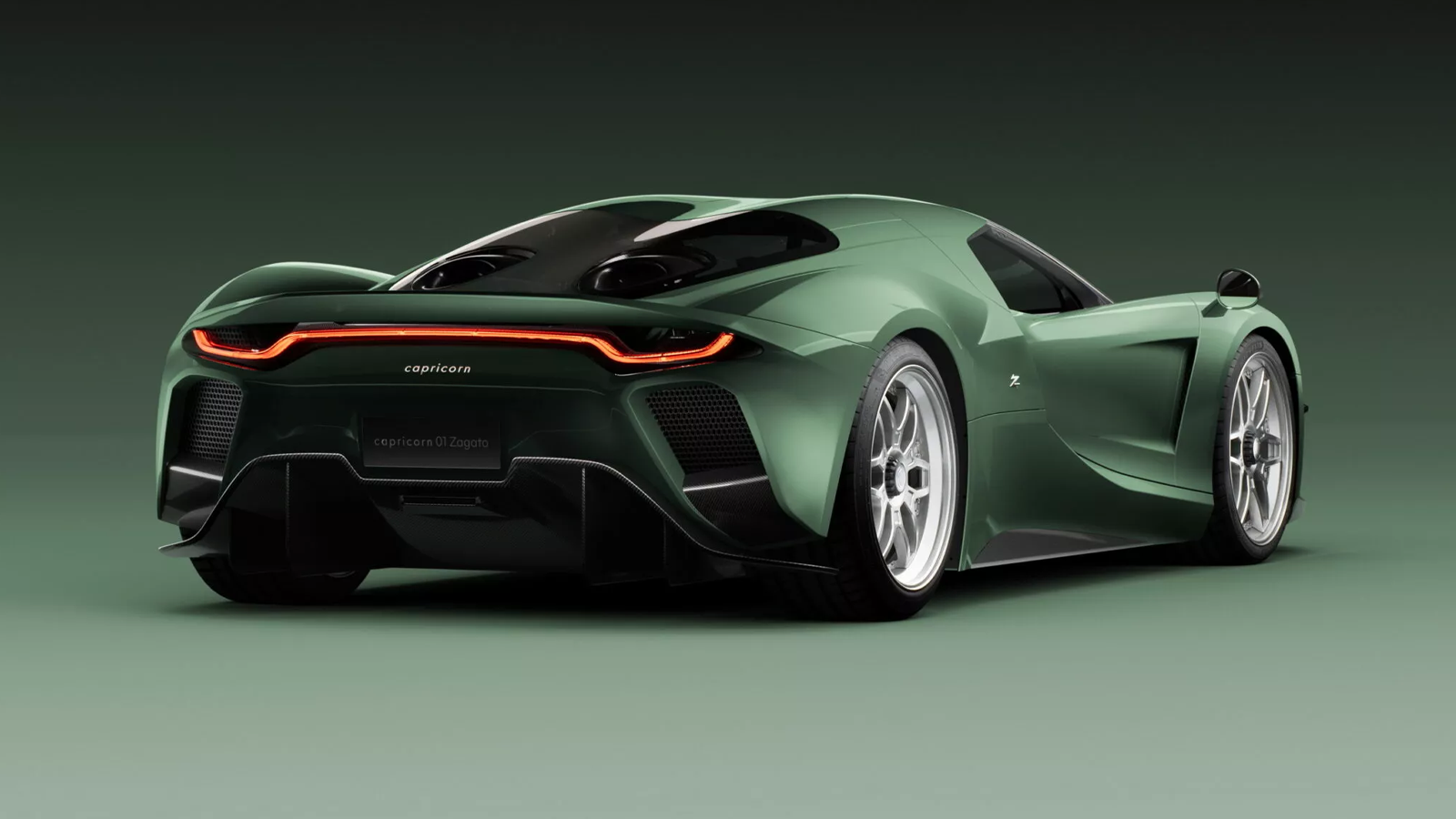
The Capricorn 01 Zagato pairs a Le Mans-grade chassis and manual transmission with a supercharged V8 to create a modern analog masterpiece.
A New Old-School Hypercar
In an era dominated by hybrid systems and digital dashboards, the Capricorn 01 Zagato stands apart as a defiant return to the essence of driving. Developed by Germany’s Capricorn Group and styled by Italy’s Zagato, this limited-production machine emphasizes mechanical purity, manual gears, analog dials, and a naturally involving feel. Only 19 units will be built, each priced from roughly $3.15 million (€2.95 million), and all are expected to be assembled by hand in Germany.
German Engineering Meets Italian Design
The partnership between Capricorn CEO Robertino Wild and Zagato president Andrea Michele Zagato gave rise to what they describe as the fusion of “German engineering discipline with Italian design flair.” The 01 Zagato’s exterior carries several of Zagato’s hallmarks, the double-bubble roof, almond-shaped headlights, and tightly sculpted proportions, but blends them with aerodynamic pragmatism. Inspiration seems to draw from several sources: Ford GT-like side contours, a single windshield wiper reminiscent of Koenigsegg, and slender LED taillamps that echo modern minimalist hypercars.
Precise Aero
Rather than relying on active aero, the car’s downforce is generated purely through careful body shaping, ensuring predictability and stability at speed. The result is a hypercar intended to feel natural and manageable, even for drivers without racing experience.
Race-Derived Chassis and Construction
Underneath the bodywork lies a chassis architecture derived directly from LMP1 endurance racing. Capricorn applied its decades of motorsport experience, including engineering contributions to Porsche’s 919 Hybrid, Mercedes-AMG’s Formula 1 program, and Volkswagen’s WRC efforts, to create a road car that meets race-car levels of stiffness and response.
Carbon-Clad
The monocoque, subframes, crash structures, and body panels are all made of carbon fiber, keeping dry weight below 2,646 pounds (1,200 kg). The suspension uses double wishbones with pushrod Bilstein dampers, featuring three selectable modes: Comfort, Sport, and Track. Steering assistance comes from a small electric motor that disconnects entirely at speed, delivering an unfiltered mechanical feel.
An Analog Cabin
The cabin forgoes modern infotainment excess in favor of timeless simplicity. A central analog tachometer dominates the gauge cluster behind a traditional round steering wheel. Only a small retractable display for the rearview camera hints at modernity. Switchgear is machined from titanium and aluminum, while the interior features Alcantara, Connolly leather, and exposed carbon fiber.
Practicality Included
Despite its focused intent, the car offers practical concessions: adjustable pedals and steering, customizable seat padding, and even a 110-liter frunk. Capricorn designed the cockpit to accommodate a broad range of drivers while maintaining the sense of handcrafted intimacy found in classic sports cars.
The Supercharged Heart
Power comes from a mid-mounted, supercharged 5.2-liter V8 based on a Ford architecture but reengineered by Capricorn with bespoke internals. The unit produces over 888 horsepower (900 PS) and 1,000 Nm (738 lb-ft) of torque while revving to 9,000 rpm, a combination rarely seen in an era of downsized, turbocharged engines.
Drive is sent exclusively to the rear wheels via a five-speed dog-leg manual transmission, with first gear positioned down and to the left for quicker second-to-third shifts. Capricorn claims a 0-62 mph time under three seconds and a top speed of around 224 mph (360 km/h). The car rides on 21-inch alloy or optional carbon-fiber wheels, hiding Brembo carbon-ceramic brakes.
A Philosophy Rooted in Feel
Wild describes the project as “meant to be driven, felt, and remembered,” underscoring Capricorn’s goal of delivering mechanical engagement rather than digital complexity. The 01 Zagato rejects electronic gimmicks in favor of tactile connection; its controls, suspension, and steering are all tuned to provide direct feedback. The company likens its analog resurgence to the revival of mechanical watches following the Quartz Crisis, catering to enthusiasts who crave authenticity over automation.
The Beginning of a New Lineage
Capricorn plans to expand its Nürburgring facilities by 2026 to support future production runs of 100–200 vehicles per year, signaling that the 01 Zagato is more than a one-off vanity project. According to Wild, “This project is not a one-off; it is the beginning of a new lineage of Capricorn-branded high-end cars.” The company also intends to offer limited-series builds for other automakers or private clients seeking fully bespoke hypercars.
For now, the Capricorn 01 Zagato remains a celebration of analog purity, a hypercar that values sensation over simulation, where the act of shifting gears still matters more than the stopwatch.