
Saleen S7 Once Owned By Paul Walker Is Up For Grabs
The Saleen S7 was built to challenge Europe’s elite, and this remarkably low-mileage example remains one of the cleanest surviving reminders of America’s early-2000s supercar ambition.






American Outlier
When the Saleen S7 debuted in the early 2000s, it immediately stood apart from nearly everything else coming out of the American performance car scene. While Saleen had already built a reputation modifying Ford Mustangs, the S7 represented something entirely different: a purpose-built mid-engine supercar developed to compete with the world’s best exotic machines.
Built from 2000 through 2009, the S7 became one of the few American supercars of its era to gain genuine international credibility. It wasn’t simply fast in a straight line, it also established itself in endurance racing and FIA GT competition, helping give the car legitimacy beyond its dramatic styling and massive performance figures.
Photos: RP Exotics
Walker Connection
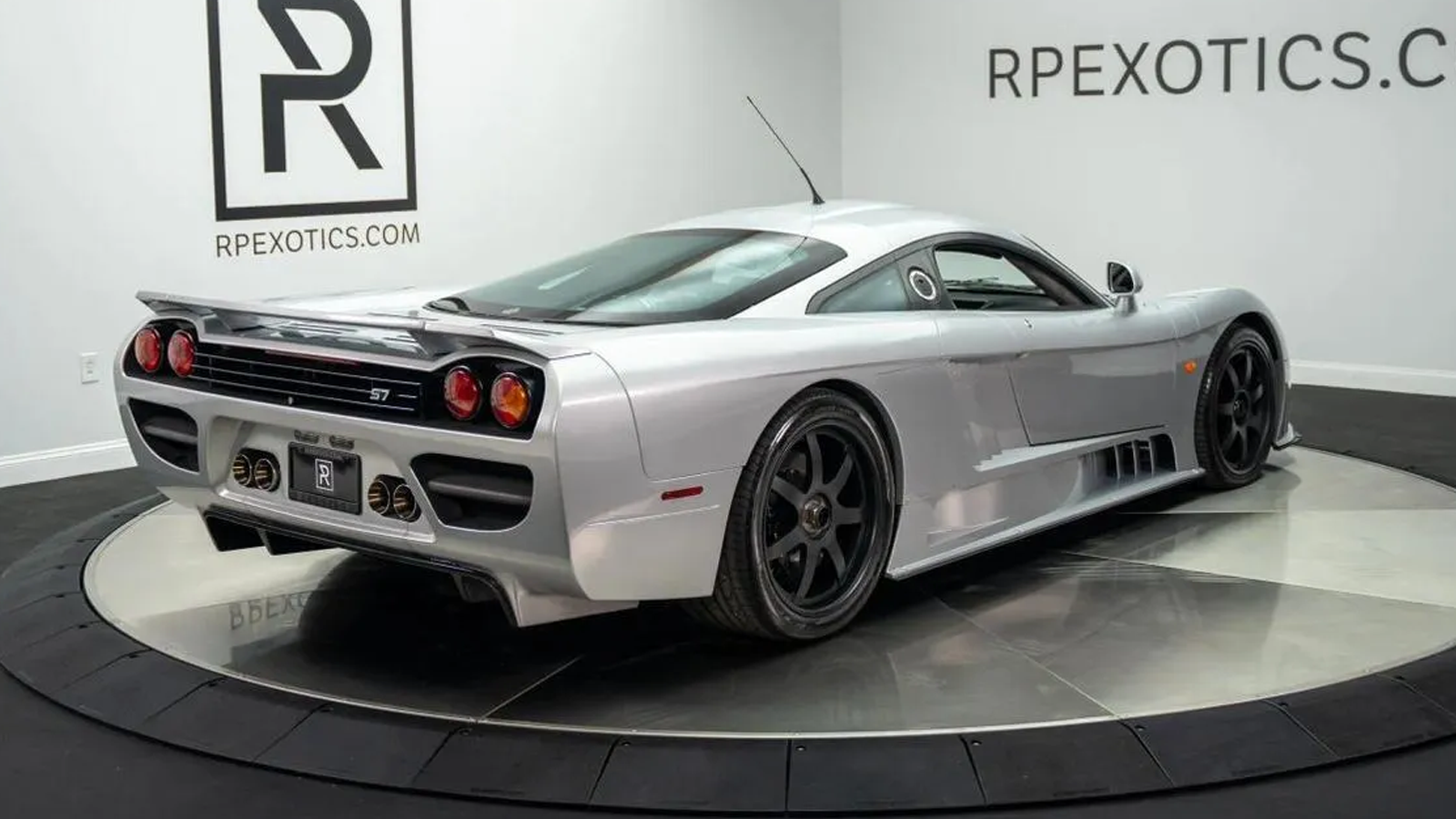
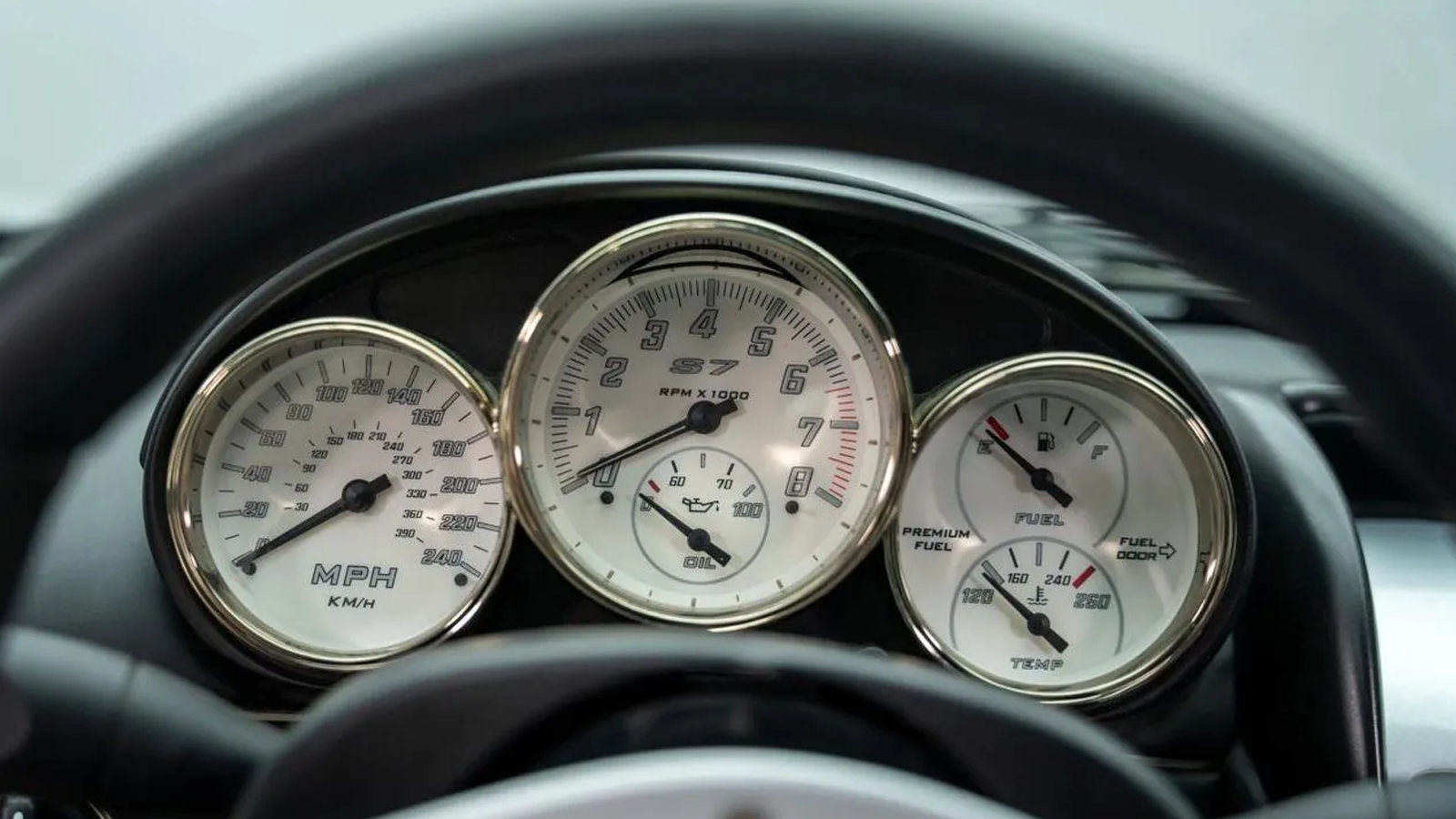
One of those early S7s has resurfaced with an especially notable history. The silver 2003 example was once owned by Paul Walker, whose enthusiasm for performance cars became almost as famous as his film career. Exactly how long Walker kept the car remains unclear, but one detail stands out immediately: the odometer shows just 1,880 miles. For a 23-year-old supercar, especially one associated with a well-known enthusiast driver, that figure is unusually low.
Tucked Away
The mileage suggests the car spent much of its life tucked away rather than regularly exercised. While ultra-low-mileage collector cars often command attention, long periods of inactivity can also create concerns. Engines, seals, fluids, and rubber components can deteriorate when cars sit unused for years at a time, particularly if they are only driven occasionally for short distances.
Pure Performance
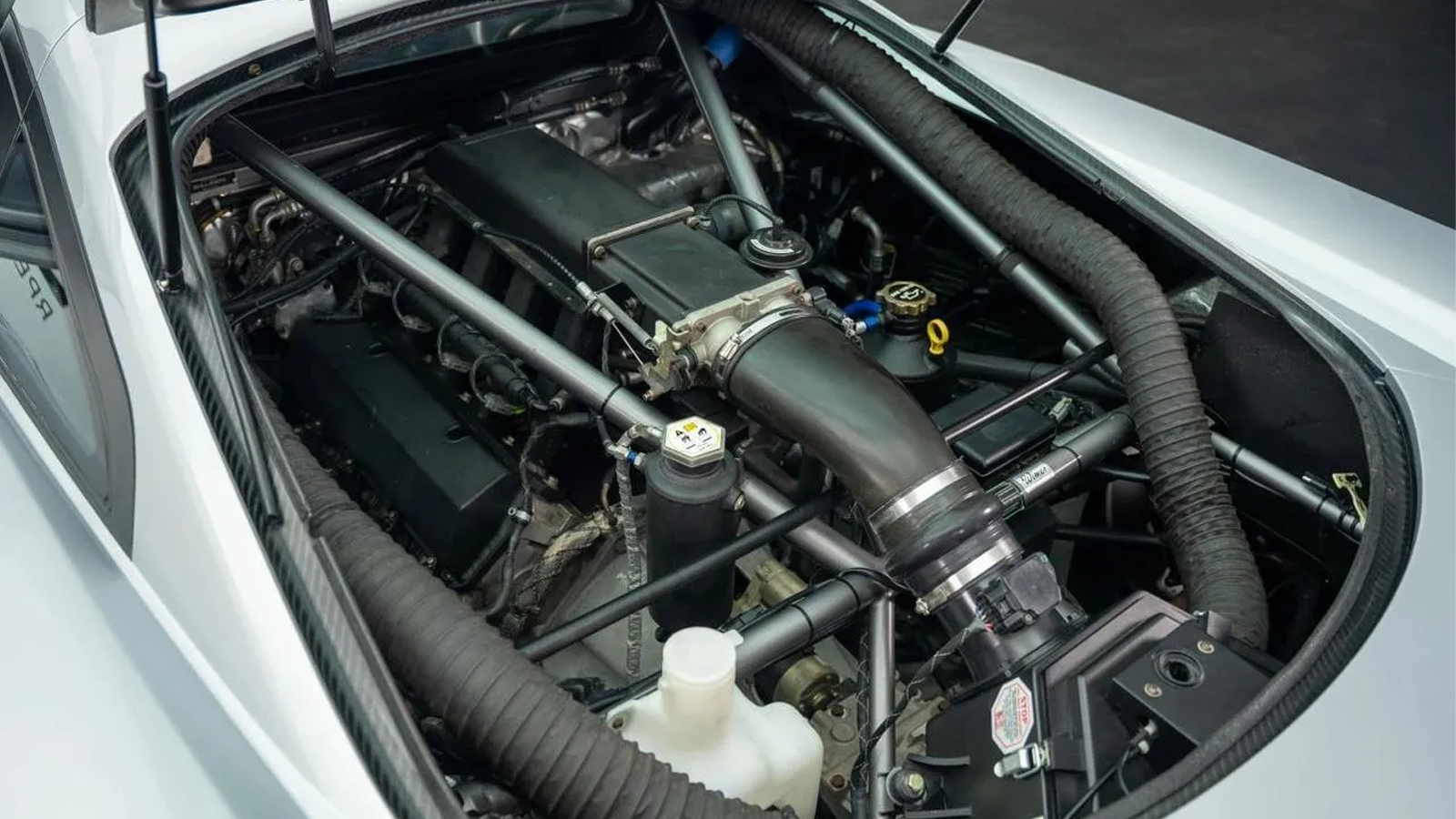
Regardless of mileage, the Saleen S7 was never designed to impress people with luxury or craftsmanship. Its appeal came almost entirely from its raw mechanical character. Mounted behind the driver is a naturally aspirated 7.0-liter Ford-derived V8 producing 550 horsepower. Power goes exclusively to the rear wheels through a six-speed manual transmission, giving the S7 a level of involvement that feels increasingly rare today.
220-MPH Claim
Saleen claimed the naturally aspirated version could reach 220 mph, placing it among the fastest production cars of its time. More importantly, the car developed a reputation for feeling uncompromising and intense, with driving dynamics closer to a race car than a traditional grand tourer. Unlike many modern supercars loaded with electronic intervention systems, the S7 came from an era when high-performance machines still felt largely mechanical and unfiltered. The steering, chassis, and power delivery demanded attention from the driver, which became part of the car’s identity.
Time Capsule Cabin
Visually, the car appears remarkably well preserved. The silver exterior reportedly shows little visible wear, and the interior also remains unusually clean considering the car’s age. That said, the cabin itself reflects early-2000s supercar design priorities. Compared to modern exotics, the interior looks sparse and somewhat dated, with a focus on functionality rather than luxury materials or advanced technology. But for many enthusiasts, that simplicity is part of the S7’s appeal. The car’s layout and controls reinforce the feeling that the S7 was engineered primarily around performance targets rather than comfort or refinement.
Racing Roots
Part of what makes the S7 significant today is that it was more than a limited-production curiosity. Saleen developed racing versions of the car that competed internationally, including in FIA GT events, helping the company establish credibility on a global stage. That motorsport connection gave the road-going S7 an authenticity many boutique supercars never achieved. The design, proportions, and mechanical layout all reflected lessons taken directly from racing development.
In hindsight, the S7 represented an unusually ambitious moment for an American manufacturer better known for tuning muscle cars. Rather than simply modifying an existing platform, Saleen attempted to build a world-class exotic from the ground up, and for a brief period, it succeeded in drawing comparisons with established European rivals.
Collector Status
Today, surviving naturally aspirated S7s remain exceptionally rare, and examples with celebrity ownership histories attract even more attention. The connection to Paul Walker adds another layer of significance, particularly given how closely his name remains tied to automotive culture.
Still, beyond the Hollywood connection, the Saleen S7 endures because it captured something unusual: an American-built supercar that genuinely felt capable of challenging Ferrari and McLaren on both the road and the racetrack. And despite being engineered for triple-digit speeds and international competition, this particular example spent most of its life sitting almost perfectly still.