
The Legendary Testarossa Nameplate Returns With Brand-New Ferrari Model
The new Testarossa blends modern hybrid engineering with subtle nods to its 1980s namesake, offering over 1,000 horsepower and cutting-edge aerodynamics.





A Legendary Name Returns
The Testarossa name is one of the most recognizable in Ferrari history. First introduced in 1984 as the successor to the Berlinetta Boxer, the original Testarossa was distinguished by its wide stance, side strakes, and flat-12 engine. It became a cultural symbol of the 1980s, immortalized in media such as Miami Vice. Production ran through the early 1990s, culminating in the 512M. The new 849 Testarossa revives this storied moniker after nearly three decades, this time applied to Ferrari’s most advanced hybrid supercar to date.
Successor to the SF90
The 849 Testarossa directly replaces the SF90 Stradale, Ferrari’s first series-production plug-in hybrid hypercar. The SF90 already represented a turning point for Ferrari, combining V-8 power with electric assistance, but the 849 advances this concept further. It is not simply a refresh of the SF90, it represents Ferrari’s latest benchmark in technology, performance, and hybrid integration.
Hybrid V-8 Powertrain
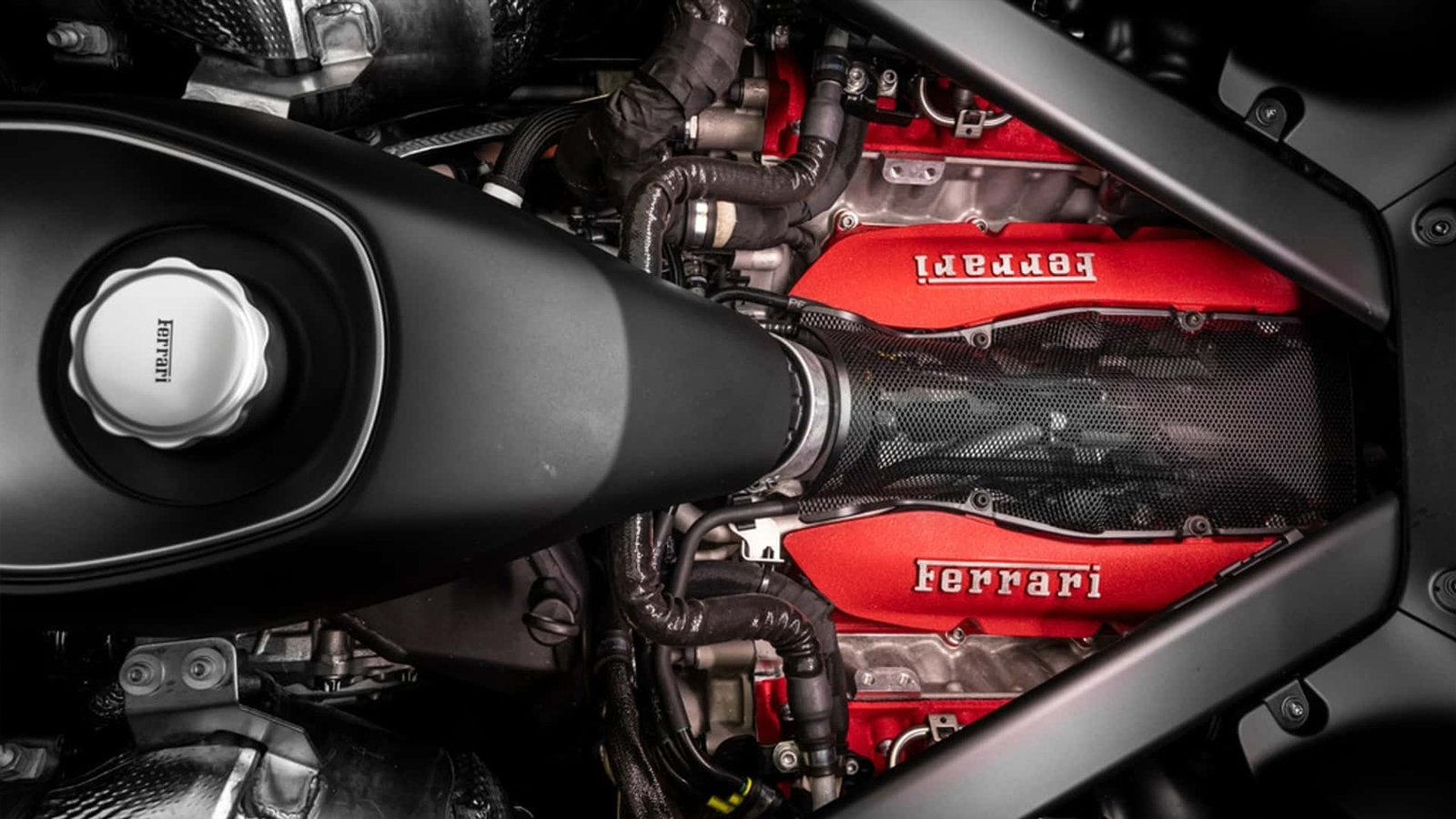
At the heart of the new car lies an evolution of the F154 4.0-liter twin-turbocharged V-8. For the 849, Ferrari re-engineered the internals and installed larger turbochargers to increase durability and output. On its own, the engine generates 818–819 hp and 621 lb-ft of torque, making it one of the most powerful V-8s ever built by Ferrari. Supplementing it are three electric motors: two mounted on the front axle for torque vectoring and all-wheel-drive capability, and one integrated into the eight-speed dual-clutch transmission at the rear. Together, these provide 216 hp, pushing the combined system output to 1,036 hp.
Blistering Performance
The performance figures put the 849 in the upper echelon of modern hypercars. Ferrari quotes 0–62 mph in 2.3 seconds, with 0–124 mph arriving in 6.3 seconds. The top speed is listed at 205 mph. These numbers aren’t just theoretical, the 849 has already demonstrated its speed on Ferrari’s Fiorano circuit, where it lapped in 1:17.5, a second and a half faster than the SF90 Stradale. That margin is substantial, considering both cars share similar architectures.
Electric Range
The plug-in hybrid system is equipped with a 6.5-kWh lithium-ion battery. On a full charge, the 849 can travel up to 16–19 miles without using the combustion engine, at speeds of up to 81 mph. This makes it possible to drive the Testarossa silently in urban areas while retaining hypercar performance on demand. The electric-only function also reduces emissions in markets with stricter regulations, an increasingly important feature for Ferrari’s global presence.
Aerodynamic Innovation
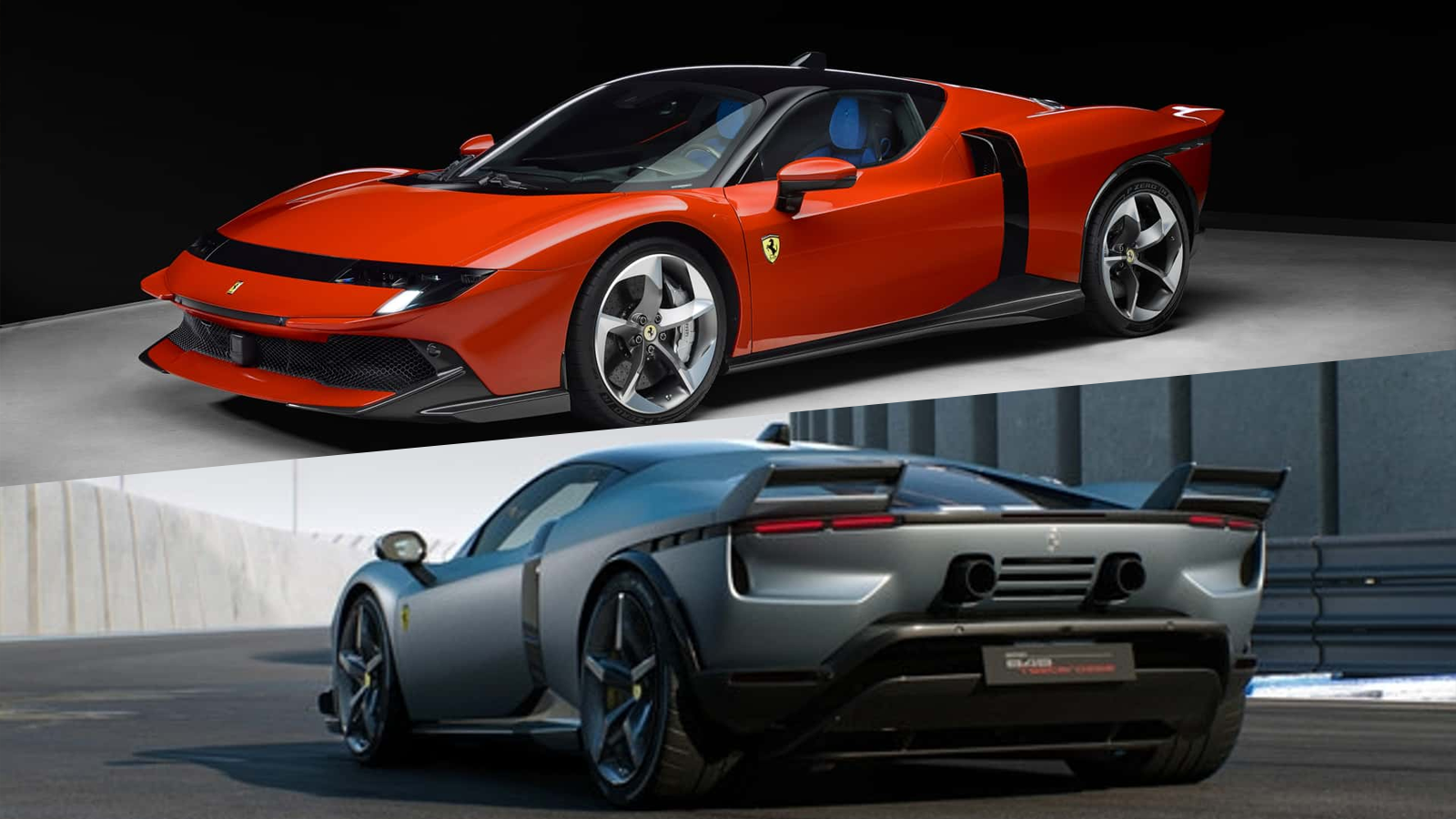
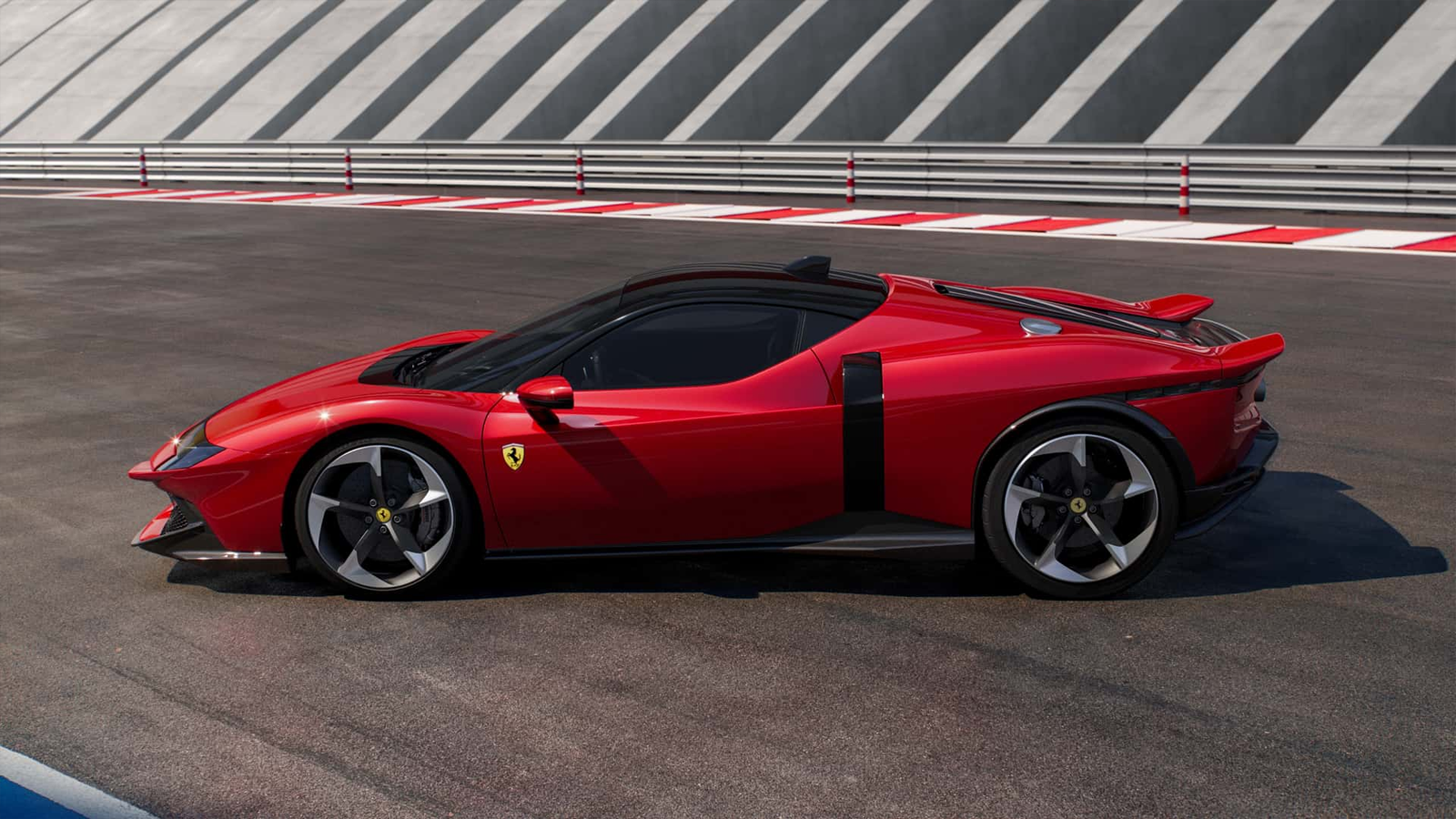
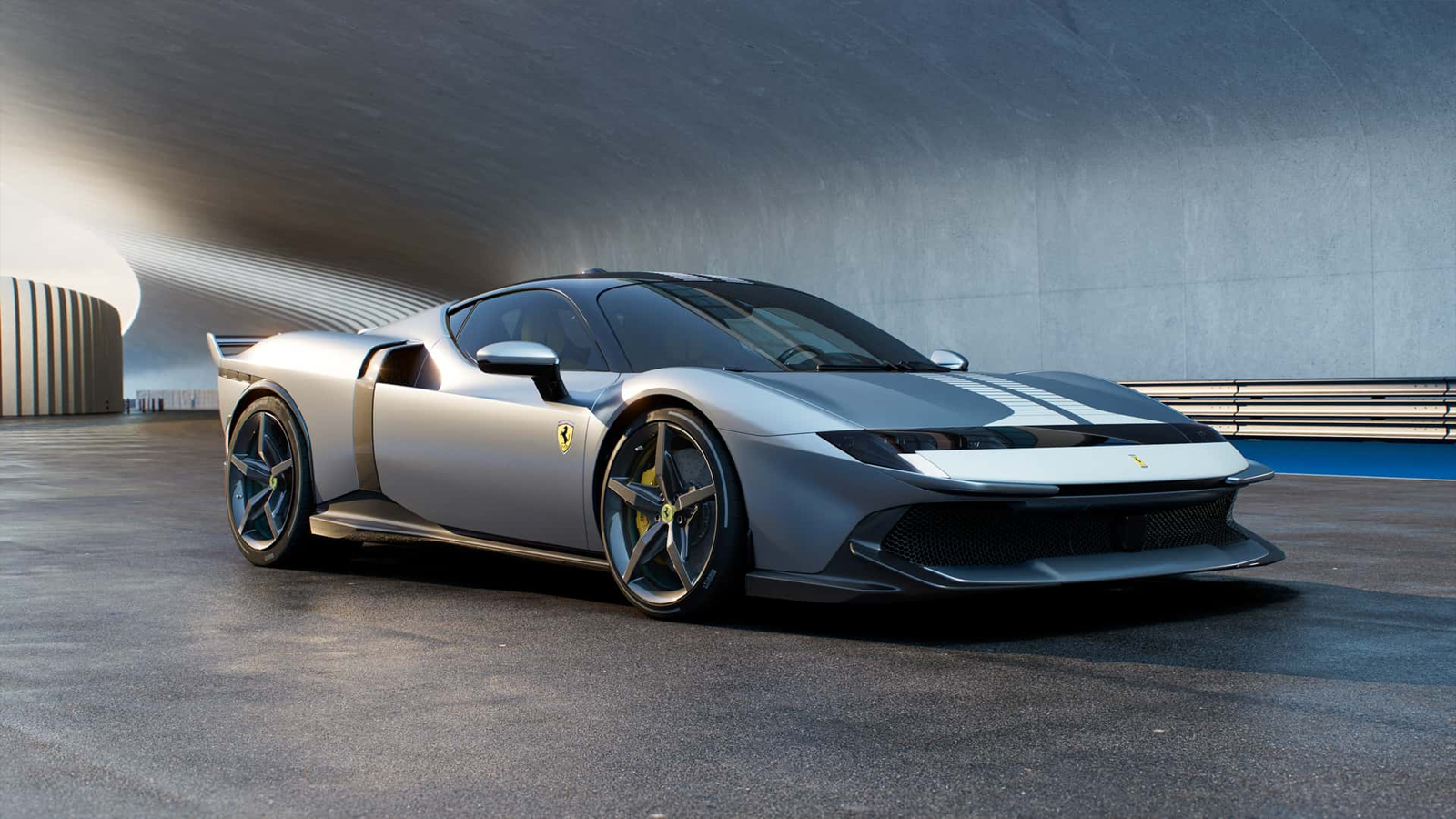
The 849’s aerodynamic package is one of its most advanced to date. The centerpiece is an active rear spoiler inspired by past Ferrari race cars, which deploys or retracts in less than a second. Two smaller spoilers, dubbed “twin tails,” are integrated into the rear bumper, collectively generating 915 pounds of downforce at 155 mph, 55 pounds more than the SF90. The system continuously adjusts depending on driving conditions, maximizing grip during cornering and stability under braking. Ferrari also drew inspiration from the 512 S race car’s ducktail spoiler, visible in the segmented design of the rear wing.
Assetto Fiorano Package
For drivers prioritizing circuit performance, Ferrari offers the Assetto Fiorano option. This track-focused package reduces weight by around 66 pounds through extensive use of carbon fiber and titanium. The package also includes bespoke suspension tuning, stickier Michelin Cup 2 R tires, and further aerodynamic enhancements. With this specification, the car achieves a dry weight of about 3,462 pounds, remarkably light given the hybrid hardware it carries.
Design References to the Past
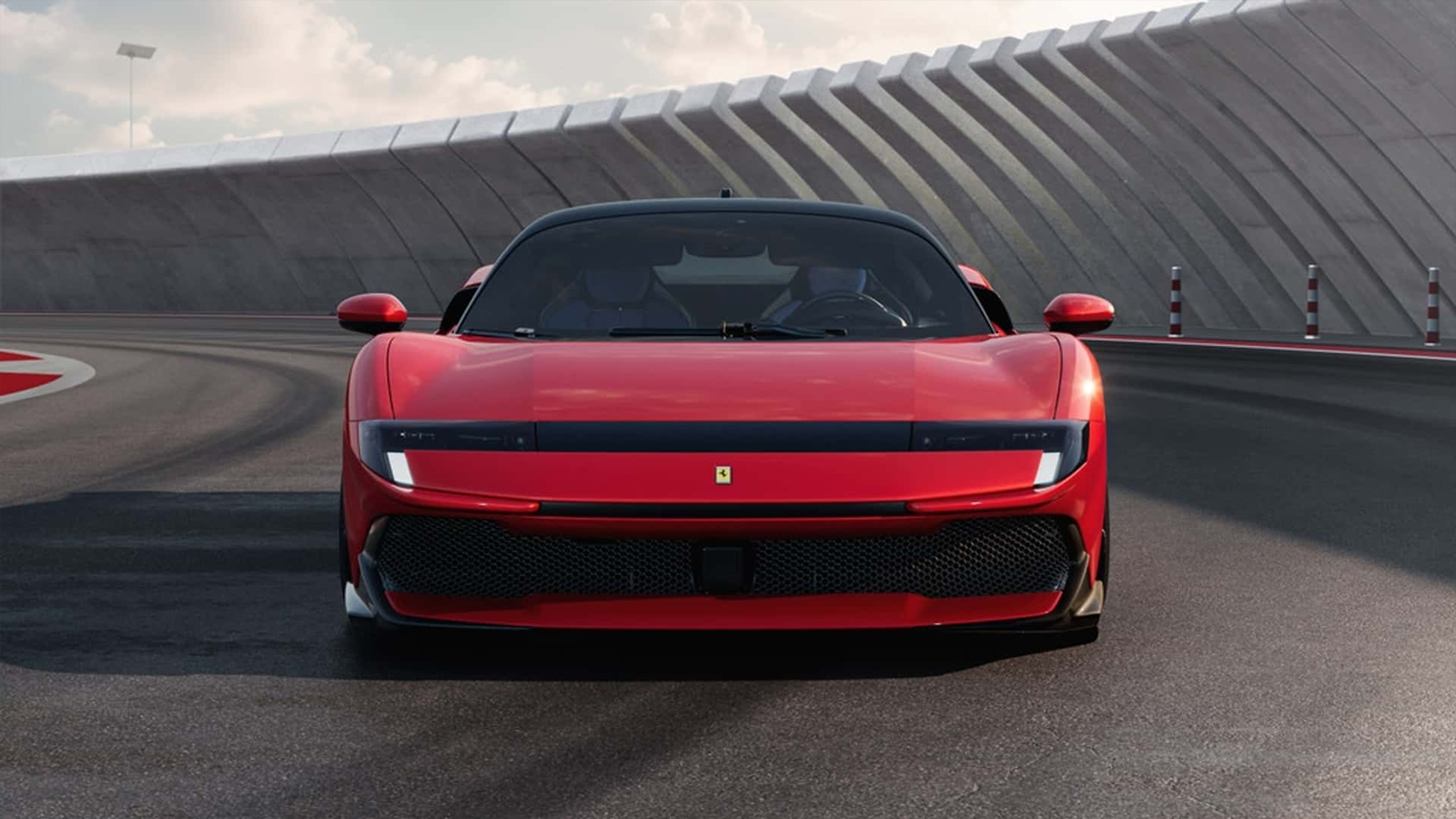
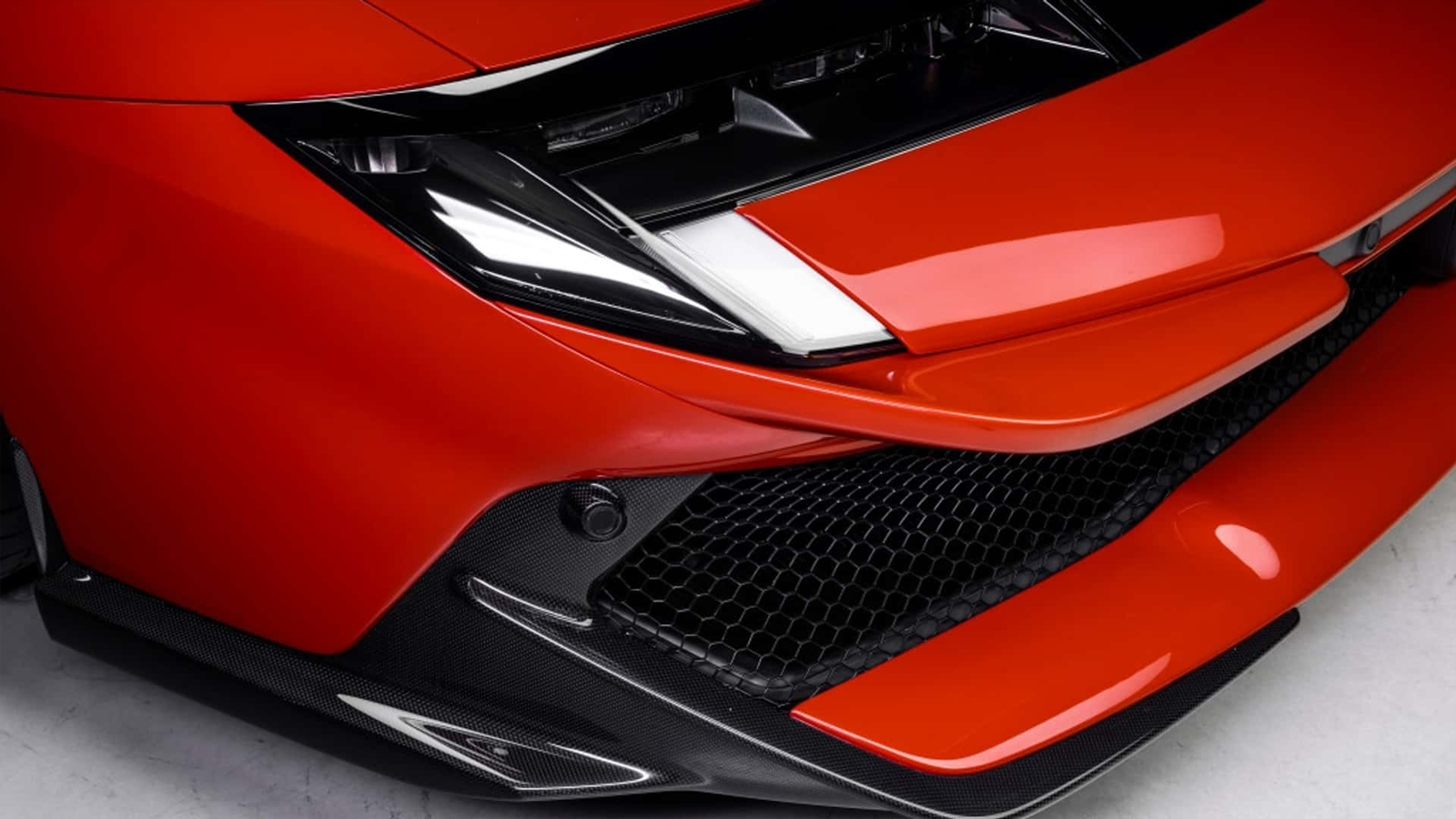
While the 849 is a forward-looking design, Ferrari included subtle nods to its heritage. The front bumper’s shape recalls the sharp nose of the 1980s Testarossa, while a gloss black strip linking the headlights echoes classic Ferrari design language. Its proportions, particularly the broad rear haunches and cockpit-like canopy, invite comparisons to the Daytona SP3. However, unlike the original Testarossa, the new car avoids heavy retro cues like pop-up headlights, instead opting for modern aerodynamics and cleaner surfaces.
Coupe and Spider Options
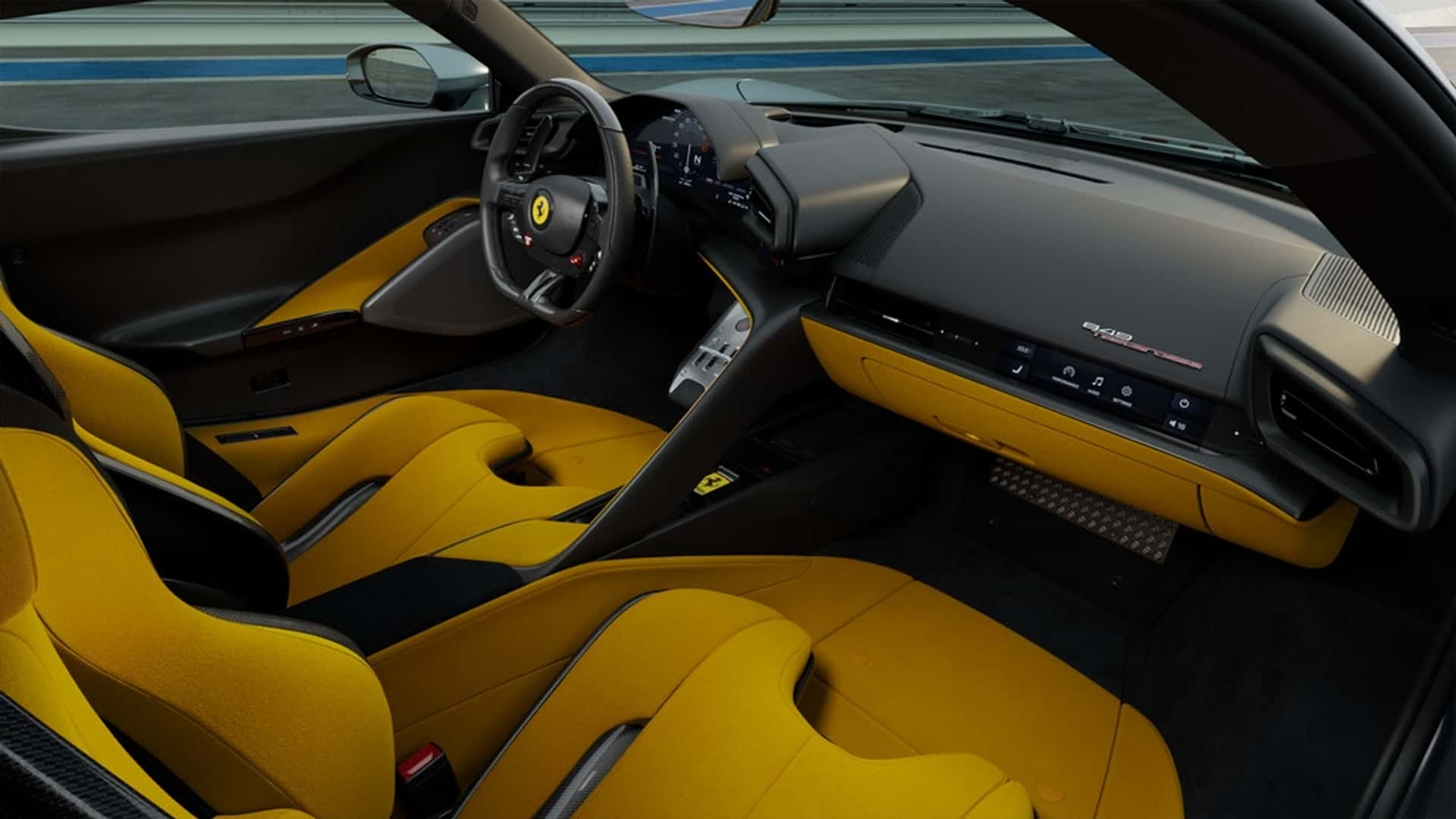
Unlike past Ferrari launches, where open-top variants arrived later, the 849 was revealed simultaneously in coupe and Spider form. The Spider uses a retractable hardtop that folds in 14 seconds at speeds up to 28 mph. While this adds roughly 200 pounds, the open-air experience is expected to be a major draw. Interestingly, Ferrari chose to showcase the Spider in an eye-catching yellow finish at launch, emphasizing that the 849 is not limited to traditional Rosso Corsa red.
Driver-Focused Interior
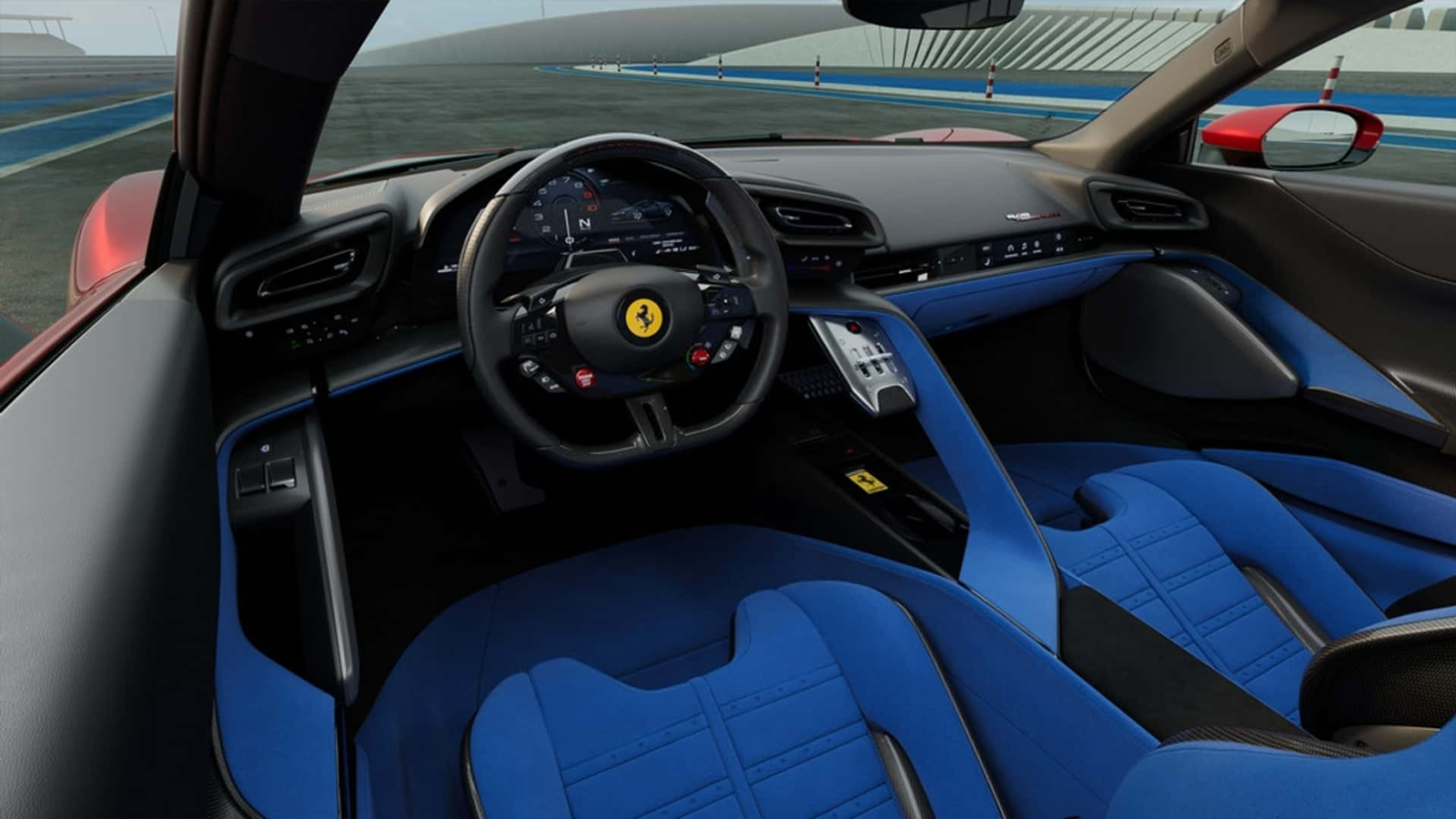
Inside, Ferrari has rethought its approach. Recent models experimented with touch-sensitive steering wheel controls, but customer feedback led to a return to physical buttons in the 849. The cockpit is sculpted to highlight the driver’s position, creating a racing-inspired feel. The digital instrument cluster integrates all infotainment functions, while the passenger receives a separate display with independent media controls. Apple CarPlay, Android Auto, wireless charging, and MyFerrari Connect are all standard, but there’s no traditional center touchscreen, an intentional design choice to keep attention on the driving experience.
Pricing and Availability
Ferrari has not released official U.S. pricing, but given the SF90’s base price of around $550,000, the 849 will likely exceed that figure. European prices have been confirmed at €460,000 for the coupe and €500,000 for the Spider, approximately $540,000–$586,000 depending on exchange rates. Production is scheduled to begin next year, and Ferrari has already opened order books for eager buyers.