
Achieving V-Max in a McLaren Speedtail
Frustrated with how slow your McLaren F1 is? The new Speedtail hits 250 mph and McLaren shows us how it is done.
The McLaren F1 from the mid- ‘90s remains one of the most wonderful, insane, and fastest cars ever made. If you own one of these beauties, there is no doubt that you are winning at life. The F1 was the pinnacle car for McLaren. Time marches on, and the folks at McLaren have released a new hypercar upon the world called the Speedtail. The Speedtail is now the fastest McLaren ever built, and they have now released the details around how they have done it.
McLaren Automotive has posted on their YouTube channel a video that shows the Speedtail hitting its claimed top speed of 250 mph or 403 kph. Sure, you may never have a runway at your disposal that would allow you to test this for yourself, much less access to a Speedtail. However, it is nice to see McLaren back up its claim. In some ways, this not only showcases the capabilities of the new car, but also shows just how amazing the F1 really was. With all the latest technology and 25 years’ worth of advancements, the new car is only 10 mph faster than the old one. Pretty impressive.
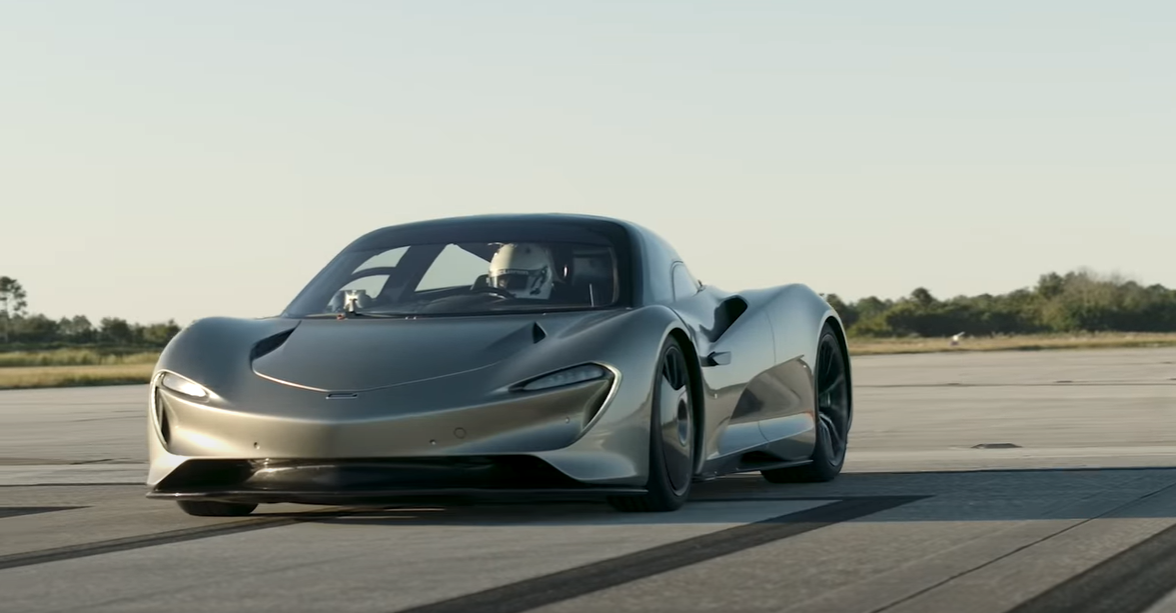
Speaking of the latest technology, just how does the Speedtail achieve its top speed? One aspect is its slippery shape. Jonathan Beaumont who is the Vehicle Line Manager, Ultimate Series (that must be a pretty cool job) explains, “It gets its name from its extended tail which is not only is aesthetic, it’s also there to reduce drag and improve speed.” Aerodynamics certainly help but hitting 250 mph is going to take some serious power as well. The McLaren certainly has the power covered.

The Speedtail is the most powerful hybrid powertrain that McLaren has ever built. The combined output is 1,055 horsepower. On the more traditional side is the combustion engine. In the Speedtail, it is a 4.0-liter twin-turbo V8, rated for 747 horsepower and 590 pound-feet of torque. The electric motor adds another 308 horsepower to the mix. Adding more power than a Porsche 718 Cayman on top of a 747 horsepower engine makes for some astonishing figures. Yes, it will hit 250 mph, but it will also accelerate to 186 mph in just 13 seconds.
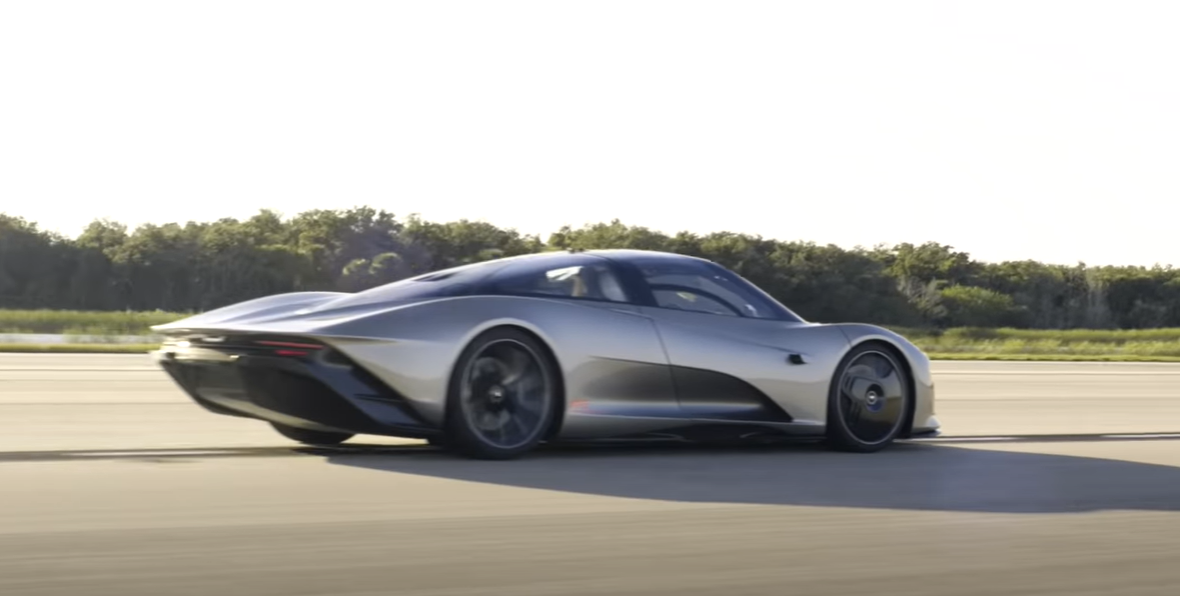
The electric motor used in the Speedtail is derived from the Formula E racing program. The battery used in this application is more energy-dense than what was seen in the P1. As with combustion engines, heat is the enemy here. McLaren addressed this by immersing the battery cells in a lightweight electrically insulative oil. This type of setup has not been seen before outside of a racing car.

This leading-edge technology should eventually trickle down to other vehicles. As Beaumont says, “The developmental learning on the Speedtail program will allow McLaren Automotive to push that forward onto future programs and use those technologies to continue to break technological barriers.” That is good news for those that could not land one of the 106 Speedtail rocket ships that McLaren has produced.
Join the 6SpeedOnline forums now!

You must be logged in to post a comment.