


19's or 20's on a 997TT Cab?

Registered User
Joined: May 2009
Posts: 70
From: San Jose
Rep Power: 20

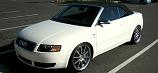
I have 20's on my S4 vert but I would probably go with 19's since you're probably going to "drive" your car.
You can make 19's look just as nice if not nicer than 20's -- you have to really dial in the offsets and ride height to make them "pop"!
You can make 19's look just as nice if not nicer than 20's -- you have to really dial in the offsets and ride height to make them "pop"!
Last edited by OSIKS4; May 15, 2009 at 01:59 PM.
Thread Starter
|
Registered User
Joined: Apr 2009
Posts: 925
From: Mountain View, CA
Rep Power: 78

thanks Stacy and Justin. Appreciate your input.
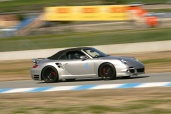
Stacy - your car looks great! what springs did you go with? I'm assuming your spring set up helped the ride a lot vs 20's w/stock suspension.
Stacy - your car looks great! what springs did you go with? I'm assuming your spring set up helped the ride a lot vs 20's w/stock suspension.

Registered User
Joined: Jan 2008
Posts: 2,370
From: Vancouver
Rep Power: 329
Thanks for the compliment as well...I am really happy with the 'Look' of my car however,it seems I like everyone elses better....LOL!!!
Stacy

Banned
Joined: Dec 2008
Posts: 336
From: Houston, TX
Rep Power: 46
Here's a good one. I check and most performance 3 piece wheels in 20" are under 30lbs. So in all reality you shouldn't see a performance lose but a small gain. The ride will be a little stiffer but nothing out of this world.
So what I am trying to say is buy what you like. What you hear about performance lose is only experience under extreme conditions. Basically on the track.
Hope this helps
Janoy
So what I am trying to say is buy what you like. What you hear about performance lose is only experience under extreme conditions. Basically on the track.
Hope this helps
Janoy
Registered User
Joined: Dec 2006
Posts: 3,116
From: Palos Verdes
Rep Power: 256
 that I am surprised I even have to post it. Every little ounce counts in unsprung weight saving because of the multiplication factor (see article).
 And check out wheel offerings from the following companies: HRE and Champion for the widest choices and most modern styles, PES (very good, but only one style) and AMT (seems good but the styling is not my favorite), and of course BBS (styling not my favorite either). Call Tire Rack, Wheel Enhancement, or Sharkwerks (all forum sponsors) for real advice and fire anyone that even mentions 20. LOL
BTW, I must stress that I don't mean to be critical of any owner picking 20. Your car, your choice, you like it: That's the bottom line. And if you pick it because it looks better to your eyes: no argument!
PS: Neil, did you mention spring? Might want to check out that Bilstein link in my signature.

Last edited by cannga; May 16, 2009 at 12:33 AM.
Registered User

Joined: May 2008
Posts: 1,768
From: Cyprus
Rep Power: 111
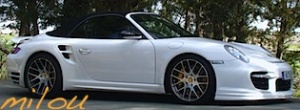
I also felt the car rides better and softer with the 20'', i believe its the 325 at the rear tat do the job, bigger surface on the road.
Now about what is better 19" or 20" for a stock car 19'' are the best but when a car is modded its better to have the 20''.
Check out gemballa, Techart,Speedart they all use 20'' on their beasts.
Handling and track performance can be improved over the 19'' with 20'', suspension, and correct alignment.
If you bold on a stock car a set of 20'' its not a good idea, but as far as you car is modded, especially those 700hp beasts you loose traction from both suspension and wheels.
All this is my own personal opinion
Now about what is better 19" or 20" for a stock car 19'' are the best but when a car is modded its better to have the 20''.
Check out gemballa, Techart,Speedart they all use 20'' on their beasts.
Handling and track performance can be improved over the 19'' with 20'', suspension, and correct alignment.
If you bold on a stock car a set of 20'' its not a good idea, but as far as you car is modded, especially those 700hp beasts you loose traction from both suspension and wheels.
All this is my own personal opinion
Registered User
Joined: Jul 2003
Posts: 879
From: California
Rep Power: 84
Well I just got my 20s today and now I'm wondering if half the people who are against them have actually ever had them? I was expecting a harsh ride (I have a back injury so I'm extra sensitive)...and frankly the car rides better in my opinion.
Now I don't track the car so perhaps in that environment it makes a difference however for street driving I think they are great and look fantastic.
Now I don't track the car so perhaps in that environment it makes a difference however for street driving I think they are great and look fantastic.
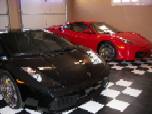
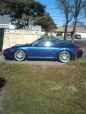
Which wheel/tire combo did you get? Specs & pics please
Registered User
Joined: Mar 2009
Posts: 766
From: USA
Rep Power: 86
Even if it's a theoretical negative to the handling/performance of the car, I think I would have a hard time going through all the trouble and money to do it. I guess you have to determine what your focus is...speed, performance, looks, track, road, etc. and go from there.
J
J

Registered User

Joined: Mar 2004
Posts: 382
From: Rowland Heights, CA
Rep Power: 0

Since you've got a Cab, go with what looks best to you. The Turbo's suspension is so compliant, the 20's won't hurt the ride much unless your put the shocks in Sport mode and if you're asking this question, you're probably not a serious track person so the much less selection of track rubber in 20" size won't matter to you.
Banned
Joined: Dec 2008
Posts: 336
From: Houston, TX
Rep Power: 46
So I asked an engineer friend to look at this equation and this is what he came up with...
Ok, here's the basic idea of this calculation.
Your car produces a set amount of power. For arguments sake, lets say that the average hp from 0 to 60mph is 200hp Yes your porsche produces 450hp, BUT at lower rpms the car produces way less,than at higher rpms, so to simplify things I'll just work with the average.
Let's say that your car + driver + wheels weighs 1.5 tons (Roughly 3300 Lbs). and your wheels weight 30 lbs each and measure 19".
When your car travels at 60 mph, it has kinetic energy that's divided into two things, the weight of the car and all its parts PLUS the rotational energy of the wheels.
So, to take your car from 0 to 60 mph, You have to take you available horsepower, and divide it into two tasks. The first one is rotating the wheels, the second is making the car go forward.
Your available power doesn't change, but if you lighten the wheels, it means that you can allocate more of your available HP to move the car forward.
The question is, how much of a difference does this make... Let's do the math.
First of all, kinetic energy of the moving vehicle:
[ mass * [ speed squared ] ] divided by 2. = 540 Kj (that's 540.000 joules)
Second kinetic rotational energy of the wheels.
[ mass * [ radius squared ] * [angular velocity squared]] divided by two. Multiplied by 4 (wheels) = 18 Kj (roughly)
This equation changes quickly if you alter the speed or radius of the rotating mass.
So the car has a total kinetic energy of 558 Kj. (540 moving mass + 18 rotating mass)
Horse power is energy expended in time.
So basically, 1 HP produces 0.746 Kj each second.
Therefore it takes 3.741 seconds for 200 hp to produce sufficient energy (558Kj) to bring the car to 60 Mph (Sounds about right for a porsche).
Ok, Now we change the wheels and put on the lighter ones. Same diameter, but these weight 19 lbs instead of 30
The moving energy of the car decreases slightly because of the lightened wheels, and the rotational mass decreases proportionately.
Using the same equations above we now have
531Kj moving mass + 11.5 Rotating mass = 542.5 Kj.
Using our 200 Hp it now takes 3.634 seconds to do our 0 - 60 mph.
With the original set of wheels, the car would need 205 Hp to achieve that same time.
So that amounts to 2.5% improvement, which *feels like* 5 hp on average...
A couple of interesting things from the above equations, you get about the same gains by reducing the size of the wheel from 19" to 18" and by the way, the more horsepower the car makes, the less of a difference wheels will make
Hope that helps...
Ok, here's the basic idea of this calculation.
Your car produces a set amount of power. For arguments sake, lets say that the average hp from 0 to 60mph is 200hp Yes your porsche produces 450hp, BUT at lower rpms the car produces way less,than at higher rpms, so to simplify things I'll just work with the average.
Let's say that your car + driver + wheels weighs 1.5 tons (Roughly 3300 Lbs). and your wheels weight 30 lbs each and measure 19".
When your car travels at 60 mph, it has kinetic energy that's divided into two things, the weight of the car and all its parts PLUS the rotational energy of the wheels.
So, to take your car from 0 to 60 mph, You have to take you available horsepower, and divide it into two tasks. The first one is rotating the wheels, the second is making the car go forward.
Your available power doesn't change, but if you lighten the wheels, it means that you can allocate more of your available HP to move the car forward.
The question is, how much of a difference does this make... Let's do the math.
First of all, kinetic energy of the moving vehicle:
[ mass * [ speed squared ] ] divided by 2. = 540 Kj (that's 540.000 joules)
Second kinetic rotational energy of the wheels.
[ mass * [ radius squared ] * [angular velocity squared]] divided by two. Multiplied by 4 (wheels) = 18 Kj (roughly)
This equation changes quickly if you alter the speed or radius of the rotating mass.
So the car has a total kinetic energy of 558 Kj. (540 moving mass + 18 rotating mass)
Horse power is energy expended in time.
So basically, 1 HP produces 0.746 Kj each second.
Therefore it takes 3.741 seconds for 200 hp to produce sufficient energy (558Kj) to bring the car to 60 Mph (Sounds about right for a porsche).
Ok, Now we change the wheels and put on the lighter ones. Same diameter, but these weight 19 lbs instead of 30
The moving energy of the car decreases slightly because of the lightened wheels, and the rotational mass decreases proportionately.
Using the same equations above we now have
531Kj moving mass + 11.5 Rotating mass = 542.5 Kj.
Using our 200 Hp it now takes 3.634 seconds to do our 0 - 60 mph.
With the original set of wheels, the car would need 205 Hp to achieve that same time.
So that amounts to 2.5% improvement, which *feels like* 5 hp on average...
A couple of interesting things from the above equations, you get about the same gains by reducing the size of the wheel from 19" to 18" and by the way, the more horsepower the car makes, the less of a difference wheels will make
Hope that helps...

Registered User
Joined: May 2009
Posts: 2
From: Miami
Rep Power: 0
Hi all,
I'm Lenny. I'm the one that wrote the math-rant above ^^^^.
Janoy told me to drop by so I could check out the original posts.
No question about it; there is a performance advantage to using smaller diameter wheels; but on the first article that's posted, the claimed number of 44 Bhp is just outlandish... It looks like that article was pulled of the wheel manufacturers site.
There are two main reasons why you never see 20" wheels at the track. the first is that racers look for every possible performance enhancement they can get; even if it's a 2.5% improvement. The second reason is because nobody -as far as I know-, makes 20" R-comp tires (Slicks...). And if they did, they'd be crazy expensive...
So to recap, there is a performance gain, but it's not nearly as dramatic, unless you start reducing the size of the wheel...
I'm Lenny. I'm the one that wrote the math-rant above ^^^^.
Janoy told me to drop by so I could check out the original posts.
No question about it; there is a performance advantage to using smaller diameter wheels; but on the first article that's posted, the claimed number of 44 Bhp is just outlandish... It looks like that article was pulled of the wheel manufacturers site.
There are two main reasons why you never see 20" wheels at the track. the first is that racers look for every possible performance enhancement they can get; even if it's a 2.5% improvement. The second reason is because nobody -as far as I know-, makes 20" R-comp tires (Slicks...). And if they did, they'd be crazy expensive...
So to recap, there is a performance gain, but it's not nearly as dramatic, unless you start reducing the size of the wheel...
Basic Sponsor

Joined: Jul 2003
Posts: 5,110
From: Dallas, TX
Rep Power: 0
I would say that considering the performance aspect only, 19" is a better choice. However, for most, performance gain is not the only reason for upgrading/changing out wheels. That being said, I would argue that a good 20" gives you a better look while not harming any performance aspect to the degree that the average driver would notice. Unless you are really going to push the car hard (which I don't believe most Porsche owners do) you won't notice the difference if going with a reasonably weighted 20" wheel (under 30 lbs each). A reasonably weighted 20" wheel with a good performance tire will likely drive the same as the OEM 19s, which aren't particularly light.
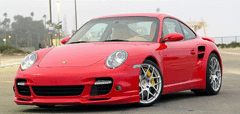
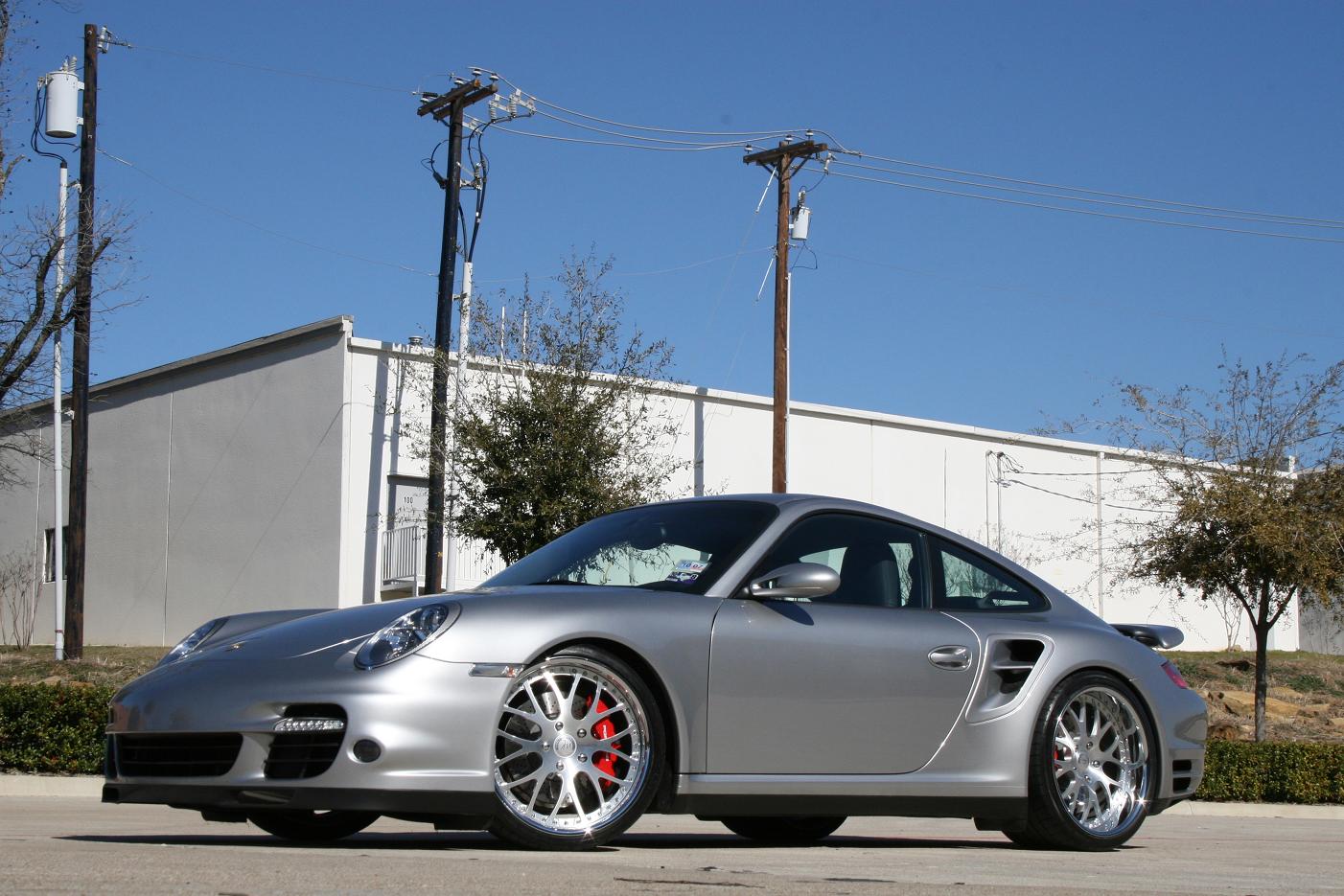
Here is my former 07 997TT coupe on the Modulare M6 forged wheel in a 20". This wheel weighs 26.7 lbs in the 20" configuration, and to be honest I didn't see any performance decrease from the stock 19s, although I never did push the car to its limits. I think the average driver just wants to have a nice looking car that is fun to drive, that can still take advantage of its performance aspects when needed.
Here is my former 07 997TT coupe on the Modulare M6 forged wheel in a 20". This wheel weighs 26.7 lbs in the 20" configuration, and to be honest I didn't see any performance decrease from the stock 19s, although I never did push the car to its limits. I think the average driver just wants to have a nice looking car that is fun to drive, that can still take advantage of its performance aspects when needed.