When you click on links to various merchants on this site and make a purchase, this can result in this site earning a commission. Affiliate programs and affiliations include, but are not limited to, the eBay Partner Network.
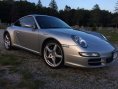
First porsche here, 997.1 C4. I love it!!! I have read about over rev's. My question is this:
I normally shift at 4000 RPM. Where do you shift normally?
Aggressively I'll shift slightly over 5000 RPM. How about you?
Lastly, what exactly qualifies for over rev's? Is it redline only?
Search is your friend. Over-revs occur when you exceed the redline - there are 5 ranges progressively increasing from benign to potentially disastrous. Much has been written/discussed over the years. Obviously you didn't get over-rev info on your car before you purchased - you may (or may not) already have some over-revs logged in your DME.
Range 1: 7300-7500 RPM
Range 2: 7500-7700 RPM
Range 3: 7700-7900 RPM
Range 4: 7900-8400 RPM
Range 5: 8400-9500 RPM
Range 6: 9500-11000 RPM
Ranges 1 - 3 are not considered problematic and they are very common. You can get these in normal driving by running your car up to the red line before shifting. Ranges 4 - 6 are typically caused by something like missing a shift. An example might be trying to downshift to 4th gear and accidentally hitting second gear. Over revs in Range 4 are right on the line - sometimes a problem and sometimes not. Over revs in Range 5 - 6 are much more likely to cause engine damage.
It doesn't hurt your engine to go well past the 5000 RPM you are currently limiting yourself to and as I'll try to explain, it may be somewhat detrimental not to. There is nothing wrong with going all of the way to redline, you just don't want to go over. With the rev limiter, the only way to get into truly harmful RPMs is to have a manual tranny and do a bad downshift; sending the RPMs well past redline into the higher ranges described by Dennis above. Kissing the redline on occasion won't hurt a thing, Porsche picked the redline and set the rev limiter with the knowledge this often happens in mind.
There are prior discussions in a thread earlier this year about the benefits of driving our engines hard, at least occasionally... but I can't quickly find it. Hartech has an excellent series of articles on the subject, the one that I am referring to is here: http://www.hartech.org/docs/buyers%2...20part%205.pdf.
These engines were made for racing levels of usage. In a nutshell, the argument goes something like this (and this argument is from Porsche engine pros): The pistons in our car fit loosely under normal usage compared to most cars in order to allow them to expand into the cylinder without binding when the car is driven hard for a prolonged period. Without occasionally driving the car hard, the pistons never fully expand into the cylinder and lots of carbon and oil crud build up on the sides. High RPMs also help throw off carbon build-up on the crown. Be sure to look at page 60-61 of the article I posted above for the picture and description of a piston from a conservatively driven 997.
The bottom line is: Do your engine a favor and occasionally drive it hard for a while every now and them. Keeping the RPMs up in the 4k to 7k range helps with this and is not a bad thing. I expect that others here can help clarify this even better.
Casual cruising I'll shift in the 4-5000 range. Spirited drives, on ramps, quick accelerations and such I push to 7000 trying to avoid hitting the rev limiter. But I've been know to hit the range 1 over revs many times. Drive it like you stole it.
Search is your friend. Over-revs occur when you exceed the redline - there are 5 ranges progressively increasing from benign to potentially disastrous. Much has been written/discussed over the years. Obviously you didn't get over-rev info on your car before you purchased - you may (or may not) already have some over-revs logged in your DME.
Originally Posted by StormRune
It doesn't hurt your engine to go well past the 5000 RPM you are currently limiting yourself to and as I'll try to explain, it may be somewhat detrimental not to. There is nothing wrong with going all of the way to redline, you just don't want to go over. With the rev limiter, the only way to get into truly harmful RPMs is to have a manual tranny and do a bad downshift; sending the RPMs well past redline into the higher ranges described by Dennis above. Kissing the redline on occasion won't hurt a thing, Porsche picked the redline and set the rev limiter with the knowledge this often happens in mind. There are prior discussions in a thread earlier this year about the benefits of driving our engines hard, at least occasionally... but I can't quickly find it. Hartech has an excellent series of articles on the subject, the one that I am referring to is here: http://www.hartech.org/docs/buyers%2...20part%205.pdf. These engines were made for racing levels of usage. In a nutshell, the argument goes something like this (and this argument is from Porsche engine pros): The pistons in our car fit loosely under normal usage compared to most cars in order to allow them to expand into the cylinder without binding when the car is driven hard for a prolonged period. Without occasionally driving the car hard, the pistons never fully expand into the cylinder and lots of carbon and oil crud build up on the sides. High RPMs also help throw off carbon build-up on the crown. Be sure to look at page 60-61 of the article I posted above for the picture and description of a piston from a conservatively driven 997. The bottom line is: Do your engine a favor and occasionally drive it hard for a while every now and them. Keeping the RPMs up in the 4k to 7k range helps with this and is not a bad thing. I expect that others here can help clarify this even better.
Thanks and you sold me! I truly notice the difference when she hot; she is tighter, smoother and wants to go! My DME report shows a bunch in range 1 and one in range 3 and 4. My PPI told me it was likely from a missed down shift but everything checks out mechanically.
Here are the over rev ranges for the 997.1: Range 1: 7300-7500 RPM Range 2: 7500-7700 RPM Range 3: 7700-7900 RPM Range 4: 7900-8400 RPM Range 5: 8400-9500 RPM Range 6: 9500-11000 RPM Ranges 1 - 3 are not considered problematic and they are very common. You can get these in normal driving by running your car up to the red line before shifting. Ranges 4 - 6 are typically caused by something like missing a shift. An example might be trying to downshift to 4th gear and accidentally hitting second gear. Over revs in Range 4 are right on the line - sometimes a problem and sometimes not. Over revs in Range 5 - 6 are much more likely to cause engine damage.
Thanks and you sold me! I truly notice the difference when she hot; she is tighter, smoother and wants to go! My DME report shows a bunch in range 1 and one in range 3 and 4. My PPI told me it was likely from a missed down shift but everything checks out mechanically.
Cool, glad we could help. Also note that it is pretty much impossible for the single count in range 3 and 4 to be valid data. The overrev counters count ignitions. At 7200 RPM the crankshaft rotates 120 times every second and since each of the 6 cylinders fires every other rotation, there are 360 ignitions per second. I would find it virtually impossible to overrev an engine for less than 3 thousandths of a second.
Slightly off topic but we recently did a dyno day. The HP/torque curves showed a range of between 5600-6400 for optimal HP/torque combo (after 5600 HP continues to climb but torque begins to wane; after 6400 torque drops off dramatically and HP begins to flatten out).
Slightly off topic but we recently did a dyno day. The HP/torque curves showed a range of between 5600-6400 for optimal HP/torque combo (after 5600 HP continues to climb but torque begins to wane; after 6400 torque drops off dramatically and HP begins to flatten out).
Right on topic, aside from over rev stuff, this is what I was aiming for.