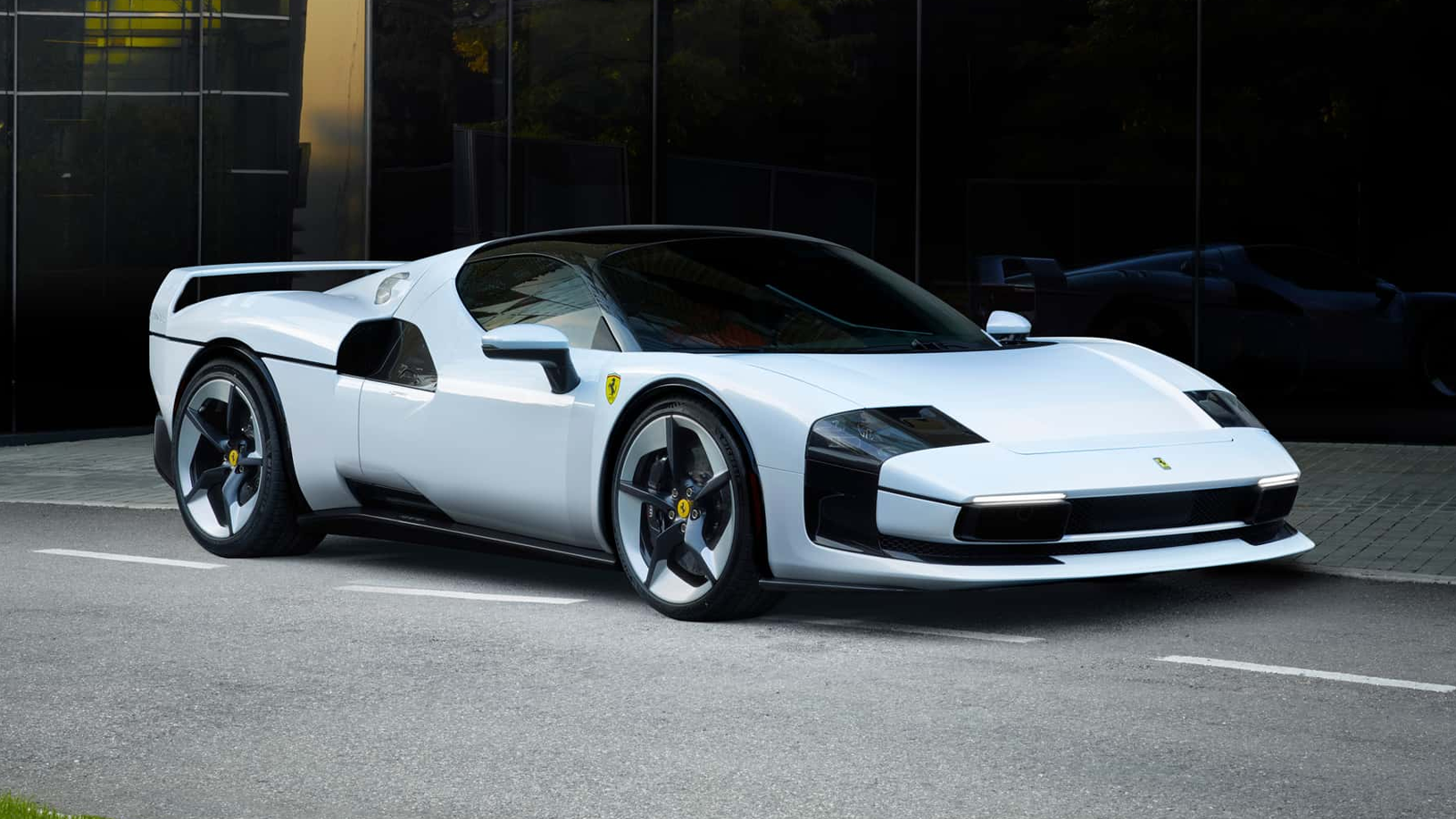
Built on the 296 GTB, the SC40 reinterprets one of Maranello’s most iconic supercars through bespoke design and cutting-edge craftsmanship.
A Tribute Born From the Past
Ferrari’s latest one-off project, the SC40, pays subtle yet deliberate homage to the iconic F40, the final model personally approved by Enzo Ferrari in 1987. Though it isn’t an official successor, the car channels the spirit of its predecessor through design and material choices. Created through Ferrari’s Special Projects program, the SC40 began life as a 296 GTB but has been completely rebodied, with no major exterior panels carried over.
The In-House Design Connection
Unlike the original F40, styled by Pininfarina, the SC40 was penned by Ferrari’s in-house Centro Stile under Flavio Manzoni. This marks another chapter in Ferrari’s shift away from outside design studios; the last Pininfarina-designed Ferrari was the 812 Superfast, launched in 2017. Manzoni’s team sought to reinterpret the classic silhouette without replicating it. “It’s a model with its own distinct personality,” Ferrari said of the SC40.
Modern Form, Retro Influence
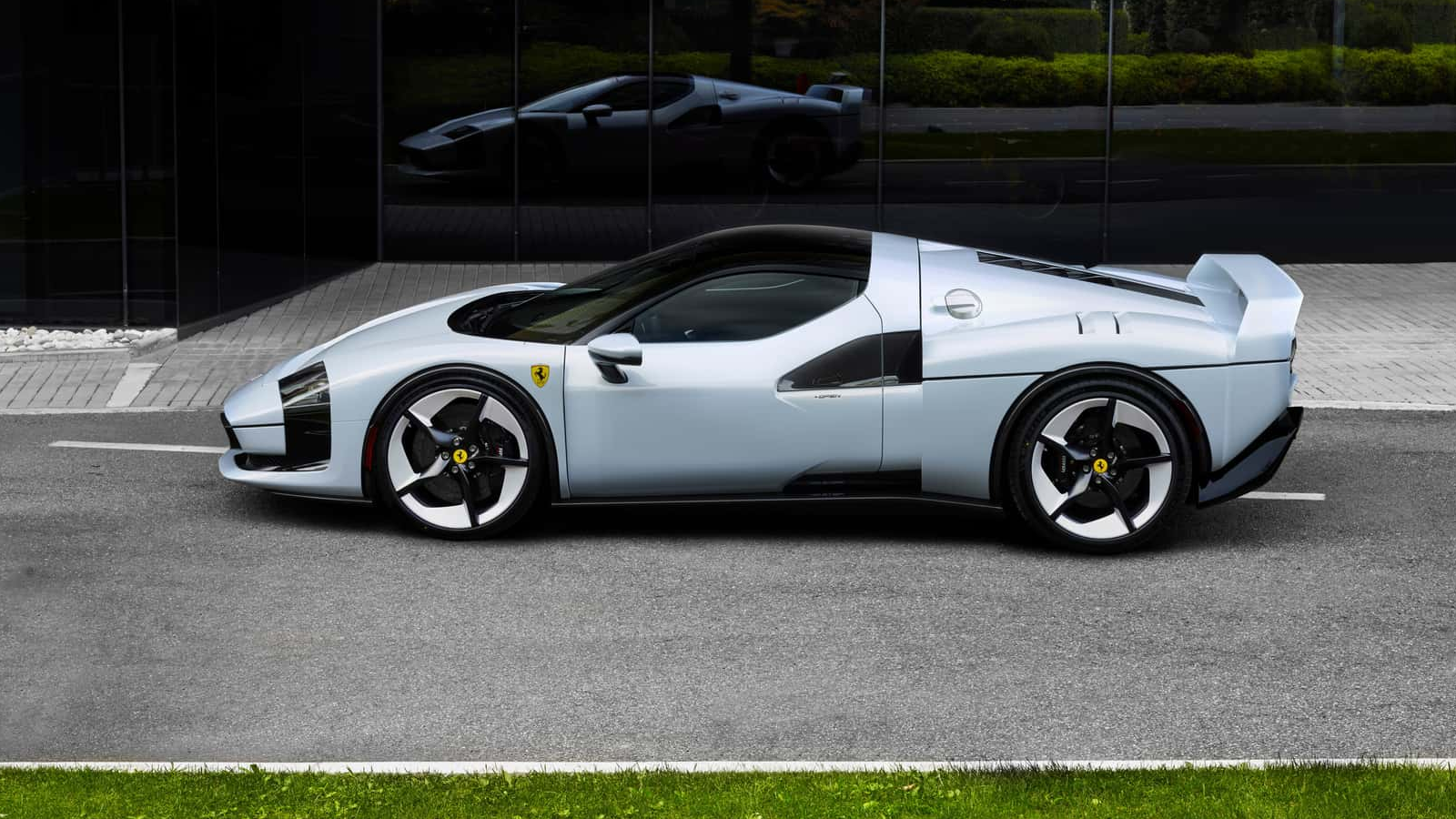
The SC40’s bodywork merges sharp, geometric surfaces with smoother, contemporary lines. Its front fascia introduces a pointed nose flanked by slim LED running lights, a modern alternative to the F40’s pop-up headlights. The bumper intakes flow around the corners, lending the car a purposeful, sculpted appearance. Along the sides, the reimagined NACA-style ducts evoke the original’s aerodynamic intakes, while the “SC40” script embossed on the rear wing directly nods to the 1980s legend.
Distinctive Rear and Signature Details
At the back, the SC40 combines retro cues with 296 GTB elements. Lexan louvres shield the V6 engine, just as they covered the F40’s V8, and the fixed rear wing adds visual downforce and historical continuity. Some fans might lament the retention of the 296’s dual taillights instead of four circular lamps, but the overall stance captures Ferrari’s balance between heritage and evolution. Finished in Bianco SC40, a one-off white tone chosen by the client, the car features two-tone five-spoke wheels accented by yellow Ferrari crests.
Cabin Crafted in Carbon-Kevlar
Inside, the transformation is equally meticulous. Much of the cabin is trimmed in carbon-kevlar, a material nodding to the F40’s stripped-down construction. It covers the dashboard, steering wheel, center console, and even the footwells. The bucket seats, finished in red Jacquard technical fabric with Charcoal Alcantara trim, carry subtle SC40 branding. The minimalist design recalls the F40’s spartan interior but with contemporary execution.
Performance: Familiar Power, Different Soul
While the SC40 channels the F40 visually, its mechanicals remain faithful to the 296 GTB base. That means a 2.9-liter twin-turbocharged V6 paired with an electric motor, producing a combined 819 horsepower (611 kW). Power is sent to the rear wheels through an eight-speed dual-clutch transmission—far removed from the F40’s raw, gated manual gearbox and twin-turbo V8. Though some purists might find the omission disappointing, Ferrari focused on craftsmanship and design purity rather than recreating the F40’s exact driving character.
The Craftsmanship Behind a One-Off
Projects under Ferrari’s Special Projects banner typically take around two years to complete, with the client closely involved at each stage, from early sketches to aerodynamic validation. Every element of the SC40, from its composite body panels to interior stitching, was made to specification. Ferrari hasn’t revealed pricing, but considering the 296 GTB starts at $346,950 and bespoke builds often cost several times that, the SC40 likely entered multimillion-dollar territory.
A Display of Legacy and Imagination
Only one SC40 exists, though visitors to the Ferrari Museum in Maranello can view the full-scale styling buck that shaped its form. Its creation underscores Ferrari’s growing interest in reviving design icons through modern reinterpretations rather than direct recreations. The SC40 may not be the “F40 reborn,” but it demonstrates how the company continues to bridge its storied past with the technology and aesthetic of the present.
A Hint of What’s Next?
The SC40 might not be the last of its kind. Formula 1 champion Lewis Hamilton has reportedly shown interest in collaborating with Ferrari on a future model—potentially dubbed the “F44”, complete with a manual gearbox and retro-inspired design. Whether or not that happens, the SC40 stands as proof that Ferrari’s reverence for its heritage remains alive in the age of hybrid performance.