


Manual - parking

Thread Starter
|
Registered User
Joined: Aug 2012
Posts: 274
From: NY
Rep Power: 29


Manual - parking
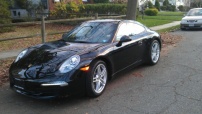
I picked up a 991 recently. Amazing car.
I read in a separate post that a manual 991 is not supposed to be left in gear when parked...just left in neutral with the parking break engaged. This runs somewhat counter to what I have done with manual trans cars in the past (always leaving it engaged in either 1st gear or in R). Anyone have knowledge why?
I am still getting used to having a parking break button instead of a stick.
I read in a separate post that a manual 991 is not supposed to be left in gear when parked...just left in neutral with the parking break engaged. This runs somewhat counter to what I have done with manual trans cars in the past (always leaving it engaged in either 1st gear or in R). Anyone have knowledge why?
I am still getting used to having a parking break button instead of a stick.

Registered User
Joined: Feb 2010
Posts: 1,810
Rep Power: 321
I picked up a 991 recently. Amazing car.
I read in a separate post that a manual 991 is not supposed to be left in gear when parked...just left in neutral with the parking break engaged. This runs somewhat counter to what I have done with manual trans cars in the past (always leaving it engaged in either 1st gear or in R). Anyone have knowledge why?
I am still getting used to having a parking break button instead of a stick.
I read in a separate post that a manual 991 is not supposed to be left in gear when parked...just left in neutral with the parking break engaged. This runs somewhat counter to what I have done with manual trans cars in the past (always leaving it engaged in either 1st gear or in R). Anyone have knowledge why?
I am still getting used to having a parking break button instead of a stick.
Congrats and post up some pics of your 991.
As to your question... I agree it seems odd.
I've always left my mt cars in gear when parked as well.
If you got this info from a post on a forum I'd confirm by asking the source and check with the dealer/owners manual.

Registered User
Joined: Jul 2012
Posts: 736
From: Boise, ID
Rep Power: 71
I posted a picture of my vehicle on Rennlist showing my Interior. In the Picture you could see my MT in Gear. A Rennlist Form member noticed and wrote me this:
"I'd suggest leaving the box out of gear and using the parking brake. The gears aren't designed to be held static face to face, the oil will separate and leave metal-to-metal contact as well as needlessly compressing the syncro's and transmitting movement into the engine, which is also not designed to take bearing load or move pistons without temperature and continuous lubrication. If need be, use reverse."
************************************************** **********
I then wrote back with:
"Thanks for the heads-up on leaving the car parked in gear. I had no idea. I always leave it in reverse. I also heard it's not good to set the parking break when the discs are hot, which confuses me a bit on what to do.
************************************************** **********
To which he replied with:
"The electric parking brake is there for just that purpose. It's a bit weird, but you get used to it.
As for parking brakes and hot rotors, the issue is simply that a hot rotor needs to cool uniformly or it can warp over time. The pressure of the parking brake is a pair of "shoes" inside the drum of the rear rotors ... hence the name "drum brake" ... much the same as truck brakes dating back a century ... heavy, ineffective, expensive, prone to failure and expensive to maintain.
The drum brake for parking uses two shoes which expand outwards inside the drum to press against two opposite areas on a machine surface inside the hub of the rotor where it bolts to the car's wheel axle hub -- effectively applying pressure at the same time as changing the rate of contraction and cooling simply because the contact of the brake shoes to the hub creates a larger connected thermal mass than just the metal of the hub itself. Over time, if the rotors are hot from track driving and repeatedly subjected to cooling while in contact with the parking brake shoes, there's the risk of two problems: the rotor can change shape around the drum as it cools faster where the hub is not in contact with the parking brake and not surrounded by the brake caliper and its pads; and, the friction material held on the face of the parking brake shoe can be dissolved by heat and pressure, and "transfer" to the parking brake hub on its machined surface, causing the brake action to be irregular and less reliable because it will have "sticky" points with less gap between shoe and hub in some places with wider points with more gap and less friction between shoe and hub. The same thing happens between a hot rotor and caliper brake pads -- it's vitally important to cool down brakes from track driving or after even one extreme application such as a panic brake from freeway speeds -- the instantaneous heat soak into the rotor can cause pad transfer if the driver holds the brake pedal to keep the pads forced against the rotor while the car is stopped. One lap at a brisk rolling pace with zero brake pedal application is enough to cool the rotors ... rolling too slowly so as to take longer is counterproductive because it's airflow through the rotor veins that cools the rotor, not time ... given time, the rotors will stay hot almost indefinitely, but with airflow at speed, the cooling process is efficient (efficient enough to keep the brakes operating lap after lap.)
For even the most aggressive driving on public roads, it's practically impossible to get the rotors to temperatures where precautions are necessary. The only exception would be hilly driving at freeway speeds where there's intermittent snow or deep standing water that could contact the rotor in sufficient effect to change the rotor temperature abruptly.
Porsche should have used the 991 to introduce a parking brake caliper. The weight and impractical aspects of a drum brake for parking should have been removed from the 911 with the 964 (circa 1989.)"
************************************************** *
I was very appreciative for the education. Everything stated seems to make mechanical sense. If anyone knows or thinks diffently, I'd be interested.
"I'd suggest leaving the box out of gear and using the parking brake. The gears aren't designed to be held static face to face, the oil will separate and leave metal-to-metal contact as well as needlessly compressing the syncro's and transmitting movement into the engine, which is also not designed to take bearing load or move pistons without temperature and continuous lubrication. If need be, use reverse."
************************************************** **********
I then wrote back with:
"Thanks for the heads-up on leaving the car parked in gear. I had no idea. I always leave it in reverse. I also heard it's not good to set the parking break when the discs are hot, which confuses me a bit on what to do.
************************************************** **********
To which he replied with:
"The electric parking brake is there for just that purpose. It's a bit weird, but you get used to it.
As for parking brakes and hot rotors, the issue is simply that a hot rotor needs to cool uniformly or it can warp over time. The pressure of the parking brake is a pair of "shoes" inside the drum of the rear rotors ... hence the name "drum brake" ... much the same as truck brakes dating back a century ... heavy, ineffective, expensive, prone to failure and expensive to maintain.
The drum brake for parking uses two shoes which expand outwards inside the drum to press against two opposite areas on a machine surface inside the hub of the rotor where it bolts to the car's wheel axle hub -- effectively applying pressure at the same time as changing the rate of contraction and cooling simply because the contact of the brake shoes to the hub creates a larger connected thermal mass than just the metal of the hub itself. Over time, if the rotors are hot from track driving and repeatedly subjected to cooling while in contact with the parking brake shoes, there's the risk of two problems: the rotor can change shape around the drum as it cools faster where the hub is not in contact with the parking brake and not surrounded by the brake caliper and its pads; and, the friction material held on the face of the parking brake shoe can be dissolved by heat and pressure, and "transfer" to the parking brake hub on its machined surface, causing the brake action to be irregular and less reliable because it will have "sticky" points with less gap between shoe and hub in some places with wider points with more gap and less friction between shoe and hub. The same thing happens between a hot rotor and caliper brake pads -- it's vitally important to cool down brakes from track driving or after even one extreme application such as a panic brake from freeway speeds -- the instantaneous heat soak into the rotor can cause pad transfer if the driver holds the brake pedal to keep the pads forced against the rotor while the car is stopped. One lap at a brisk rolling pace with zero brake pedal application is enough to cool the rotors ... rolling too slowly so as to take longer is counterproductive because it's airflow through the rotor veins that cools the rotor, not time ... given time, the rotors will stay hot almost indefinitely, but with airflow at speed, the cooling process is efficient (efficient enough to keep the brakes operating lap after lap.)
For even the most aggressive driving on public roads, it's practically impossible to get the rotors to temperatures where precautions are necessary. The only exception would be hilly driving at freeway speeds where there's intermittent snow or deep standing water that could contact the rotor in sufficient effect to change the rotor temperature abruptly.
Porsche should have used the 991 to introduce a parking brake caliper. The weight and impractical aspects of a drum brake for parking should have been removed from the 911 with the 964 (circa 1989.)"
************************************************** *
I was very appreciative for the education. Everything stated seems to make mechanical sense. If anyone knows or thinks diffently, I'd be interested.
Registered User
Joined: Jan 2012
Posts: 859
From: Pacific NW
Rep Power: 78
I guess it's nice to have the "right" way to do it, but just imo, it's probably fine either way 
It's also nice that the electric brake releases automatically (if your seat belt is on) when you move the car.
It's also nice that the electric brake releases automatically (if your seat belt is on) when you move the car.

Registered User
Joined: Aug 2012
Posts: 136
From: Cincinnati, OH
Rep Power: 20
Seems to me like if you set the parking brake first, then put the car in gear, there would be no tension on the gears unless the parking brake slipped. If this happened you would be glad to have the miniscule amount of wear on the gears versus your baby rolling down the hill. I always leave my manual cars in gear as a precaution to brake failure.
Trending Topics
Registered User
Joined: Jul 2012
Posts: 67
Rep Power: 17
Ahhh ... now I understand .... seat belts must be on
 ... I thought that on the 991 I test drove last weekend the automatic release did not work
I´m used to start driving without seat belts on .....
Best
Gregor
Thread Starter
|
Registered User
Joined: Aug 2012
Posts: 274
From: NY
Rep Power: 29
I re-checked the owners manual. I couldn't find anything under the Parking section, but when I was re-reading the break-in period details on Page 5 I noticed a bullet to the left whcih said to leave a manual in either 1st or R when parked and engage the parking brake.
It was always easy to engage the parking break in other cars while I still had the break pedal depressed, and thus not stress the gearbox. I will have to learn to reach under and press the brake button in the same fashion.
It was always easy to engage the parking break in other cars while I still had the break pedal depressed, and thus not stress the gearbox. I will have to learn to reach under and press the brake button in the same fashion.

Thread
Thread Starter
Forum
Replies
Last Post
NC 996TT
Automobiles For Sale
13
Mar 23, 2023 06:19 AM