
Front Differential Chewed due to incorrect wheel/tire se up
Subscribe


Quote:
Im really confused now...
Originally Posted by speedracer800
Thanks for the reply. Wow! That just seems like a ton. The post was started by a guy who tore up his front diff with a less then 2% difference. Im really confused now...
You really have to check the tire specs from every manufacturer. Even with the same size tires, manufacturers sizes DO differ, and it doesn't take much to go from 2% to 4% or more...Go RWD and forget all your problems...


Quote:
From what I understand you want to be as close as possible to the same front to rear. I would think under 2/10". Originally Posted by contigo
Isnt 0,5 the limit to be ok? 25,7 to 26 is only 0,3, or did I get ir wrong?
My concern is the overall height that will fit. So much different/conflicting info out there.
Quote:
4% of 25 inches is 1 inch. that is huge. What measurement are they talking aboutOriginally Posted by ttboost
It's here somewhere, but Porsche recommends 4% or LESS deviation front to rear.
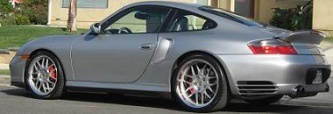
That's exactly what I'm running. 255/35-18 fronts on my stock wheels. Works great. There is no "bulge" or anything like that. With some aggressive front camber(2-2.5 degrees), a stiffer rear bar and 255s in front you can dial out ALL the under-steer and as you can see the diameter is totally good. I run 295 rears for even better handling balance. I also run 21mm rear spacers and 15mm fronts (rear fenders rolled) with no rubbing.
As an added benefit, this setup only marginally accelerates front tire wear since there is very little weight up front. The fronts should still last 1.5 to 2 times the rears. The rears run a basic stockish alignment for maximum street wear.
To the OP, I'm sure you can pick slightly up used front diffs on this forum. There are plenty of people running RWD setups. Finally, for $3,000? or so you can get rid of AWD and get a bad *** guard diff and have the ultimate GT2 like setup along with the weight loss. 75% of the GT2's lightness comes from PCCbs, 70lb for the FWD setup, 15lb for the rear seats. You get pretty close.
Finally, there HAS to be some tolerance in the factory setup. People running bald fronts and new rears IE don't blow their diffs. Just don't KNOWINGLY go with a diameter staggered setup and you could be fine.
What's amazing is that with latest ECU technology, newer cars COULD calculate the front/rear bias from any setup and adjust both diff action and stability management. That's not happening now but it's possible. As-is the 997 is adjusting for a minor difference front/rear.
As an added benefit, this setup only marginally accelerates front tire wear since there is very little weight up front. The fronts should still last 1.5 to 2 times the rears. The rears run a basic stockish alignment for maximum street wear.
To the OP, I'm sure you can pick slightly up used front diffs on this forum. There are plenty of people running RWD setups. Finally, for $3,000? or so you can get rid of AWD and get a bad *** guard diff and have the ultimate GT2 like setup along with the weight loss. 75% of the GT2's lightness comes from PCCbs, 70lb for the FWD setup, 15lb for the rear seats. You get pretty close.
Finally, there HAS to be some tolerance in the factory setup. People running bald fronts and new rears IE don't blow their diffs. Just don't KNOWINGLY go with a diameter staggered setup and you could be fine.
What's amazing is that with latest ECU technology, newer cars COULD calculate the front/rear bias from any setup and adjust both diff action and stability management. That's not happening now but it's possible. As-is the 997 is adjusting for a minor difference front/rear.
Quote:
Originally Posted by ard
Agree on the wider fronts, but you can't run that on a stock 8" rim.
I don't KNOW that. It's just a hypothesis.
The spare issue is entirely different because it deals with left right balance?
The spare issue is entirely different because it deals with left right balance?
Quote:
Originally Posted by ard
Then you would suggest that there are no size matching restrictions on the 997TT??

Quote:
Well, there is no tire I could find in a 255/35-18 that has "8.0 inches" as a recommended size. While I am certain you can fit it, I never exceed a manufacturers recommendation for this...just me.Originally Posted by ari
That's exactly what I'm running. 255/35-18 fronts on my stock wheels. Works great. There is no "bulge" or anything like that.
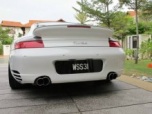
I think I'm suffering from this dreaded problem after running 295/30 19s on the rear. Just wondering what the symptoms of this are. My car (only 27000 kms) suddenly stated making strange grinding noises in tight left and right turns (feels like the ABS or traction control coming on but no lights) and now the diff (not sure front or back) has started whining. I'm putting the correct 19 wheels tyre combo on now and my workshop will change what fluids they can and see what happens.
I'm really asking whether these are symptoms others have experienced. Also if it is, what needs to be replaced. Is it the whole front end drivetrain or there just a separate viscous coupling ? Any advice would be appreciated.
I'm really asking whether these are symptoms others have experienced. Also if it is, what needs to be replaced. Is it the whole front end drivetrain or there just a separate viscous coupling ? Any advice would be appreciated.
Quote:
I'm really asking whether these are symptoms others have experienced. Also if it is, what needs to be replaced. Is it the whole front end drivetrain or there just a separate viscous coupling ? Any advice would be appreciated.
Originally Posted by pwengland
I think I'm suffering from this dreaded problem after running 295/30 19s on the rear. Just wondering what the symptoms of this are. My car (only 27000 kms) suddenly stated making strange grinding noises in tight left and right turns (feels like the ABS or traction control coming on but no lights) and now the diff (not sure front or back) has started whining. I'm putting the correct 19 wheels tyre combo on now and my workshop will change what fluids they can and see what happens. I'm really asking whether these are symptoms others have experienced. Also if it is, what needs to be replaced. Is it the whole front end drivetrain or there just a separate viscous coupling ? Any advice would be appreciated.
that sounds like the problem. Replace the entire unit, it is cheaper. you can find used ones for sale all the time. The diameter difference between your front and rear tires must have been really huge.

I hate to bring this up, given all the work that has gone into this interesting post, but the only guy we know with a chewed front diff (dave, who started this post) only had a 1.93% difference in size between front and back wheels, which is within Porsce spec.
Perhaps:
1. something else caused the chewed diff and
2. 4% difference is fine and
3. We are freaking out way too much over small size differences.
Perhaps:
1. something else caused the chewed diff and
2. 4% difference is fine and
3. We are freaking out way too much over small size differences.
Quote:
3. We are freaking out way too much over small size differences.
Maybe.Originally Posted by KMT996turbo
2. 4% difference is fine and3. We are freaking out way too much over small size differences.
Go change tire sizes on an axle, go with 4% and report back in 10k miles.

There are other posts here, and on rennlist... it isn't an isolated, "just heard about one single event" thing...
A
PS Roseville? Sacto area, welcome...

The most I would ever go is 1.5%, and I do notice the car behaving
differently at that difference. Whichever way the difference is, the
viscous unit will have to be delivering some torque to the front, at
all rolling time, and the heat created goes up with speed. I have
actually felt the fronts being affected by the extra load when the
diff is 1.5% and up...
differently at that difference. Whichever way the difference is, the
viscous unit will have to be delivering some torque to the front, at
all rolling time, and the heat created goes up with speed. I have
actually felt the fronts being affected by the extra load when the
diff is 1.5% and up...

Quote:
differently at that difference. Whichever way the difference is, the
viscous unit will have to be delivering some torque to the front, at
all rolling time, and the heat created goes up with speed. I have
actually felt the fronts being affected by the extra load when the
diff is 1.5% and up...
Originally Posted by Joe Weinstein
The most I would ever go is 1.5%, and I do notice the car behavingdifferently at that difference. Whichever way the difference is, the
viscous unit will have to be delivering some torque to the front, at
all rolling time, and the heat created goes up with speed. I have
actually felt the fronts being affected by the extra load when the
diff is 1.5% and up...
It seems that everyone is pulling these numbers like 1.0%, 1.5%, 2.0%, 4.0% straight out of their ****. Does anyone actually have a document or literature from Porsche that unequivocally states what the max permissible difference in tire diameter is or is all this just conjecture based on what happened to a guy on this board who chewed up his diff? What about the guy who has brand new fronts and rears that are down to the wear bars? A rear tire at max wear will be close to .75" smaller in diameter than the identical tire when new. Run those numbers......
I get my numbers by comparing the actual rolling diameter of OEM tires, and those
I use. I try to avoid a difference over .3 inches or so, and I do consider how things
change with different tire wear rates. For a typical diameter around 25", my .3 inch
limit equates to 1.2%. I can feel the effects of the fronts getting different torsional
load when the difference gets to be .4 and up.
I use. I try to avoid a difference over .3 inches or so, and I do consider how things
change with different tire wear rates. For a typical diameter around 25", my .3 inch
limit equates to 1.2%. I can feel the effects of the fronts getting different torsional
load when the difference gets to be .4 and up.
Quote:
I use. I try to avoid a difference over .3 inches or so, and I do consider how things
change with different tire wear rates. For a typical diameter around 25", my .3 inch
limit equates to 1.2%. I can feel the effects of the fronts getting different torsional
load when the difference gets to be .4 and up.
I'm too lazy to look it up but I believe on the OE tire setup, the fronts are actually slightly larger diameter wise than the rears. Considering that the rears wear much faster than the fronts, the diameter delta between the fronts and rears will only get greater as the rears wear at the faster rate. It seem to me that if one had rears that were just slightly taller than the fronts than the diameter delta would decrease as the rears wore down. Once again, does anyone have any documentation from Porsche as the the max permissible diameter difference front to rear??Originally Posted by Joe Weinstein
I get my numbers by comparing the actual rolling diameter of OEM tires, and thoseI use. I try to avoid a difference over .3 inches or so, and I do consider how things
change with different tire wear rates. For a typical diameter around 25", my .3 inch
limit equates to 1.2%. I can feel the effects of the fronts getting different torsional
load when the difference gets to be .4 and up.