


slight vibration question

Thread Starter
|
Registered User
Joined: Apr 2009
Posts: 22
From: mesa, az
Rep Power: 0

slight vibration question
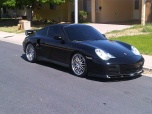
Im curious how everyone's turbos drive with aftermarket wheels? I got brand new set of staggard set wheels and I feel a very slight vibration (if thats even what i would call it) you can see the steering wheel vibrate a very little as well. I had alignment done, and wheels are brand new. So im wondering if its just the normal ride of lowered car with low profile tires, the road, wheel not true, or what. Maybe my problem is that my mercedes feels so smooth and i get in porsche thats a different feel. Any thoughts?


When were the front bushings and associated components done? Did you get the set of wheels from a shop or private party, did they balance them/correctly? Lot of variables to answer this question correctly.

Registered User
Joined: Mar 2010
Posts: 112
From: USA
Rep Power: 21
You will find a lot of threads on this topic. I seems that the there are a lot of variables in play once you go away from factory setups. I fought a vibration for a year after I went with new 19's. First I thought it was a bad balance (4 shops tried to balance) got worse each time, then I was told it was a bad tire, had my tires replaced (warranty, excessive run-out...no questions asked); then I was told it was a bad wheel, had my wheels checked one fixed; then I was told it was something to do with my PSS9 installation or a bad steering rack. I had it realigned. Nothing made it better... almost worst every time.
Finally I took it to a shop and demanded that I speak to someone that understood the Hunter Road Force Balance process. This guy was great! He mentioned that although they have the machine and use it for balancing, they rarely use the road force "readings" to do anything--they just zero the tires out with weights. He said most of the guys in tire shops think it is a waste of time and is "voodoo". He used it religiously on high end cars, he once worked in a shop that did a fare share of Ferrari's, Porsche's, Lambos etc. Big low profile tire (19" 225-300+) will tend to expose the inherent anomalies that ever tire has. He showed me exactly what road force does. After running the machine that showed excessive road force 45+lbs, he spun the tires on the wheel and made sure that the heavy spot on the tire lined up with the lightest spot on the wheel --then he rebalanced from scratch. After this he ended up with less weight than before he started. Still more than I would like to see (2 ounces per wheel). He also mentioned that the reason some tires are easier balanced than others was factory QC. He said, Michelin and Conti reject a higher number of tires before they leave the factory than say Nitto or Toyo. Not sure if this is true, but it kind of makes sense.
My original Turbo Twists HS have new Conti SP2's and only have one .25 ounce weight on each wheel. I bet this is because the wheels and tires are higher quality and are as close to round as can be. I have Nitto Innvos--they are half the cost of the Conti's, so image the quality is not as high--although the Nitto's are a ton quieter.
After he was done it was an immediate improvement ---only a slight vibration at 68-75 mph, it is tolerable and goes away above 75. I have solid bushing camber plates, low profile tires and a stiff suspension it is always going to be rougher than my wife's suv.
I came from a CLK55 amg that was like silk at any speed. Hard to compare rides-apples and oranges, but I will take the acceleration, nimbleness and "Wow Factor" of my Turbo over the dead silence of a MB any day.
Finally I took it to a shop and demanded that I speak to someone that understood the Hunter Road Force Balance process. This guy was great! He mentioned that although they have the machine and use it for balancing, they rarely use the road force "readings" to do anything--they just zero the tires out with weights. He said most of the guys in tire shops think it is a waste of time and is "voodoo". He used it religiously on high end cars, he once worked in a shop that did a fare share of Ferrari's, Porsche's, Lambos etc. Big low profile tire (19" 225-300+) will tend to expose the inherent anomalies that ever tire has. He showed me exactly what road force does. After running the machine that showed excessive road force 45+lbs, he spun the tires on the wheel and made sure that the heavy spot on the tire lined up with the lightest spot on the wheel --then he rebalanced from scratch. After this he ended up with less weight than before he started. Still more than I would like to see (2 ounces per wheel). He also mentioned that the reason some tires are easier balanced than others was factory QC. He said, Michelin and Conti reject a higher number of tires before they leave the factory than say Nitto or Toyo. Not sure if this is true, but it kind of makes sense.
My original Turbo Twists HS have new Conti SP2's and only have one .25 ounce weight on each wheel. I bet this is because the wheels and tires are higher quality and are as close to round as can be. I have Nitto Innvos--they are half the cost of the Conti's, so image the quality is not as high--although the Nitto's are a ton quieter.
After he was done it was an immediate improvement ---only a slight vibration at 68-75 mph, it is tolerable and goes away above 75. I have solid bushing camber plates, low profile tires and a stiff suspension it is always going to be rougher than my wife's suv.
I came from a CLK55 amg that was like silk at any speed. Hard to compare rides-apples and oranges, but I will take the acceleration, nimbleness and "Wow Factor" of my Turbo over the dead silence of a MB any day.
Last edited by LO_996tt; Apr 26, 2011 at 11:25 AM.

Thread
Thread Starter
Forum
Replies
Last Post
away
Automobiles For Sale
2
Sep 4, 2015 12:30 PM