Still totally unimpressed with the AWD on these things


Registered User
Joined: Feb 2010
Posts: 209
From: Canada
Rep Power: 43


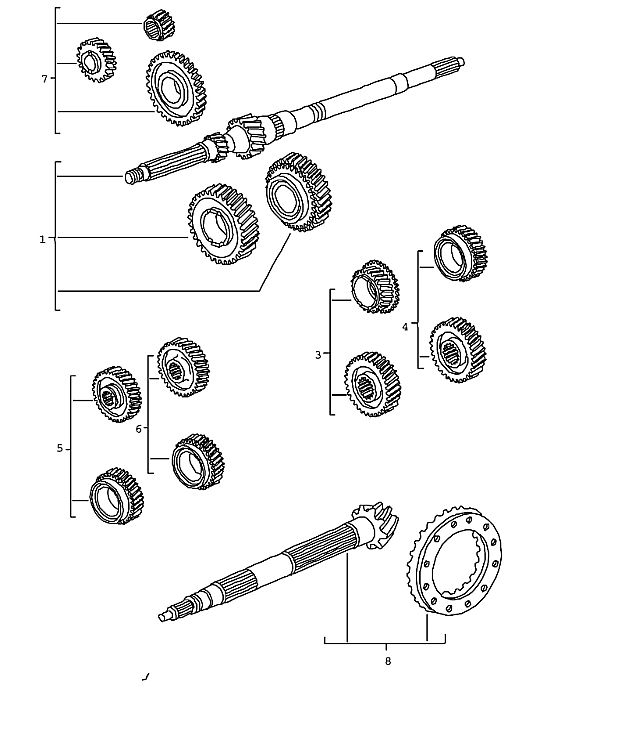
Wiki?? Really? SMH.. "Add a rear lsd and both rear wheels need to loose traction before the viscous sees speed differential and begins to transfer more power." You need to learn a few thing about diff's and how they work, transfer power how they get connected.. Also I think you should take one of these cars apart before you make any further comments. The transaxle in the 996/7 tt/4/4s uses a simple spline on the pinion shaft that is extended out of the trans case where a yoke slips over and is bolted down. that yoke is now connected to the front drive via a drive shaft. That yoke sees 50% power ALL the time, direct connection rear pinion to yoke. Its one part #8 in first pic. In fact the input side of your "magic" viscous coupler sees 50% of the power ALL the time. A lsd has no influence on how the viscous coupler works at all. A lsd simply needs the viscous coupler work less do to both rear wheels providing power to the ground. Do you know why the front tires and rear tires are not the same run out? Check Wiki...
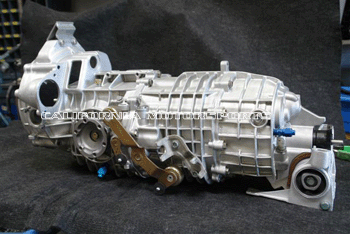
Turbo trans, black yoke right on top of the trans mount.
GT2/3 no yoke in that area.
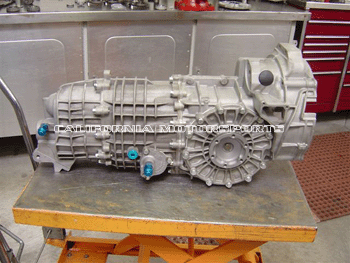
Credit to Roger at CMS for the pics off his site.
Or from my own phone:
Gt2.. yokeless
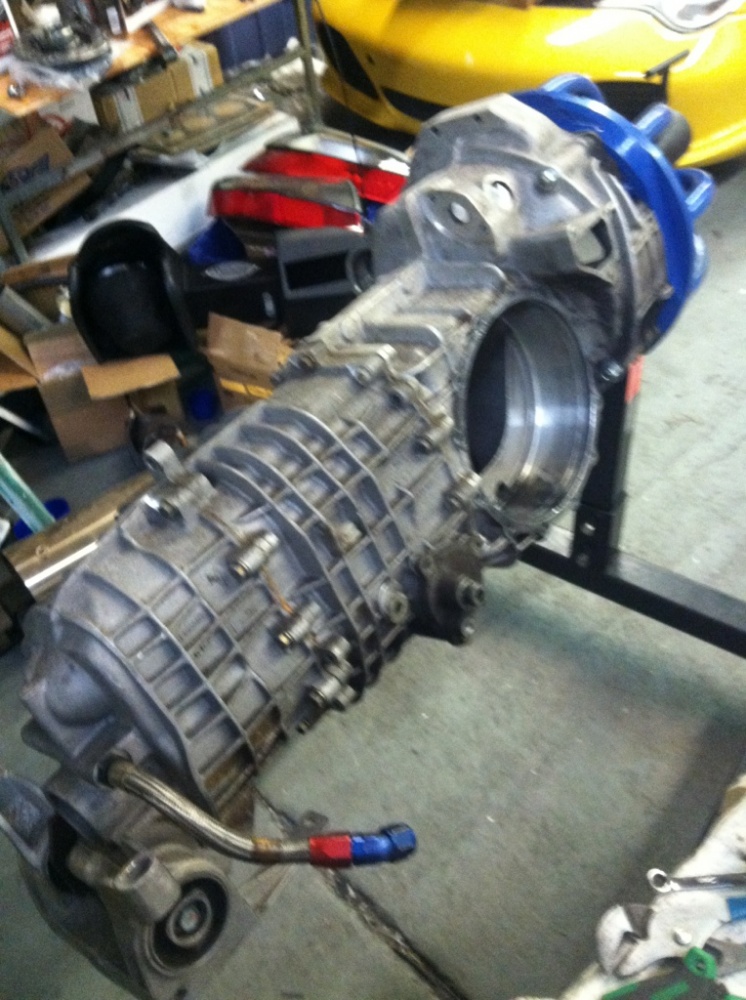
Turbo.. yoke

Turbo trans, black yoke right on top of the trans mount.
GT2/3 no yoke in that area.
Credit to Roger at CMS for the pics off his site.
Or from my own phone:
Gt2.. yokeless
Turbo.. yoke
Tell me what happens to the center vc when one rear wheel is spinning twice as fast as the front wheels? Now when you add a lsd how does that help the situation when that single rear wheels isnt spinning like mad?
There is a good reason I changed my front tires to be more or less identical in diameter to the rears.
You reply like no one could possible understand anything as well as yourself, so please explain to all us simpletons.
Might want to turn the dick volume down a notch.
Paul
Registered User
Joined: Jul 2010
Posts: 3,319
From: Long island NY
Rep Power: 381
Tim,
Tell me what happens to the center vc when one rear wheel is spinning twice as fast as the front wheels? Now when you add a lsd how does that help the situation when that single rear wheels isnt spinning like mad?
There is a good reason I changed my front tires to be more or less identical in diameter to the rears.
You reply like no one could possible understand anything as well as yourself, so please explain to all us simpletons.
Might want to turn the dick volume down a notch.
Paul
Tell me what happens to the center vc when one rear wheel is spinning twice as fast as the front wheels? Now when you add a lsd how does that help the situation when that single rear wheels isnt spinning like mad?
There is a good reason I changed my front tires to be more or less identical in diameter to the rears.
You reply like no one could possible understand anything as well as yourself, so please explain to all us simpletons.
Might want to turn the dick volume down a notch.
Paul
This statement sums it up for me.
" There is a good reason I changed my front tires to be more or less identical in diameter to the rears."
It proves you do not understand why the wheels are staggered. The wheels are staggered to heat up the "vc". How you wonder? Well the rear axle is spinning faster then the front needs to to go the same speed. How can that be you ask? Well the "vc" does not lock. it never will unless the plates get galled enough that they fuse. Now the difference in speed must create friction. one by product of friction is heat that heat thickens the viscous fluid, now the "vc" is ready to react when it is needed. How does your system work when you removed the very thing that makes it work?
"You reply like no one could possible understand anything as well as yourself, so please explain to all us simpletons."
I replied so when someone does a search they will find the truth, not a "wiki" rendition..
Registered User
Joined: Feb 2010
Posts: 209
From: Canada
Rep Power: 43
One or both rear wheels can not spin any faster then the input speed of the pinion, lsd or not. With that said the pinion gear has the yoke directly bolted to it, that has the cardan shaft bolt to it. If that is understood then we agree that the rear diff and front diff are spun at the same speed regardless of what the wheels are doing.
This statement sums it up for me.
" There is a good reason I changed my front tires to be more or less identical in diameter to the rears."
It proves you do not understand why the wheels are staggered. The wheels are staggered to heat up the "vc". How you wonder? Well the rear axle is spinning faster then the front needs to to go the same speed. How can that be you ask? Well the "vc" does not lock. it never will unless the plates get galled enough that they fuse. Now the difference in speed must create friction. one by product of friction is heat that heat thickens the viscous fluid, now the "vc" is ready to react when it is needed. How does your system work when you removed the very thing that makes it work?
"You reply like no one could possible understand anything as well as yourself, so please explain to all us simpletons."
I replied so when someone does a search they will find the truth, not a "wiki" rendition..
This statement sums it up for me.
" There is a good reason I changed my front tires to be more or less identical in diameter to the rears."
It proves you do not understand why the wheels are staggered. The wheels are staggered to heat up the "vc". How you wonder? Well the rear axle is spinning faster then the front needs to to go the same speed. How can that be you ask? Well the "vc" does not lock. it never will unless the plates get galled enough that they fuse. Now the difference in speed must create friction. one by product of friction is heat that heat thickens the viscous fluid, now the "vc" is ready to react when it is needed. How does your system work when you removed the very thing that makes it work?
"You reply like no one could possible understand anything as well as yourself, so please explain to all us simpletons."
I replied so when someone does a search they will find the truth, not a "wiki" rendition..
The vc fluid changes state towards a solid when heated, nothing to do with the plates touching like in a clutch pack diff, you seem to not understand how a vc works.
Tell me again what about the wiki quote is not the TRUTH?
Registered User
Joined: Jul 2010
Posts: 3,319
From: Long island NY
Rep Power: 381
The front and rear diffs are not directly connected, the vc is between them. The only way the vc heats up and allows power transfer is when the rear wheel spins faster then the front. Without a rear lsd it is very easy to have this happen. The vc heats up very fast, does not need the different size tires to do this. Porsche did this to increase power transfer as speed increased to improve stability and high speed handling.
The vc fluid changes state towards a solid when heated, nothing to do with the plates touching like in a clutch pack diff, you seem to not understand how a vc works.
Tell me again what about the wiki quote is not the TRUTH?
The vc fluid changes state towards a solid when heated, nothing to do with the plates touching like in a clutch pack diff, you seem to not understand how a vc works.
Tell me again what about the wiki quote is not the TRUTH?
Registered User
Joined: Jul 2010
Posts: 3,319
From: Long island NY
Rep Power: 381
I am in my workshop working on my car, I was looking for some part and I came across the remnants of a front drive.. It started my mind going again...
Quote: Basic from Wiki..
" The viscous type is generally simpler because it relies on hydrodynamic friction from fluids with high viscosity. Silicone-based oils are often used. Here, a cylindrical chamber of fluid filled with a stack of perforated discs rotates with the normal motion of the output shafts. The inside surface of the chamber is coupled to one of the driveshafts, and the outside coupled to the differential carrier. Half of the discs are connected to the inner, the other half to the outer, alternating inner/outer in the stack. Differential motion forces the interleaved discs to move through the fluid against each other. In some viscous couplings when speed is maintained the fluid will accumulate heat due to friction. This heat will cause the fluid to expand, and expand the coupler causing the discs to be pulled together resulting in a non-viscous plate to plate friction and a dramatic drop in speed difference. This is known as the hump phenomenon and it allows the side of the coupler to gently lock. In contrast to the mechanical type, the limiting action is much softer and more proportional to the slip, and so is easier to cope with for the average driver."
Quote from Basic,
"Again, if you feel your awd doesnt do anything or very little you probably have a worn out viscous coupler."
Wiki: States "it relies on hydrodynamic friction".
I will leave you with this question.. How does hydrodynamic friction "wear out"?
Quote: Basic from Wiki..
" The viscous type is generally simpler because it relies on hydrodynamic friction from fluids with high viscosity. Silicone-based oils are often used. Here, a cylindrical chamber of fluid filled with a stack of perforated discs rotates with the normal motion of the output shafts. The inside surface of the chamber is coupled to one of the driveshafts, and the outside coupled to the differential carrier. Half of the discs are connected to the inner, the other half to the outer, alternating inner/outer in the stack. Differential motion forces the interleaved discs to move through the fluid against each other. In some viscous couplings when speed is maintained the fluid will accumulate heat due to friction. This heat will cause the fluid to expand, and expand the coupler causing the discs to be pulled together resulting in a non-viscous plate to plate friction and a dramatic drop in speed difference. This is known as the hump phenomenon and it allows the side of the coupler to gently lock. In contrast to the mechanical type, the limiting action is much softer and more proportional to the slip, and so is easier to cope with for the average driver."
Quote from Basic,
"Again, if you feel your awd doesnt do anything or very little you probably have a worn out viscous coupler."
Wiki: States "it relies on hydrodynamic friction".
I will leave you with this question.. How does hydrodynamic friction "wear out"?
Registered User
Joined: Feb 2010
Posts: 209
From: Canada
Rep Power: 43
I am in my workshop working on my car, I was looking for some part and I came across the remnants of a front drive.. It started my mind going again...
Quote: Basic from Wiki..
" The viscous type is generally simpler because it relies on hydrodynamic friction from fluids with high viscosity. Silicone-based oils are often used. Here, a cylindrical chamber of fluid filled with a stack of perforated discs rotates with the normal motion of the output shafts. The inside surface of the chamber is coupled to one of the driveshafts, and the outside coupled to the differential carrier. Half of the discs are connected to the inner, the other half to the outer, alternating inner/outer in the stack. Differential motion forces the interleaved discs to move through the fluid against each other. In some viscous couplings when speed is maintained the fluid will accumulate heat due to friction. This heat will cause the fluid to expand, and expand the coupler causing the discs to be pulled together resulting in a non-viscous plate to plate friction and a dramatic drop in speed difference. This is known as the hump phenomenon and it allows the side of the coupler to gently lock. In contrast to the mechanical type, the limiting action is much softer and more proportional to the slip, and so is easier to cope with for the average driver."
Quote from Basic,
"Again, if you feel your awd doesnt do anything or very little you probably have a worn out viscous coupler."
Wiki: States "it relies on hydrodynamic friction".
I will leave you with this question.. How does hydrodynamic friction "wear out"?
Quote: Basic from Wiki..
" The viscous type is generally simpler because it relies on hydrodynamic friction from fluids with high viscosity. Silicone-based oils are often used. Here, a cylindrical chamber of fluid filled with a stack of perforated discs rotates with the normal motion of the output shafts. The inside surface of the chamber is coupled to one of the driveshafts, and the outside coupled to the differential carrier. Half of the discs are connected to the inner, the other half to the outer, alternating inner/outer in the stack. Differential motion forces the interleaved discs to move through the fluid against each other. In some viscous couplings when speed is maintained the fluid will accumulate heat due to friction. This heat will cause the fluid to expand, and expand the coupler causing the discs to be pulled together resulting in a non-viscous plate to plate friction and a dramatic drop in speed difference. This is known as the hump phenomenon and it allows the side of the coupler to gently lock. In contrast to the mechanical type, the limiting action is much softer and more proportional to the slip, and so is easier to cope with for the average driver."
Quote from Basic,
"Again, if you feel your awd doesnt do anything or very little you probably have a worn out viscous coupler."
Wiki: States "it relies on hydrodynamic friction".
I will leave you with this question.. How does hydrodynamic friction "wear out"?
Lots of information regarding this available on the net, VC are not uncommon. These units wear out, when they do you gradually lose transfer of power to the front wheels. Not sure if they could possibly be rebuilt, when mine goes I will likely figure that out.
Some more info I found
"
- If you refill a VC so that it is full it will burst its seals. Never refill so it is full. (The proper percent air is 84% to 86% according to an estimate from another expert familiar with Viscous Couplings but this percent cannot be confirmed yet.)
- The plates inside the Viscous Couplings have microscopic burrs on them that are critical to the proper torque transfer of these units. This means that the plates wear out and cannot be reused!
- Since replacement plates are not available, this means Viscous Couplings should not be rebuilt until a source of replacement plates can be identified.
- Any viscous coupling under pressure is likely a bad viscous coupling! If you open the unit, and a lot of VC juice comes out, the VC is likely bad.
- Viscous Couplings have a useful life of 60,000 to 90,000 miles. After that, they are worn out and should be replaced. This makes it sound like they should be replaced as often as your clutch! "
Last edited by Basic; Mar 3, 2013 at 11:58 PM.

Registered User
Joined: Sep 2005
Posts: 127
From: Colorado
Rep Power: 26
Colorado drivers, take an extended test drive to Squaw Pass road in Evergreen and test the winter performance for yourself on a nice cold day, or slushy day.
I-70 from Evergreen to Den is a much different drive than over the Loveland and/or Vail pass on black ice or slush. Besides we haven't had a hard winter in a couple years in Colorado. Neither has Canada btw. Or Midwest. I drive a Carrera for ten years over 100k miles as DD (with 4 wheel studded snows) and it was good. I live in Evergreen at 8500' elev w ten miles of mtn roads to I-70, and have Range Rover for DD now. It's always better to have a true 4WD than AWD and tires are very important as is driving style. Most ppl have never owned a true 4WD so comparisons are subjective. I have a friend in Breckenridge who drives an older C4S all seasons and is good. Jmo
I-70 from Evergreen to Den is a much different drive than over the Loveland and/or Vail pass on black ice or slush. Besides we haven't had a hard winter in a couple years in Colorado. Neither has Canada btw. Or Midwest. I drive a Carrera for ten years over 100k miles as DD (with 4 wheel studded snows) and it was good. I live in Evergreen at 8500' elev w ten miles of mtn roads to I-70, and have Range Rover for DD now. It's always better to have a true 4WD than AWD and tires are very important as is driving style. Most ppl have never owned a true 4WD so comparisons are subjective. I have a friend in Breckenridge who drives an older C4S all seasons and is good. Jmo
Registered User
Joined: Jul 2010
Posts: 3,319
From: Long island NY
Rep Power: 381
What happens is the fluid breaks down in a condition called gellation. The fluid breaks down the plates during the heatup and solidification of the fluid. These little bits of metal create issues with the fluid and eventually fail the unit.
Lots of information regarding this available on the net, VC are not uncommon. These units wear out, when they do you gradually lose transfer of power to the front wheels. Not sure if they could possibly be rebuilt, when mine goes I will likely figure that out.
Some more info I found
"
Lots of information regarding this available on the net, VC are not uncommon. These units wear out, when they do you gradually lose transfer of power to the front wheels. Not sure if they could possibly be rebuilt, when mine goes I will likely figure that out.
Some more info I found
"
- If you refill a VC so that it is full it will burst its seals. Never refill so it is full. (The proper percent air is 84% to 86% according to an estimate from another expert familiar with Viscous Couplings but this percent cannot be confirmed yet.)
- The plates inside the Viscous Couplings have microscopic burrs on them that are critical to the proper torque transfer of these units. This means that the plates wear out and cannot be reused!
- Since replacement plates are not available, this means Viscous Couplings should not be rebuilt until a source of replacement plates can be identified.
- Any viscous coupling under pressure is likely a bad viscous coupling! If you open the unit, and a lot of VC juice comes out, the VC is likely bad.
- Viscous Couplings have a useful life of 60,000 to 90,000 miles. After that, they are worn out and should be replaced. This makes it sound like they should be replaced as often as your clutch! "


__________________
#TeamAIM
997TT SilverSpool - 210.8 mph 1/2 Mile WR Apr 2019, 9.2 @ 168 mph 1/4 Mile Manual World Record , 3.15 60-130 mph , 2.72 100-150 mph , 1400whp E85
996TT SpoolBus - 204.6 mph 1/2 Mile 996TT WR Aug 2018, 9.5 @ 154 mph, 3.23 60-130 mph, 2.5 100-150 mph Manual Porsche World Record, 1400whp E85
997TT SlowBerry - 205.0 mph 1/2 Mile WR Nov 2018, 9.7 @ 170 mph 1/4 Mile , 3.2 60-130 mph , 2.4 100-150 mph , 1420whp E85
ESMOTOR | DO88 | TPC DSC | SYVECS | COBB | IPD | KLINE | XONA | AMS | ID | ERP | SACHS | TURBOSMART | CSF | DODSON |
#TeamAIM
997TT SilverSpool - 210.8 mph 1/2 Mile WR Apr 2019, 9.2 @ 168 mph 1/4 Mile Manual World Record , 3.15 60-130 mph , 2.72 100-150 mph , 1400whp E85
996TT SpoolBus - 204.6 mph 1/2 Mile 996TT WR Aug 2018, 9.5 @ 154 mph, 3.23 60-130 mph, 2.5 100-150 mph Manual Porsche World Record, 1400whp E85
997TT SlowBerry - 205.0 mph 1/2 Mile WR Nov 2018, 9.7 @ 170 mph 1/4 Mile , 3.2 60-130 mph , 2.4 100-150 mph , 1420whp E85
ESMOTOR | DO88 | TPC DSC | SYVECS | COBB | IPD | KLINE | XONA | AMS | ID | ERP | SACHS | TURBOSMART | CSF | DODSON |
Registered User
Joined: Feb 2010
Posts: 209
From: Canada
Rep Power: 43
All though all this information seems like great information, however if you have reduced the front drive down to its components you would know that this info is completely useless as Porsche uses a sealed unit. If the "VC" is such a magic unit why does Porsche now use a simple clutch type with a pwm controller?
Why does Porsche now use a electronically controlled clutch? probably the same reason PDK is being used, it's called progress.

Registered User

Joined: May 2008
Posts: 536
From: Dallas TX
Rep Power: 51
Here's a site that rebuilds them for those cars:
http://stecouplers.com/recharge/modu...index.php?id=9
Don't see why they couldn't rebuild ours too.

Registered User
Joined: Feb 2013
Posts: 47
From: Denver, CO
Rep Power: 15
Colorado drivers, take an extended test drive to Squaw Pass road in Evergreen and test the winter performance for yourself on a nice cold day, or slushy day.
I-70 from Evergreen to Den is a much different drive than over the Loveland and/or Vail pass on black ice or slush. Besides we haven't had a hard winter in a couple years in Colorado. Neither has Canada btw. Or Midwest. I drive a Carrera for ten years over 100k miles as DD (with 4 wheel studded snows) and it was good. I live in Evergreen at 8500' elev w ten miles of mtn roads to I-70, and have Range Rover for DD now. It's always better to have a true 4WD than AWD and tires are very important as is driving style. Most ppl have never owned a true 4WD so comparisons are subjective. I have a friend in Breckenridge who drives an older C4S all seasons and is good. Jmo
I-70 from Evergreen to Den is a much different drive than over the Loveland and/or Vail pass on black ice or slush. Besides we haven't had a hard winter in a couple years in Colorado. Neither has Canada btw. Or Midwest. I drive a Carrera for ten years over 100k miles as DD (with 4 wheel studded snows) and it was good. I live in Evergreen at 8500' elev w ten miles of mtn roads to I-70, and have Range Rover for DD now. It's always better to have a true 4WD than AWD and tires are very important as is driving style. Most ppl have never owned a true 4WD so comparisons are subjective. I have a friend in Breckenridge who drives an older C4S all seasons and is good. Jmo

Registered User
Joined: Apr 2010
Posts: 874
From: Hawaii
Rep Power: 72
What happens is the fluid breaks down in a condition called gellation. The fluid breaks down the plates during the heatup and solidification of the fluid. These little bits of metal create issues with the fluid and eventually fail the unit.
Lots of information regarding this available on the net, VC are not uncommon. These units wear out, when they do you gradually lose transfer of power to the front wheels. Not sure if they could possibly be rebuilt, when mine goes I will likely figure that out.
Some more info I found
"
Lots of information regarding this available on the net, VC are not uncommon. These units wear out, when they do you gradually lose transfer of power to the front wheels. Not sure if they could possibly be rebuilt, when mine goes I will likely figure that out.
Some more info I found
"
- If you refill a VC so that it is full it will burst its seals. Never refill so it is full. (The proper percent air is 84% to 86% according to an estimate from another expert familiar with Viscous Couplings but this percent cannot be confirmed yet.)
- The plates inside the Viscous Couplings have microscopic burrs on them that are critical to the proper torque transfer of these units. This means that the plates wear out and cannot be reused!
- Since replacement plates are not available, this means Viscous Couplings should not be rebuilt until a source of replacement plates can be identified.
- Any viscous coupling under pressure is likely a bad viscous coupling! If you open the unit, and a lot of VC juice comes out, the VC is likely bad.
- Viscous Couplings have a useful life of 60,000 to 90,000 miles. After that, they are worn out and should be replaced. This makes it sound like they should be replaced as often as your clutch! "
These forums are great for in-depth discussion like this. Also, kudos to everyone for being complete gentlemen during this most informative and somewhat "charged" discussion.