


Best deal on MAF?


Registered User

Joined: May 2009
Posts: 7,984
From: la
Rep Power: 608


[QUOTE=sinKing;3897642]So just did some more research. It looks like our Bosch sensors are a hot film design. The sensor being that copper film in the air flow path.
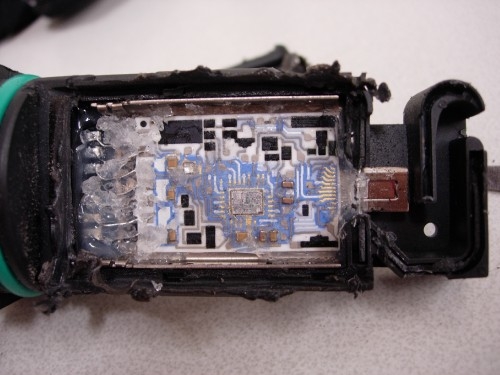
My research has indicated that one of the ways MAF's fail is by operating outside of a range they were designed for. This fits in nicely with many on this board saying that the stock MAF's are only good for XXX HP. I wonder if this MAF was just an off the shelf Bosch unit not custom for our cars that may be found on much smaller Audi and VW engines so we are already at the edge of its design. QUOTE]
that's right, far as i know. also, when the hp limits ofthe car exceed the "voltage" the maf is designed to handle. they get fried. i always suspected that was causing mafs to fail on my car when i would hit the raised 7200rpm rev limiter.. while the maf wasn't designed to handle the accompanying voltage spikes that the raised rev limiter and HP allowed.
this tendency was confirmed in a previous thread just like this, by tony @epl. so, i knew it wasn't crazy. least as far as this topic goes.
my vw bosch maf isn't the same as this at all, but i'll try a refurb from ECS on that one too, should the need arise.
My research has indicated that one of the ways MAF's fail is by operating outside of a range they were designed for. This fits in nicely with many on this board saying that the stock MAF's are only good for XXX HP. I wonder if this MAF was just an off the shelf Bosch unit not custom for our cars that may be found on much smaller Audi and VW engines so we are already at the edge of its design. QUOTE]
that's right, far as i know. also, when the hp limits ofthe car exceed the "voltage" the maf is designed to handle. they get fried. i always suspected that was causing mafs to fail on my car when i would hit the raised 7200rpm rev limiter.. while the maf wasn't designed to handle the accompanying voltage spikes that the raised rev limiter and HP allowed.
this tendency was confirmed in a previous thread just like this, by tony @epl. so, i knew it wasn't crazy. least as far as this topic goes.
my vw bosch maf isn't the same as this at all, but i'll try a refurb from ECS on that one too, should the need arise.
Last edited by '02996ttx50; Jul 19, 2013 at 08:35 AM.
Registered User
Joined: May 2009
Posts: 7,984
From: la
Rep Power: 608
 yeah.. here's the guy i get em from.. ( for all the guys that have pm'd me ) asking. i wish you great success, and hope they work as mine do. 47 bucks. don't hate lol
user name "foreverunauto" on ebay.. based in CA.

Registered User
Joined: May 2009
Posts: 7,984
From: la
Rep Power: 608


Registered User
Joined: Nov 2011
Posts: 645
From: Visalia, CA
Rep Power: 66
I did try one of the reman MAF vs. a Bosch new unit and did see a difference.
I was on a drive from central coast wine country back to Chico, CA , at the start of my drive leaving Paso Robles, my MAF blew from hitting redline a few times too much (which is how most of my MAF have blown in the past) I had ordered two MAF from amazon the month before for occasion like this. I too saw the 47.00 MAF and was ecstatic about the possibility since the Bosch unit even at discounted price was 170.xx to get. So when my MAF went bad initially,I installed the aftermarket unit. Used my durametric to scan vehicle and reset all codes and did about 4 short 3-5 miles drives and key cycled the vehicled to make sure that there were no residual codes left in the DME.
Car ran fine so I took her on the road home. After about a 30 minute run, I started getting light misfiring accelerating between 3.5-5K up highway 41 leaving wine country.
I had my hand scanner also with me and monitored the MAF sensor voltage to see if I am running into problems. I kept seeing voltage hang at 1.4 volts even when I let off throttle . Pulled over and installed the new bosch unit, again, clear codes and drove it for a good 20 minutes. Car behaved fine at all points of throttle, and when I monitored the the voltage changes in the MAF, voltage responded nicely to changes in my throttle roll. I know this is not a technical evaluation of the MAF but does show that remanufactured MAF , at least from this Amazon seller could have inherent problems other than a resistor/diode swap for a new one.
Here's some reading on MAF that talks further about the circuitry of a MAF and draw your own conclusion on MAF
https://www.6speedonline.com/forums/...about-diy.html
I was on a drive from central coast wine country back to Chico, CA , at the start of my drive leaving Paso Robles, my MAF blew from hitting redline a few times too much (which is how most of my MAF have blown in the past) I had ordered two MAF from amazon the month before for occasion like this. I too saw the 47.00 MAF and was ecstatic about the possibility since the Bosch unit even at discounted price was 170.xx to get. So when my MAF went bad initially,I installed the aftermarket unit. Used my durametric to scan vehicle and reset all codes and did about 4 short 3-5 miles drives and key cycled the vehicled to make sure that there were no residual codes left in the DME.
Car ran fine so I took her on the road home. After about a 30 minute run, I started getting light misfiring accelerating between 3.5-5K up highway 41 leaving wine country.
I had my hand scanner also with me and monitored the MAF sensor voltage to see if I am running into problems. I kept seeing voltage hang at 1.4 volts even when I let off throttle . Pulled over and installed the new bosch unit, again, clear codes and drove it for a good 20 minutes. Car behaved fine at all points of throttle, and when I monitored the the voltage changes in the MAF, voltage responded nicely to changes in my throttle roll. I know this is not a technical evaluation of the MAF but does show that remanufactured MAF , at least from this Amazon seller could have inherent problems other than a resistor/diode swap for a new one.
Here's some reading on MAF that talks further about the circuitry of a MAF and draw your own conclusion on MAF
https://www.6speedonline.com/forums/...about-diy.html

Thread Starter
|
Registered User
Joined: Jan 2010
Posts: 1,413
From: OC, CA
Rep Power: 93
Wow, this thread exploded since last night LOL. I went with the new one since I don't want to deal with this headache again, especially since my basic code reader didn't pick up the MAF issue.
That said, is the stock Bosch unit good enough for a stage 1 flash (K16s) ?Still stock now but just in case
That said, is the stock Bosch unit good enough for a stage 1 flash (K16s) ?Still stock now but just in case
Registered User
Joined: Nov 2011
Posts: 645
From: Visalia, CA
Rep Power: 66
Wow, this thread exploded since last night LOL. I went with the new one since I don't want to deal with this headache again, especially since my basic code reader didn't pick up the MAF issue.
That said, is the stock Bosch unit good enough for a stage 1 flash (K16s) ?Still stock now but just in case
That said, is the stock Bosch unit good enough for a stage 1 flash (K16s) ?Still stock now but just in case
I'm on to Hitachi MAF next month and a re-tune .
And while you are at it, get durametric or a better code scanner with live data streaming at least
Thread Starter
|
Registered User
Joined: Jan 2010
Posts: 1,413
From: OC, CA
Rep Power: 93
Yea, will have to add a durametric to my list. Luckily my mechanic was nice enough to not charge me to read the codes.
I also ordered a paper Mahle filter. I'm taking out the aftermarket one.
I also ordered a paper Mahle filter. I'm taking out the aftermarket one.
Registered User
Joined: May 2009
Posts: 7,984
From: la
Rep Power: 608
the only way i ever knew of a lower cost alternative to buying NEW ( at up to $400.00..
) is because an OEM Bosch unit had failed! and someone with more knowledge than i had told me about the option. doh!different mafs for different folks. lol
Registered User
Joined: Nov 2011
Posts: 645
From: Visalia, CA
Rep Power: 66
From my previous link:
The film is electrically heated to a constant
temperature above the inlet air temperature. The outlet air
temperature is sensed using a thermistor. The hot film
element is incorporated in a Wheatstone bridge circuit.
The Wheatstone bridge consists of three resistors R1, R2 and
R3 and a hot film element having resistance Rhw. With no
airflow the voltage of resistors R1, R2, and R3 are the same.
The flow stream of air passes through to the thin film
sensor device. It incorporates two sensors that are exposed
to the air stream. A thin film sensor measures flow and a
thermister measures gas temperature. The flow sensor is
heated and maintained at a constant temperature. As airflow
passes the hot film, heat is carried away from the film by
the moving air. The amount of heat carried away varies in
proportional to the mass flow rate of the air. The heat
lost by the film to the air tends to cause the resistance
of the film to vary, which will unbalance the bridge
circuit, thereby producing an input voltage to the
amplifier. The output of the amplifier is connected to the
bridge circuit and provides the power for this circuit. The
amplified voltage changes the resistance in such a way as
to maintain a fixed hot film temperature relative to the
inlet temperature.
In a most basic of function , the diode/resistor is the one that gets fried often but in rebuilding these, the internals may not be properly bench tested for maximum integrity. But then if you are running stock to very mild modded motors, failure will happen less frequently. Start tuning and failure will be eminent. The stock MAF are just not made to handle that type of air flow resolution requirement for a high hp tune. Just my 0.02 cents
The film is electrically heated to a constant
temperature above the inlet air temperature. The outlet air
temperature is sensed using a thermistor. The hot film
element is incorporated in a Wheatstone bridge circuit.
The Wheatstone bridge consists of three resistors R1, R2 and
R3 and a hot film element having resistance Rhw. With no
airflow the voltage of resistors R1, R2, and R3 are the same.
The flow stream of air passes through to the thin film
sensor device. It incorporates two sensors that are exposed
to the air stream. A thin film sensor measures flow and a
thermister measures gas temperature. The flow sensor is
heated and maintained at a constant temperature. As airflow
passes the hot film, heat is carried away from the film by
the moving air. The amount of heat carried away varies in
proportional to the mass flow rate of the air. The heat
lost by the film to the air tends to cause the resistance
of the film to vary, which will unbalance the bridge
circuit, thereby producing an input voltage to the
amplifier. The output of the amplifier is connected to the
bridge circuit and provides the power for this circuit. The
amplified voltage changes the resistance in such a way as
to maintain a fixed hot film temperature relative to the
inlet temperature.
In a most basic of function , the diode/resistor is the one that gets fried often but in rebuilding these, the internals may not be properly bench tested for maximum integrity. But then if you are running stock to very mild modded motors, failure will happen less frequently. Start tuning and failure will be eminent. The stock MAF are just not made to handle that type of air flow resolution requirement for a high hp tune. Just my 0.02 cents
Registered User
Joined: May 2009
Posts: 7,984
From: la
Rep Power: 608
, the diode/resistor is the one that gets fried often but in rebuilding these, the internals may not be properly bench tested for maximum integrity. But then if you are running stock to very mild modded motors, failure will happen less frequently. Start tuning and failure will be eminent.
i would venture, any tuned car will blow mafs at a higher rate of frequency than a stock one will.