


Feds seize Cizeta V16...

Thread Starter
|
Registered User
Joined: Sep 2004
Posts: 114
From: California, USA
Rep Power: 26

Feds seize Cizeta V16...
ICE seizes $700,000 exotic car in San Juan Capistrano
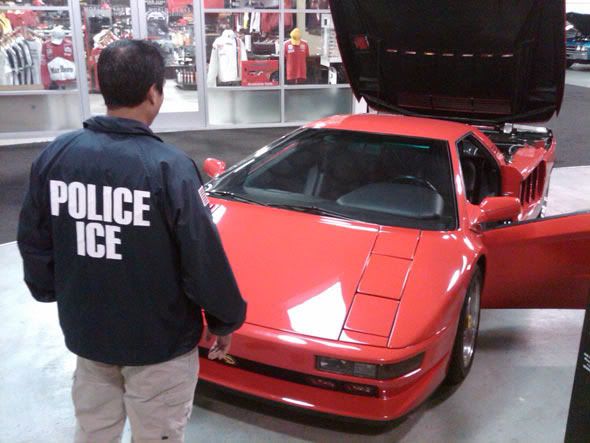
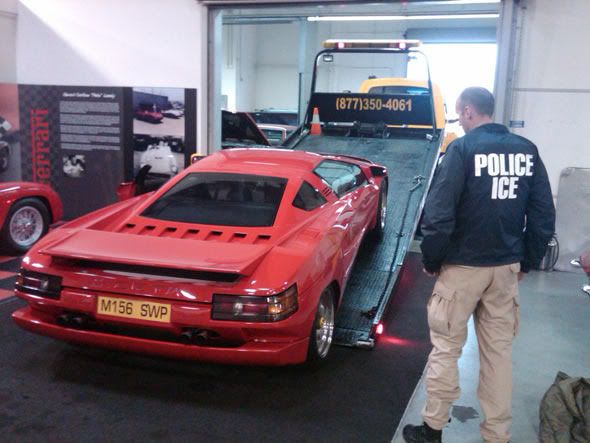
Federal agents this morning seized an exotic car valued at more than $700,000 from Family Classic Cars in San Juan Capistrano, where it had been left from a car show that took place there on Friday.
The U.S. Immigration and Customs Enforcement agency served the seizure warrant for a 1994 Cizeta V16.
ICE said the Italian car is one of fewer than a dozen such vehicles produced by automotive engineer Claudio Zampoli in a joint venture with music composer Giorgio Moroder.
According to a news release, ICE investigators allege that Orange County resident Zampoli violated U.S. customs and environmental laws when he brought the car into the country in 2001.
In the affidavit filed in support of the seizure, Zampoli’s import agent stated on customs documents when the car was imported that it was worth $125,000, even though the car originally sold new for $600,000, ICE said.
Additionally, the federal agency said the car does not meet U.S. environmental and safety regulations.
“Make no mistake, the illegal importation of gray market vehicles like this is not just a technical violation,” said Miguel Unzueta, special agent in charge for the ICE Office of Investigations in Los Angeles. “Cars that don’t meet U.S. standards are outlawed for a reason. These vehicles can pose a real threat to public health and safety.”
The folks at Family Classic, meanwhile, say they were just as surprised as anyone when federal agents arrived this morning to seize the car.
“We don’t own the car, we weren’t trying to sell the car and it wasn’t even on consignment,” said Family Classic owner Marc Spizzirri.
“Apparently they went to (Zampoli’s) business first to seize the car. Then the next thing I know, I had 10 agents here.”
“The immigration guys were total gentlemen,” Spizzirri added. “They couldn’t have been more cordial. They said, ‘This has nothing to do with you; we are just taking the car out of here.’”
(We are still trying to find a phone number to reach Zampoli for comment.)
As for the Cizeta, it will remain in storage while authorities seek to have it forfeited to the federal government. If that happens, it will be offered at a public auction, ICE said. But if sold, the car would then have to be exported due to it not meeting the environmental and safety standards, the government said.
The Cizeta features a V16 engine capable of producing 560 horsepower and was first unveiled in 1988 in Los Angeles, according to the Cizeta Web site.
Federal agents this morning seized an exotic car valued at more than $700,000 from Family Classic Cars in San Juan Capistrano, where it had been left from a car show that took place there on Friday.
The U.S. Immigration and Customs Enforcement agency served the seizure warrant for a 1994 Cizeta V16.
ICE said the Italian car is one of fewer than a dozen such vehicles produced by automotive engineer Claudio Zampoli in a joint venture with music composer Giorgio Moroder.
According to a news release, ICE investigators allege that Orange County resident Zampoli violated U.S. customs and environmental laws when he brought the car into the country in 2001.
In the affidavit filed in support of the seizure, Zampoli’s import agent stated on customs documents when the car was imported that it was worth $125,000, even though the car originally sold new for $600,000, ICE said.
Additionally, the federal agency said the car does not meet U.S. environmental and safety regulations.
“Make no mistake, the illegal importation of gray market vehicles like this is not just a technical violation,” said Miguel Unzueta, special agent in charge for the ICE Office of Investigations in Los Angeles. “Cars that don’t meet U.S. standards are outlawed for a reason. These vehicles can pose a real threat to public health and safety.”
The folks at Family Classic, meanwhile, say they were just as surprised as anyone when federal agents arrived this morning to seize the car.
“We don’t own the car, we weren’t trying to sell the car and it wasn’t even on consignment,” said Family Classic owner Marc Spizzirri.
“Apparently they went to (Zampoli’s) business first to seize the car. Then the next thing I know, I had 10 agents here.”
“The immigration guys were total gentlemen,” Spizzirri added. “They couldn’t have been more cordial. They said, ‘This has nothing to do with you; we are just taking the car out of here.’”
(We are still trying to find a phone number to reach Zampoli for comment.)
As for the Cizeta, it will remain in storage while authorities seek to have it forfeited to the federal government. If that happens, it will be offered at a public auction, ICE said. But if sold, the car would then have to be exported due to it not meeting the environmental and safety standards, the government said.
The Cizeta features a V16 engine capable of producing 560 horsepower and was first unveiled in 1988 in Los Angeles, according to the Cizeta Web site.

>8^)
ER




Registered User
Joined: Nov 2009
Posts: 21
From: Oxford, NJ/ Exton, PA
Rep Power: 0
Trending Topics
Registered User
Joined: May 2008
Posts: 447
From: too far from the autobahn, USA
Rep Power: 37
Thats how the Maserati MC12 is registered here, correct?



Registered User
Joined: May 2009
Posts: 282
From: California
Rep Power: 32
I saw this car at Woodley Park in So. Cal a few months ago at a European car show. What a great piece of machinery. The motor alone was worth driving to the show. I spoke to the owner who was a gentleman and took the time to answer all of my questions.
Too bad he may lose this wonderful supercar. He was so proud to show it.
dave29
Too bad he may lose this wonderful supercar. He was so proud to show it.
dave29
Registered User
Joined: Oct 2009
Posts: 73
From: Home of the Brave
Rep Power: 19
Not sure about the MC12 but it's close enough to the Enzo I would think it would be street legal w/o the need for that type of registration, however a few of the Mclaren F1s in the country are registered under the "show and display" registration. I think it limits the amount of driving you are allowed to do but lets you bypass all of the crash/emissions tests.
Thread Starter
|
Registered User
Joined: Sep 2004
Posts: 114
From: California, USA
Rep Power: 26
Not sure about the MC12 but it's close enough to the Enzo I would think it would be street legal w/o the need for that type of registration, however a few of the Mclaren F1s in the country are registered under the "show and display" registration. I think it limits the amount of driving you are allowed to do but lets you bypass all of the crash/emissions tests.
'Show or Display' only provides waivers for the DOT's Federal Motor Vehicle Safety Standards - like airbags, bumper height, exterior lighting and reflectors, and countless other things related to how an automobile is constructed and the safety related items that are typically tested via crash tests.
It would be wonderful if the 'Show or Display' legislation also exempted the vehicles from emissions testing, but unfortunately that is not the case. You must still meet all EPA standards for the vehicle's year of manufacture. I consider this the 'fatal flaw' of the legislation, as in the small numbers these cars are being brought into the USA, the impact they might impose by being non-conforming in whatever way they might be is tremendously minute.
This means that if a vehicle was built in 1996 or later, then the car must conform to the EPA's OBD-II diagnostic standard. If a car wasn't originally built with this in mind by its manufacturer, the costs and complexity of trying to conform to that standard with the proper sensors, and codes registered by the ECU can be extremely costly to try and overcome, or just nearly impossible. Costs for the EPA work have been known to run well into the tens, and even low hundred, thousand dollars for this effort to be done, and there are a very small number of companies in the USA that are certified by the EPA as "Independent Commercial Importers" (or ICIs) that can be contracted to even attempt it.
Here's an article, reprinted out of AutoWeek that gives a great explanation of the origins of 'Show or Display' and the process associated with importing a vehicle using it.
Display of Speed: Under the "Show or Display exemption, Americans can now import previously forbidden exotics
>8^)
ER
Registered User
Joined: Oct 2009
Posts: 73
From: Home of the Brave
Rep Power: 19
Couple of points of correction. The MC-12s that are here were brought in under 'Show or Display'. The fact that they are Enzo-based likely made the process easier, but they are significantly different from the Enzo and would not have been given a free pass.
'Show or Display' only provides waivers for the DOT's Federal Motor Vehicle Safety Standards - like airbags, bumper height, exterior lighting and reflectors, and countless other things related to how an automobile is constructed and the safety related items that are typically tested via crash tests.
It would be wonderful if the 'Show or Display' legislation also exempted the vehicles from emissions testing, but unfortunately that is not the case. You must still meet all EPA standards for the vehicle's year of manufacture. I consider this the 'fatal flaw' of the legislation, as in the small numbers these cars are being brought into the USA, the impact they might impose by being non-conforming in whatever way they might be is tremendously minute.
This means that if a vehicle was built in 1996 or later, then the car must conform to the EPA's OBD-II diagnostic standard. If a car wasn't originally built with this in mind by its manufacturer, the costs and complexity of trying to conform to that standard with the proper sensors, and codes registered by the ECU can be extremely costly to try and overcome, or just nearly impossible. Costs for the EPA work have been known to run well into the tens, and even low hundred, thousand dollars for this effort to be done, and there are a very small number of companies in the USA that are certified by the EPA as "Independent Commercial Importers" (or ICIs) that can be contracted to even attempt it.
Here's an article, reprinted out of AutoWeek that gives a great explanation of the origins of 'Show or Display' and the process associated with importing a vehicle using it.
Display of Speed: Under the "Show or Display exemption, Americans can now import previously forbidden exotics
>8^)
ER
'Show or Display' only provides waivers for the DOT's Federal Motor Vehicle Safety Standards - like airbags, bumper height, exterior lighting and reflectors, and countless other things related to how an automobile is constructed and the safety related items that are typically tested via crash tests.
It would be wonderful if the 'Show or Display' legislation also exempted the vehicles from emissions testing, but unfortunately that is not the case. You must still meet all EPA standards for the vehicle's year of manufacture. I consider this the 'fatal flaw' of the legislation, as in the small numbers these cars are being brought into the USA, the impact they might impose by being non-conforming in whatever way they might be is tremendously minute.
This means that if a vehicle was built in 1996 or later, then the car must conform to the EPA's OBD-II diagnostic standard. If a car wasn't originally built with this in mind by its manufacturer, the costs and complexity of trying to conform to that standard with the proper sensors, and codes registered by the ECU can be extremely costly to try and overcome, or just nearly impossible. Costs for the EPA work have been known to run well into the tens, and even low hundred, thousand dollars for this effort to be done, and there are a very small number of companies in the USA that are certified by the EPA as "Independent Commercial Importers" (or ICIs) that can be contracted to even attempt it.
Here's an article, reprinted out of AutoWeek that gives a great explanation of the origins of 'Show or Display' and the process associated with importing a vehicle using it.
Display of Speed: Under the "Show or Display exemption, Americans can now import previously forbidden exotics
>8^)
ER
I completely agree that if there are a limited number of vehicles in the US that may fail emissions and they are limited in the amount of driving they are allowed, then how much damage to the environment can they really be doing?
Last edited by widebody350; Jan 21, 2010 at 06:02 PM.