When you click on links to various merchants on this site and make a purchase, this can result in this site earning a commission. Affiliate programs and affiliations include, but are not limited to, the eBay Partner Network.
My car just had the standard airboxes without the vacuum actuated flaps so it wasn't a problem. No codes so no worries! Bit cold here in the PNW to test at the moment so will update once it gets warmer.
Love the 3D printed adapter plate and would like to follow your lead. Any chance I could pay you for a set?
Nicely done! Did you end up leaving the ducting in from the grille? My only concern as previously mentioned by others is the filters sucking in hot air. The GT4 cars have bumper cutouts in the bumpers in front of the air boxes for cool air.
We pulled all the ducting. I am a Carroll Smith student. I don't like stacking stuff in front of the cooling system.
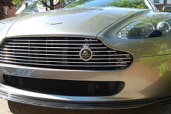
Will most likely direct air from the lower grill, you can just see it in the picture. I don't know what that looks like yet. Mine is an 06 and it is important to me to run the stock cover.
Sound is a huge thing that engineers focus on with intake boxes. I'm also not a fan of oiled filters. My car had K&N filters on it when I bought it, and I went back to stock. Also had some bad MAFs (accompanied by error codes)... purely speculation but I wouldn't be surprised if the oil was a culprit. Here's an old vs new pic:
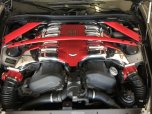
And here's an overview showing the entire intake system:
Nice setup, you may find removing the original bracket for the airbox housing leaves you without the mounting point for the inner guard that it included.
We fit the liner and needed to move the filter forward some, it was squished against the liner. The hole attaching the liner to the box is of no consequence. The liner is very stiff thru that region when installed, I suspect the fastener was used to eliminate vibration between the box and the liner. We are going to plug the hole with an automotive plastic push pin.
Here is the bracket.
Filters are AEM from Summit.
We will close the cooling system side from the intake side with some kind of aluminum fencing. Notice the small hole drilled thru the bracket - 2ea 180 apart. Drill thru MAF tube flange and button head together. Surprisingly stiff when fully assembled.
We cut the sound proofing back to the top of the filter for extra clearance - YMMV I am undecided on a dam around the bottom. We need to get it fully assembled and put it on the ground at ride height and take some sanity measurements.
A follow up. Got a lean mixture code the other day after some 'enthusiastic' driving. Reset it and it hasn't returned.
While resetting the code I went through my OBD app. Among the readings available was inlet air temp. So for the past few times I've gone out I've watched the temp. So far, as long as I'm moving it is the same as the ambient outside temp. Warms up a bit when stopped but otherwise same as outside. So I think I can say that with no airboxes there's no issue of the inlet temp rising from proximity to the engine.
Interested if anyone can run theirs with airboxes on and see if same readings. Would think with airbox the temp wouldn't rise as much when stopped.
I've been terrible at keeping up on the forums lately but wanted to chime in with something really quickly.
I just did a dunk test with intake filters to compare how well water is blocked by paper (OEM filters) and cloth (aftermarket filters). I've got a video I'll be posting but the cliff notes are that the paper filter took a LONG time for water to seep through, while the cloth filters basically offered no resistance.
I've never been a fan of oiled filters (my own personal preference). Oil is a way to compensate for the lack of filtration of the loose cloth weave and the oil can be sucked in and can foul your MAF sensors. The OEM filters have a LOT of surface area so, despite being made of restrictive paper, there's still enough air supply to keep your engine happy.
I know a couple guys are working on adapters to run filters without air boxes, and I'll be asking to try them out on my car - but I'll continue using the OEM paper intake filters along with the main intake inlet (the one behind the grill). I also kept track of my intake air temps while driving around yesterday, and the intake temps were at most only 2 degrees (Fahrenheit) different than the outside ambient air temperature. With the location of the air filters, I don't think losing the air boxes will increase intake temps.
With this setup, I think I'll get:
-More overall air supply (both ambient and from the grill)
-Less weight (by losing the air boxes)
-Easier maintenance (there are WAY too many bolts on the air box covers)
-Adequate protection from water ingestion (by using OEM paper filters)
I'll post up the filter dunk test video when it's ready
Last edited by Redpants; Dec 30, 2016 at 05:17 PM.
Okay, here we go... The main point of this dunk test is to see how well the filter prevents water from being ingested. It is not to show air flow (or lack thereof). It is not to show filtration. I only did it for the sake of seeing how likely it is for water to be ingested into the engine if you're running open airboxes.
Telum-Redpants if you work your plan to keep the OE ductwork you might consider:
Open the duct center mouth to maximize its size, more than doubling its area.
Remove your Vantage's grille and then apply tape to protect neighboring vertical and horizontal surfaces that could be affected by the minor surgery you will be performing.
Maximize the duct center opening by making vertical cuts in the plastic, left and right, starting at the bottom of the original opening down to the bumper fascia. Then, just above the fascia, cut horizontally, connecting the two original vertical cuts, and remove the scrap.
I used a small hand held saw being careful to avoid contact with other surfaces, especially the painted bumper fascia. Used files and sand paper to slick up the rough edges. Liberal use of several thicknesses of painters tape avoids an "aw ****".
AM had looked into a similar change to their OE ductwork, a 6hp increase the reward. They did not implement the modification, however, sometime later the flapper valve air box system went into production.
Telum-Redpants if you work your plan to keep the OE ductwork you might consider:
Open the duct center mouth to maximize its size, more than doubling its area.
Remove your Vantage's grille and then apply tape to protect neighboring vertical and horizontal surfaces that could be affected by the minor surgery you will be performing.
Maximize the duct center opening by making vertical cuts in the plastic, left and right, starting at the bottom of the original opening down to the bumper fascia. Then, just above the fascia, cut horizontally, connecting the two original vertical cuts, and remove the scrap.
I used a small hand held saw being careful to avoid contact with other surfaces, especially the painted bumper fascia. Used files and sand paper to slick up the rough edges. Liberal use of several thicknesses of painters tape avoids an "aw ****".
AM had looked into a similar change to their OE ductwork, a 6hp increase the reward. They did not implement the modification, however, sometime later the flapper valve air box system went into production.
Thanks for sharing Flinder. Do you have any images you took during the modification and after? I too am thinking that I will be leaving the ductwork. Thanks!!
Have no pictures immediately available but will uncover car in my storage facility, remove my newly finished Telum-Redpants 4 bar grille and photograph the larger intake mouth.
Love retirement, gives me lots of time for car play. Problem is only have limited computer skills...luckily have indentured grand children who help.






 I am undecided on a dam around the bottom. We need to get it fully assembled and put it on the ground at ride height and take some sanity measurements.