


Wheel Vibration 60-80mph


Thread Starter
|
Banned
Joined: Nov 2008
Posts: 49
From: Fords, NJ
Rep Power: 19

Wheel Vibration 60-80mph
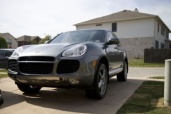
After Installing the 22" Technos (285/35/22) & the H&R's, Mounting and Balancing the wheels properly & doing a full wheel alignment....
I get a hard shaking vibration on the steering wheel between 60-80mph... It goes away after 80mph... I took the car back to rebalance the front wheels, but that didnt fix anything...
the wheels were described as being Hubcentric...
What can be the Problem????
I get a hard shaking vibration on the steering wheel between 60-80mph... It goes away after 80mph... I took the car back to rebalance the front wheels, but that didnt fix anything...
the wheels were described as being Hubcentric...
What can be the Problem????


Registered User
Joined: Dec 2007
Posts: 1,230
From: Turkey
Rep Power: 68
bring the car into a discount tire or somewhere that has road force balancer from hunter, they will probably solve the issue, make sure you remind the guy who's going to work on your car that you're going to tip him if he solves the problem 


Thread Starter
|
Banned
Joined: Nov 2008
Posts: 49
From: Fords, NJ
Rep Power: 19
Spoke to a few people... trying to find a place to force Balance the front wheels.... No bents, wheels are brand new...
Trending Topics
Thread Starter
|
Banned
Joined: Nov 2008
Posts: 49
From: Fords, NJ
Rep Power: 19
Found a Local Friend w. a Hunter GSP9700 and road-forced the front wheels.... Nothing Changed.... still shakes hard between 60-80mph
so its not the Balancing issue...
1) Tires suck and are causing the Problem
2) Rims are not Hubcentric as stated???
3) Power Steering Issue?
so its not the Balancing issue...
1) Tires suck and are causing the Problem
2) Rims are not Hubcentric as stated???
3) Power Steering Issue?
Registered User
Joined: Apr 2009
Posts: 62
From: Texas
Rep Power: 20
I'd vote for number one because I've seen it happen on vehicles before. As an example, on Miatas up to 2005 certain tires will cause shaking like you're describing. Once the tires are changed the shaking would go away.

Registered User
Joined: Mar 2009
Posts: 927
From: NJ
Rep Power: 70

Of course it could be anything, but . . . when I was in the biz this is how I would proceed:
1. Move the fronts to the back and see if the vibration goes away. If its every bit as bad, it may be another issues.
2. If the vibration lessens with the fronts mounted in the rear, take the 2 tire/rims in question and have them checked for radial runout. Tires / rims have a measurement called "radial runout" to which they actually make a gauge for measuring it. Basically when the tire or rim is mounted on the balancer (or right on your vehicle) and the guage is held against the tread or the inside of the rim, it will reveal if there is a lateral "hop" in either. IF THERE IS A HOP, i would pull the tire from the rim and check the rim. If the rim has no hop, then the tires at fault.
Also: Bead seating - if the bead did not properly, the tire will have a runout problem. If you pull the tire from the rim, lube the bead heavily and then reseat, this normally cures that issue. This can be done in conjunction with the above recommendation.
Here is more web info related to my comments:
Radial Run-out: An "out-of-round" situation where vibrations are produced as the wheel spindle moves up and down.
Lateral Run-out: A side-to-side or wobbling movement of the tire and wheel. It is less common than radial run-out. Sensitivity of a vehicle to vibration from radial run-out is four to eight times that of wobble from lateral run-out.
Run-out Balancing
Depends on whether it is radial or lateral run-out.
Radial run-out balancing: Achieved by rotating the wheel and tire assembly two stud positions on the hub, or by rotating the tire 180° on the wheel. If run-out is still over specification, check wheel run-out and mark the low point. Rotate to match the high point of the assembly run-out with the wheel low point. If the assembly run-out is still too high and the wheel is within specification, replace the tire.
Lateral run-out: Achieved by using a run-out gauge to check both the tire and wheel. Chalk-mark the highest point of run-out on both the wheel and tire. Replace whichever (wheel, tire, or both) is out of specification.
1. Wheel is securely seated on the hub face.
2. All lugs have proper torque.
3. There is no buildup of dirt between the hub and wheel.
4. The wheel is not bent.
5. Both tire beads are securely seated on the rim.
1. Move the fronts to the back and see if the vibration goes away. If its every bit as bad, it may be another issues.
2. If the vibration lessens with the fronts mounted in the rear, take the 2 tire/rims in question and have them checked for radial runout. Tires / rims have a measurement called "radial runout" to which they actually make a gauge for measuring it. Basically when the tire or rim is mounted on the balancer (or right on your vehicle) and the guage is held against the tread or the inside of the rim, it will reveal if there is a lateral "hop" in either. IF THERE IS A HOP, i would pull the tire from the rim and check the rim. If the rim has no hop, then the tires at fault.
Also: Bead seating - if the bead did not properly, the tire will have a runout problem. If you pull the tire from the rim, lube the bead heavily and then reseat, this normally cures that issue. This can be done in conjunction with the above recommendation.
Here is more web info related to my comments:
Radial Run-out: An "out-of-round" situation where vibrations are produced as the wheel spindle moves up and down.
Lateral Run-out: A side-to-side or wobbling movement of the tire and wheel. It is less common than radial run-out. Sensitivity of a vehicle to vibration from radial run-out is four to eight times that of wobble from lateral run-out.
Run-out Balancing
Depends on whether it is radial or lateral run-out.
Radial run-out balancing: Achieved by rotating the wheel and tire assembly two stud positions on the hub, or by rotating the tire 180° on the wheel. If run-out is still over specification, check wheel run-out and mark the low point. Rotate to match the high point of the assembly run-out with the wheel low point. If the assembly run-out is still too high and the wheel is within specification, replace the tire.
Lateral run-out: Achieved by using a run-out gauge to check both the tire and wheel. Chalk-mark the highest point of run-out on both the wheel and tire. Replace whichever (wheel, tire, or both) is out of specification.
1. Wheel is securely seated on the hub face.
2. All lugs have proper torque.
3. There is no buildup of dirt between the hub and wheel.
4. The wheel is not bent.
5. Both tire beads are securely seated on the rim.

Thread Starter
|
Banned
Joined: Nov 2008
Posts: 49
From: Fords, NJ
Rep Power: 19
I sent this reply to the super996tt....
my issue has been resolved (90% of it at least)
I left the car for the entire day with one of my clients who owns a shop specializing in tire mounting and balancing and he end up remounting 2 of the tires
and road-force balancing the wheels to tight specs and eliminated the vibration almost completely... its alot smoother now, there is a minimal vibration but its because I have aggressive all-season tires...
My suggestion is taking the truck to a professional tire installation/balancing place and let the work their magic...
this is his shop...
http://www.advancedtireauto.com/
my issue has been resolved (90% of it at least)
I left the car for the entire day with one of my clients who owns a shop specializing in tire mounting and balancing and he end up remounting 2 of the tires
and road-force balancing the wheels to tight specs and eliminated the vibration almost completely... its alot smoother now, there is a minimal vibration but its because I have aggressive all-season tires...
My suggestion is taking the truck to a professional tire installation/balancing place and let the work their magic...
this is his shop...
http://www.advancedtireauto.com/

Registered User
Joined: Sep 2010
Posts: 2
From: MICHIGAN
Rep Power: 0
Cayenne tire balancing
2006 cs-had good year tires replaced at dealer with bridgestone dueler hp sports. N rating. I have returned to dealer three times for rebalancing for slight flutter in steering wheel at 70 and above. Also pulls to the right now. With other tires no balance problem and no pull to right. Tires replace at 37,000 miles.
The have road force balancer. Tire tech rode with me and said there is definitely a problem. No change after two additional visits to dealer.
Help!
The have road force balancer. Tire tech rode with me and said there is definitely a problem. No change after two additional visits to dealer.
Help!

