


2010 Panamera Turbo - Throttle blip in S.C


Thread Starter
|
Registered User
Joined: Apr 2015
Posts: 4
From: Norway
Rep Power: 0

2010 Panamera Turbo - Throttle blip in S.C
Picking up a used Panamera Turbo with sport chrono tomorrow.
Does the throttle blip on downshifts or not ? Cant find a single clip on youtube..haha. GTS only.
So.. can anyone confirm I have a pleasant throttle blip coming into my life ?
Does the throttle blip on downshifts or not ? Cant find a single clip on youtube..haha. GTS only.
So.. can anyone confirm I have a pleasant throttle blip coming into my life ?

Registered User
Joined: Feb 2015
Posts: 79
From: PA
Rep Power: 15
I am not sure if my car rev-match because i do not have the sports chrono package. I do not really get what rev match do for me. I tried down shifting from 3rd to 2nd and the rpm jumped significantly and i fet engine breaking. Is that rev matching??

Registered User
Joined: Jun 2014
Posts: 372
From: Boston
Rep Power: 26
Once again: all PDK transmissions rev-match, regardless of what options you have. You'd really notice it if they didn't.
The transmission controls the gear ratio between the engine and the wheels. The lower the gear, the faster the engine must spin to maintain the same speed.
Let's imagine that you're braking hard, but that you're not planning on coming to a complete stop. In a manual transmission car, you take your foot off the accelerator, press the brake, and disengage the clutch. The engine rapidly drops to idle speed as you brake.
Now it's time to re-engage the clutch at a lower speed. The engine is spinning too slowly for the new speed. Most people will simply engage the clutch slowly, so the friction of the spinning clutch brings the engine to the correct speed.
A more experienced driver might tap the accelerator just before re-engaging the clutch. This spins the engine, hopefully at around the right rate for the new speed and gear ratio. The driver is matching revolution speed with the drive train. If he gets it very close, he can now engage the clutch very rapidly, because it's spinning at the same speed as the engine, and there's no abrupt jerk as friction on the clutch plate matches speed.
As you brake, the PDK (literally "Porsche Double Clutch" in German) transmission disengages one clutch and engages the other, which already has the new gear selected on the second gear shaft. This happens very fast, so there's no time for the engine to slow down to idle speed.
Even so, the engine is still spinning too slow for the new gear, even if the disparity is not as great. The PDK has the same choice a human driver has - it can use the clutch to drag the engine up to speed, or apply a bit of throttle to increase engine speed. Using the clutch is slower and jerkier, so it applies throttle. Because it's computer-controlled, it can be much more precise about how much throttle it needs to match speed.
So far as I know, all dual-clutch transmissions do this, because they already involve a lot of computer control anyway, and rapid shifting is very unpleasant without it.
The transmission controls the gear ratio between the engine and the wheels. The lower the gear, the faster the engine must spin to maintain the same speed.
Let's imagine that you're braking hard, but that you're not planning on coming to a complete stop. In a manual transmission car, you take your foot off the accelerator, press the brake, and disengage the clutch. The engine rapidly drops to idle speed as you brake.
Now it's time to re-engage the clutch at a lower speed. The engine is spinning too slowly for the new speed. Most people will simply engage the clutch slowly, so the friction of the spinning clutch brings the engine to the correct speed.
A more experienced driver might tap the accelerator just before re-engaging the clutch. This spins the engine, hopefully at around the right rate for the new speed and gear ratio. The driver is matching revolution speed with the drive train. If he gets it very close, he can now engage the clutch very rapidly, because it's spinning at the same speed as the engine, and there's no abrupt jerk as friction on the clutch plate matches speed.
As you brake, the PDK (literally "Porsche Double Clutch" in German) transmission disengages one clutch and engages the other, which already has the new gear selected on the second gear shaft. This happens very fast, so there's no time for the engine to slow down to idle speed.
Even so, the engine is still spinning too slow for the new gear, even if the disparity is not as great. The PDK has the same choice a human driver has - it can use the clutch to drag the engine up to speed, or apply a bit of throttle to increase engine speed. Using the clutch is slower and jerkier, so it applies throttle. Because it's computer-controlled, it can be much more precise about how much throttle it needs to match speed.
So far as I know, all dual-clutch transmissions do this, because they already involve a lot of computer control anyway, and rapid shifting is very unpleasant without it.
Registered User
Joined: Feb 2015
Posts: 79
From: PA
Rep Power: 15
Once again: all PDK transmissions rev-match, regardless of what options you have. You'd really notice it if they didn't.
The transmission controls the gear ratio between the engine and the wheels. The lower the gear, the faster the engine must spin to maintain the same speed.
Let's imagine that you're braking hard, but that you're not planning on coming to a complete stop. In a manual transmission car, you take your foot off the accelerator, press the brake, and disengage the clutch. The engine rapidly drops to idle speed as you brake.
Now it's time to re-engage the clutch at a lower speed. The engine is spinning too slowly for the new speed. Most people will simply engage the clutch slowly, so the friction of the spinning clutch brings the engine to the correct speed.
A more experienced driver might tap the accelerator just before re-engaging the clutch. This spins the engine, hopefully at around the right rate for the new speed and gear ratio. The driver is matching revolution speed with the drive train. If he gets it very close, he can now engage the clutch very rapidly, because it's spinning at the same speed as the engine, and there's no abrupt jerk as friction on the clutch plate matches speed.
As you brake, the PDK (literally "Porsche Double Clutch" in German) transmission disengages one clutch and engages the other, which already has the new gear selected on the second gear shaft. This happens very fast, so there's no time for the engine to slow down to idle speed.
Even so, the engine is still spinning too slow for the new gear, even if the disparity is not as great. The PDK has the same choice a human driver has - it can use the clutch to drag the engine up to speed, or apply a bit of throttle to increase engine speed. Using the clutch is slower and jerkier, so it applies throttle. Because it's computer-controlled, it can be much more precise about how much throttle it needs to match speed.
So far as I know, all dual-clutch transmissions do this, because they already involve a lot of computer control anyway, and rapid shifting is very unpleasant without it.
The transmission controls the gear ratio between the engine and the wheels. The lower the gear, the faster the engine must spin to maintain the same speed.
Let's imagine that you're braking hard, but that you're not planning on coming to a complete stop. In a manual transmission car, you take your foot off the accelerator, press the brake, and disengage the clutch. The engine rapidly drops to idle speed as you brake.
Now it's time to re-engage the clutch at a lower speed. The engine is spinning too slowly for the new speed. Most people will simply engage the clutch slowly, so the friction of the spinning clutch brings the engine to the correct speed.
A more experienced driver might tap the accelerator just before re-engaging the clutch. This spins the engine, hopefully at around the right rate for the new speed and gear ratio. The driver is matching revolution speed with the drive train. If he gets it very close, he can now engage the clutch very rapidly, because it's spinning at the same speed as the engine, and there's no abrupt jerk as friction on the clutch plate matches speed.
As you brake, the PDK (literally "Porsche Double Clutch" in German) transmission disengages one clutch and engages the other, which already has the new gear selected on the second gear shaft. This happens very fast, so there's no time for the engine to slow down to idle speed.
Even so, the engine is still spinning too slow for the new gear, even if the disparity is not as great. The PDK has the same choice a human driver has - it can use the clutch to drag the engine up to speed, or apply a bit of throttle to increase engine speed. Using the clutch is slower and jerkier, so it applies throttle. Because it's computer-controlled, it can be much more precise about how much throttle it needs to match speed.
So far as I know, all dual-clutch transmissions do this, because they already involve a lot of computer control anyway, and rapid shifting is very unpleasant without it.
Registered User
Joined: Jun 2014
Posts: 372
From: Boston
Rep Power: 26
I don't know how else to say that.
It's not a "blip" when the computer does it, because it's not guessing like a human driver does. It feeds just enough fuel to the engine to get it to smoothly increase to the new RPM before it engages the second clutch.
Registered User
Joined: Feb 2015
Posts: 79
From: PA
Rep Power: 15
Read the first sentence again. All PDK transmissions do rev matching. Options don't matter. Your car does this, but it does it so smoothly you don't notice. If it didn't do rev-matching, you'd feel a huge slam every time the transmission shifted.
I don't know how else to say that.
It's not a "blip" when the computer does it, because it's not guessing like a human driver does. It feeds just enough fuel to the engine to get it to smoothly increase to the new RPM before it engages the second clutch.
I don't know how else to say that.
It's not a "blip" when the computer does it, because it's not guessing like a human driver does. It feeds just enough fuel to the engine to get it to smoothly increase to the new RPM before it engages the second clutch.
Trending Topics
Registered User
Joined: Jun 2012
Posts: 92
From: Florida
Rep Power: 17
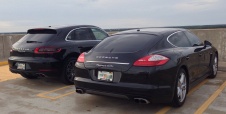
Hope this helps (and doesn't confuse the issue)
Registered User
Joined: Jun 2014
Posts: 372
From: Boston
Rep Power: 26
Was your Cayman S a manual transmission? Because I have a 2015 Cayman S with a 6 speed manual, and because it's a manual and not a PDK, rev matching is optional, and when you do engage it, it's very different. It's a blip that's a lot like tapping the accelerator yourself (also known as "heel / toe" shifting since you need to do that if you're braking at the same time).
I didn't bring it up because it's a manual transmission, and I didn't want to muddy the waters since we're talking about Panamera PDK transmissions.
I didn't bring it up because it's a manual transmission, and I didn't want to muddy the waters since we're talking about Panamera PDK transmissions.
Registered User
Joined: Jun 2012
Posts: 92
From: Florida
Rep Power: 17
Hi there! No actually it was a PDK. It's matching algorithm was much different between normal and sport/sport+. Lots of overrun, pops and gurgles when in sport/sport+. Normal typically downshifted much like my current Panamera.
Was a fun car --but so is the Panamera - just different. I'll look for a YouTube video to see if I can let you hear what I mean.
Was a fun car
--but so is the Panamera - just different. I'll look for a YouTube video to see if I can let you hear what I mean.

Registered User

Joined: Aug 2012
Posts: 336
From: San Francisco, CA
Rep Power: 220

My Panamera GTS makes the same sounds in those modes as well. It bellows out pretty impressive sounds when you speed up into a tunnel in Sport+ mode and then slow down. The noises echo all through the tunnel.

Thread
Thread Starter
Forum
Replies
Last Post
2lflat4
Automotive Parts & Accessories For Sale/Wanted
2
Nov 18, 2019 05:05 PM
AJUSA.com
997 Vendor Classifieds
4
Oct 8, 2015 05:50 PM
EMC2
Automotive Parts & Accessories For Sale/Wanted
0
Aug 22, 2015 08:52 AM
PelicanParts.com
Panamera Vendor Classifieds
0
Aug 20, 2015 02:50 PM