When you click on links to various merchants on this site and make a purchase, this can result in this site earning a commission. Affiliate programs and affiliations include, but are not limited to, the eBay Partner Network.
My parking brake failed on in my driveway, so was completely immobilized.
Tried the VCDS procedures to no avail, as well as battery disconnect.
Was only able to get going after removing the wheels and parking brake motors, then manually turning them to release. Not fun on a slanted driveway. Also, my car wouldn't enter jack mode, so hope that's OK.
After I got the brakes released, I am able to drive the car, however the p with a slash through it remains and as soon as I get moving there's a piercing warning tone, which makes driving the car unpleasant. Once stopped (in park or drive) the tone stops.
The parking brake switch was and still is completely unresponsive and I have the p/, brake light in tachometer and lit up parking brake switch.
Ran VCDS again and here's what I got.
Here's the specific fault... Address 53: Parking Brake
1 Fault Found:
02435 - Supply Voltage for Control Module for Right Channel
009 - Open or Short to Ground - MIL ON
Before I go crazy trying to figure this out. Is this the common 2006 right rear sensor, switch or the control module? Any help appreciated from the experts.
Other info:
Parking brake motor housings don't appear to have any cracks.
Haven't tried disconnecting the cables after the manual release, but I don't think that would make a difference as it was still unresponsive.
VCDS 006 and 007 'basic functions' have no effect on the parking brake motors.
Output tests seem to work OK, turning the various lamps/warnings/ on and off, etc, but the motors don't move.
As an update, tried the battery disconnect again and this didn't work either.
Curious as to other folk's experiences as I've not yet to read about the epb switch having no response whatsoever.
btw, the battery disconnect (both batteries) was an adventure. not thinking I thought I would leave it disconnected overnight and then shut the trunk. 10 seconds later I realized my mistake. Tried the front receptacle per the video and was no go. (i think because of the cables being disconnected there was an incomplete circuit)
Then tried the seat removal. Seat removal was surprisingly easy. However, the cable lever pushed all the way to the right did nothing.
ended up opening the access door between the seats and was able to use a broom stick to coax the negative connection on the driver side to just touch the terminal. voila. Of the three things, that was surprisingly the easiest, lol. Will have to check into that release cable to see what the heck is up. seems to be frayed just below the right angle attachment that goes into the lever, so may be stretched or something.
At least my problems are down to the p/ thing, which I hope some members will be able to confirm as one (I also hope!) of the 4 items. (left and right motors, switch and module)
Afraid to drive it as I've read some horror stories about the brakes activating while moving. (particularly since I manually opened the motors) Thinking my best bet is to either remove the motors completely or perhaps pull the fuses so I can take it to the dealer (1 hour away), but the warning tone is so horrible I don't want to drive the car more than 5 minutes.
Last edited by sam08861; Aug 27, 2017 at 08:27 PM.
All right, I checked the front fuses (#27, #69) and these are OK. Rear fuses check out also. Disconnected my fuse taps and bring back to full stock, but no difference whatsoever.
It seems when I try and clear the codes, they pop right back up, so it seems the module isn't accepting them or just sends them back immediately.
One other funky thing is happening.. The rear spoiler decided to go up all by itself and the motor kept turning past the top position, making a nice loud grinding noise.
Running the VAG again, I got the same error as above, but now both left and right side.
(02434 in addition to the 02435)
Checked the connections for the motors and these looked fine also. No rust or other visible evidence of water intrusion.
Decided to remove the center console and check the switch wiring for chafing and all looked fine.
Did find a few curious items, however.
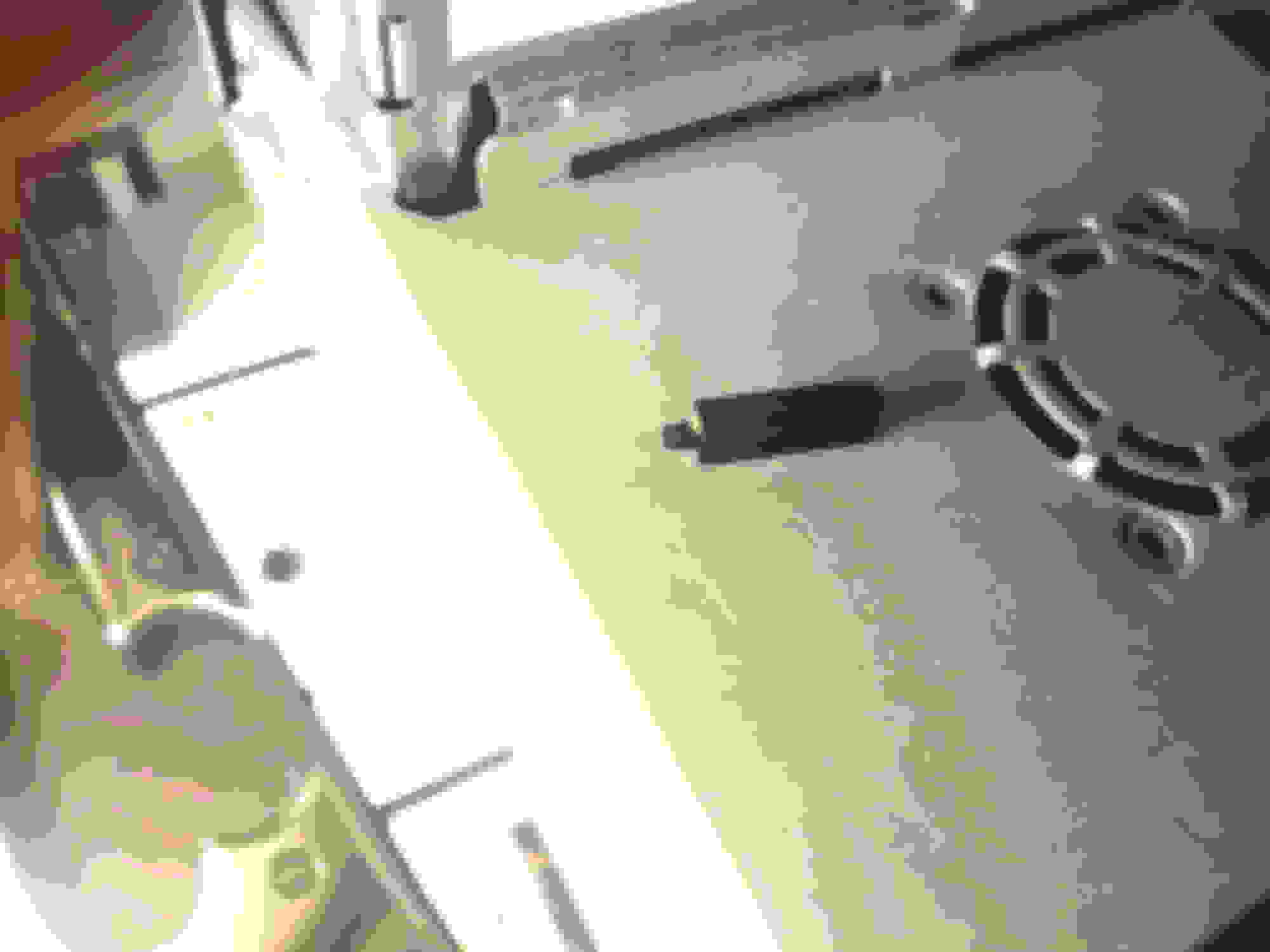
1. There is what looks like a lose end (blue arrow pointing to it) from some sort of cable. Anyone know where this is supposed to go?
2. A black plastic piece was also found.
Pics below..
Have no Idea what the heck these things are.
The cable thing worries me a bit though, but assuming it related to the parking lever and in park is in the most forward position.
With the wonky behaviour of the rear wing, I'm wondering if perhaps I might have a low battery or some other wiring/water intrusion problem.
Gussing that my situation is unique and the best bet here is to take the motors off or pull fuses 29 and 30 in the rear, put in earplugs and take it to the dealer!
think I found my problem and why it's so wonky. found standing water in the spare tire well up to the top of the foam blocks holding the tools/jack in place.
I realize I'm conversing with myself here, but posting an update in case it helps anyone down the line..
After drying out the water, I found that the rear spoiler was an independent issue due to the cable guides not staying together. (cheap plastic compression fitting, fixed by welding the tubes together with expoxy)
Then I got code only code 02443, suggesting bad epb switch or wiring to. Replaced the switch and voila.
(part #3W0927225C, $250 at the local dealer for a new one, old switch had the same #, parts guy said they sell a ton of these and keep these in stock at all times since they
get customers coming in all the time asking for these are selling about 20 a month. Btw, the pricing info and order taking for the 2019 Continental will be available next week, with expected delivery next fall, for those interested.)
Now I'll need to do the complete adaptation since I tinkered with the motors, but I'm really glad to have those warning lights go away and get my center lcd info panel back along with the parking brakes since I'm often parking in sloped areas.
Examining the old parking brake switch after removal, seems there's a flimsy metal plate that is needed to actuate the buttons on a circuit board inside that gets bent and doesn't press hard enough on the buttons. I'll fix this by bending the metal to make better contact and have a spare ready in case this fails again.
That's right. The switch opposite the mirror control that is used to set and release the parking brakes.
If it stops responding, I found that you can listen for a very faint click when pushing in or pulling out at the halfway point in the range of motion. It appears there's a metal lever inside which no longer presses firmly enough on the circuit board contacts.
See photos below showing the switch, inside top, inside bottom (w/circuit board) and the removed rocker with metal prongs that actuate the circuit board switches.
I removed the rocker, bent the tabs and it's now working. Will keep this as a ready spare in the car just in case.
Thanks also good info to know. you also know right, that the switch also activates emergency braking. If you pull that switch up whilst driving the braking system ( all of it) is operated at 100% braking force on all wheels and will bring the car to a dead stop. Its incase the brake peddle and associated system fails. Good to know for the mrs' incase you take not well and pass out at the wheel. Pull that switch when driving and hang on for grim life.
Thanks also good info to know. you also know right, that the switch also activates emergency braking. If you pull that switch up whilst driving the braking system ( all of it) is operated at 100% braking force on all wheels and will bring the car to a dead stop. Its incase the brake peddle and associated system fails. Good to know for the mrs' incase you take not well and pass out at the wheel. Pull that switch when driving and hang on for grim life.
Thank you for the additional info about use of the switch for emergency stopping if peddle failure occurs. Now, if I can remember to use if needed.
Ron
That's right. The switch opposite the mirror control that is used to set and release the parking brakes.
If it stops responding, I found that you can listen for a very faint click when pushing in or pulling out at the halfway point in the range of motion. It appears there's a metal lever inside which no longer presses firmly enough on the circuit board contacts.
See photos below showing the switch, inside top, inside bottom (w/circuit board) and the removed rocker with metal prongs that actuate the circuit board switches.
I removed the rocker, bent the tabs and it's now working. Will keep this as a ready spare in the car just in case.
Great pictures. I would not thought to remove the switch and inspect the metal fingers for proper pressure on the buttons.
I have one more important thing to add that I just figured out. Someone looking at the thread in the future will look at this and laugh.
It appears the unknown item in picture #1 in post #3 actually goes into the open slot in picture #3 in post #8. Putting a similarly sized plastic piece into the slot and the switch has much more leverage. (would have put the original plastic piece in but I have no idea what I did with it, so I cut 3/4" off the end of a plastic paintbrush and put the rounded end facing down into the rocker. This stuck out about 1/4 and pushed in/out with the spring easily and also gave a more positive up and down switch engagement feel)
Here's what I think happened and it's a one in a million event. When I removed the the veneered panel below the shifter, the bottom portion of the switch must have caught on something and the piece in post #3 fell out before the bottom snapped back into place. This would have been aided by the spring in the receptacle, causing the plasctic piece to shoot out.
This piece is exactly the right shape and there is a spring where the protrusion goes into and the smooth rounded end would perfectly fit into the white end of the rocker to give additional leverage. Using round smooth (not brush side) end of a small plastic paintbrush as a substitute, I found the extra length moves the 2 spring loaded black plastic hooks out of the way so there is more range of motion. With the added range of motion, there's no need to bend the metal tabs.
The chances of this happening are very low, but looking at the parts the bottom comes of very easily, if the thin top plastic is pushed out.
Murphy's law being what it is, I didn't piece this together until just now. I could not fathom a 3/4" long piece of plastic escaping from what appears to be a sealed switch unit.
This can't possibly explain the 20 switches that fail a month per the parts guy, but it is what I believe happened in this particular case.
Someone at a breaker or having a bad switch laying around can verify by looking at the parts inside. Have to remind myself, there should be no 'extra parts,' lol.
I have one more important thing to add that I just figured out. Someone looking at the thread in the future will look at this and laugh.
It appears the unknown item in picture #1 in post #3 actually goes into the open slot in picture #3 in post #8. Putting a similarly sized plastic piece into the slot and the switch has much more leverage. (would have put the original plastic piece in but I have no idea what I did with it, so I cut 3/4" off the end of a plastic paintbrush and put the rounded end facing down into the rocker. This stuck out about 1/4 and pushed in/out with the spring easily and also gave a more positive up and down switch engagement feel)
Here's what I think happened and it's a one in a million event. When I removed the the veneered panel below the shifter, the bottom portion of the switch must have caught on something and the piece in post #3 fell out before the bottom snapped back into place. This would have been aided by the spring in the receptacle, causing the plasctic piece to shoot out.
This piece is exactly the right shape and there is a spring where the protrusion goes into and the smooth rounded end would perfectly fit into the white end of the rocker to give additional leverage. Using round smooth (not brush side) end of a small plastic paintbrush as a substitute, I found the extra length moves the 2 spring loaded black plastic hooks out of the way so there is more range of motion. With the added range of motion, there's no need to bend the metal tabs.
The chances of this happening are very low, but looking at the parts the bottom comes of very easily, if the thin top plastic is pushed out.
Murphy's law being what it is, I didn't piece this together until just now. I could not fathom a 3/4" long piece of plastic escaping from what appears to be a sealed switch unit.
This can't possibly explain the 20 switches that fail a month per the parts guy, but it is what I believe happened in this particular case.
Someone at a breaker or having a bad switch laying around can verify by looking at the parts inside. Have to remind myself, there should be no 'extra parts,' lol.
Thanks for reading and happy motoring!
Sam
Reads like MacGyver modified the switch to work. A true DIY type guy.
Thanks for the additional FYI.
Ron