


991 gt3 vs 991 turbo S performance test from autozeitung


Thread Starter
|
Registered User
Joined: Jun 2013
Posts: 1,107
Rep Power: 72


991 gt3 vs 991 turbo S performance test from autozeitung
http://www.dragtimes.ru/en/blogs/view/99 .
The peformance of 991 gt3 is incredible , so I would say it is a bargain for its price difference vs 991 turbo S
I would buy a 991 turbo S only if I want a faster panamerq and the back seats .
And If I had 200k to spend , I would buy a base 991gt3 + gt-r or 997.1 turbo to tune
The peformance of 991 gt3 is incredible , so I would say it is a bargain for its price difference vs 991 turbo S
I would buy a 991 turbo S only if I want a faster panamerq and the back seats .
And If I had 200k to spend , I would buy a base 991gt3 + gt-r or 997.1 turbo to tune

Registered User
Joined: Aug 2004
Posts: 1,357
From: Chicagoland
Rep Power: 120
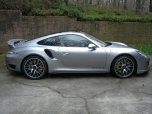
On paper, sure, but the power delivery is apples and oranges, as likely will be the driver experience. I'm sure I'll be faster in my 991TT on a relatively nontechnical track as I would with a 991GT3 w/ the same tires, but I doubt it would be as fun. 
Thread Starter
|
Registered User
Joined: Jun 2013
Posts: 1,107
Rep Power: 72

congratulation on your 991 TT
Registered User
Joined: Aug 2004
Posts: 1,357
From: Chicagoland
Rep Power: 120
Registered User
Joined: Oct 2013
Posts: 626
From: Southeast US
Rep Power: 43
What am I missing here? The Turbo S beat the GT3 in every reported acceleration test. I don't read the language the results are reported in, so if anyone can tell me where the GT3 showed up the Turbo S, please let me know. Thank you.
GT3 is definitely less expensive, so it wins in the price category.
GT3 is definitely less expensive, so it wins in the price category.
Thread Starter
|
Registered User
Joined: Jun 2013
Posts: 1,107
Rep Power: 72
What am I missing here? The Turbo S beat the GT3 in every reported acceleration test. I don't read the language the results are reported in, so if anyone can tell me where the GT3 showed up the Turbo S, please let me know. Thank you.
GT3 is definitely less expensive, so it wins in the price category.
GT3 is definitely less expensive, so it wins in the price category.
Thread Starter
|
Registered User
Joined: Jun 2013
Posts: 1,107
Rep Power: 72
Trending Topics
Thread Starter
|
Registered User
Joined: Jun 2013
Posts: 1,107
Rep Power: 72


Registered User
Joined: Sep 2005
Posts: 797
From: PNW
Rep Power: 103
Here's a comparison between 997Turbo S & 991Turbo S...
(Disclaimer... from Rennteam - not my work + well done):
************************************************** ******
This may be interesting to some of you, some 991 Turbo S vs. 997 Turbo S (previous model) fun facts. I apologize for sometimes not using the right technical term, I translated it from German. Enjoy.
4% less performance/weight ratio (2,87 kg/hp vs. 2,99 kg/hp)
123 kg more downforce at 300 kph in Performance Mode (9 kg in Speed mode, same as 997 Turbo S)
28 mm wider in the rear than 997 Turbo S
200 rpm higher rev limiter (7200 rpm instead of 7000 rpm)
Completely newly developed exhaust manifold, conrods, pistons and adjusted VTG chargers.
Middle cooler in the front is a new development with a higher cooling capacity. The cooling fans have an improved power of 400 W (vs. 280 W in the 997)
Turbo S Airblades improve cooling to the side coolers, they are also standard on the regular Turbo in regions with very hot climate.
Intercoolers similar to 997 models but due to the new side vents and air outlets in the lower rear bumper, air flow has been substantially improved.
Optional round sport pipes for the exhaust system are made of titanium and are polished.
991 Turbo S sounds sportier at idle than 991 Turbo (different sound symposer programming, VTG blade "opens", later ignition timing), in Sport and Sport Plus mode, the idle rpm figure is raised from 680 to 800 rpm (both Turbo S and Turbo)
Sound symposer does not create artificial sound, it transmits the "natural" sound of the engine from the engine bay into the interior. Unlike in the Carrera models (2 chamber sound symposer), the Turbo/S sound symposer has 4 chambers.
PDK has been improved substantially, incl. an integrated rear axle differential lock and a thermodynamic integration into the cooling system of the car. Especially the automatic function of the PDK has been highly improved but also shifting speed and comfort.
Electrohydraulic operated PTM clutch for front axle allows 10% more power and at the same time a much faster and more precise reaction. This improves driving dynamics and traction. For even better durability at extreme stress, a water cooling system has been added, which is integrated into the engine's cooling system, incl. a separate electric water pump and a separate oil/water heat exchanger.
Front axle tread has been increased by 48 mm and 33 mm on the rear axle.
Rear axle steering switches to a more dynamic setup in Sport Plus mode.
10% more direct steering than on 997.
Generation PCCB (997 uses 2. generation PCCB) with calipers made of aluminum (997: stainless steel), which results in a further weight reduction and more ceramic compound in the discs, resulting in a much better durability under high stress to avoid excessive wear on the track like on the "old" generation.
PCCB front discs 410 mm (997: 380 mm) and rear discs 390 mm (997: 350 mm).
Optional Sport Classic rims not offered in Japan.
Sport Plus mode specifically "tuned" for race track.
Front fenders are made of aluminum.
more luggage room (front)
The rear wing adapts it's angle to open or closed sun roof.
At speeds over 270 kph, you cannot operate the PAA (Porsche Active Aerodynamics) system.
In Performance mode, front axle downforce is 44 kg (997: 18 kg drag) and rear axle downforce is 88 kg (997: 27 kg)
Battery capacity has increased to 95 Ah (997: 70 Ah)
Engine control unit is Siemens SDI 9 (997: SDI 3.1)
991 Turbo S has different camber setting (-35' +/- 15') than 991 Turbo (-50' +/-15').
991 Turbo S turning circle is 0.3 meters shorter at 10.6 m (997: 10.9 m)
991 Turbo S uses ABS 9.0 (997: ABS 8.0)
991 Turbo S has 1 mm more ground clearance than 997 model.
Angle of slope is 10.3° (997: 7,8°), huge difference.
Frontal area is 2,07 qm (997: 2,05 qm).
(Disclaimer... from Rennteam - not my work + well done):
************************************************** ******
This may be interesting to some of you, some 991 Turbo S vs. 997 Turbo S (previous model) fun facts. I apologize for sometimes not using the right technical term, I translated it from German. Enjoy.
4% less performance/weight ratio (2,87 kg/hp vs. 2,99 kg/hp)
123 kg more downforce at 300 kph in Performance Mode (9 kg in Speed mode, same as 997 Turbo S)
28 mm wider in the rear than 997 Turbo S
200 rpm higher rev limiter (7200 rpm instead of 7000 rpm)
Completely newly developed exhaust manifold, conrods, pistons and adjusted VTG chargers.
Middle cooler in the front is a new development with a higher cooling capacity. The cooling fans have an improved power of 400 W (vs. 280 W in the 997)
Turbo S Airblades improve cooling to the side coolers, they are also standard on the regular Turbo in regions with very hot climate.
Intercoolers similar to 997 models but due to the new side vents and air outlets in the lower rear bumper, air flow has been substantially improved.
Optional round sport pipes for the exhaust system are made of titanium and are polished.
991 Turbo S sounds sportier at idle than 991 Turbo (different sound symposer programming, VTG blade "opens", later ignition timing), in Sport and Sport Plus mode, the idle rpm figure is raised from 680 to 800 rpm (both Turbo S and Turbo)
Sound symposer does not create artificial sound, it transmits the "natural" sound of the engine from the engine bay into the interior. Unlike in the Carrera models (2 chamber sound symposer), the Turbo/S sound symposer has 4 chambers.
PDK has been improved substantially, incl. an integrated rear axle differential lock and a thermodynamic integration into the cooling system of the car. Especially the automatic function of the PDK has been highly improved but also shifting speed and comfort.
Electrohydraulic operated PTM clutch for front axle allows 10% more power and at the same time a much faster and more precise reaction. This improves driving dynamics and traction. For even better durability at extreme stress, a water cooling system has been added, which is integrated into the engine's cooling system, incl. a separate electric water pump and a separate oil/water heat exchanger.
Front axle tread has been increased by 48 mm and 33 mm on the rear axle.
Rear axle steering switches to a more dynamic setup in Sport Plus mode.
10% more direct steering than on 997.
Generation PCCB (997 uses 2. generation PCCB) with calipers made of aluminum (997: stainless steel), which results in a further weight reduction and more ceramic compound in the discs, resulting in a much better durability under high stress to avoid excessive wear on the track like on the "old" generation.
PCCB front discs 410 mm (997: 380 mm) and rear discs 390 mm (997: 350 mm).
Optional Sport Classic rims not offered in Japan.
Sport Plus mode specifically "tuned" for race track.
Front fenders are made of aluminum.
more luggage room (front)
The rear wing adapts it's angle to open or closed sun roof.
At speeds over 270 kph, you cannot operate the PAA (Porsche Active Aerodynamics) system.
In Performance mode, front axle downforce is 44 kg (997: 18 kg drag) and rear axle downforce is 88 kg (997: 27 kg)
Battery capacity has increased to 95 Ah (997: 70 Ah)
Engine control unit is Siemens SDI 9 (997: SDI 3.1)
991 Turbo S has different camber setting (-35' +/- 15') than 991 Turbo (-50' +/-15').
991 Turbo S turning circle is 0.3 meters shorter at 10.6 m (997: 10.9 m)
991 Turbo S uses ABS 9.0 (997: ABS 8.0)
991 Turbo S has 1 mm more ground clearance than 997 model.
Angle of slope is 10.3° (997: 7,8°), huge difference.
Frontal area is 2,07 qm (997: 2,05 qm).
Thread Starter
|
Registered User
Joined: Jun 2013
Posts: 1,107
Rep Power: 72
Here's a comparison between 997Turbo S & 991Turbo S...
(Disclaimer... from Rennteam - not my work + well done):
************************************************** ******
This may be interesting to some of you, some 991 Turbo S vs. 997 Turbo S (previous model) fun facts. I apologize for sometimes not using the right technical term, I translated it from German. Enjoy.
4% less performance/weight ratio (2,87 kg/hp vs. 2,99 kg/hp)
123 kg more downforce at 300 kph in Performance Mode (9 kg in Speed mode, same as 997 Turbo S)
28 mm wider in the rear than 997 Turbo S
200 rpm higher rev limiter (7200 rpm instead of 7000 rpm)
Completely newly developed exhaust manifold, conrods, pistons and adjusted VTG chargers.
Middle cooler in the front is a new development with a higher cooling capacity. The cooling fans have an improved power of 400 W (vs. 280 W in the 997)
Turbo S Airblades improve cooling to the side coolers, they are also standard on the regular Turbo in regions with very hot climate.
Intercoolers similar to 997 models but due to the new side vents and air outlets in the lower rear bumper, air flow has been substantially improved.
Optional round sport pipes for the exhaust system are made of titanium and are polished.
991 Turbo S sounds sportier at idle than 991 Turbo (different sound symposer programming, VTG blade "opens", later ignition timing), in Sport and Sport Plus mode, the idle rpm figure is raised from 680 to 800 rpm (both Turbo S and Turbo)
Sound symposer does not create artificial sound, it transmits the "natural" sound of the engine from the engine bay into the interior. Unlike in the Carrera models (2 chamber sound symposer), the Turbo/S sound symposer has 4 chambers.
PDK has been improved substantially, incl. an integrated rear axle differential lock and a thermodynamic integration into the cooling system of the car. Especially the automatic function of the PDK has been highly improved but also shifting speed and comfort.
Electrohydraulic operated PTM clutch for front axle allows 10% more power and at the same time a much faster and more precise reaction. This improves driving dynamics and traction. For even better durability at extreme stress, a water cooling system has been added, which is integrated into the engine's cooling system, incl. a separate electric water pump and a separate oil/water heat exchanger.
Front axle tread has been increased by 48 mm and 33 mm on the rear axle.
Rear axle steering switches to a more dynamic setup in Sport Plus mode.
10% more direct steering than on 997.
Generation PCCB (997 uses 2. generation PCCB) with calipers made of aluminum (997: stainless steel), which results in a further weight reduction and more ceramic compound in the discs, resulting in a much better durability under high stress to avoid excessive wear on the track like on the "old" generation.
PCCB front discs 410 mm (997: 380 mm) and rear discs 390 mm (997: 350 mm).
Optional Sport Classic rims not offered in Japan.
Sport Plus mode specifically "tuned" for race track.
Front fenders are made of aluminum.
more luggage room (front)
The rear wing adapts it's angle to open or closed sun roof.
At speeds over 270 kph, you cannot operate the PAA (Porsche Active Aerodynamics) system.
In Performance mode, front axle downforce is 44 kg (997: 18 kg drag) and rear axle downforce is 88 kg (997: 27 kg)
Battery capacity has increased to 95 Ah (997: 70 Ah)
Engine control unit is Siemens SDI 9 (997: SDI 3.1)
991 Turbo S has different camber setting (-35' +/- 15') than 991 Turbo (-50' +/-15').
991 Turbo S turning circle is 0.3 meters shorter at 10.6 m (997: 10.9 m)
991 Turbo S uses ABS 9.0 (997: ABS 8.0)
991 Turbo S has 1 mm more ground clearance than 997 model.
Angle of slope is 10.3° (997: 7,8°), huge difference.
Frontal area is 2,07 qm (997: 2,05 qm).
(Disclaimer... from Rennteam - not my work + well done):
************************************************** ******
This may be interesting to some of you, some 991 Turbo S vs. 997 Turbo S (previous model) fun facts. I apologize for sometimes not using the right technical term, I translated it from German. Enjoy.
4% less performance/weight ratio (2,87 kg/hp vs. 2,99 kg/hp)
123 kg more downforce at 300 kph in Performance Mode (9 kg in Speed mode, same as 997 Turbo S)
28 mm wider in the rear than 997 Turbo S
200 rpm higher rev limiter (7200 rpm instead of 7000 rpm)
Completely newly developed exhaust manifold, conrods, pistons and adjusted VTG chargers.
Middle cooler in the front is a new development with a higher cooling capacity. The cooling fans have an improved power of 400 W (vs. 280 W in the 997)
Turbo S Airblades improve cooling to the side coolers, they are also standard on the regular Turbo in regions with very hot climate.
Intercoolers similar to 997 models but due to the new side vents and air outlets in the lower rear bumper, air flow has been substantially improved.
Optional round sport pipes for the exhaust system are made of titanium and are polished.
991 Turbo S sounds sportier at idle than 991 Turbo (different sound symposer programming, VTG blade "opens", later ignition timing), in Sport and Sport Plus mode, the idle rpm figure is raised from 680 to 800 rpm (both Turbo S and Turbo)
Sound symposer does not create artificial sound, it transmits the "natural" sound of the engine from the engine bay into the interior. Unlike in the Carrera models (2 chamber sound symposer), the Turbo/S sound symposer has 4 chambers.
PDK has been improved substantially, incl. an integrated rear axle differential lock and a thermodynamic integration into the cooling system of the car. Especially the automatic function of the PDK has been highly improved but also shifting speed and comfort.
Electrohydraulic operated PTM clutch for front axle allows 10% more power and at the same time a much faster and more precise reaction. This improves driving dynamics and traction. For even better durability at extreme stress, a water cooling system has been added, which is integrated into the engine's cooling system, incl. a separate electric water pump and a separate oil/water heat exchanger.
Front axle tread has been increased by 48 mm and 33 mm on the rear axle.
Rear axle steering switches to a more dynamic setup in Sport Plus mode.
10% more direct steering than on 997.
Generation PCCB (997 uses 2. generation PCCB) with calipers made of aluminum (997: stainless steel), which results in a further weight reduction and more ceramic compound in the discs, resulting in a much better durability under high stress to avoid excessive wear on the track like on the "old" generation.
PCCB front discs 410 mm (997: 380 mm) and rear discs 390 mm (997: 350 mm).
Optional Sport Classic rims not offered in Japan.
Sport Plus mode specifically "tuned" for race track.
Front fenders are made of aluminum.
more luggage room (front)
The rear wing adapts it's angle to open or closed sun roof.
At speeds over 270 kph, you cannot operate the PAA (Porsche Active Aerodynamics) system.
In Performance mode, front axle downforce is 44 kg (997: 18 kg drag) and rear axle downforce is 88 kg (997: 27 kg)
Battery capacity has increased to 95 Ah (997: 70 Ah)
Engine control unit is Siemens SDI 9 (997: SDI 3.1)
991 Turbo S has different camber setting (-35' +/- 15') than 991 Turbo (-50' +/-15').
991 Turbo S turning circle is 0.3 meters shorter at 10.6 m (997: 10.9 m)
991 Turbo S uses ABS 9.0 (997: ABS 8.0)
991 Turbo S has 1 mm more ground clearance than 997 model.
Angle of slope is 10.3° (997: 7,8°), huge difference.
Frontal area is 2,07 qm (997: 2,05 qm).
Registered User
Joined: Nov 2006
Posts: 232
From: ontario
Rep Power: 41
Here's a comparison between 997Turbo S & 991Turbo S...
(Disclaimer... from Rennteam - not my work + well done):
************************************************** ******
This may be interesting to some of you, some 991 Turbo S vs. 997 Turbo S (previous model) fun facts. I apologize for sometimes not using the right technical term, I translated it from German. Enjoy.
4% less performance/weight ratio (2,87 kg/hp vs. 2,99 kg/hp)
123 kg more downforce at 300 kph in Performance Mode (9 kg in Speed mode, same as 997 Turbo S)
28 mm wider in the rear than 997 Turbo S
200 rpm higher rev limiter (7200 rpm instead of 7000 rpm)
Completely newly developed exhaust manifold, conrods, pistons and adjusted VTG chargers.
Middle cooler in the front is a new development with a higher cooling capacity. The cooling fans have an improved power of 400 W (vs. 280 W in the 997)
Turbo S Airblades improve cooling to the side coolers, they are also standard on the regular Turbo in regions with very hot climate.
Intercoolers similar to 997 models but due to the new side vents and air outlets in the lower rear bumper, air flow has been substantially improved.
Optional round sport pipes for the exhaust system are made of titanium and are polished.
991 Turbo S sounds sportier at idle than 991 Turbo (different sound symposer programming, VTG blade "opens", later ignition timing), in Sport and Sport Plus mode, the idle rpm figure is raised from 680 to 800 rpm (both Turbo S and Turbo)
Sound symposer does not create artificial sound, it transmits the "natural" sound of the engine from the engine bay into the interior. Unlike in the Carrera models (2 chamber sound symposer), the Turbo/S sound symposer has 4 chambers.
PDK has been improved substantially, incl. an integrated rear axle differential lock and a thermodynamic integration into the cooling system of the car. Especially the automatic function of the PDK has been highly improved but also shifting speed and comfort.
Electrohydraulic operated PTM clutch for front axle allows 10% more power and at the same time a much faster and more precise reaction. This improves driving dynamics and traction. For even better durability at extreme stress, a water cooling system has been added, which is integrated into the engine's cooling system, incl. a separate electric water pump and a separate oil/water heat exchanger.
Front axle tread has been increased by 48 mm and 33 mm on the rear axle.
Rear axle steering switches to a more dynamic setup in Sport Plus mode.
10% more direct steering than on 997.
Generation PCCB (997 uses 2. generation PCCB) with calipers made of aluminum (997: stainless steel), which results in a further weight reduction and more ceramic compound in the discs, resulting in a much better durability under high stress to avoid excessive wear on the track like on the "old" generation.
PCCB front discs 410 mm (997: 380 mm) and rear discs 390 mm (997: 350 mm).
Optional Sport Classic rims not offered in Japan.
Sport Plus mode specifically "tuned" for race track.
Front fenders are made of aluminum.
more luggage room (front)
The rear wing adapts it's angle to open or closed sun roof.
At speeds over 270 kph, you cannot operate the PAA (Porsche Active Aerodynamics) system.
In Performance mode, front axle downforce is 44 kg (997: 18 kg drag) and rear axle downforce is 88 kg (997: 27 kg)
Battery capacity has increased to 95 Ah (997: 70 Ah)
Engine control unit is Siemens SDI 9 (997: SDI 3.1)
991 Turbo S has different camber setting (-35' +/- 15') than 991 Turbo (-50' +/-15').
991 Turbo S turning circle is 0.3 meters shorter at 10.6 m (997: 10.9 m)
991 Turbo S uses ABS 9.0 (997: ABS 8.0)
991 Turbo S has 1 mm more ground clearance than 997 model.
Angle of slope is 10.3° (997: 7,8°), huge difference.
Frontal area is 2,07 qm (997: 2,05 qm).
(Disclaimer... from Rennteam - not my work + well done):
************************************************** ******
This may be interesting to some of you, some 991 Turbo S vs. 997 Turbo S (previous model) fun facts. I apologize for sometimes not using the right technical term, I translated it from German. Enjoy.
4% less performance/weight ratio (2,87 kg/hp vs. 2,99 kg/hp)
123 kg more downforce at 300 kph in Performance Mode (9 kg in Speed mode, same as 997 Turbo S)
28 mm wider in the rear than 997 Turbo S
200 rpm higher rev limiter (7200 rpm instead of 7000 rpm)
Completely newly developed exhaust manifold, conrods, pistons and adjusted VTG chargers.
Middle cooler in the front is a new development with a higher cooling capacity. The cooling fans have an improved power of 400 W (vs. 280 W in the 997)
Turbo S Airblades improve cooling to the side coolers, they are also standard on the regular Turbo in regions with very hot climate.
Intercoolers similar to 997 models but due to the new side vents and air outlets in the lower rear bumper, air flow has been substantially improved.
Optional round sport pipes for the exhaust system are made of titanium and are polished.
991 Turbo S sounds sportier at idle than 991 Turbo (different sound symposer programming, VTG blade "opens", later ignition timing), in Sport and Sport Plus mode, the idle rpm figure is raised from 680 to 800 rpm (both Turbo S and Turbo)
Sound symposer does not create artificial sound, it transmits the "natural" sound of the engine from the engine bay into the interior. Unlike in the Carrera models (2 chamber sound symposer), the Turbo/S sound symposer has 4 chambers.
PDK has been improved substantially, incl. an integrated rear axle differential lock and a thermodynamic integration into the cooling system of the car. Especially the automatic function of the PDK has been highly improved but also shifting speed and comfort.
Electrohydraulic operated PTM clutch for front axle allows 10% more power and at the same time a much faster and more precise reaction. This improves driving dynamics and traction. For even better durability at extreme stress, a water cooling system has been added, which is integrated into the engine's cooling system, incl. a separate electric water pump and a separate oil/water heat exchanger.
Front axle tread has been increased by 48 mm and 33 mm on the rear axle.
Rear axle steering switches to a more dynamic setup in Sport Plus mode.
10% more direct steering than on 997.
Generation PCCB (997 uses 2. generation PCCB) with calipers made of aluminum (997: stainless steel), which results in a further weight reduction and more ceramic compound in the discs, resulting in a much better durability under high stress to avoid excessive wear on the track like on the "old" generation.
PCCB front discs 410 mm (997: 380 mm) and rear discs 390 mm (997: 350 mm).
Optional Sport Classic rims not offered in Japan.
Sport Plus mode specifically "tuned" for race track.
Front fenders are made of aluminum.
more luggage room (front)
The rear wing adapts it's angle to open or closed sun roof.
At speeds over 270 kph, you cannot operate the PAA (Porsche Active Aerodynamics) system.
In Performance mode, front axle downforce is 44 kg (997: 18 kg drag) and rear axle downforce is 88 kg (997: 27 kg)
Battery capacity has increased to 95 Ah (997: 70 Ah)
Engine control unit is Siemens SDI 9 (997: SDI 3.1)
991 Turbo S has different camber setting (-35' +/- 15') than 991 Turbo (-50' +/-15').
991 Turbo S turning circle is 0.3 meters shorter at 10.6 m (997: 10.9 m)
991 Turbo S uses ABS 9.0 (997: ABS 8.0)
991 Turbo S has 1 mm more ground clearance than 997 model.
Angle of slope is 10.3° (997: 7,8°), huge difference.
Frontal area is 2,07 qm (997: 2,05 qm).
Now I know why I love this car!!!! Great information!

Thread
Thread Starter
Forum
Replies
Last Post
