


Stealth Booth Gauge Design (Idea, Conceptual at this point) Comments?

Stealth Boost Gauge Design (Idea, Conceptual at this point) Comments?
I am toying with the idea of designing an accurate 20 psi (or more) Boost Gauge for the Porche 996 TT (specifically for my 2005 Turbo S). This is all in the conceptual design stage at the moment. I have done this very successfully in the past with a lot of Turbo cars; Audi S4 S6, VW Passatt Jetta TDI, Nissan TT, Lotus TT to name some.
This is based primarily on the fact that the Porsche gauge seems quite inacurate and is +/- 1.5 psi in resolution, and it is in Bar not psi. My gauges are typically accurate to 0.125/0.250psi.
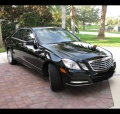
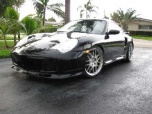
However, I am trying to decide if it is too undignified to have a bunch of flashing lights in a Porche cluster! Is the car above such a thing? It was very acceptable in the Audis.
I originally designed this gauge for the hobby racing circuit in South Orange County, CA in the late 90's with Audis. The request came from the drivers that they needed to see the boost levels (along with Air Fuel and Injector Duty Cycle Actually) without actually having to look dorectly at a gauge, pod or other protrusion to do it. Or, in our case the cluster as you would need to do with the digital Gauge. We also toyed with a Heads up display but this turned out to be too distracting and difficult to read at speed.
I came up with and designed a simply gauge that displayed PSI and Air Fuel or Injector Duty Cycle on 20 or 30 indicators and installed it directly in the Audi S4 Cluster. (See Pic Below) This was a great hit as the drivers could read it like a clock, and it was clearly visible in their peripheral vision. (They did not have to take their eyes off the track at WOT to see it) We tried all sorts of colors for the indicators, some liked Clear indicators that turned to a color when activated, others liked combinations of Red, Green, Yellow, Amber and Blue indicators. I ended up doing a variety for different applications and the driver could choose their own custom color combo.
Take a look at the examples below. Most are from Audi or VW applications, I have not got a spare cluster for a 996 (Yet) I will need to get a broken or damaged one so I can do some experimenting, if anyone knows a source that would be a great help. I did a mock up of a 996 pic I got off the web but it is only an idea, I would need a real cluster so I could CAD it up and do some exact measurements and templates. The object is that it should be virtually unnoticable from stock unless the indicators are on.
I would like some comments as to the viability of this Mod before I go through the design process. I already have proven electronics, the design is all in the mechanics of fitting it into the cluster. (Or any place that 20 1.8mm indicators wil fit for that matter) Please be frank and honest (I know you all are).
Thanks in advance for your perspectives.
This is based primarily on the fact that the Porsche gauge seems quite inacurate and is +/- 1.5 psi in resolution, and it is in Bar not psi. My gauges are typically accurate to 0.125/0.250psi.
However, I am trying to decide if it is too undignified to have a bunch of flashing lights in a Porche cluster! Is the car above such a thing? It was very acceptable in the Audis.
I originally designed this gauge for the hobby racing circuit in South Orange County, CA in the late 90's with Audis. The request came from the drivers that they needed to see the boost levels (along with Air Fuel and Injector Duty Cycle Actually) without actually having to look dorectly at a gauge, pod or other protrusion to do it. Or, in our case the cluster as you would need to do with the digital Gauge. We also toyed with a Heads up display but this turned out to be too distracting and difficult to read at speed.
I came up with and designed a simply gauge that displayed PSI and Air Fuel or Injector Duty Cycle on 20 or 30 indicators and installed it directly in the Audi S4 Cluster. (See Pic Below) This was a great hit as the drivers could read it like a clock, and it was clearly visible in their peripheral vision. (They did not have to take their eyes off the track at WOT to see it) We tried all sorts of colors for the indicators, some liked Clear indicators that turned to a color when activated, others liked combinations of Red, Green, Yellow, Amber and Blue indicators. I ended up doing a variety for different applications and the driver could choose their own custom color combo.
Take a look at the examples below. Most are from Audi or VW applications, I have not got a spare cluster for a 996 (Yet) I will need to get a broken or damaged one so I can do some experimenting, if anyone knows a source that would be a great help. I did a mock up of a 996 pic I got off the web but it is only an idea, I would need a real cluster so I could CAD it up and do some exact measurements and templates. The object is that it should be virtually unnoticable from stock unless the indicators are on.
I would like some comments as to the viability of this Mod before I go through the design process. I already have proven electronics, the design is all in the mechanics of fitting it into the cluster. (Or any place that 20 1.8mm indicators wil fit for that matter) Please be frank and honest (I know you all are).
Thanks in advance for your perspectives.
Last edited by ShokWaveRider; Sep 24, 2009 at 07:52 AM. Reason: Title Spelling Mistake

I need to get a donor/mule Cluster first to do some measurements. But I have been approached by a few Porsche owners about this already.
I have the electronics all designed. The problem arrises in doing the clusters. Each is done by hand. I will PM you.
I have the electronics all designed. The problem arrises in doing the clusters. Each is done by hand. I will PM you.
Last edited by ShokWaveRider; Sep 24, 2009 at 07:50 AM.
Registered User
Joined: Jun 2007
Posts: 2,141
From: CIR PCA Region
Rep Power: 133


I love it. It would have to be affordable.....key here is not just the unit, but you guys have to figure out a way to make it easy/cheap to install...obd2 pass through plug perhaps....
jeff
jeff
Easy it won't be that is for sure. And cost is relative. As mentioned I need to dismantle a stock unit to see even if it is viable.

I really need to see what is behind the dials.
If anyone has any other ideas for the placement of 20 indicators (very small 1.8mm diameter at best, please let me know, location of the indicators is unimportant as long as they fit with their associated wiring. I have all the electronics designed already and proven, it is the same as I use in all my other boost gauges. If anyone would like my Web site addy to look they are welcome, send me a PM, I do not think I am allowed to post it.
Here are some photos of the Electronics:
Trending Topics
Perhaps and explanation of the Gauge's operation will help:
My Boost controller displays boost and peak boost on 20 indicators. It is basically an analog display. This is done on purpose, as Boost (in our opinion at the time) lends it self more to being read in an analog fasion as opposed to digitally. When originally designing this unit it was for the track. So imagine yourself going round a corner at 100 mph at WOT, the LAST thing you want to do is take your eyes off the road to look at a digital gauge.
Although all this happens very fast, when we look at a digital gauge, we have to register the number process it in our minds and convert it to something we can identify with. In order for us to do this we need to "Focus" on the number, thus taking our eyes from the road to do so.
With an analog set of indicators, arranged like a clock, placed in such a manner that we can see them in our perpheral vision, without taking our eyes off the road, we found that we did not need to "Focus" on them to see what our boost is at any given time. After a while our mind knew by the placement of the indicators and which ones were on, what the reading was at a given moment in time. Think of a clock, when you look at the time, you do not focus on the number you simply look at the hands, your mind knows what the numbers are. I designed the gauge to use the same principle. Once installed in your chosed location, your mind automatically decodes the reading and you never have to actually look at it directly. A lot of people for Stealth reasons do not even bother with the numbers on the dial as, again you know what they are. They want their cars looking as stock as possible.
OK, so what is Peak Hold. When you are at WOT and your boost is say 1 bar (14.7psi) the gauge will have indicators 1 - 15 on (15psi) 16-20 will be off. When you lift your foot off the accelerator, all indicators will go out with the exception of number 15 indicating that your peak boost was 15psi for that session. It will then decay at a predetermined time (2 secs adjustable) to 14, 13, 12 etc till it is "Pushed" up via another WOT session or if reset via a switch will go to zero. The gauge is fast and will also read boost spikes as they occur in the same manner. If the gauge is NOT configured for Peak Hold, then it will not register the peaks no indicators will remain on when there is no boost present.
The controller can be configured for any boost reading over 20 indicators. for 20 psi the resolution is 1 psi = 1 indicator for a 25 psi setup, 1.25psi = 1 indicator and so on. I either use the car's stock OEM MAP sensor output process it and after some smoothing display it accordingly. Or, I use my own instrument grade Pressure sensor which with some OEM sensors has proved more accurate. controllers can be cascaded with a few modification to control 30 or 40 indicators.
AFR is a different animal. It monitors a 1v O2 sensor and displays the output on 10 indicators. I prefer monitoring AFR via tools like Durametric and not an analog gauge, this was only designed for the VW crowd that liked flashing lights in their cars. It has limited use IMHO in cars like ours.
Injector Duty cycle simply monitors the fuel Injector Pulse, and displays it on 10 indicators as a percentage. All 10 on would indicate 100% duty (Injector maxed out) and so on. Again, somewhat useful when you are tuning, but then ends up being a buch of flashing lights. Unlike Boost which is applicable all the time.
Sorry for the thesis.

Registered User
Joined: Jan 2007
Posts: 2,981
From: N. California
Rep Power: 298
Interesting concept. Expensive for sure, even 'relatively speaking'.  Especially if it involves installing unique sensors, cabling and modifying individual clusters.
I do like the concept, the display is definitely a better user interface- especially if you can monitor a few items and not have to 'cycle' through sequential displays of numeric data....
Go for it-
A
Especially if it involves installing unique sensors, cabling and modifying individual clusters. I do like the concept, the display is definitely a better user interface- especially if you can monitor a few items and not have to 'cycle' through sequential displays of numeric data....
Go for it-
A
Interesting concept. Expensive for sure, even 'relatively speaking'. Especially if it involves installing unique sensors, cabling and modifying individual clusters.
I do like the concept, the display is definitely a better user interface- especially if you can monitor a few items and not have to 'cycle' through sequential displays of numeric data....
Go for it-
A
Especially if it involves installing unique sensors, cabling and modifying individual clusters. I do like the concept, the display is definitely a better user interface- especially if you can monitor a few items and not have to 'cycle' through sequential displays of numeric data....
Go for it-
A
The basic electronics (My proprietary boost controller) is under $200, completely built on a 4 layer professional PCB and fully tested and calibrated to the desired sensor. (never had one fail yet, touch wood)
Even installation is not really complicated. People install them in all sorts of places. Typically any place where you can put 20 indicators. You do need some soldering and mechanical expertise though. I can summerize it as follows:
1) Select Location (Hardest part, decisions, decisions)
2) Drill 20 holes (#51 drill for 1.8mm indicators) you can also use 3mm or 5mm depending on your application.
3) Wire all indicator anodes together then 1 wire to controller (can be tricky)
4) Wire all 20 cathodes to controller in order of display (Can also be tricky)
5) Connect Power to Ignition Switch via 1 amp fuse.
6) Connect Dimmer wire to Light switch.
7) Connect pipe to boost source or wire to OEM Sensor
You are Done. Happy boosting.
Sounds easy? The Drilling and locating the indicators can either be simple or complex. In Cluster complex, anywhere else simple.
Last edited by ShokWaveRider; Sep 26, 2009 at 05:24 AM.
Registered User
Joined: Nov 2007
Posts: 448
From: AZ
Rep Power: 51
Shok,
I like the 2nd display; I was thinking the single color led version would be more discrete, less distracting. Does this confuse a person vs the rpm counter, with the shift-I I'm shifting on that but without one of those? good luck on the implementation of the project, I think these cars need a little jazz (especially as a daily driver)
You have given me a more "stealth" location for my shift lights
I like the 2nd display; I was thinking the single color led version would be more discrete, less distracting. Does this confuse a person vs the rpm counter, with the shift-I I'm shifting on that but without one of those? good luck on the implementation of the project, I think these cars need a little jazz (especially as a daily driver)
You have given me a more "stealth" location for my shift lights
Last edited by Danyol; Sep 25, 2009 at 06:04 PM.

Thread
Thread Starter
Forum
Replies
Last Post
eclip5e
Automobiles For Sale
6
Jul 29, 2019 11:13 AM
