


New carbon fiber airbox release!!!!!!




Agreed...and I'll post just to bump this. It's soo hard to recreate a real world environment on a dyno even with fans. I think the real world testing is great. I'd love to see the time slips and environmental data captures. Trap speed will be the real tell as long as the weather's consistant. Although you've got to figure 10hp is only going to equate to about 1mph. All the more reason that the 20 runs in each configuration is better than less runs as it should pretty consistantly be 1-2 mph higher across the run range.
We wanted to get the unit up on the site for those guys who want an intake and have a thing for anything carbon.

Registered User
Joined: Nov 2006
Posts: 839
From: Crazy Town USA
Rep Power: 53

The carbon Fiber is beautiful....but it essentially looks like a EVOMS. I assume there are differences but for 900 -1000 (I assume) more dollars I am not sure if it really is that marketable....It seems odd to me that during a bottomed out economy, and with a majority of most every aftermarket companies figuring out how just to stay in business that a manufacturer would come out with such a high end price point for a solution that if made in low cost plastic could sell for 350-500 bucks and still be profitable........
It is interesting to me that we all are watching our cars drop in value like a lead ball in water.....and still we get offered high high high end stuff to buy that adds zero to resale....I do not know about the rest of you, but my aftermkt spending has dramatically declined. Maybe a plastic alternative would be a better idea...and one that had a much better fit, and lined up better than the EVOMS
It is interesting to me that we all are watching our cars drop in value like a lead ball in water.....and still we get offered high high high end stuff to buy that adds zero to resale....I do not know about the rest of you, but my aftermkt spending has dramatically declined. Maybe a plastic alternative would be a better idea...and one that had a much better fit, and lined up better than the EVOMS
The carbon Fiber is beautiful....but it essentially looks like a EVOMS. I assume there are differences but for 900 -1000 (I assume) more dollars I am not sure if it really is that marketable....It seems odd to me that during a bottomed out economy, and with a majority of most every aftermarket companies figuring out how just to stay in business that a manufacturer would come out with such a high end price point for a solution that if made in low cost plastic could sell for 350-500 bucks and still be profitable........
It is interesting to me that we all are watching our cars drop in value like a lead ball in water.....and still we get offered high high high end stuff to buy that adds zero to resale....I do not know about the rest of you, but my aftermkt spending has dramatically declined. Maybe a plastic alternative would be a better idea...and one that had a much better fit, and lined up better than the EVOMS
It is interesting to me that we all are watching our cars drop in value like a lead ball in water.....and still we get offered high high high end stuff to buy that adds zero to resale....I do not know about the rest of you, but my aftermkt spending has dramatically declined. Maybe a plastic alternative would be a better idea...and one that had a much better fit, and lined up better than the EVOMS
Carbonio has a history of well-made products in the VW, Audi, BMW intake market and has released AMG 63 airboxes as well. They also have some very nice Ferrari airboxes and Gallardo carbon engine bay pieces.
All their products are made to the highest standard:
• Pre-preg vacuum forming
• Autoclave curing
• Open and closed mold wet lamination
• Silkscreen application of text or logos
• Resin transfer molding
• Urethane clear for shinier finish (will not yellow)
• Carbon fiber, carbon/Kevlar, fiberglass, & more
• Coloured composites (e.g. silver carbon fiber)
• Compression molding
• Monocoque and seamless construction
• Sandwich construction
• Mold making
• High or low volumes
Audi S4


AMG63 Engine Cover and AirBox(Click for Details)
Fits all 2007+ AMG 63 models
• Power increase: 18-21hp
• Torque increase: 14·18lb/ft

Ferrari Airboxes (Click for Details)


Gallardo 5-Piece Engine Bay (Click for Details)


Registered User

Joined: Apr 2006
Posts: 254
From: Columbus OH
Rep Power: 0
I swear my K&N gets massive heat soak at the track and turns into a hot air intake after a few hot laps on the track. I'd love to see your data on both times, trap speeds and intake temps if you've got them.
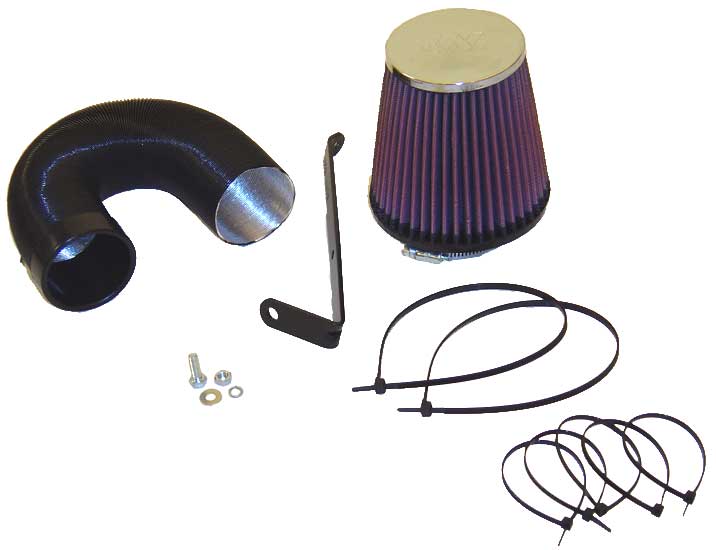
Here is a shot of the unit. We have installed a number of them and everyone has been super happy with the performance. I have not done a track comparison and the guys at Carbonio compare to stock performance and not an aftermarket unit like the K&N. I looked at K&N's website and they have a simple filter and tube. The Carbonio unit shields the heat that is produced from the turbo and cat, as you know, located right next to where the filter sits. With the top cover, it also channels the air directly to the filter too.

Registered User
Joined: Apr 2006
Posts: 254
From: Columbus OH
Rep Power: 0
I was talking about the 996 unit...not the one for my A4 as shown
Here is a shot of the unit. We have installed a number of them and everyone has been super happy with the performance. I have not done a track comparison and the guys at Carbonio compare to stock performance and not an aftermarket unit like the K&N. I looked at K&N's website and they have a simple filter and tube. The Carbonio unit shields the heat that is produced from the turbo and cat, as you know, located right next to where the filter sits. With the top cover, it also channels the air directly to the filter too.
O... Right...., I completely missed that one. My mistake. The same applies to the 996 unit. It is just as open and sits right on top of the engine.



 fuqfest


Finally got the details on the testing:
Notes on testing:
Test results printed represent the average of at least 20 trials conducted in near identical conditions. When calculating averages, the two best and two worst scores are not counted. Trials that show a consistent gain or loss over the test period are re-tried until consistent results are achieved (the assumption being that changes in atmospheric or track were significant enough to skew the results over the test period).
As such the 11-15hp and 12-16lb/ft of torque gains are a function of consistent elapsed time drops and increased trap speeds observed at the drag strip. While we used a few extra sensors to measure air temp and inlet air velocity, these are not needed for calculating performance gains as the only variable we changed was the intake (we even weighed the car after each pass and added fuel to make sure the car weighed the same at the start of each run). Customers wishing to verify our results can do so by employing the method used above and comparing the before and after times and speeds. As explained below dyno testing is all but useless for intake design which explains why we do not use it in our development; its just the wrong tool for the job.
Why a dyno is not reliable for testing an intake.
The performance of a cold air intake is greatly influenced by the quantity and velocity of airflow around its inlet. Testing the effectiveness of an intake on a dyno has the main shortcoming that during a run on a dyno, the air available for the engine to breath has neither the volume nor speed that exists in real world driving conditions (over the same run period). Placing a large fan in front of a dyno fails to achieve two key requirements for a good test:
Why the ¼ mile is a good way to test.
Fixed distance & No corners to consider: The exact measured amount of a ¼ mile eliminates the varied distances involved in road courses (varying lines, braking points, etc.)
Not too long or short: A ¼ mile is distance that allows any car time to show its performance potential without being so long as to introduce too many test variables that can affect results.
Recognized standard: Customers can relate to the figures generated.
Understanding the costs of carbon fiber and why it is a good material
From time to time customers will question the cost of the Carbonio system compared to less expensive offerings in the market. The primary reason for the cost difference is in the process by which a carbon fiber component is produced. The making of a single intake is a labor intensive operation which occupies a great deal of manual labor and expensive materials.
Some points to consider:
-The raw material to make a single intake piece costs more than the completed production of an aluminum equivalent.
-Production time for a single piece is over 4 hours. This compares to approximately 20 seconds for a plastic part or 15 minutes for an aluminum part.
-Each Carbonio intake is baked in a pressurized autoclave oven for several hours. These autoclaves are mainly used in the aerospace industry and are very costly to own and operate.
Why is Carbon Fiber Used? What are its advantages?
Carbon fiber is used for a number of reasons
-The material has excellent thermal properties not offered by other materials. It allows to maintain a cold intake charge thereby maximizing power.
-Carbon is very light and strong compared to competing materials
-Complex shapes are easier to achieve therefore giving the designers many more design possibilities then would be otherwise possible.
-The visual impact of a well made carbon part has a strong wow factor for the customer making it a piece worthy of show.
When judging price it is important to compare apples to apples. Just like it is not fair to compare the price of a Toyota to that of a Porsche (they are both 'just' cars that get you from point A to B...LOL!!!!) it is not equal to compare an engineered full carbon fiber component to a plastic or plastic/carbon hybrid part.
Some notes on the X51 intake.
When we did our testing we had access to all available competitors including the X51 intake. In testing we concluded the following:
- Over extended driving, the air inlet temp of the X51 was consistently much higher than that of the Carbonio unit. The X51 holds a lot of heat and transfers it to the inlet air while the carbon unit does not. While part of the problem resides in the material and shape of the X51, the filter placement is optimized for reduced engine noise rather than full performance.
- The dual inlets of the X51 do not flow more air than the single one on the Carbonio unit. This is because Carbonio took advantage of inlet space that the X51 could not because of its filter placement. The plenum volume on the Carbonio is considerably larger than the X51 resulting in more cool exterior air being accessed by the inlet filter than in the X51.
- The X51 intake requires the cutting of the engine cover which takes away from the re-sale value of the car. The Carbonio unit installs in minutes and can be removed returning the car to totally OEM without any modification. The cars value is not affected, it is not damaged potentially causing problems with leasing companies, and the Carbonio unit can be sold to recover a good part of its initial cost; all things not possible with the X51.
Remember the X51 is an advantage over stock however it is still a production OEM part with the same compromises of performance to comfort inherent in all factory installed parts. The Carbonio unit before anything else is a performance part first. It uses the best materials and best shape without the cost/performance/comfort compromises the OEM need to deal with. The result is a component that yields the highest performance possible.
Notes on testing:
Test results printed represent the average of at least 20 trials conducted in near identical conditions. When calculating averages, the two best and two worst scores are not counted. Trials that show a consistent gain or loss over the test period are re-tried until consistent results are achieved (the assumption being that changes in atmospheric or track were significant enough to skew the results over the test period).
As such the 11-15hp and 12-16lb/ft of torque gains are a function of consistent elapsed time drops and increased trap speeds observed at the drag strip. While we used a few extra sensors to measure air temp and inlet air velocity, these are not needed for calculating performance gains as the only variable we changed was the intake (we even weighed the car after each pass and added fuel to make sure the car weighed the same at the start of each run). Customers wishing to verify our results can do so by employing the method used above and comparing the before and after times and speeds. As explained below dyno testing is all but useless for intake design which explains why we do not use it in our development; its just the wrong tool for the job.
Why a dyno is not reliable for testing an intake.
The performance of a cold air intake is greatly influenced by the quantity and velocity of airflow around its inlet. Testing the effectiveness of an intake on a dyno has the main shortcoming that during a run on a dyno, the air available for the engine to breath has neither the volume nor speed that exists in real world driving conditions (over the same run period). Placing a large fan in front of a dyno fails to achieve two key requirements for a good test:
- [*]
Why the ¼ mile is a good way to test.
Fixed distance & No corners to consider: The exact measured amount of a ¼ mile eliminates the varied distances involved in road courses (varying lines, braking points, etc.)
Not too long or short: A ¼ mile is distance that allows any car time to show its performance potential without being so long as to introduce too many test variables that can affect results.
Recognized standard: Customers can relate to the figures generated.
Understanding the costs of carbon fiber and why it is a good material
From time to time customers will question the cost of the Carbonio system compared to less expensive offerings in the market. The primary reason for the cost difference is in the process by which a carbon fiber component is produced. The making of a single intake is a labor intensive operation which occupies a great deal of manual labor and expensive materials.
Some points to consider:
-The raw material to make a single intake piece costs more than the completed production of an aluminum equivalent.
-Production time for a single piece is over 4 hours. This compares to approximately 20 seconds for a plastic part or 15 minutes for an aluminum part.
-Each Carbonio intake is baked in a pressurized autoclave oven for several hours. These autoclaves are mainly used in the aerospace industry and are very costly to own and operate.
Why is Carbon Fiber Used? What are its advantages?
Carbon fiber is used for a number of reasons
-The material has excellent thermal properties not offered by other materials. It allows to maintain a cold intake charge thereby maximizing power.
-Carbon is very light and strong compared to competing materials
-Complex shapes are easier to achieve therefore giving the designers many more design possibilities then would be otherwise possible.
-The visual impact of a well made carbon part has a strong wow factor for the customer making it a piece worthy of show.
When judging price it is important to compare apples to apples. Just like it is not fair to compare the price of a Toyota to that of a Porsche (they are both 'just' cars that get you from point A to B...LOL!!!!) it is not equal to compare an engineered full carbon fiber component to a plastic or plastic/carbon hybrid part.
Some notes on the X51 intake.
When we did our testing we had access to all available competitors including the X51 intake. In testing we concluded the following:
- Over extended driving, the air inlet temp of the X51 was consistently much higher than that of the Carbonio unit. The X51 holds a lot of heat and transfers it to the inlet air while the carbon unit does not. While part of the problem resides in the material and shape of the X51, the filter placement is optimized for reduced engine noise rather than full performance.
- The dual inlets of the X51 do not flow more air than the single one on the Carbonio unit. This is because Carbonio took advantage of inlet space that the X51 could not because of its filter placement. The plenum volume on the Carbonio is considerably larger than the X51 resulting in more cool exterior air being accessed by the inlet filter than in the X51.
- The X51 intake requires the cutting of the engine cover which takes away from the re-sale value of the car. The Carbonio unit installs in minutes and can be removed returning the car to totally OEM without any modification. The cars value is not affected, it is not damaged potentially causing problems with leasing companies, and the Carbonio unit can be sold to recover a good part of its initial cost; all things not possible with the X51.
Remember the X51 is an advantage over stock however it is still a production OEM part with the same compromises of performance to comfort inherent in all factory installed parts. The Carbonio unit before anything else is a performance part first. It uses the best materials and best shape without the cost/performance/comfort compromises the OEM need to deal with. The result is a component that yields the highest performance possible.