


Tire Wear


Thread Starter
|
Registered User
Joined: Jul 2010
Posts: 110
Rep Power: 25


Tire Wear
Hey guys, i just checked my tires to see how im doing on tread before the rain comes. Anyways, on the back set in seems like there is alot more tread wear on the inner side vs it being even...why would this be? I understand why its that way on the front set but why the back?

Registered User
Joined: Feb 2006
Posts: 858
From: Wilmette, IL
Rep Power: 66
Camber causes the wear on the inner side. This is very typical for the cars, the rears almost always wear out first on the inside. If this is not the case the alignment is probably off.

Registered User
Joined: Sep 2010
Posts: 137
From: Houston TX
Rep Power: 30
To add to Dharn55's answer...factory specs for a 996 call for nearly 1-1/2 degrees of negative camber, plus or minus 1/4 degree. This definitely helps keep the rear end planted (so that it does not try to swap positions with the front in a corner) but at the expense of premature inside rear tire wear. This higher wear is especially noticeable if the car is driven mostly on the highways and not tracked much.
The stock adjustment mechanism does not give a lot of rear camber adjustability, so you may find--as I did--that trying to hit the minimum factory camber spec, to increase tire life, may not be possible. (Note, I only considered doing this since my car sees no track time at the moment. You will need to make your own decision as to where you want your rear camber set.)
The stock adjustment mechanism does not give a lot of rear camber adjustability, so you may find--as I did--that trying to hit the minimum factory camber spec, to increase tire life, may not be possible. (Note, I only considered doing this since my car sees no track time at the moment. You will need to make your own decision as to where you want your rear camber set.)

Registered User
Joined: Jun 2006
Posts: 2,240
From: NY & LA
Rep Power: 121
Normal for our cars, how many miles has it been?
Your front and rear tires will do this, with the stock setup, it is normal for your rear tires to wear out about twice as fast as the fronts
When I run my track, more aggressive setup, my rear tires only last me about 5k miles
Your front and rear tires will do this, with the stock setup, it is normal for your rear tires to wear out about twice as fast as the fronts
When I run my track, more aggressive setup, my rear tires only last me about 5k miles

Registered User
Joined: Apr 2008
Posts: 507
From: Houston
Rep Power: 41
In my experience, too much toe in will eat tires faster than too much negative camber. If you haven't had your alignment checked in a while [like over a year], have the shop look at it.
-td
Thread Starter
|
Registered User
Joined: Jul 2010
Posts: 110
Rep Power: 25
Normal for our cars, how many miles has it been?
Your front and rear tires will do this, with the stock setup, it is normal for your rear tires to wear out about twice as fast as the fronts
When I run my track, more aggressive setup, my rear tires only last me about 5k miles
Your front and rear tires will do this, with the stock setup, it is normal for your rear tires to wear out about twice as fast as the fronts
When I run my track, more aggressive setup, my rear tires only last me about 5k miles
About 8k
Registered User

Joined: May 2010
Posts: 175
From: Chicago
Rep Power: 27
The stock adjustment mechanism does not give a lot of rear camber adjustability, so you may find--as I did--that trying to hit the minimum factory camber spec, to increase tire life, may not be possible. (Note, I only considered doing this since my car sees no track time at the moment. You will need to make your own decision as to where you want your rear camber set.)
My front camber has a tight range w/ little adjustability (0 to -0.75).
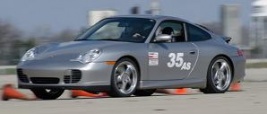
My rear camber has much more range and can be changed from -1 to -2.5. Mine is set to -1.0 for autox purposes, but it also helps improve street wear.
Trending Topics
Registered User
Joined: Sep 2010
Posts: 137
From: Houston TX
Rep Power: 30

Thanks for sharing your experience at -1.0...I'll shoot for that (with new rear upper control arms probably) at my next rear tire replacement.
Registered User
Joined: Sep 2010
Posts: 137
From: Houston TX
Rep Power: 30
With new tires, I check pressures with a digital gauge every week until I know how they'll behave. Usually I see no more than 2-3 psi/month drop, in which case I'll check with the gauge at least every month when I top the tires up.
I do a visual inspection of all four tires before every drive, on any car I drive.
As for rotation, you can't do that most of the time. Front and rear tires are different sizes, and the tires are usually uni-directional (so you can't swap them left and right).
I do a visual inspection of all four tires before every drive, on any car I drive.
As for rotation, you can't do that most of the time. Front and rear tires are different sizes, and the tires are usually uni-directional (so you can't swap them left and right).

Registered User
Joined: Jun 2010
Posts: 24
From: Kansas City Metro
Rep Power: 0
thanks. Happy driving.
I know it no Pcar, however my wife's Ford Expedition ate through a new tire in less than a year due to bad alignment. Real bummer, when some of those stock tire made it 60,000 miles.
I know it no Pcar, however my wife's Ford Expedition ate through a new tire in less than a year due to bad alignment. Real bummer, when some of those stock tire made it 60,000 miles.
Last edited by JayBellmo; Oct 18, 2010 at 11:54 AM.

What advantage is gained using -1.0 for autocross? Loosens up the rear end a little?

Registered User
Joined: May 2010
Posts: 175
From: Chicago
Rep Power: 27
if you autox on street tires or on asphalt lots the 996 can rotate easier and you can run higher camber in the rear or a less aggressive toe.
Registered User
Joined: May 2010
Posts: 175
From: Chicago
Rep Power: 27
however, with lowered springs you will automatically make your camber range more severe (e.g. -1.5 instead of -0.5 in front, -2.5 instead of -1.5 in rear) which is good for autox and DE and bad for the street. since you want to run it on the street, my guess is you will have no trouble reducing the camber on the front, but will have trouble reducing the camber on the rear with lowered springs without a camber plate. gl