


996 Intermediate Shaft Beariing failure (IMS) and Rear Main Seal (RMS) failure

996 Intermediate Shaft Beariing failure (IMS) and Rear Main Seal (RMS) failure
I picked up a magazine at my doctor's waiting room and there was an article bashing Porsches, so it caught my eye. So I read on and found out that a lot of Boxsters have had this problem. Some with less than 40K miles on them. I never heard of it. It said that the IMS and RMS failures were common on them too. I thought, well, no worries, that is for boxsters only. Bang! Here is guy with a 2000 996 from Cali with both IMS and RMS. Then I read this when I got home http://www.thetruthaboutcars.com/tag/rms-failure/
which almost made me weep.
I called the main Porsche service guy and I ask him "Should I worry about IMS and RMS failures on my car?". Silence or a pause and he says "No". He didn't add any more info and he usually gives a nice explanation so it surprised me and maybe paranoid from the article in the link above.
Now, I keep worrying. I have a 2001 996 Cab and it has been in DEs and the only thing that has broken is the coolant reservoir and an O2 sensor. Nothing big ever wrong with it and nothing that stopped it from running. So, is this a common problem or not and how do people prevent it?
thanks
which almost made me weep.
I called the main Porsche service guy and I ask him "Should I worry about IMS and RMS failures on my car?". Silence or a pause and he says "No". He didn't add any more info and he usually gives a nice explanation so it surprised me and maybe paranoid from the article in the link above.
Now, I keep worrying. I have a 2001 996 Cab and it has been in DEs and the only thing that has broken is the coolant reservoir and an O2 sensor. Nothing big ever wrong with it and nothing that stopped it from running. So, is this a common problem or not and how do people prevent it?
thanks
Last edited by See-ya; Mar 15, 2013 at 05:17 AM.
It may have been an old article or magazine. I just read the Porsche piece when I came across it. I have read about it in other forums, but mostly about boxsters. I'll look again.
Sorry to waste your time.
Sorry to waste your time.

Registered User
Joined: Aug 2008
Posts: 63
From: texas
Rep Power: 0

I picked up a magazine at my doctor's waiting room and there was an article bashing Porsches, so I went 'whoa, watcha talking about'. So I read on and found out that a lot of Boxsters have had this problem. Some with less than 40K miles on them. I never heard of it. Then they saying that the RMS failures were common on them too. I thought, well, no worries, that is for boxsters only. Bang! Here is guy with a 2000 996 from Cali with both IMS and RMS. Then I read this when I got home http://www.thetruthaboutcars.com/tag/rms-failure/
which almost made me weep.
I called the dealer and Curt answers the phone (main Porsche service guy) and I ask him "Curt, should I worry about IMS and RMS failures on my car?". Silence or a pause and he says "No". He didn't add any more info and he usually gives a nice explanation so it surprised me that Curt was curt.
Now, I keep worrying. I have a 2001 996 Cab and it has been in DEs and the only thing that has broken is the coolant reservoir. Nothing big ever wrong with it and nothing that stopped it from running. So, is this a common problem or not and how do people prevent it?
thanks
which almost made me weep.
I called the dealer and Curt answers the phone (main Porsche service guy) and I ask him "Curt, should I worry about IMS and RMS failures on my car?". Silence or a pause and he says "No". He didn't add any more info and he usually gives a nice explanation so it surprised me that Curt was curt.
Now, I keep worrying. I have a 2001 996 Cab and it has been in DEs and the only thing that has broken is the coolant reservoir. Nothing big ever wrong with it and nothing that stopped it from running. So, is this a common problem or not and how do people prevent it?
thanks
You'll get many opinions if its common or not.....
IMS Guardian
IMS Retrofit
possibly IMS replacement
all from LN Engineering and/or Flat 6 Innovations.
I personally have done the IMS Retrofit on each M96 engine (the engine used in 986/996) I have owned.
Mike
Yes, mine is an M96/04 (whatever the 04 means, dont' know). Is it a DIY job? i don't have a lift or anything like that? But, I love this car and even though it is older, it looks like new, so I want to prevent what I can. I saw another thread where they mentioned the LN kit, I assume that is what you mean by IMS Guardian, Retrofit. Am I getting this right that Porsche does not offer a solution for this? Thanks Mike
Registered User
Joined: Aug 2008
Posts: 63
From: texas
Rep Power: 0
There are three products from LNE and/or Flat6Innovations,
Porsche has no such product. There are other similar retrofit
solutions from other 3rd party providers, however I can only personally
recommend LNE/Flat6Innovations.
IMS Guardian -- a kit which detects metal shavings in your oil
and can serve as a canary for engine issues -- including the IMS failure.
IMS Retrofit -- a ceramic bearing assembly that replaces the sealed factory steel ball bearing assembly. Throughout the years Porsche had various types, double row, single row,
and later a non-retrofitable (05+) bearing.
It is DIYable -- but not for the feint of heart.
The IMS Replacement is for single row bearings only.
I have not personally seen the Guardian or Replacement -- but I
have been happy with all versions of their Retrofits.
The labor involved is basically what is needed to do a clutch job.
If you are going to replace the clutch -- then the labor for the IMS retrofit is
basically free (maybe an extra hour or so of labor).
Economically It's hard to justify the cost of an IMS Retrofit without having to already do a clutch or RMS. However, you have to decide if peace of mind is worth to you.
Mike
Porsche has no such product. There are other similar retrofit
solutions from other 3rd party providers, however I can only personally
recommend LNE/Flat6Innovations.
IMS Guardian -- a kit which detects metal shavings in your oil
and can serve as a canary for engine issues -- including the IMS failure.
IMS Retrofit -- a ceramic bearing assembly that replaces the sealed factory steel ball bearing assembly. Throughout the years Porsche had various types, double row, single row,
and later a non-retrofitable (05+) bearing.
It is DIYable -- but not for the feint of heart.
The IMS Replacement is for single row bearings only.
I have not personally seen the Guardian or Replacement -- but I
have been happy with all versions of their Retrofits.
The labor involved is basically what is needed to do a clutch job.
If you are going to replace the clutch -- then the labor for the IMS retrofit is
basically free (maybe an extra hour or so of labor).
Economically It's hard to justify the cost of an IMS Retrofit without having to already do a clutch or RMS. However, you have to decide if peace of mind is worth to you.
Mike
Mike, thanks a lot. You gave me the hints on the first response and then I found a lot of info. I just have to get over it and wait for clutch replacement or listen to my engine. A lot of info in these links from LNengineering (the LN kit).
http://www.lnengineering.com/ims.html
http://www.imsretrofit.com/
http://www.imsretrofit.com/ims-guardian/
And I don't know if this is ok to do, and the moderator will give me flak, but want to share it on this forum, but it is a long back/forth discussion on this topic with Jack Raby who worked with LNengineering on the IMS Retrofits. These posts are from around September 2009. It is just killing me that my service guy is telling me not to worry and this is even happening to 997s. I may consider the guardian, but have to do more research with the PCA guys around me. Thanks again Mike.
Jack Raby:
A few clarifications/ explanations:
The IMS procedure and bearing have been a mutual development between my company and LN Engineering, we have been working together on similar projects for over a decade. Charles from LN designed the replacement hybrid silicon nitride bearing and together we completed the procedures of bearing extraction and replacement.
Over time several different methods of bearing extraction have been executed and as we speak a new version of the tooling is being tested that is easier to use and will not require rental hassles. This puller will come with the bearing kit and will allow for much simpler bearing extraction.
When this puller is completed and has been fully tested I will then produce a DVD to supplement the kit that covers bearing extraction and reinsertion as well as all other pertinent aspects of the IMSR procedure. I have held off on producing this until the new tooling is completed as it changes the entire process, for the better.
The IMSR processes can be accomplished for under 1K if you are a DIY Porsche enthusiast, this will cover the parts only for the process along with the current tool rental costs.
If you depend on your local shop to do this work, the going rate is hourly but generally comes in at 3,500-4K and slightly more if the car is a C4 due to aded labor.
I applied the first retrofit bearing and we have done more than anyone else, along with the testing of the entire series of bearings as they have evolved. The very first bearing installed is seeing service in my Boxster while bearings #2 and 3 are also in service in our test cars, including my Wife's Land Speed 996 that she piloted to 149.281 MPH last weekend in the standing mile at Maxton NC.
We have done these processes dozens of times and the procedure is routine for us along with some complications that can be experienced from time to time. Due to this we have a flat rate fee for the procedure, not done by the hour for the various Porsches. This includes a new clutch (trust me, you need one if the car has more than 40K miles) and RMS updates along with the IMSR procedures.
We are working with competent, open minded Porsche shops throughout the world to get this technology into their hands so more engines can be saved. Believe it or not some Porsche Dealerships have installed these IMS bearings.
The technology can be applied as a preventive, or as salvation for engines with impending IMS bearing failures or failures that have not taken the engine out of service completely.
To reduce some confusion:
The IMSR (retrofit) and IMSU (update) are entirely different procedures, applied in entirely different manners.
The IMSR is applied to existing engines before a failure occurs or after a failure has began to occur WITH THE ENGINE ASSEMBLED and still IN THE CAR. This is the process that was overviewed in the link provided by the original poster in this thread. This is the technology that offers the most value to an enthusiast who is concerned with addressing the issue prior to becoming a statistic.
The IMSU is a procedure that modifies the entire IMS for the fitment of more bearings, thus spreading the bearing load. This procedure must be applied during an engine update when the engine is completely disassembled and generally reconstructed with much higher performance components.
The application of the IMSU requires full disassembly of the engine.
When I carry out these procedures I make other strengthening enhancements to the IMS, one of which that locks the bank 4-6 drive sprocket onto the shaft so it can never slip again, resulting in MOF #17. MOF #17 is best illustrated by the pic I have attached, this occurred with an engine that had a perfectly fine IMS bearing that was misdiagnosed by a Porsche dealership as a bearing failure. In this instance the IMS failed.
Lets just say that the majority of the IMSR procedures I have carried out have given us some of the best testimonials in the history of my company. Its fairly difficult (generally) to exceed the expectations of a discerning owner when applying a preventive procedure thats not cheap.
These owners have driven or shipped their car from various parts of the country to have work done that doesn't give them any added performance... They never feel or see the difference the IMSR affords their engine.
Amazingly, they are among the happiest group of people I have ever worked with after the fact.
The main problem lies in the fact that other than a slight bit of oil leakage and maybe a rattle 2 minutes before total failure, there are no symptoms of the IMS syndrome.
One of my clients who is a Neurosurgeon described the failure of his engine as an "Aneurism" because he was driving fine one second, the next second the engine was dead.
We have been able to save a number of engines that were caught early on with failures that had not yet scattered parts all over the interior of the engine. These are few and far between because when people hear noises they immediately try to limp the car home or to the shop to save a tow bill... That money they attempted to save costs a lot of them 15,000.00+ when the failure has it's grand finale. IF they would have stopped and shut the engine off we could have intervened and saved the engine before total catastrophe.
I have a good candidate on the way now that was shut down just soon enough that we can hopefully save it.. The engine passed a leak down test with no bent valves and it seems that the oil sump, pre-filter and primary filter protected the engine from foreign object debris from the failure well.
I appreciate being able to save engines that have failed more than doing preventives.. If only more people paid attention to their engines and weren't bullheaded about trying to "limp home" we'd be able to save many, many more.
IF you hear a noise you must understand that IF that noise is emanating from the IMS that the life of your engine can be measured in seconds.
I agree about enjoying the car- thats the only thing you can do if you choose not to elect for IMSR procedures as a preventive.. Enjoy it till the last second you can and don't let it worry you.
Just pay attention.
The older cars are now "totalled" if they experience an engine failure because the engine cost more than the car is worth.
The engine is too time consuming to assemble to ever complete corretcly for a lesser price than is currently offered. Trying to accomplish this cheaper simply creates more problems with corners being cut.
=====
Quote: "Just to be clear, which engines are most susceptible to this failure? Is it just the 3.4L, or is the 3.6L also at risk?"
Raby: "ALL M96 engines are at risk. I field calls from people with most every year and model of M96 equipped engines weekly.. **most** 3.6 engines have the weakest of all bearings installed, known as the "single row" bearing. The syndrome can occur with any year or any model.
The engines manufactured post 2006 have an entirely different bearing that can't be serviced at all, because it can't be removed from the engine due to it's size. These are now starting to fail, but most are silenced by the warranty."
Quote: "Are there versions of either that are more (or less) susceptible to this failure? Is this unique to the 996, or can other models have similar risks; 986, 996TT, GT3, etc.?"
Raby: "The GT2, GT3 and Turbo use an entirely different engine. These engines still have an IMS, but it is the same as was found in the 964 aircooled engines. These have plain bearings, not roller bearings and they do not fail. Do not confuse ANY aspect of the standard M96 engine with any of the GT series engines- they share nothing in common.
Boxsters and 996s both suffer the IMS syndrome. We field more calls from Boxster owners because there are more of them on the street."
Quote: "I understand that you really can't tell if an IMS is bad until its been removed from the engine-is that correct?"
Raby: "Yes, or until it fails completely. I know the sounds that they make when they are starting to go south. Last month I saved one that was going south and had started to spin inside the IMS tube. The only thing holding that one in place was the internal snap ring because the factory bearing was .0015 too small for the shaft!"
Quote: "If it is, I would like to ask Jake for some insight. Given that you have likley performed more of these procedures than anyone else, in your opinion what percentage of those that were replaced actually exhibited enough degredation to lead to failure?"
Raby: "I stay away from percentages and absolute terms because none of those exist in a mechanical world where anything can happen for any reason at any given time.
Lets just say this: Once the bearing begins to degrade it's internal clearances are effected. When this occurs its a fairly quick progression from "about to fail" to "failed". I have seen some engines die from materials that were ingested into other critical clearances that came from an IMS bearing that was heading south, but hadn't reached a level of total failure as of yet.
Long story short, when the bearing begins to degrade it doesn't last long enough to be diagnosed most of the time...
One instance was an Owner who heard a noise in his engine at start up that hadn't been there.. It was an Anniversary Edition with an X51 package. He stopped the car, drove another car and then came back later that day to see of the noise persisted; it did. He then called the Porsche Dealership and told them that he had "An IMS bearing starting to fail". They sent out a Technician (since they were slow) to pick the car up and instead of winching the car onto the roll back the tech cranked the car and drove it onto the truck. Bang, end of story- there goes 20 grand.
The Owner did the right thing and he had read about sounds here on rennlist and other forums, the driver of the tow truck needed a good slap for starting the engine...
Quote: "In your opinion, is this not an issue of "if" , but rather of "when" it will happen. Not trying to put you on the spot, just trying to get a better idea what the risks actually are."
Raby: "No one knows what the risks are.. I am one of a very, very small group of people that have jumped into these issues outside the factory and I only see a small portion of the big picture. I will say that in two days I have received 5 emails from those with IMS bearing failures, thats more than I have received in the past week from people wanting to apply our technology as a preventive."
Quote: "Based on what I've read thus far, I'm likely to have the IMSR completed, but I was never really able to find the answers to the questions above in anything I've read to-date."
You are less than 60 miles from me.. You should schedule a time to see these parts and how they work first hand. The majority of our clients are several states away, not able to take advantage of this.
I am not trying to instill fear in anyone, merely stating the facts that I see on a near daily basis. If more people understand why these bearings fail and what the symptoms are the more engines we'll be able to save.
=====
Quote: "Is the retrofit actually a solution? Or does it just reduce the chance that a failure will happen?
Are you contracting with regional shops to do these installs?
What does it sound like?"
Raby: "The retrofit replaces the factory conventional roller bearing with a hybrid, silicon nitride ceramic bearing. This bearing technology was not available when the M96 engine was developed, it was still limited to aerospace applications and military weapons..
I have utilized silicon nitride components inside other Porsche engines with excellent results dating back to around 2000. The material is so hard and wear resistant that about the only thing that will cut or drill into it is a diamond tipped tool.
Its a bearing thats basically as big and as strong as we can place inside the stock IMS without parent material removal. No stronger bearing could be made.
I have started a program of training local shops from across the world to work with these engines and do our procedures. The primary goal by years end is to have that program in place with a step by step DVD to walk the DIY or professional mechanic through a successful bearing extraction, inspection and replacement.
As far as the sound of the bearing, well that takes a trained ear... No sound clip could be made with enough clarity to represent the sound of an impending bearing failure and they always sound slightly different according to what mode of failure the bearing is experiencing."
Quote: "Here's a youtube clip of an IMS dying--you can hear it come in a little after 1:00 while the engine still has power, but who knows if the engine was already toast at that point. Pretty low quality audio so the sound was probably noticeable sooner.
It's kind of painful to watch because you hear the sound come in and he keeps on going and you just know and oh god oh god why isn't he turning the engine off CLACK clunk clunk clunk clunk.."
Raby: "SWEET!!! Thats ONE of the noises.
Classic example. Thanks for the video."
Quote: "So, I take it from your answer that you hope it works. There's no guarantee. It may, in fact, not perform better than the factory original. Only time will tell."
Raby: "We are keeping track of every IMSR bearing sold and serializing the units along with tracking VIN numbers..
Due to this we'll be able to prove the effectiveness of the bearing over time through the data base. It'll take years to prove that the bearing is THE absolute resolution to the problem. I am confident that it'll maintain a flawless record as I have prior experiences with silicon nitride bearings and other engine parts that have proven to be absolutely indestructible.
We are keeping total track of the bearings that are being employed for a couple of reasons:
1- People are already selling cars that are advertised with the IMSR bearing that HAVE NOT been subjected to the retrofit.
2- So in a few years we'll be able to use the trend data of the component to answer questions from discerning owners just like you.
I prove what we do and do a better job of that than anyone.
Dave!,
If that engine had been shut down immediately after the noise had been notable the chances of it's salvation would have been very good. At track speeds it doesn't take very long at all for the cam timing to retard just enough to kiss the exhaust valves into the pistons resulting in a secondary failure thats just as damaging as the primary failure.
If you hear a noise that you haven't been hearing and if that noise sounds metallic shut the car down and have it diagnosed. Not many things in these engines can make a sound if they are "healthy"... About the only thing that can make a sound similar to this and be a "simple repair" would be a noisy water pump due to trashed bearings.
If in doubt STOP!"
http://www.lnengineering.com/ims.html
http://www.imsretrofit.com/
http://www.imsretrofit.com/ims-guardian/
And I don't know if this is ok to do, and the moderator will give me flak, but want to share it on this forum, but it is a long back/forth discussion on this topic with Jack Raby who worked with LNengineering on the IMS Retrofits. These posts are from around September 2009. It is just killing me that my service guy is telling me not to worry and this is even happening to 997s. I may consider the guardian, but have to do more research with the PCA guys around me. Thanks again Mike.
Jack Raby:
A few clarifications/ explanations:
The IMS procedure and bearing have been a mutual development between my company and LN Engineering, we have been working together on similar projects for over a decade. Charles from LN designed the replacement hybrid silicon nitride bearing and together we completed the procedures of bearing extraction and replacement.
Over time several different methods of bearing extraction have been executed and as we speak a new version of the tooling is being tested that is easier to use and will not require rental hassles. This puller will come with the bearing kit and will allow for much simpler bearing extraction.
When this puller is completed and has been fully tested I will then produce a DVD to supplement the kit that covers bearing extraction and reinsertion as well as all other pertinent aspects of the IMSR procedure. I have held off on producing this until the new tooling is completed as it changes the entire process, for the better.
The IMSR processes can be accomplished for under 1K if you are a DIY Porsche enthusiast, this will cover the parts only for the process along with the current tool rental costs.
If you depend on your local shop to do this work, the going rate is hourly but generally comes in at 3,500-4K and slightly more if the car is a C4 due to aded labor.
I applied the first retrofit bearing and we have done more than anyone else, along with the testing of the entire series of bearings as they have evolved. The very first bearing installed is seeing service in my Boxster while bearings #2 and 3 are also in service in our test cars, including my Wife's Land Speed 996 that she piloted to 149.281 MPH last weekend in the standing mile at Maxton NC.
We have done these processes dozens of times and the procedure is routine for us along with some complications that can be experienced from time to time. Due to this we have a flat rate fee for the procedure, not done by the hour for the various Porsches. This includes a new clutch (trust me, you need one if the car has more than 40K miles) and RMS updates along with the IMSR procedures.
We are working with competent, open minded Porsche shops throughout the world to get this technology into their hands so more engines can be saved. Believe it or not some Porsche Dealerships have installed these IMS bearings.
The technology can be applied as a preventive, or as salvation for engines with impending IMS bearing failures or failures that have not taken the engine out of service completely.
To reduce some confusion:
The IMSR (retrofit) and IMSU (update) are entirely different procedures, applied in entirely different manners.
The IMSR is applied to existing engines before a failure occurs or after a failure has began to occur WITH THE ENGINE ASSEMBLED and still IN THE CAR. This is the process that was overviewed in the link provided by the original poster in this thread. This is the technology that offers the most value to an enthusiast who is concerned with addressing the issue prior to becoming a statistic.
The IMSU is a procedure that modifies the entire IMS for the fitment of more bearings, thus spreading the bearing load. This procedure must be applied during an engine update when the engine is completely disassembled and generally reconstructed with much higher performance components.
The application of the IMSU requires full disassembly of the engine.
When I carry out these procedures I make other strengthening enhancements to the IMS, one of which that locks the bank 4-6 drive sprocket onto the shaft so it can never slip again, resulting in MOF #17. MOF #17 is best illustrated by the pic I have attached, this occurred with an engine that had a perfectly fine IMS bearing that was misdiagnosed by a Porsche dealership as a bearing failure. In this instance the IMS failed.
Lets just say that the majority of the IMSR procedures I have carried out have given us some of the best testimonials in the history of my company. Its fairly difficult (generally) to exceed the expectations of a discerning owner when applying a preventive procedure thats not cheap.
These owners have driven or shipped their car from various parts of the country to have work done that doesn't give them any added performance... They never feel or see the difference the IMSR affords their engine.
Amazingly, they are among the happiest group of people I have ever worked with after the fact.
The main problem lies in the fact that other than a slight bit of oil leakage and maybe a rattle 2 minutes before total failure, there are no symptoms of the IMS syndrome.
One of my clients who is a Neurosurgeon described the failure of his engine as an "Aneurism" because he was driving fine one second, the next second the engine was dead.
We have been able to save a number of engines that were caught early on with failures that had not yet scattered parts all over the interior of the engine. These are few and far between because when people hear noises they immediately try to limp the car home or to the shop to save a tow bill... That money they attempted to save costs a lot of them 15,000.00+ when the failure has it's grand finale. IF they would have stopped and shut the engine off we could have intervened and saved the engine before total catastrophe.
I have a good candidate on the way now that was shut down just soon enough that we can hopefully save it.. The engine passed a leak down test with no bent valves and it seems that the oil sump, pre-filter and primary filter protected the engine from foreign object debris from the failure well.
I appreciate being able to save engines that have failed more than doing preventives.. If only more people paid attention to their engines and weren't bullheaded about trying to "limp home" we'd be able to save many, many more.
IF you hear a noise you must understand that IF that noise is emanating from the IMS that the life of your engine can be measured in seconds.
I agree about enjoying the car- thats the only thing you can do if you choose not to elect for IMSR procedures as a preventive.. Enjoy it till the last second you can and don't let it worry you.
Just pay attention.
The older cars are now "totalled" if they experience an engine failure because the engine cost more than the car is worth.
The engine is too time consuming to assemble to ever complete corretcly for a lesser price than is currently offered. Trying to accomplish this cheaper simply creates more problems with corners being cut.
=====
Quote: "Just to be clear, which engines are most susceptible to this failure? Is it just the 3.4L, or is the 3.6L also at risk?"
Raby: "ALL M96 engines are at risk. I field calls from people with most every year and model of M96 equipped engines weekly.. **most** 3.6 engines have the weakest of all bearings installed, known as the "single row" bearing. The syndrome can occur with any year or any model.
The engines manufactured post 2006 have an entirely different bearing that can't be serviced at all, because it can't be removed from the engine due to it's size. These are now starting to fail, but most are silenced by the warranty."
Quote: "Are there versions of either that are more (or less) susceptible to this failure? Is this unique to the 996, or can other models have similar risks; 986, 996TT, GT3, etc.?"
Raby: "The GT2, GT3 and Turbo use an entirely different engine. These engines still have an IMS, but it is the same as was found in the 964 aircooled engines. These have plain bearings, not roller bearings and they do not fail. Do not confuse ANY aspect of the standard M96 engine with any of the GT series engines- they share nothing in common.
Boxsters and 996s both suffer the IMS syndrome. We field more calls from Boxster owners because there are more of them on the street."
Quote: "I understand that you really can't tell if an IMS is bad until its been removed from the engine-is that correct?"
Raby: "Yes, or until it fails completely. I know the sounds that they make when they are starting to go south. Last month I saved one that was going south and had started to spin inside the IMS tube. The only thing holding that one in place was the internal snap ring because the factory bearing was .0015 too small for the shaft!"
Quote: "If it is, I would like to ask Jake for some insight. Given that you have likley performed more of these procedures than anyone else, in your opinion what percentage of those that were replaced actually exhibited enough degredation to lead to failure?"
Raby: "I stay away from percentages and absolute terms because none of those exist in a mechanical world where anything can happen for any reason at any given time.
Lets just say this: Once the bearing begins to degrade it's internal clearances are effected. When this occurs its a fairly quick progression from "about to fail" to "failed". I have seen some engines die from materials that were ingested into other critical clearances that came from an IMS bearing that was heading south, but hadn't reached a level of total failure as of yet.
Long story short, when the bearing begins to degrade it doesn't last long enough to be diagnosed most of the time...
One instance was an Owner who heard a noise in his engine at start up that hadn't been there.. It was an Anniversary Edition with an X51 package. He stopped the car, drove another car and then came back later that day to see of the noise persisted; it did. He then called the Porsche Dealership and told them that he had "An IMS bearing starting to fail". They sent out a Technician (since they were slow) to pick the car up and instead of winching the car onto the roll back the tech cranked the car and drove it onto the truck. Bang, end of story- there goes 20 grand.
The Owner did the right thing and he had read about sounds here on rennlist and other forums, the driver of the tow truck needed a good slap for starting the engine...
Quote: "In your opinion, is this not an issue of "if" , but rather of "when" it will happen. Not trying to put you on the spot, just trying to get a better idea what the risks actually are."
Raby: "No one knows what the risks are.. I am one of a very, very small group of people that have jumped into these issues outside the factory and I only see a small portion of the big picture. I will say that in two days I have received 5 emails from those with IMS bearing failures, thats more than I have received in the past week from people wanting to apply our technology as a preventive."
Quote: "Based on what I've read thus far, I'm likely to have the IMSR completed, but I was never really able to find the answers to the questions above in anything I've read to-date."
You are less than 60 miles from me.. You should schedule a time to see these parts and how they work first hand. The majority of our clients are several states away, not able to take advantage of this.
I am not trying to instill fear in anyone, merely stating the facts that I see on a near daily basis. If more people understand why these bearings fail and what the symptoms are the more engines we'll be able to save.
=====
Quote: "Is the retrofit actually a solution? Or does it just reduce the chance that a failure will happen?
Are you contracting with regional shops to do these installs?
What does it sound like?"
Raby: "The retrofit replaces the factory conventional roller bearing with a hybrid, silicon nitride ceramic bearing. This bearing technology was not available when the M96 engine was developed, it was still limited to aerospace applications and military weapons..
I have utilized silicon nitride components inside other Porsche engines with excellent results dating back to around 2000. The material is so hard and wear resistant that about the only thing that will cut or drill into it is a diamond tipped tool.
Its a bearing thats basically as big and as strong as we can place inside the stock IMS without parent material removal. No stronger bearing could be made.
I have started a program of training local shops from across the world to work with these engines and do our procedures. The primary goal by years end is to have that program in place with a step by step DVD to walk the DIY or professional mechanic through a successful bearing extraction, inspection and replacement.
As far as the sound of the bearing, well that takes a trained ear... No sound clip could be made with enough clarity to represent the sound of an impending bearing failure and they always sound slightly different according to what mode of failure the bearing is experiencing."
Quote: "Here's a youtube clip of an IMS dying--you can hear it come in a little after 1:00 while the engine still has power, but who knows if the engine was already toast at that point. Pretty low quality audio so the sound was probably noticeable sooner.
It's kind of painful to watch because you hear the sound come in and he keeps on going and you just know and oh god oh god why isn't he turning the engine off CLACK clunk clunk clunk clunk.."
Raby: "SWEET!!! Thats ONE of the noises.
Classic example. Thanks for the video."
Quote: "So, I take it from your answer that you hope it works. There's no guarantee. It may, in fact, not perform better than the factory original. Only time will tell."
Raby: "We are keeping track of every IMSR bearing sold and serializing the units along with tracking VIN numbers..
Due to this we'll be able to prove the effectiveness of the bearing over time through the data base. It'll take years to prove that the bearing is THE absolute resolution to the problem. I am confident that it'll maintain a flawless record as I have prior experiences with silicon nitride bearings and other engine parts that have proven to be absolutely indestructible.
We are keeping total track of the bearings that are being employed for a couple of reasons:
1- People are already selling cars that are advertised with the IMSR bearing that HAVE NOT been subjected to the retrofit.
2- So in a few years we'll be able to use the trend data of the component to answer questions from discerning owners just like you.
I prove what we do and do a better job of that than anyone.
Dave!,
If that engine had been shut down immediately after the noise had been notable the chances of it's salvation would have been very good. At track speeds it doesn't take very long at all for the cam timing to retard just enough to kiss the exhaust valves into the pistons resulting in a secondary failure thats just as damaging as the primary failure.
If you hear a noise that you haven't been hearing and if that noise sounds metallic shut the car down and have it diagnosed. Not many things in these engines can make a sound if they are "healthy"... About the only thing that can make a sound similar to this and be a "simple repair" would be a noisy water pump due to trashed bearings.
If in doubt STOP!"
Trending Topics


Registered User
Joined: Apr 2012
Posts: 1,850
From: Brandon, Florida
Rep Power: 183


 For some reason this is a BIG topic.
Registered User
Joined: Feb 2013
Posts: 9
From: Redmond, WA
Rep Power: 0
Is the IMS Solution available to companies who install the IMS Retrofit? I'm on the west coast and interested in getting the IMS Solution installed. Thx.
Registered User
Joined: Apr 2012
Posts: 1,850
From: Brandon, Florida
Rep Power: 183
If you go to http://www.flat6innovations.com/ there is a list of places that are trained to install this.
It may be available to companies that do the retrofit but, unless they are trained on the installation of the "Solution" there could be some warranty issues should it not be done correctly. If you are considering it call Flat6 and talk to them, they will guide you through the process.
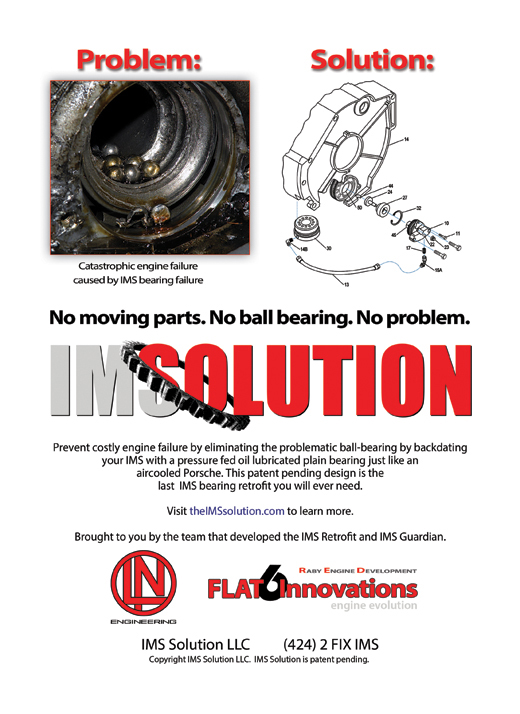
The IMS Solution ...is here and available for exclusive installation only at Flat 6 Innovations!
The IMS Solution is the first and only permanent IMS Retrofit for model year 2000-2005 Porsche M96 engines. Invented by Jake Raby of Flat 6 Innovations and Charles Navarro of LN Engineering; the IMS Solution omits the problematic sealed ball bearing and replaces it with a pressure fed oil lubricated journal bearing. This technology is nothing new and found in all flat 6 aircooled Porsche engines as well as the GT3 and Turbo. Whether you are 20 miles or 2,000+ miles from our facility in Cleveland Georgia, we can arrange transport of your Porsche and apply the IMS Solution right here where it was invented, developed and perfected. Noone knows this technology like we do!
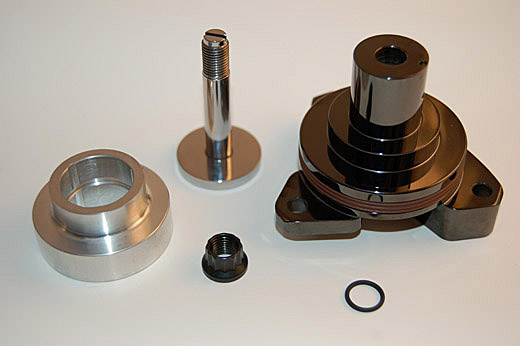
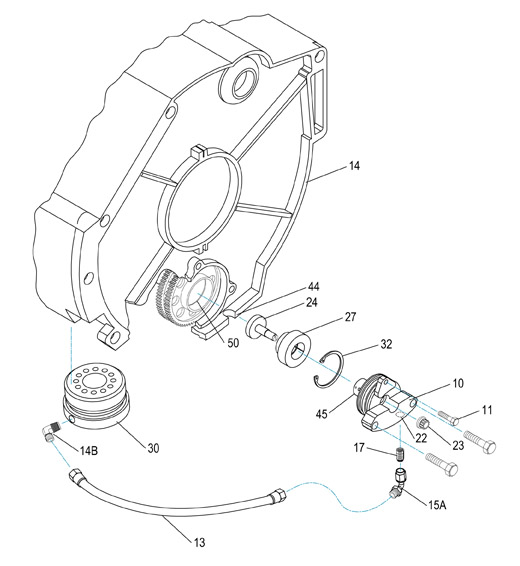
Having the very first M96 Engine program in North America, Flat 6 Innovations is the pioneer in reconstruction, re-design and performance modification of Porsche's M96/ M97 engine family. A division of Raby Engine Development, Flat 6 Innovations is dedicated to research and development to enhance the reliability and performance the M96 engine found in Porsche's 986/ 996 or M97 engine found in 987/997 models.
Our company can create the engine you desire, remove your slow or broken engine from your car, then replace it with an updated and higher performance version, and finally chassis dyno and field test the car and engine to perfection. The best part is no hidden fees, tricks or fine print with any aspect of what we do. Each project is proposed up front with all costs and schedules accurately presented prior to any work being carried out.
Whether your Porsche 986/ 996 or 987/997 isn't reliable or the performance just isn't what you expected, we can diagnose the problem and perfect it to exceed your expectations. Contact us today via our engine failure hotline at 706.219.4874 or via email at info@flat6innovations.com This e-mail address is being protected from spambots. You need JavaScript enabled to view it

A reputation built on excellence.
Whether it's from the AircooledTechnology division, the Flat 6 Innovations division, or the Subaru Engine Development division, every Raby engine is hand-crafted, meticulously tested, and RED Line™ certified to be the highest quality available anywhere.
Become a member of our mailing list!
This is your invitation to join our REDLine mail list to receive the latest news about products and services tomaintain and enhance your vehicle. You may choose to opt-in for our Aircooled VW and Porsche news, our Flat 6 Innovations Watercooled Porsche news, our Subaru Engine Development news,or choose the General Interest list to see it all. Whichever list you choose, we will send no more than one email per month, per list and we will never share your contact information. SIGN UP TODAY!
It may be available to companies that do the retrofit but, unless they are trained on the installation of the "Solution" there could be some warranty issues should it not be done correctly. If you are considering it call Flat6 and talk to them, they will guide you through the process.
The IMS Solution ...is here and available for exclusive installation only at Flat 6 Innovations!
The IMS Solution is the first and only permanent IMS Retrofit for model year 2000-2005 Porsche M96 engines. Invented by Jake Raby of Flat 6 Innovations and Charles Navarro of LN Engineering; the IMS Solution omits the problematic sealed ball bearing and replaces it with a pressure fed oil lubricated journal bearing. This technology is nothing new and found in all flat 6 aircooled Porsche engines as well as the GT3 and Turbo. Whether you are 20 miles or 2,000+ miles from our facility in Cleveland Georgia, we can arrange transport of your Porsche and apply the IMS Solution right here where it was invented, developed and perfected. Noone knows this technology like we do!
Having the very first M96 Engine program in North America, Flat 6 Innovations is the pioneer in reconstruction, re-design and performance modification of Porsche's M96/ M97 engine family. A division of Raby Engine Development, Flat 6 Innovations is dedicated to research and development to enhance the reliability and performance the M96 engine found in Porsche's 986/ 996 or M97 engine found in 987/997 models.
Our company can create the engine you desire, remove your slow or broken engine from your car, then replace it with an updated and higher performance version, and finally chassis dyno and field test the car and engine to perfection. The best part is no hidden fees, tricks or fine print with any aspect of what we do. Each project is proposed up front with all costs and schedules accurately presented prior to any work being carried out.
Whether your Porsche 986/ 996 or 987/997 isn't reliable or the performance just isn't what you expected, we can diagnose the problem and perfect it to exceed your expectations. Contact us today via our engine failure hotline at 706.219.4874 or via email at info@flat6innovations.com This e-mail address is being protected from spambots. You need JavaScript enabled to view it
A reputation built on excellence.
Whether it's from the AircooledTechnology division, the Flat 6 Innovations division, or the Subaru Engine Development division, every Raby engine is hand-crafted, meticulously tested, and RED Line™ certified to be the highest quality available anywhere.
Become a member of our mailing list!
This is your invitation to join our REDLine mail list to receive the latest news about products and services tomaintain and enhance your vehicle. You may choose to opt-in for our Aircooled VW and Porsche news, our Flat 6 Innovations Watercooled Porsche news, our Subaru Engine Development news,or choose the General Interest list to see it all. Whichever list you choose, we will send no more than one email per month, per list and we will never share your contact information. SIGN UP TODAY!
for more information.
Questions? Call 706.219.4874 or email info@flat6innovations.com This e-mail address is being protected from spambots. You need JavaScript enabled to view it for immediate assistance.
Registered User
Joined: Sep 2012
Posts: 150
From: Chatham, NJ
Rep Power: 20
Wow, it's like IMSB for newbies 101. I just got my imsb replaced on my 02 Boxster. My bearing was fine, it had very slight play, but still had the rubber seal although the flange was leaking. I think the consensus is if you drive your car hard the bearing survives. If you drive slow and don't rev it high the bearing goes. The reason being that the higher engine speed causes more oil to go into your IMS tube and into the bearing.

Thread
Thread Starter
Forum
Replies
Last Post
eclip5e
Automobiles For Sale
6
Jul 29, 2019 11:13 AM
ECS Tuning - BMW
Mini Cooper Vendor Classifieds
0
Aug 19, 2015 09:29 AM
Yotam Refael
Cayenne
0
Aug 18, 2015 03:03 PM
