Doing a little more research on PSM didn't answer why rear brakes would suffer more but I did find something interesting that sheds light on how PSM really works.
The Porsche website also indicates that PSM can apply SELECTIVE braking to any wheel as needed.
Still doesn't answer the question about rear brake wear.
And if rear PCCB's wear out, rear steel rotors must wear out at a faster rate too.
I'm still not seeing an answer to this. Does anyone have any additional input? It'd be nice to see something definitive on this (I know that's an oxymoron in re: PCCBs)
Doing a little more research on PSM didn't answer why rear brakes would suffer more but I did find something interesting that sheds light on how PSM really works.
So revisiting this thread as I have noticed I have one round mark on each rear disc of my 997 GT2 with 15k miles.
I recently replaced the rear pads that had at least 50% left on them.
This is an old post but hoped someone could share a tech doc on ceramic wear or an update ?
Hi guy, I am from the company Redisc from Slovenia (Europe). We are specialized in refurbishment, repairs and upgrades od Carbon ceramic disc. So I have a lot of answers, if someone is interested.
First of all, as you maybe know, a carbon-ceramic brake disc is made up of a mixture of materials that are treated by special processes and repeated heating up to 1,700 degrees Celsius. They are produced under high pressure and, in some cases, in a vacuum. They take up to 21 days to produce.Carbon-ceramic discs are composed of carbon fibre (C) and silicon carbide (SiC). The arrangement of materials and fibres in the manufacturing process affects the thermal conductivity and the direction of heat dissipation.
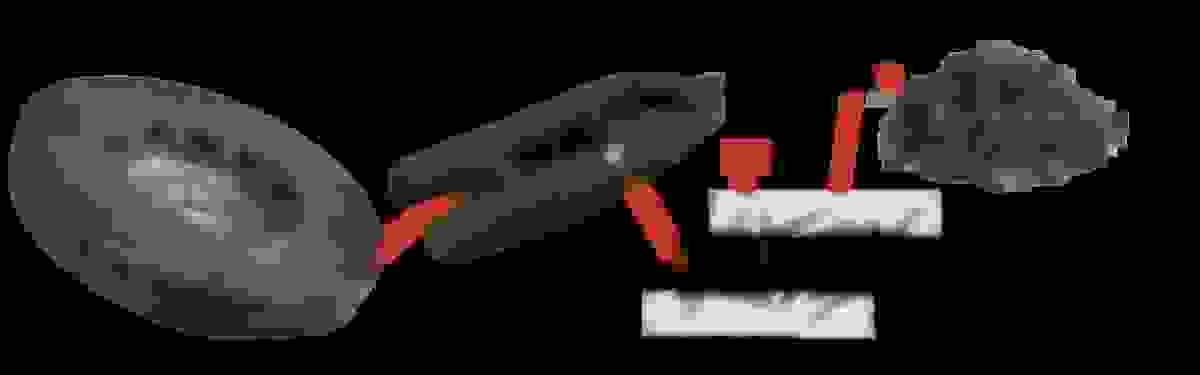
The main problem of carbon ceramic discs is uncontroled mixture of carbon fibre (C) and silicon carbide (SiC). under high temparatures, can carbon fibers evapurate and inside the core are "air pockets" created. Air (CO2) acts as isolator and that means that discs do not have great heat conduction and once air is inside the core, discs are losing their greatest feature. ofter discs start to broke of the discs.
Here is an example:
You can find more info here https://www.redisc.si/en/about-discs/ How do you know if the discs are ok?
1. Weight them and measure them
2. Take them to a specialist that is using Carboteq