


Answer: How restrictive are the stock tips? [PICS]


Thread Starter
|
Moderator

Joined: Jan 2011
Posts: 1,504
From: (in my garage welding something vicious)
Rep Power: 105


 Answer: How restrictive are the stock tips? [PICS]
I have been meaning to put up this post since the end of last year - it just kind of fell into the cracks.
The stock exhaust tips on the 957 CTT/S is surprisingly restrictive. Each one of the dual tips is pinched down to only use half of the total incoming pipe size. Think of a circle with a line drawn straight through the diameter. Like this:

Since this is extreme by many performance standards, my theory is that it was done as another way to restrict the net decibel level of the OEM muffler. So if you are looking to do any exhaust mods, please make sure this is near the top of your list or you may negate any additional flow gains. I was shocked at the improved sound and significantly less raspy tone of my exhaust as soon as I got these installed. (Disclaimer: I already had a full custom exhaust system, sans any tips).
Here are some pics from my OEM tips and Leistung Motorsports replacement tips (Thanks Rob!). Note that these address the original design "deficiencies" and are true SS304 dual exhaust tips that flow MUCH better:
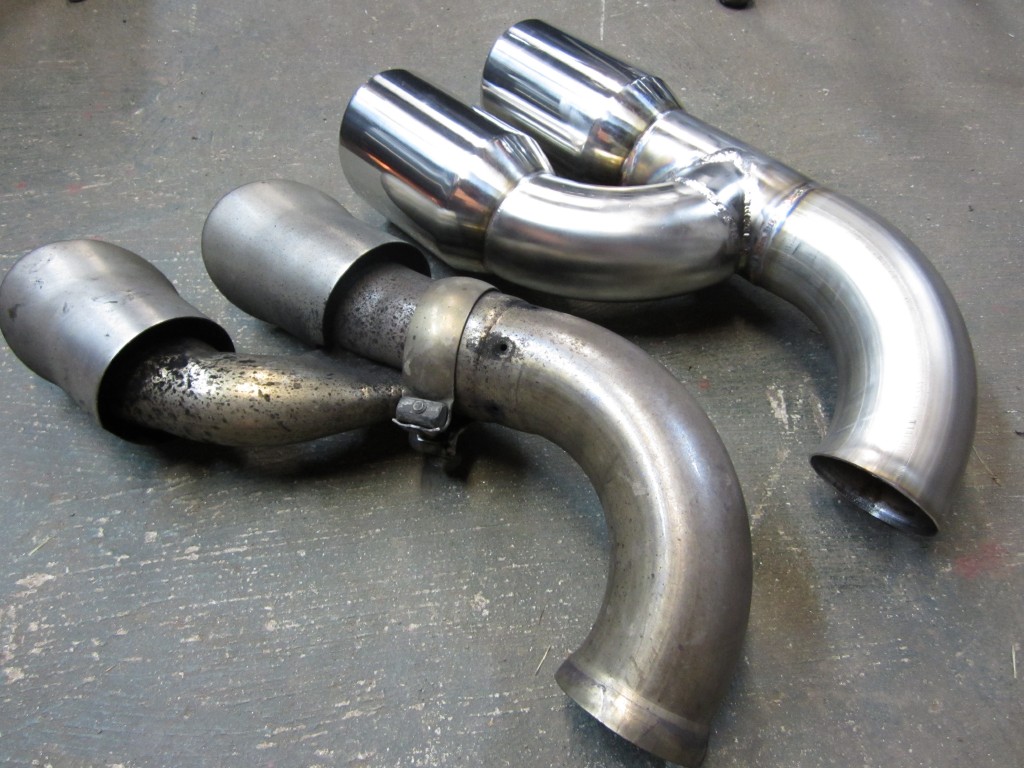
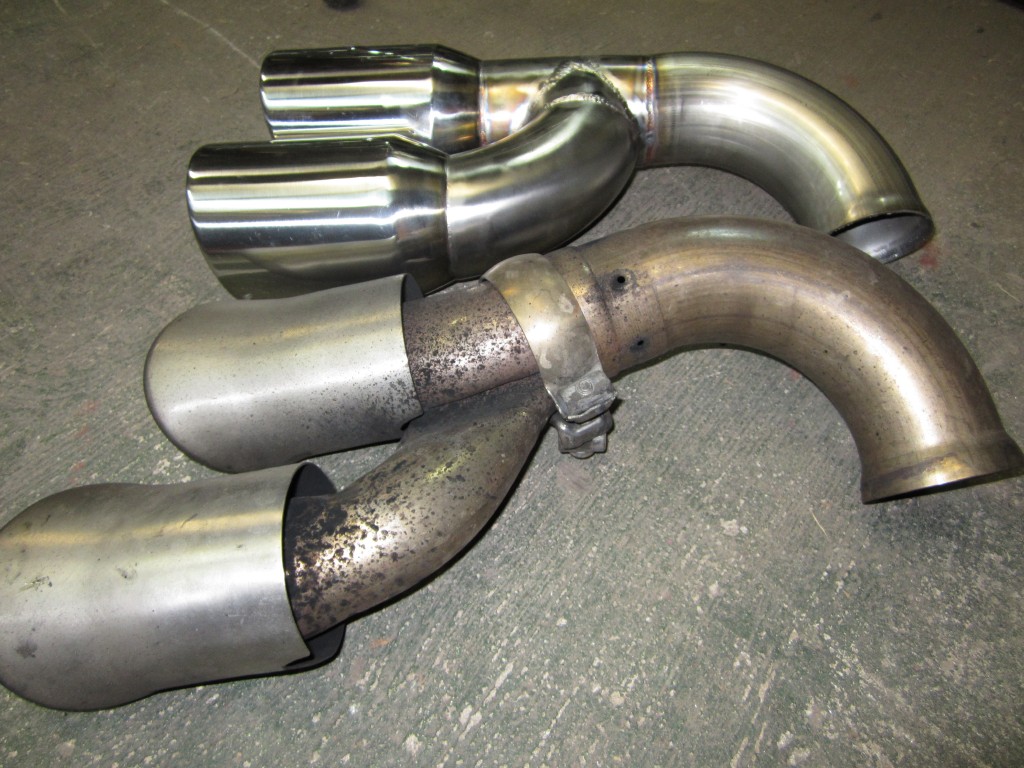
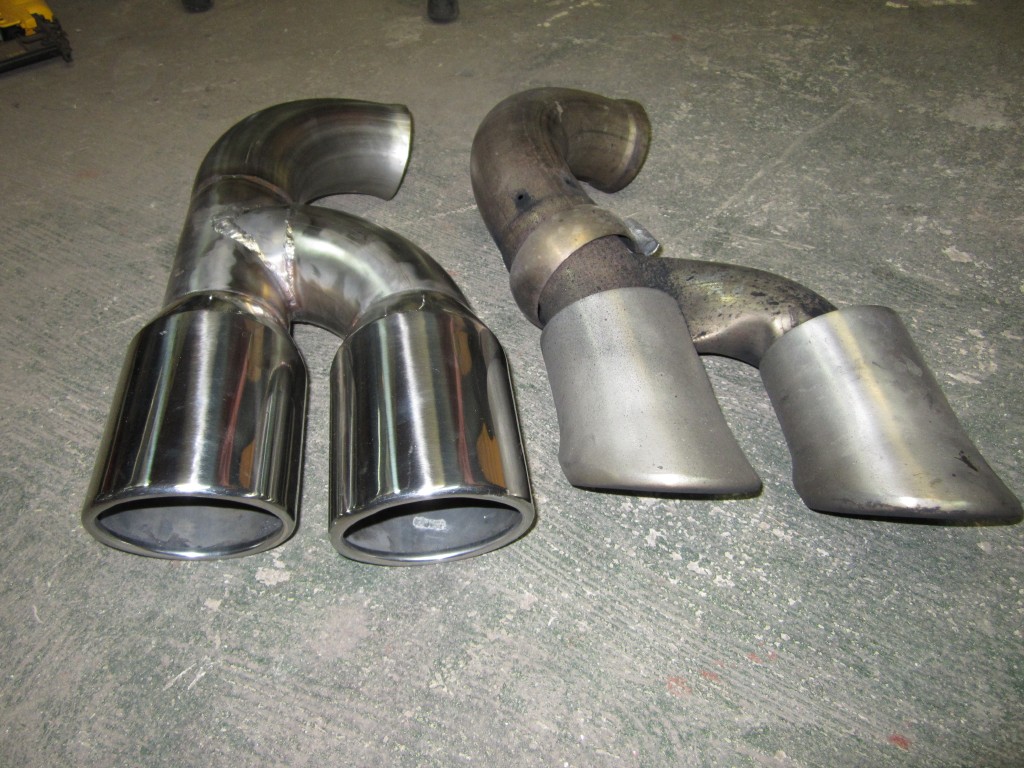
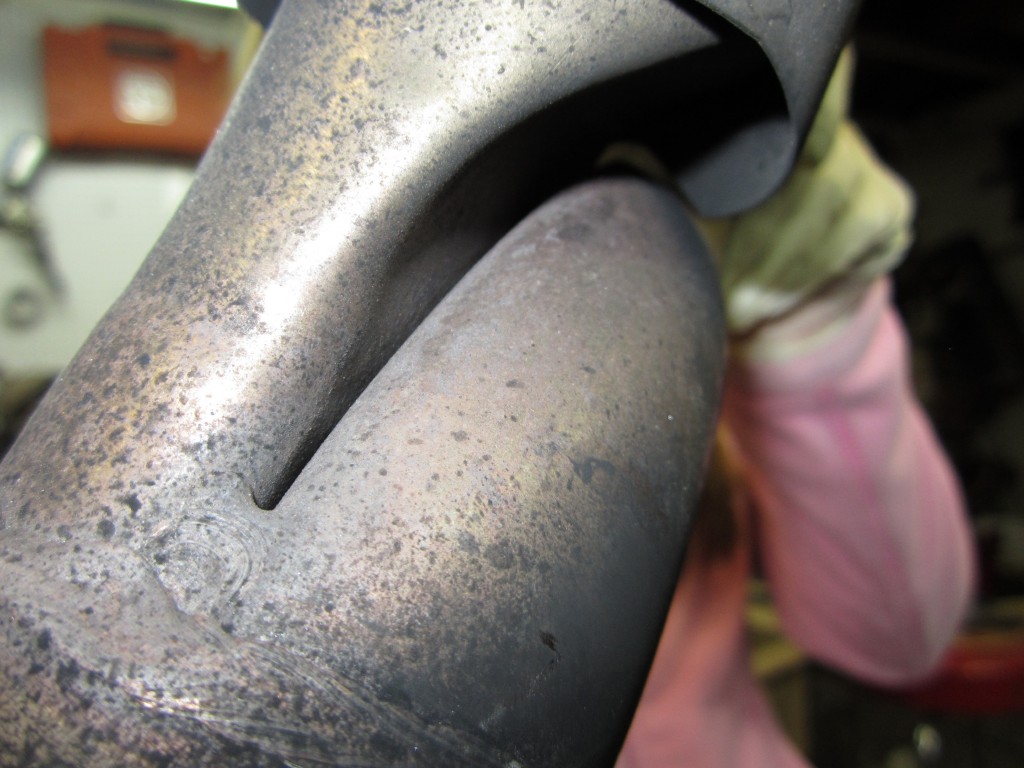
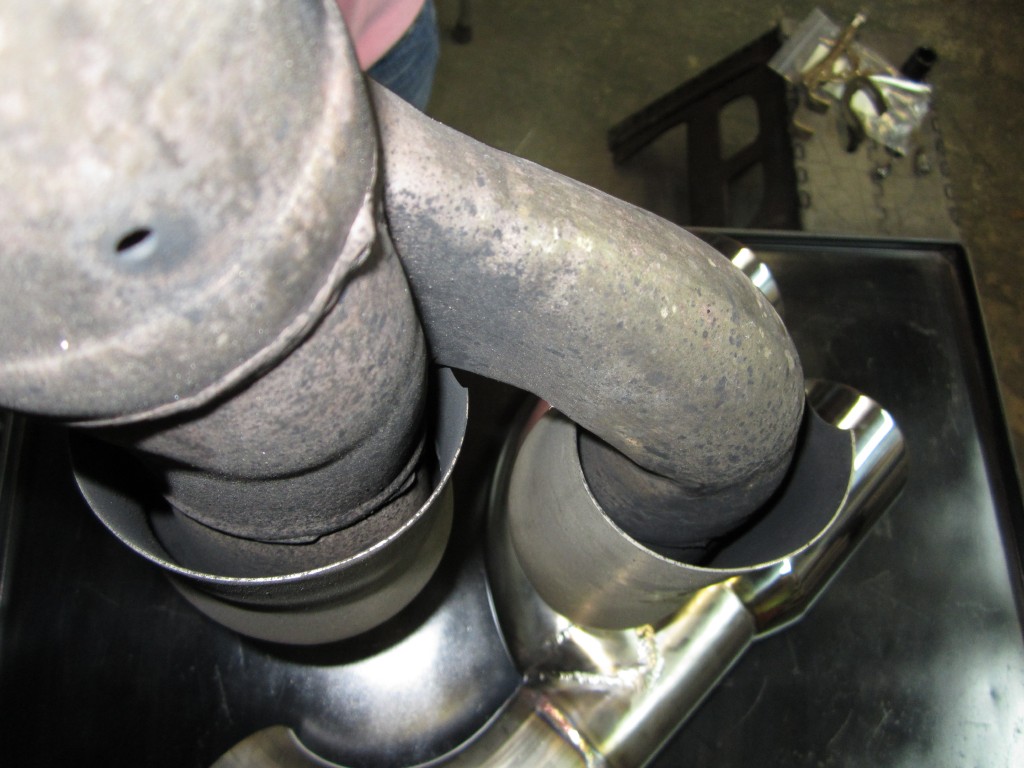


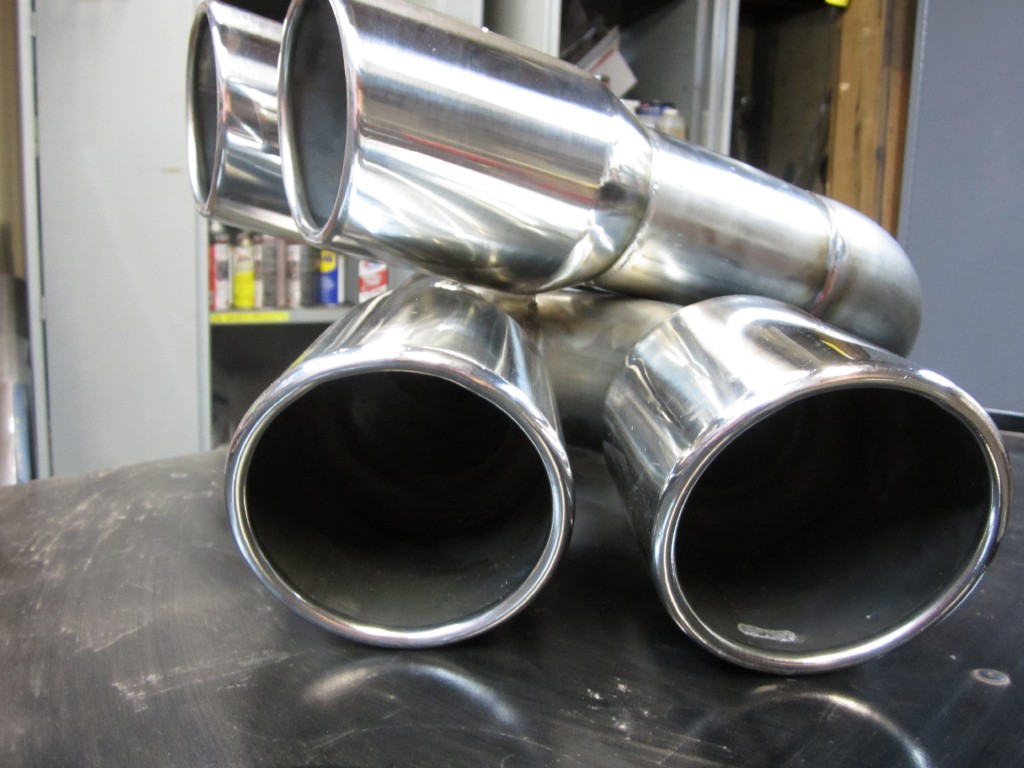
The stock exhaust tips on the 957 CTT/S is surprisingly restrictive. Each one of the dual tips is pinched down to only use half of the total incoming pipe size. Think of a circle with a line drawn straight through the diameter. Like this:
Since this is extreme by many performance standards, my theory is that it was done as another way to restrict the net decibel level of the OEM muffler. So if you are looking to do any exhaust mods, please make sure this is near the top of your list or you may negate any additional flow gains. I was shocked at the improved sound and significantly less raspy tone of my exhaust as soon as I got these installed. (Disclaimer: I already had a full custom exhaust system, sans any tips).
Here are some pics from my OEM tips and Leistung Motorsports replacement tips (Thanks Rob!). Note that these address the original design "deficiencies" and are true SS304 dual exhaust tips that flow MUCH better:
Last edited by Renaissance.Man; May 12, 2013 at 07:12 PM.
Thread Starter
|
Moderator
Joined: Jan 2011
Posts: 1,504
From: (in my garage welding something vicious)
Rep Power: 105
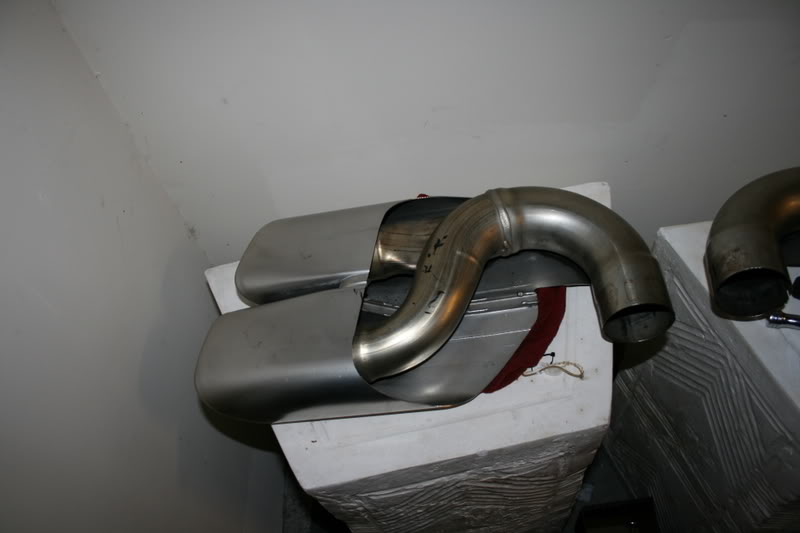
Judging by the image below, Yes. The 955 Cayenne Turbo (S) has the same issues with the square OEM tips. It is not a true dual exhaust tip either  :
:
:
Registered User
Joined: Mar 2012
Posts: 2,298
From: TX
Rep Power: 123
Putting my engineering cap on, here is something to ponder...
If my exhaust is 2.56inch (as is a typical CTT with OEM piping), and say the volume of air is x, disregarding cats, muffler restrictions etc, once the air reaches the tip, following physics of path of least resistance, the volume of air splits in two evenly, with each half travelling into its own channel. However the volume of air travelling through each tip channeling is half the volume that existed when travelling through main piping (mid pipe, etc).
Therefore, it would make sense to assume that the circumference of each tip channel would not need to be as large as the pipe itself. If so, then seeing channels smaller woul not necessarily result in a more restrictive exit. With (good) exhaust purpose to evacuate gasses as fast as possible without causing impedance to out flow of exhaust gasses, these may not be as restrictive as they look.
Don't get me wrong ren~man, not trying to say anything other than presenting my train of thought form others to correct. What do you think?
If my exhaust is 2.56inch (as is a typical CTT with OEM piping), and say the volume of air is x, disregarding cats, muffler restrictions etc, once the air reaches the tip, following physics of path of least resistance, the volume of air splits in two evenly, with each half travelling into its own channel. However the volume of air travelling through each tip channeling is half the volume that existed when travelling through main piping (mid pipe, etc).
Therefore, it would make sense to assume that the circumference of each tip channel would not need to be as large as the pipe itself. If so, then seeing channels smaller woul not necessarily result in a more restrictive exit. With (good) exhaust purpose to evacuate gasses as fast as possible without causing impedance to out flow of exhaust gasses, these may not be as restrictive as they look.
Don't get me wrong ren~man, not trying to say anything other than presenting my train of thought form others to correct. What do you think?
Thread Starter
|
Moderator
Joined: Jan 2011
Posts: 1,504
From: (in my garage welding something vicious)
Rep Power: 105
Putting my engineering cap on, here is something to ponder...
If my exhaust is 2.56inch (as is a typical CTT with OEM piping), and say the volume of air is x, disregarding cats, muffler restrictions etc, once the air reaches the tip, following physics of path of least resistance, the volume of air splits in two evenly, with each half travelling into its own channel. However the volume of air travelling through each tip channeling is half the volume that existed when travelling through main piping (mid pipe, etc).
Therefore, it would make sense to assume that the circumference of each tip channel would not need to be as large as the pipe itself. If so, then seeing channels smaller woul not necessarily result in a more restrictive exit. With (good) exhaust purpose to evacuate gasses as fast as possible without causing impedance to out flow of exhaust gasses, these may not be as restrictive as they look.
Don't get me wrong ren~man, not trying to say anything other than presenting my train of thought form others to correct. What do you think?
If my exhaust is 2.56inch (as is a typical CTT with OEM piping), and say the volume of air is x, disregarding cats, muffler restrictions etc, once the air reaches the tip, following physics of path of least resistance, the volume of air splits in two evenly, with each half travelling into its own channel. However the volume of air travelling through each tip channeling is half the volume that existed when travelling through main piping (mid pipe, etc).
Therefore, it would make sense to assume that the circumference of each tip channel would not need to be as large as the pipe itself. If so, then seeing channels smaller woul not necessarily result in a more restrictive exit. With (good) exhaust purpose to evacuate gasses as fast as possible without causing impedance to out flow of exhaust gasses, these may not be as restrictive as they look.
Don't get me wrong ren~man, not trying to say anything other than presenting my train of thought form others to correct. What do you think?
 . However, I think that is just about the max flow rate for 2.5" inch pipe.
So I do not think there is an issue until you add significantly more hp. I my example, I am roughly making about 40% more hp over stock. Which, if my estimates are correct, necessitate large diameter pipe throughout of at least 2.75" to support the higher hp.
The net of which would also need more exhaust flow from the tips as well. The icing on the cake is the throatier sound, less rasp. Hence this thread. Hopefully, that makes sense.
Last edited by Renaissance.Man; May 12, 2013 at 08:37 PM.
Registered User
Joined: Mar 2012
Posts: 2,298
From: TX
Rep Power: 123
...sure does.
I have just started on the journey to mod my CTT. Maybe one day i will get into the 700s club.
If you are at 40% over stock, I am sure that impacts the exhaust flow within the same tubing that stock cars have.
BTW, if you have the 3" exhaust, how did you overcome the tranny cross member space deficiency? The stock tubes have a flattened area there and when I looked, there was no space for 3" pipe through there. I was brainstorming for possibilities of maybe splitting the 3" into horizontal arrangement to have a net neutral outcome wrt air volume at certain pressure, but that was just me brain ticking. Interested in other people's solutions. Thanks again.
I have just started on the journey to mod my CTT. Maybe one day i will get into the 700s club.
If you are at 40% over stock, I am sure that impacts the exhaust flow within the same tubing that stock cars have.
BTW, if you have the 3" exhaust, how did you overcome the tranny cross member space deficiency? The stock tubes have a flattened area there and when I looked, there was no space for 3" pipe through there. I was brainstorming for possibilities of maybe splitting the 3" into horizontal arrangement to have a net neutral outcome wrt air volume at certain pressure, but that was just me brain ticking. Interested in other people's solutions. Thanks again.

Registered User
Joined: Feb 2013
Posts: 133
From: Mtn Home AFB, Idaho
Rep Power: 19
i glanced at my 06 ctts tips and didn't think they resembled either of the above, will get some pics and take some measurements to verify.
Trending Topics

Registered User
Joined: Feb 2013
Posts: 133
From: Mtn Home AFB, Idaho
Rep Power: 19
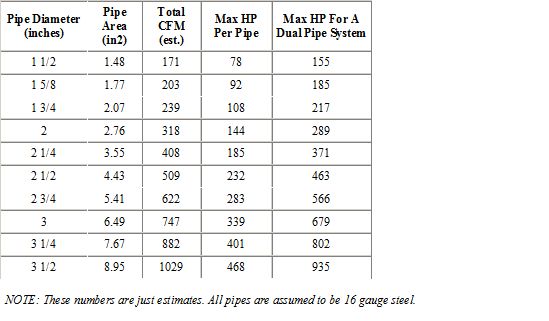
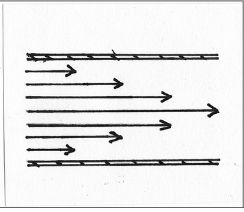
ciaka, i dont really have time to get deep into it, but your theory is a little off about half size pipes providing the same flow.... its a fluid dynamics/laminar flow issue. I used to have a chart I trusted for various pipe diameters but cant find it, my memory says a single 3" flows more than 2 x 2.5"... This one is close and the other pic gives you an idea of the frictional losses. I think this chart is listing theoretical flow, not actual. another thing to keep in mind is this does not account for any other restrictions, ie' cats, muffs that could be in the system.
Registered User
Joined: Mar 2012
Posts: 2,298
From: TX
Rep Power: 123
I dont think I said half size pipe providing same flow, but rather that the tips at the point where they split allow outcoming air from mid pipe to divide according to laws of physics, with each tip pipe receiving half of the volume flowing out. Similar to what one would observe when attaching a splitter onto the tip of the water hose outlet. Each of the resulting splitter outlets (assuming they are same size) will take up same volume of water due to our good ol' laws of physics). If that was not true, sometimes, one would observe less water flowing through one side of splitter, than in the other side...and similar observations would be made for gaseous volumes.
So if you measure gas volume at each tip pipe, and add them together, you would get the volume that travels through mid pipe (otherwise you would have to say some volume is lost or gained - which is impossible in a controlled closed system).
I think my statement above also addressed the realities of cats, mufflers, etc, and making assumption that the statements disregard effect they would have on the volume moving through the system.
My statements referred to looking at the volume of air moving through each tip pipe after receiving the volume of air from mid pipe, and effect on the resultant volume through each tip pipe. That is all.
So if you measure gas volume at each tip pipe, and add them together, you would get the volume that travels through mid pipe (otherwise you would have to say some volume is lost or gained - which is impossible in a controlled closed system).
I think my statement above also addressed the realities of cats, mufflers, etc, and making assumption that the statements disregard effect they would have on the volume moving through the system.
My statements referred to looking at the volume of air moving through each tip pipe after receiving the volume of air from mid pipe, and effect on the resultant volume through each tip pipe. That is all.
ciaka, i dont really have time to get deep into it, but your theory is a little off about half size pipes providing the same flow.... its a fluid dynamics/laminar flow issue. I used to have a chart I trusted for various pipe diameters but cant find it, my memory says a single 3" flows more than 2 x 2.5"... This one is close and the other pic gives you an idea of the frictional losses. I think this chart is listing theoretical flow, not actual. another thing to keep in mind is this does not account for any other restrictions, ie' cats, muffs that could be in the system.

Registered User
Joined: Mar 2013
Posts: 257
From: Georgia
Rep Power: 27
The Fabspeed tips look well designed. Dual 4" tips extending from a nice smooth "Y" transition. I'm not sure tips are that big of a deal though. By the time the exhaust gasses have travelled to the end of the system (i.e., the tips), they have cooled down and aren't moving as fast. I seriously doubt that a set of tips will contribute to power gains. Appearance maybe, performance, no. I'd have to see before and after dyno sheets on the same vehicle to convince me otherwise.
Personally, I think the tips on the '06 CTTS are perfect. Uniquely Porsche and great looking. Probably the best Cayenne tips of all time.
Here's the Fabspeed tips:

And the Porsche CTTS tips:

Personally, I think the tips on the '06 CTTS are perfect. Uniquely Porsche and great looking. Probably the best Cayenne tips of all time.
Here's the Fabspeed tips:

And the Porsche CTTS tips:

Last edited by spooltime; Sep 24, 2018 at 01:01 PM.
Thread Starter
|
Moderator
Joined: Jan 2011
Posts: 1,504
From: (in my garage welding something vicious)
Rep Power: 105
You are technically right. However, I can assure you that the exhaust gases are still plenty hot at the exhaust tips. As imperial evidence, I have melted the inside of my rear bumper exhaust inserts by the close proximity of the exhaust tips (see image below):
I thought they were aluminum inserts, however, clearly they are not since they started to melt. The melting point for most plastics begin around 300 deg F. I would say this is still hot enough to support high velocity exhaust evacuation in the form of better/bigger tips.


Registered User
Joined: Dec 2008
Posts: 30
From: Denver, Co
Rep Power: 19

Thread
Thread Starter
Forum
Replies
Last Post
vividracing
991
6
Jun 10, 2017 07:45 PM
RS GT3 RS
Automotive Parts & Accessories For Sale/Wanted
3
Sep 24, 2015 09:27 PM
ModBargains
Audi Vendor Classifieds
1
Sep 1, 2015 05:26 PM
ECS Tuning - VW
VW Vendor Classifieds
1
Aug 19, 2015 11:08 AM
