


Polishing Question

Thread Starter
|
Registered User

Joined: Mar 2005
Posts: 1,030
From: Chicago, IL
Rep Power: 64

Polishing Question
I just purchased some Menzerna PO 106FA polish for use with my Porter Cable random orbital buffer. I have a couple of quick questions.
1. How do I know when the polish is broken down and to stop using the buffer? I assume when it is about dry?
2. How large or small of a section should I tackle with the Menzerna PO 106FA? I will test it out first but if the results are decent is it ok to use it on the entire car?
3. Can I apply the Menzerna PO 106FA to the clearbra sections as well?
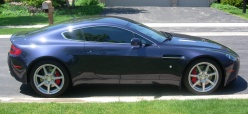
BTW, I have a dark metalic blue AM V8 Vantage. I assume that my paint is similar to most others???
Thanks in advance for your help.
Regards,
Adam
1. How do I know when the polish is broken down and to stop using the buffer? I assume when it is about dry?
2. How large or small of a section should I tackle with the Menzerna PO 106FA? I will test it out first but if the results are decent is it ok to use it on the entire car?
3. Can I apply the Menzerna PO 106FA to the clearbra sections as well?
BTW, I have a dark metalic blue AM V8 Vantage. I assume that my paint is similar to most others???
Thanks in advance for your help.
Regards,
Adam

Registered User
Joined: Feb 2004
Posts: 386
From: chicago
Rep Power: 40
i just finished my E36 M3 the other night. I work in 2x2 sections, You will know when the polish breaks down, if not no more then 5 min. I did this with My PC set at speed 5.
I am not sure about the clear bra but i'm sure it can;t hurt.
I am not a pro but did stay at a holiday inn.
J/k
I am not sure about the clear bra but i'm sure it can;t hurt.
I am not a pro but did stay at a holiday inn.
J/k
Last edited by gt2buyer; Oct 9, 2008 at 08:26 AM.
Thread Starter
|
Registered User
Joined: Mar 2005
Posts: 1,030
From: Chicago, IL
Rep Power: 64
i just finished my E36 M3 the other night. I work in 2x2 sections, You will know when the polish breaks down, if not no more then 5 min. I did this with My PC set at speed 5.
I am not sure about the clear bra but i sure it can;t hurt.
I am not a pro but did stay at a holiday inn.
J/k
I am not sure about the clear bra but i sure it can;t hurt.
I am not a pro but did stay at a holiday inn.
J/k
Adam


I just purchased some Menzerna PO 106FA polish for use with my Porter Cable random orbital buffer. I have a couple of quick questions.
1. How do I know when the polish is broken down and to stop using the buffer? I assume when it is about dry?
2. How large or small of a section should I tackle with the Menzerna PO 106FA? I will test it out first but if the results are decent is it ok to use it on the entire car?
3. Can I apply the Menzerna PO 106FA to the clearbra sections as well?
BTW, I have a dark metalic blue AM V8 Vantage. I assume that my paint is similar to most others???
Thanks in advance for your help.
Regards,
Adam
1. How do I know when the polish is broken down and to stop using the buffer? I assume when it is about dry?
2. How large or small of a section should I tackle with the Menzerna PO 106FA? I will test it out first but if the results are decent is it ok to use it on the entire car?
3. Can I apply the Menzerna PO 106FA to the clearbra sections as well?
BTW, I have a dark metalic blue AM V8 Vantage. I assume that my paint is similar to most others???
Thanks in advance for your help.
Regards,
Adam
As for the swirls that are in the paint from the factory, you should make a noticeable improvement but to fully eliminate them, it needs to be done with a rotary, which I don't recommend for a DIYer, so your next best tool is the FLEX.
To answer your questions:
1. How do I know when the polish is broken down and to stop using the buffer? I assume when it is about dry?
If the polish has dried, that's not a true sign of it being broken down. If the polish has dried, it could also mean that it's too warm or you've left it on too long and the oils in the polish have dried out. To truly know you've broken the polish down, look for the polish to finish down to an almost transparent finish. You should almost begin to see your reflection in the paint.
2. How large or small of a section should I tackle with the Menzerna PO 106FA? I will test it out first but if the results are decent is it ok to use it on the entire car?
Work in small sections like half the hood or a fender or a door at a time. You need to check your work along the way. For this, you can use something as simple as a maglite for lighting. After you've completed polishing, wipe down the panel with a 50/50 or 70/30 Isopropyl Alcohol and water mixture. That's 50% IPA or 70% IPS respectively. This will help see what the paint truly looks like.
3. Can I apply the Menzerna PO 106FA to the clearbra sections as well?
Yes. Use a white lake country pad. If you need further polishing, you can use SIP and white pad.
From the paint corrections I've done on Astons, I don't think 106 will remove all the imperfections. I've had to use SIP every time. But I'm OCD and clients pay good money for perfection. As long as you're happy with the results, that's all that matters.


Banned
Joined: Nov 2005
Posts: 178
From: pleasanton ca
Rep Power: 35

Right advice
Moe is right, you need the Flex to power out the defects. As for the Aston paint Moe got that right as well, always pig tail sand scratches on C pillar leading down to the rear quarter panel in the curve of the panel, and around the rear tailights..... why not spend the extra hour or two and get the car correct before it leaves the factory, Rolls and Bentley do.
Moe is right, you need the Flex to power out the defects. As for the Aston paint Moe got that right as well, always pig tail sand scratches on C pillar leading down to the rear quarter panel in the curve of the panel, and around the rear tailights..... why not spend the extra hour or two and get the car correct before it leaves the factory, Rolls and Bentley do.
As for why not finish, $$$$$. Imagine an extra 1-2 hours per car, per man, and the $$ adds up to the bottom line. Compared to a Rolls, an Aston is a mere production line car
 I think the paint on the Aston is much better than the Rolls. Rolls actually has quite a bit of orange peel compared to the Aston.

Former Vendor
Joined: Feb 2008
Posts: 1,460
From: Bellevue
Rep Power: 0
Trending Topics
Thread Starter
|
Registered User
Joined: Mar 2005
Posts: 1,030
From: Chicago, IL
Rep Power: 64
Moe:
Thanks for the advice. Much appreciated. I am actually the second owner of the car and I'm quite confident the car was detailed prior to my purchase as the paint was in GREAT shape. Actually much better than I expected. I am just really **** and I enjoy doing the work so I want to make certain I do it correctly and address a few minor issues in the paint. You have provided me some good insight. I love this board!
Thanks,
Adam
Thanks for the advice. Much appreciated. I am actually the second owner of the car and I'm quite confident the car was detailed prior to my purchase as the paint was in GREAT shape. Actually much better than I expected. I am just really **** and I enjoy doing the work so I want to make certain I do it correctly and address a few minor issues in the paint. You have provided me some good insight. I love this board!
Thanks,
Adam

Registered User
Joined: Oct 2006
Posts: 478
From: Des Moines
Rep Power: 39
A post I wrote up why I like the flex over the PC. That being said you can use the PC for correction If you have the time and the patience. Start with 4 inch pads and work slowly. apply moderate pressure. Just enough, to work the polish but not enough to bog the machine. Correction process with a pc will be anywhere from 4-6 hours per polish step on a car that size. Below you will find compelling reasons why you might want to switch to a flex.
As a side note, you may want to have it properly done with a rotary by a skilled detailer in proper lighting. from then on it will be far easier to maintain with the PC/Flex
flex 3401 over the PC. the flex is a better tool overall.
The problem with a PC are numerous.
One of the first is that it does NOT have the capabilities to reliably break down sip or 106 in all areas before it starts to dry the product out. Tight corners, curves, and edges all suffer from this problem. The PC simply does not have the rotation to tumble the polish. This is required for the polish to break down. The pc will just oscillate the polish thus leaving portions that are either unbroken down or sharp on one side.
Another maddening reason is the fatigue generated by the PC, two step correction on a moderately marred car is a 10-14 hour polishing process. That clacking, vibrating, and noise will drive any one insane after 2-3 cars. There is also the effect it has on nerves, elbow's and shoulders. Constant vibration like the pc can make your arms numb for hours.
Lack of power. Simply put, you apply more than a smidgen of pressure and the PC bogs down. It becomes much less effective the more pressure you apply. It can be some what maddening on a very hard clear. You need the pressure for the "cut and polish" yet the pc can not handle it.
No trigger variable speed. Most rotary's and even the flex have a trigger variable speed. You set the max and then vary your trigger pull to spread the polish out, then lock the trigger to actually work the polish.
finally the biggest problem is there is no real benefit you can take with you after learning the PC to another platform. IE flex or rotary. How you polish with the PC is not how you polish with the flex or the rotary.
The flex is an interesting hybrid between a rotary and a orbit machine.
It has the necessary rotation for tumbling the polish. Due to how the flex 3401 is designed it can provide you with both rotation and orbit. At speed 6 it has 9600 orbits (basically the equivalent of an air drive orbiter) and 480 RPM. This gives the flex enough movement to rotate and tumble the polish at a low rpm. While giving you the brute force or 10k orbit power. This will help turn that 10-14 hour 2 step polish via PC into a 5-7 hour job.
It is a smoother machine with a different vibration and noise. The flex's system is a gear driven counter weight. With the proper type of care it will be far smoother, quieter and there for much less mental and physical stress.
Basically at speed 6 It also has much more torque than most rotary's, allowing you to work an area with more pressure before it begins to bog down. Not that you will always need more pressure with it's hybrid type of movement. That extra power, and torque are what really make using a flex a joy compared to a PC orbit.
It will show a rotary user all of their bad habits. Due to the nature of how the flex moves it is beneficial that you have good rotary habits. The flex will walk on panels with poor habits, Most noticeable when people tend to edge their rotary's. By learning to keep the flex flat, they will transfer that knowledge to a rotary when they move up.
The flex will finish down tough details better than a PC. The flex has the tumble necessary to finish down paints that may have a trace of holograming in the tight corners, or bends fender flare. Where as the PC simply can not effectively remove those areas because of it's lack of rotation and lack of power.
The problem with a PC are numerous.
One of the first is that it does NOT have the capabilities to reliably break down sip or 106 in all areas before it starts to dry the product out. Tight corners, curves, and edges all suffer from this problem. The PC simply does not have the rotation to tumble the polish. This is required for the polish to break down. The pc will just oscillate the polish thus leaving portions that are either unbroken down or sharp on one side.
Another maddening reason is the fatigue generated by the PC, two step correction on a moderately marred car is a 10-14 hour polishing process. That clacking, vibrating, and noise will drive any one insane after 2-3 cars. There is also the effect it has on nerves, elbow's and shoulders. Constant vibration like the pc can make your arms numb for hours.
Lack of power. Simply put, you apply more than a smidgen of pressure and the PC bogs down. It becomes much less effective the more pressure you apply. It can be some what maddening on a very hard clear. You need the pressure for the "cut and polish" yet the pc can not handle it.
No trigger variable speed. Most rotary's and even the flex have a trigger variable speed. You set the max and then vary your trigger pull to spread the polish out, then lock the trigger to actually work the polish.
finally the biggest problem is there is no real benefit you can take with you after learning the PC to another platform. IE flex or rotary. How you polish with the PC is not how you polish with the flex or the rotary.
The flex is an interesting hybrid between a rotary and a orbit machine.
It has the necessary rotation for tumbling the polish. Due to how the flex 3401 is designed it can provide you with both rotation and orbit. At speed 6 it has 9600 orbits (basically the equivalent of an air drive orbiter) and 480 RPM. This gives the flex enough movement to rotate and tumble the polish at a low rpm. While giving you the brute force or 10k orbit power. This will help turn that 10-14 hour 2 step polish via PC into a 5-7 hour job.
It is a smoother machine with a different vibration and noise. The flex's system is a gear driven counter weight. With the proper type of care it will be far smoother, quieter and there for much less mental and physical stress.
Basically at speed 6 It also has much more torque than most rotary's, allowing you to work an area with more pressure before it begins to bog down. Not that you will always need more pressure with it's hybrid type of movement. That extra power, and torque are what really make using a flex a joy compared to a PC orbit.
It will show a rotary user all of their bad habits. Due to the nature of how the flex moves it is beneficial that you have good rotary habits. The flex will walk on panels with poor habits, Most noticeable when people tend to edge their rotary's. By learning to keep the flex flat, they will transfer that knowledge to a rotary when they move up.
The flex will finish down tough details better than a PC. The flex has the tumble necessary to finish down paints that may have a trace of holograming in the tight corners, or bends fender flare. Where as the PC simply can not effectively remove those areas because of it's lack of rotation and lack of power.
Thread Starter
|
Registered User
Joined: Mar 2005
Posts: 1,030
From: Chicago, IL
Rep Power: 64
Grouse:
Wow, that is pretty interesting. I had no idea about the limitations of the PC. My paint is actually in really good shape I just have a few spots I need to work on. I like your advice. If I can't fix these few spots to my satisfaction I will bring it to a skilled detailer. I was actually considering that anyways but I love to tinker! Thanks for the post.
Adam
Wow, that is pretty interesting. I had no idea about the limitations of the PC. My paint is actually in really good shape I just have a few spots I need to work on. I like your advice. If I can't fix these few spots to my satisfaction I will bring it to a skilled detailer. I was actually considering that anyways but I love to tinker!
Thanks for the post.Adam

Thread
Thread Starter
Forum
Replies
Last Post
eclip5e
Automobiles For Sale
6
Jul 29, 2019 11:13 AM
vividracing
997
11
Oct 6, 2015 03:43 PM
vividracing
Ferrari
0
Aug 24, 2015 04:35 PM