


When is the car actually warmed up?


Thread Starter
|
Registered User

Joined: Aug 2011
Posts: 227
From: East Wenatchee, WA
Rep Power: 24

When is the car actually warmed up?
So there are two temperature guages; one for the water temp, one for the oil. The water temp rises amazingly fast, the oil amazingly slow. Why in the heck does the oil take so long to warm up, and which temp matters as far as pushing the car goes? Do they both need to be at normal temps, or just the water? Obviously I don't know that much about cars...I'd appreciate more knowledge. Thank you all!

Registered User
Joined: Nov 2009
Posts: 1,330
From: Northern Europe
Rep Power: 78

Oil temp is more important. This was demonstrated by my old e39 M5 where the red line rev limit went gradually higher as oil temps went up. I dont start driving before revs fall to normal idle, usually the water temp is allready up. I never raise revs until oil temp is up, even if there would be need to do so. Minimum, even if there was a Ferrari trying to pass ahead of my in the lights, the oil temp would need to be above minimum line.
Last edited by kip; Dec 9, 2011 at 11:59 AM.

Registered User
Joined: May 2011
Posts: 258
From: SF Bay Area
Rep Power: 35
In case of unusual circumstances, like a failure in that system.

Registered User
Joined: Oct 2011
Posts: 319
From: New England
Rep Power: 28
1. Gauges look cool
2. If you encounter a cooling problem, i.e. a coolant leak, you'd see your water temp spike very quickly - hopefully in time to shut the engine down before any damage occurs. Just as you noticed, the oil temp takes a lot longer to rise. If you had a cooling problem and had to wait for it to show up on the oil temp gauge, you may already have some irreversible damage.
Trending Topics
Registered User
Joined: Nov 2009
Posts: 1,330
From: Northern Europe
Rep Power: 78
Here are a couple of reasons I can think of but I'm sure there are more...
1. Gauges look cool
2. If you encounter a cooling problem, i.e. a coolant leak, you'd see your water temp spike very quickly - hopefully in time to shut the engine down before any damage occurs. Just as you noticed, the oil temp takes a lot longer to rise. If you had a cooling problem and had to wait for it to show up on the oil temp gauge, you may already have some irreversible damage.
1. Gauges look cool
2. If you encounter a cooling problem, i.e. a coolant leak, you'd see your water temp spike very quickly - hopefully in time to shut the engine down before any damage occurs. Just as you noticed, the oil temp takes a lot longer to rise. If you had a cooling problem and had to wait for it to show up on the oil temp gauge, you may already have some irreversible damage.
Registered User
Joined: Nov 2009
Posts: 1,330
From: Northern Europe
Rep Power: 78
http://www.tuneruniversity.com/blog/...l-temperature/
Keep Your Engine Alive: The Importance of Oil Temperature
Posted on May 20, 2011 by Nathan
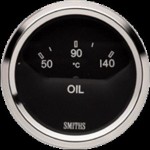 One of the things you will find if you have a oil pressure or temperature gauge is that regardless of the fact that oil is running through your engine and cooling it just like the coolant – it takes on and loses heat differently than coolant.
Oil temperature is probably the most important thing to know, specifically for those of us who are pushing our cars hard. Free reving (or worse – racing) on an engine that has not fully reached it’s oil operating temperature is extremely dangerous. But don’t think that the coolant gauge will tell you this information – it won’t.
As a general rule of thumb, after the car is warmed up, oil tends to be a few degrees warmer than the coolant (usually 10-15 degrees Fahrenheit).
However, it takes much longer for oil to come up to temperature than coolant. When you start your car in the morning, most of us are wise enough to not romp on the car until the coolant gauge is up to operating temperature. This is certainly better than romping on it cold, but it’s still not quite ideal.
You see, the oil, especially in colder ambient temperatures, takes several times longer to come up to temperature.
Oil will not get to complete operating temperature easily by simply idling, it requires driving around and putting SOME load on the engine. I see people in the pits at races all the time reving their motors to ‘warm the engine up’. It won’t do any good and is only putting premature wear on the car.
The best way to get a car’s oil temperature up is to simply drive it around for a few minutes. Ideally you’d have an oil temperature gauge to tell you when it’s at operating temperature – and oil pressure gauge (lower pressure) would also tell you this information.
What’s the danger of running an engine cold?
Total engine failure.
Well, that may seem a little extreme, as certainly all of us have run a engine that was cold, hard. We probably even got away with it due to the amazingly good engine design we have today. However, it’s an extremely risky thing to do and can easily result in catastrophic engine failure. ESPECIALLY in highly tuned, built engines.
If the engine is way too cold (ie, the coolant hasn’t even come up to temps), it’s not making its ideal power either. VTEC engines actually do not engage VTEC unless the coolant is up to temperature, for example – this is true of many other variable valve timing technologies as well. Think of it as Honda trying to save you from yourself.
In all engines, the engine’s clearances are significantly tighter, creating extreme amounts of stress on the engine’s internals and the piston rings will not have properly sealed with oil temps too low.
In short – it’s really bad for your engine to run it hard until it’s OIL is completely warmed up. Coolant temperature is a false indicator.
Practical Advice
So without going out and buying an oil gauge and all that, what’s the big take away from this discussion?
When you first start running your car for the day, make sure to keep the revs low and take it easy for at very least the first 5 or so minutes of driving, longer in extreme cold temperatures. Most importantly, and least obviously – don’t trust your coolant gauge to be a good indicator that your engine is fully warmed up.
In cars with oil coolers that utilize the coolant to cool (used on many imports, sandwhiched between the oil filter and the block), the oil temp will actually come up with the coolant as an added bonus to keeping oil temperatures cooler under high loads.
If you’re putting gauges in your car, you might also consider an oil temp or pressure gauge as it can be a real tool in assessing the load on your engine and keep you aware of situations that might harm the reliability of your engine. This is especially true in turbocharged engines or on high speed circuits as engine oil can actually cook if it gets too hot, ruining it’s lubricating properties and resulting in – yep, engine failure.
Remember, an engine fully warmed up but not heat soaked creates optimum power. In the real world, this means when you’re driving down the highway and the engine is plenty warm and the airflow through the engine bay is taking warm air from the engine bay out through the bottom of the car. Never try to get a better time at the drag strip by running with cold engine oil and never try to warm a car up by reving the engine.
Keeping this advice in mind will certainly keep your engine alive much longer and prevent you from having a really bad day.

Registered User
Joined: Oct 2010
Posts: 159
From: Canada
Rep Power: 24
Here are a couple of reasons I can think of but I'm sure there are more...
1. Gauges look cool
2. If you encounter a cooling problem, i.e. a coolant leak, you'd see your water temp spike very quickly - hopefully in time to shut the engine down before any damage occurs. Just as you noticed, the oil temp takes a lot longer to rise. If you had a cooling problem and had to wait for it to show up on the oil temp gauge, you may already have some irreversible damage.
1. Gauges look cool
2. If you encounter a cooling problem, i.e. a coolant leak, you'd see your water temp spike very quickly - hopefully in time to shut the engine down before any damage occurs. Just as you noticed, the oil temp takes a lot longer to rise. If you had a cooling problem and had to wait for it to show up on the oil temp gauge, you may already have some irreversible damage.
I'm certain the on board computer could warn of such things. But this way, they can sell the Panamera as an extension of the 911 -- works for me!!
Thread Starter
|
Registered User
Joined: Aug 2011
Posts: 227
From: East Wenatchee, WA
Rep Power: 24
Love all the info and advice...thank you all!
If anybody wants to get really technical, I'd appreciate knowing why in the world it takes the oil so much longer to heat up than the coolant! Not knowing any better, I would have assumed they would be identical temps...
If anybody wants to get really technical, I'd appreciate knowing why in the world it takes the oil so much longer to heat up than the coolant! Not knowing any better, I would have assumed they would be identical temps...

Registered User
Joined: May 2010
Posts: 513
From: Miami
Rep Power: 38
I would want to say, due to the density and mass of the liquids, the more mass you have to heat up the longer it takes to reach a higher temperature. Just like steel has a muucchh higher boiling point that water, oil is more dense, hence more particles to excite.
Then again I'm not that kind of engineer, I bet there is a better explanation.
Then again I'm not that kind of engineer, I bet there is a better explanation.
Registered User
Joined: Nov 2009
Posts: 1,330
From: Northern Europe
Rep Power: 78
The heat capacity of water is 4.1855 and I googled the value for motor oil and found a few posts, where it was around 23. So if I understand correctly it takes over 5x times more energy to warm the same amount of material. Then again I dont know how much coolant there is in a POrsche Panamera, In the manual it says 9 liters of oil. If the amounts are similar, that would explain it, but dont know if its true.

Registered User
Joined: Feb 2010
Posts: 148
From: Dallas TX
Rep Power: 27
The full volume of water is not available to warm up until the thermostat opens. Initially, the water contained in the water jackets of the block are exposed to the heat of the engine's combustion. After the thermostatically controlled temperature is reached, the water in the radiators is mixed in with the water in the block and the cooling system is big enough to stabilize to the desired operating temperature.
There is no holdback on the warming of the oil. However, the oil is not used to cool the engine so it is not necessarily directed to the hottest part of the engine. It is used to lubricate the moving parts and thus gets most of its heat from friction rather than combustion-associated take up.
At least that's what I understand.
There is no holdback on the warming of the oil. However, the oil is not used to cool the engine so it is not necessarily directed to the hottest part of the engine. It is used to lubricate the moving parts and thus gets most of its heat from friction rather than combustion-associated take up.
At least that's what I understand.
Registered User
Joined: May 2011
Posts: 258
From: SF Bay Area
Rep Power: 35
Whoa whoa, hang on a minute.
The specific heat (energy required to raise one gram one degree) of water is 4.18 J/g °C.
The specific heat of engine oil, which varies from oil to oil, and by temperature, ranges from 1.79-2.48 J/g °C. (Heat Transfer by J.P.Holman, Table A-4)
So: Water is a much better coolant than oil!
The specific heat (energy required to raise one gram one degree) of water is 4.18 J/g °C.
The specific heat of engine oil, which varies from oil to oil, and by temperature, ranges from 1.79-2.48 J/g °C. (Heat Transfer by J.P.Holman, Table A-4)
So: Water is a much better coolant than oil!

Thread
Thread Starter
Forum
Replies
Last Post
PorscheEnthusiast
Automobiles For Sale
2
Nov 13, 2015 02:23 PM
r_matt_6
Automobiles For Sale
11
Oct 8, 2015 06:07 PM
