


Benefit of 19s vs. 18s


Registered User
Joined: Jul 2006
Posts: 8,930
From: ga
Rep Power: 552


 I think a GT660 with a better driver could beat a GT700. I guess I should be a little clearer with my statement..
NOT IF THE 19'S ARE OF EQUAL OR LESSER WEIGHT!!!!!!!!!!!!!!
Not only that even heavier wheels are going to make a fender length difference. So how many times have you raced a car that's exactly the same speed?
Joe's arguement makes complete sense, but has more relevance to ride quality than performance. As for racing, 19's wont allow for as much flexibility with camber adjustments and such. Not only that, 18's optimize keeping the car lower to the ground while being able to run bigger tires. You get the best combination of all 4 worlds:
1) Good looks
2) Tire life, Tire size (comfort)
3) Adjustability
4) 1-3 + being able to keep the car low to the ground.
So 18's are the best blend of everything you can get on a car, no doubt about that, but most people in Porsches do not care about ride height, unless they are lowering anyways, adjustability only applies to the track, and 19's look even better.
For the average DE driver you can go just as fast on 19's, as R6s and Sport Cups are available and BFG drag radials are available in 19 inches as well.
This really is the smallest of deals that is being blown far out of proportion.

Thread Starter
|
Registered User
Joined: Dec 2007
Posts: 333
From: New York
Rep Power: 32
This was not meant to be a thread to bash 19s. I guess I should be clearer with my statements.
If two stock cars have the same aftermarket wheel, one in 18s and the other in 19s, and the drivers race each other from either a rolling start or a standstill, the driver with the car riding on 19s should lose every time. If you are ok with that because the 19s look better fine. I for one am not ok with that. If I wanted looks I would have bought a luxury car. Just my opinion.
If two stock cars have the same aftermarket wheel, one in 18s and the other in 19s, and the drivers race each other from either a rolling start or a standstill, the driver with the car riding on 19s should lose every time. If you are ok with that because the 19s look better fine. I for one am not ok with that. If I wanted looks I would have bought a luxury car. Just my opinion.
I have to take exception with your statement below... If someone else has, then please forgive the repeat comment... Porsche didn't have this car dialed in for hard track driving "right out of the box".
Anyone who'se pushed their 996T to the limits repeatedly for multiple 30minute sessions over a 2 or 3 day weekend will tell you that the oem stoppers, although fine for the boulivards and interstates, are no match for the rigors of hard abuse at the track.
If they'd have dialed it in out of the box, they'd have used the proper components to allow the brakes to perform as well as the drivetrain.
Mike
Anyone who'se pushed their 996T to the limits repeatedly for multiple 30minute sessions over a 2 or 3 day weekend will tell you that the oem stoppers, although fine for the boulivards and interstates, are no match for the rigors of hard abuse at the track.
If they'd have dialed it in out of the box, they'd have used the proper components to allow the brakes to perform as well as the drivetrain.
Mike
I think you guys will find this European Car article by Jay Chen to put some closure on this issue.
http://www.europeancarweb.com/tech/0...res/index.html
In his article, I captured a real good excerpt per Porsche Engineering ...."All the fuel and chassis control systems on the 996 Turbo are built and tested around the wheel and tire size and their corresponding rolling radius. Altering the standard size not only has adverse effects on the performance and handling but most likely could end in damaged drivetrain parts such as a broken front differential or viscous clutch damage (not a warranty matter). The weight of the wheels and tires is not a major factor." This just goes to show how dialed in Porsche's cars are out of the box.
http://www.europeancarweb.com/tech/0...res/index.html
In his article, I captured a real good excerpt per Porsche Engineering ...."All the fuel and chassis control systems on the 996 Turbo are built and tested around the wheel and tire size and their corresponding rolling radius. Altering the standard size not only has adverse effects on the performance and handling but most likely could end in damaged drivetrain parts such as a broken front differential or viscous clutch damage (not a warranty matter). The weight of the wheels and tires is not a major factor." This just goes to show how dialed in Porsche's cars are out of the box.
Registered User

Joined: Mar 2008
Posts: 2,621
From: Norcal
Rep Power: 170
On another note, I see the new GTR has 20s on it stock. If having 19s is so moronic and anti-performance to some people, is Nissan absolutely insane for putting 20s on that car? I am being serious when I ask because I would like to know what people think about that!



Registered User
Joined: Jul 2006
Posts: 8,930
From: ga
Rep Power: 552
Agree on your 1st sentence. Not sure I agree with your 2nd sentence. In theory, maybe. In reality, not so sure.
On another note, I see the new GTR has 20s on it stock. If having 19s is so moronic and anti-performance to some people, is Nissan absolutely insane for putting 20s on that car? I am being serious when I ask because I would like to know what people think about that!
On another note, I see the new GTR has 20s on it stock. If having 19s is so moronic and anti-performance to some people, is Nissan absolutely insane for putting 20s on that car? I am being serious when I ask because I would like to know what people think about that!
The 20's on the GTR weigh less than the 19's on the 997 TT, the 19's on the 997 GT3 and the 18's on the 996 GT2 and GT3 and TT (solids)
I think they are about the same weight as the stock hollows. Maybe 2 lbs heavier in the front and the same in the rear (due to width). The 997 TT is still faster acclerating, but the weak link of the GT-R is not it's wheels, it's the weight (curbweight). The short gearing helps it on the bottom end but up top it gets walked.
For street tires and drivers events IT'S NOT A BIG FREAKING DEAL! This is a bunch of overdramatic nonsense as neither are any specifics being mentioned as to what performance is being lost, just blind speculations backed up with no real data whatsoever.
Registered User
Joined: Mar 2008
Posts: 2,621
From: Norcal
Rep Power: 170
I'm with you, Heavy. I'm done with this debate....
The 20's on the GTR weigh less than the 19's on the 997 TT, the 19's on the 997 GT3 and the 18's on the 996 GT2 and GT3 and TT (solids)
I think they are about the same weight as the stock hollows. Maybe 2 lbs heavier in the front and the same in the rear (due to width). The 997 TT is still faster acclerating, but the weak link of the GT-R is not it's wheels, it's the weight (curbweight). The short gearing helps it on the bottom end but up top it gets walked.
For street tires and drivers events IT'S NOT A BIG FREAKING DEAL! This is a bunch of overdramatic nonsense as neither are any specifics being mentioned as to what performance is being lost, just blind speculations backed up with no real data whatsoever.
I think they are about the same weight as the stock hollows. Maybe 2 lbs heavier in the front and the same in the rear (due to width). The 997 TT is still faster acclerating, but the weak link of the GT-R is not it's wheels, it's the weight (curbweight). The short gearing helps it on the bottom end but up top it gets walked.
For street tires and drivers events IT'S NOT A BIG FREAKING DEAL! This is a bunch of overdramatic nonsense as neither are any specifics being mentioned as to what performance is being lost, just blind speculations backed up with no real data whatsoever.
Registered User
Joined: Jul 2005
Posts: 295
From: LAS VEGAS
Rep Power: 32
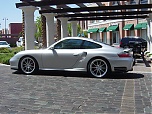
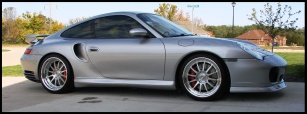
I weighed my 19's with tires and also the stock 18' hollow spokes with tires after my last track day when I swapped the 19's back on after I got done at the track. The 19's weighed 6lbs less than the stock 18's.
I don't see where they hurt performance at all, but just I didn't want to tear up the more expensive 19' tires at the track, that's the reason for swapping out to the 18's.
I don't see where they hurt performance at all, but just I didn't want to tear up the more expensive 19' tires at the track, that's the reason for swapping out to the 18's.
Registered User
Joined: Mar 2008
Posts: 2,621
From: Norcal
Rep Power: 170
I weighed my 19's with tires and also the stock 18' hollow spokes with tires after my last track day when I swapped the 19's back on after I got done at the track. The 19's weighed 6lbs less than the stock 18's.
I don't see where they hurt performance at all, but just I didn't want to tear up the more expensive 19' tires at the track, that's the reason for swapping out to the 18's.
I don't see where they hurt performance at all, but just I didn't want to tear up the more expensive 19' tires at the track, that's the reason for swapping out to the 18's.
Registered User
Joined: Jul 2006
Posts: 8,930
From: ga
Rep Power: 552
And we havent even gotten into the contact patch area yet. Bigger diameter wheel makes the contact patch longer which is great for acceleration, combine that with a slightly wider wheel and you have a bigger overall contact patch which is better in every area. This is a good reason for manufacturers to go with bigger and wider wheels, because you can get more contact patch on the ground, you get more feedback from the road, steering/handling is improved. For street cars that come from the factory it's a win win for the manufacturer, they dont need the biggest tire they can cram on the car. It's less visually appealing and only makes for squirmy sidewalls on street tires with soft sidewalls.
Porsche, however, didnt do their homework and I think it sucks that they allowed the wheels to be so heavy on the 997's. Neither did they make the wheels wider so now the 997's are working with skinnier more longitudinal contact patches on much heavier wheels compared to the 996's. Maybe they made them heavy to cover up some of the handling deficiencies of the 997 TT, those wheels are bricks compared to 996 TT hollows (and solids for that matter).
For practicality, ease of use, adjustability, weight, tire selection, the 18's are better. But if I werent running so much negative camber I would have a set of 19's for the street as they just look better. And there is no performance I need to save for the street.
Porsche, however, didnt do their homework and I think it sucks that they allowed the wheels to be so heavy on the 997's. Neither did they make the wheels wider so now the 997's are working with skinnier more longitudinal contact patches on much heavier wheels compared to the 996's. Maybe they made them heavy to cover up some of the handling deficiencies of the 997 TT, those wheels are bricks compared to 996 TT hollows (and solids for that matter).
For practicality, ease of use, adjustability, weight, tire selection, the 18's are better. But if I werent running so much negative camber I would have a set of 19's for the street as they just look better. And there is no performance I need to save for the street.
Thread Starter
|
Registered User
Joined: Dec 2007
Posts: 333
From: New York
Rep Power: 32
And we havent even gotten into the contact patch area yet. Bigger diameter wheel makes the contact patch longer which is great for acceleration, combine that with a slightly wider wheel and you have a bigger overall contact patch which is better in every area. This is a good reason for manufacturers to go with bigger and wider wheels, because you can get more contact patch on the ground, you get more feedback from the road, steering/handling is improved. For street cars that come from the factory it's a win win for the manufacturer, they dont need the biggest tire they can cram on the car. It's less visually appealing and only makes for squirmy sidewalls on street tires with soft sidewalls.
Porsche, however, didnt do their homework and I think it sucks that they allowed the wheels to be so heavy on the 997's. Neither did they make the wheels wider so now the 997's are working with skinnier more longitudinal contact patches on much heavier wheels compared to the 996's. Maybe they made them heavy to cover up some of the handling deficiencies of the 997 TT, those wheels are bricks compared to 996 TT hollows (and solids for that matter).
For practicality, ease of use, adjustability, weight, tire selection, the 18's are better. But if I werent running so much negative camber I would have a set of 19's for the street as they just look better. And there is no performance I need to save for the street.
Porsche, however, didnt do their homework and I think it sucks that they allowed the wheels to be so heavy on the 997's. Neither did they make the wheels wider so now the 997's are working with skinnier more longitudinal contact patches on much heavier wheels compared to the 996's. Maybe they made them heavy to cover up some of the handling deficiencies of the 997 TT, those wheels are bricks compared to 996 TT hollows (and solids for that matter).
For practicality, ease of use, adjustability, weight, tire selection, the 18's are better. But if I werent running so much negative camber I would have a set of 19's for the street as they just look better. And there is no performance I need to save for the street.
Registered User
Joined: Jul 2006
Posts: 8,930
From: ga
Rep Power: 552
The 19's are beneficial in many ways especially for them. I'm assuming they went for strength and in this case strength meant more weight. The thinner sidewalls on the tires puts them more at risk of bending and cracking and some of the lightweight wheels will crack and break easily. I know they put some thought into it, but who knows what the final decision was based on. I'd put my money on durability against the risk of the size of the wheel.
I think an 18' wheel would have looked poor on the 997 TT with the bigger size. The 997 TT is pretty big compared to the 996 TT and the 18" twists barely worked on it. It's probably just the best combination of looks and durability.
I think an 18' wheel would have looked poor on the 997 TT with the bigger size. The 997 TT is pretty big compared to the 996 TT and the 18" twists barely worked on it. It's probably just the best combination of looks and durability.