


Toe Links/Tie Rods with bumpsteer worth the $$?


Thread Starter
|
Registered User
Joined: Jan 2008
Posts: 636
From: Sacramento
Rep Power: 46

Toe Links/Tie Rods with bumpsteer worth the $$?
Need some opinions.
I want to make my suspension more predictable and less "jumpy".
I am currently running RUF PSS9's and the rest of the suspension is all stock.
I feel the car to be scary in corners and high speeds and it just doesn't feel planted. I had the car aligned by a reputable shop in Sacramento called G12.
I was advised by my Indy to get tarret toe links and tie rods both with bumpsteer and it would make a HUGE difference in how stable the car felt.
Is this true and are there any other suspension components I should be looking at to help stability and make the car feel as if it's more planted?
Thanks in advance.
I want to make my suspension more predictable and less "jumpy".
I am currently running RUF PSS9's and the rest of the suspension is all stock.
I feel the car to be scary in corners and high speeds and it just doesn't feel planted. I had the car aligned by a reputable shop in Sacramento called G12.
I was advised by my Indy to get tarret toe links and tie rods both with bumpsteer and it would make a HUGE difference in how stable the car felt.
Is this true and are there any other suspension components I should be looking at to help stability and make the car feel as if it's more planted?
Thanks in advance.
Last edited by uurfantasy; Mar 9, 2011 at 10:41 AM.
Administrator

Joined: Mar 2005
Posts: 15,091
From: California
Rep Power: 1002

while you can spend the extra money for toe links w/bumpsteer the bumpsteer links are not essential...you would be better served getting the non-bumpsteer tarret toe links but with locking plates so your car will hold it's alignment...otherwise the eccentrics will alter the alignment even with the good toe links...if your car feels that jumpy I would forget the alignment shop you have been going to and make a run to Tony at TC Design in Milpitas...have him corner balance at the same time...you might also want to consider Tarret rear upper monoballs and adjustable drop links front and rear to eliminate sway bar pre-load...do you have the specs for your current alignment and sway settings?
Registered User
Joined: Jul 2003
Posts: 1,989
From: Texas
Rep Power: 117
while you can spend the extra money for toe links w/bumpsteer the bumpsteer links are not essential...you would be better served getting the non-bumpsteer tarret toe links but with locking plates so your car will hold it's alignment...otherwise the eccentrics will alter the alignment even with the good toe links...if your car feels that jumpy I would forget the alignment shop you have been going to and make a run to Tony at TC Design in Milpitas...have him corner balance at the same time...you might also want to consider Tarret rear upper monoballs and adjustable drop links front and rear to eliminate sway bar pre-load...do you have the specs for your current alignment and sway settings?
Thread Starter
|
Registered User
Joined: Jan 2008
Posts: 636
From: Sacramento
Rep Power: 46
while you can spend the extra money for toe links w/bumpsteer the bumpsteer links are not essential...you would be better served getting the non-bumpsteer tarret toe links but with locking plates so your car will hold it's alignment...otherwise the eccentrics will alter the alignment even with the good toe links...if your car feels that jumpy I would forget the alignment shop you have been going to and make a run to Tony at TC Design in Milpitas...have him corner balance at the same time...you might also want to consider Tarret rear upper monoballs and adjustable drop links front and rear to eliminate sway bar pre-load...do you have the specs for your current alignment and sway settings?
Do I need drop links even with stock sway bars?
I do have the alignment specs and my Indy IPB here in Sac were looking them over and he said they looked good.
Bump steer is what my Indy was saying was causing the jumpy feeling.
Registered User
Joined: Jul 2003
Posts: 1,989
From: Texas
Rep Power: 117
You can use the OEM drop links, the aftermarket jobs are heavier duty but also very noisy. The OEMs are good enough for the factory GT2 . There is a trade off with suspensions between street and track, every change is a compromise, what's great on the track can be a PIA on the daily commute.
Administrator
Joined: Mar 2005
Posts: 15,091
From: California
Rep Power: 1002
as for the drop links..they are not necessary..but the oem ones can bend and come apart easily...the adjustable ones are much stronger plus they have the added bonus of relieving sway pre-load as it comes from the factory, which makes sway bar adjustments at the track that much easier

Registered User
Joined: Jul 2006
Posts: 8,930
From: ga
Rep Power: 552
Jumpy in the turns is not about Toe links. By scary in the turns do you mean oversteer? The TT is one of the least scary in the turns cars I've ever driven, especially in AWD if that's what you are.
Unless your coilovers are bad or a bad setup, you should not have to buy a whole lot of extra stuff to make it planted in the turns.
Unless your TT is RWD, you should not have any problems feeling stable in the turns. Maybe sway bars at most. I get annoyed whenever dudes are encouraged to spend thousands to drive on the street.
Sound like a damper issue, and the Toe Links won't even come close to fixing that jumpiness issue. Car needs to be lower and stiffer (sways) and have a very good alignment. That should solve the scary in the turns issue.
Unless your coilovers are bad or a bad setup, you should not have to buy a whole lot of extra stuff to make it planted in the turns.
Unless your TT is RWD, you should not have any problems feeling stable in the turns. Maybe sway bars at most. I get annoyed whenever dudes are encouraged to spend thousands to drive on the street.
Sound like a damper issue, and the Toe Links won't even come close to fixing that jumpiness issue. Car needs to be lower and stiffer (sways) and have a very good alignment. That should solve the scary in the turns issue.
Trending Topics



Registered User
Joined: Jul 2010
Posts: 4,848
Rep Power: 457
Need some opinions.
I want to make my suspension more predictable and less "jumpy".
I am currently running RUF PSS9's and the rest of the suspension is all stock.
I feel the car to be scary in corners and high speeds and it just doesn't feel planted. I had the car aligned by a reputable shop in Sacramento called G12.
I was advised by my Indy to get tarret toe links and tie rods both with bumpsteer and it would make a HUGE difference in how stable the car felt.
Is this true and are there any other suspension components I should be looking at to help stability and make the car feel as if it's more planted?
Thanks in advance.
I want to make my suspension more predictable and less "jumpy".
I am currently running RUF PSS9's and the rest of the suspension is all stock.
I feel the car to be scary in corners and high speeds and it just doesn't feel planted. I had the car aligned by a reputable shop in Sacramento called G12.
I was advised by my Indy to get tarret toe links and tie rods both with bumpsteer and it would make a HUGE difference in how stable the car felt.
Is this true and are there any other suspension components I should be looking at to help stability and make the car feel as if it's more planted?
Thanks in advance.
The following is an excerpt from page 7 of the PSS10 mounting instructions published by Bilstein and available on their US website. PSS9 instructions are identical except for the part numbers and the fact that the front setting range is 20mm (75mm-95mm). The same information is also contained in the PSS10 TUV certificate:
"The adjustment range of the spring plates is only approved within the range of the values given in the table below. Adjustments must be set so that the body is level when the vehicle is empty apart from the driver. The LOWEST approved adjustment and the permissible adjustment range are to be entered, stating the fixed axle reference points. (Example, see below).
Manufacturer PORSCHE
ABE-/ EG- BE- No. e13*98/14*0059*..
type designation 996 Turbo (4WD)
model 996 Turbo
FRONT according to permissible axle load and adjusting dimensions
spring part number
main spring E4-FD1-Y623A00
helper spring E4-FD1-Z349A00
shock absorber part number with damping force adjustment VM3-E716
permissible adjustment range
maximum permissible axle load 825 kg (1815 lb)
80 – 90 mm* = 10 mm range
* measurement:
top edge of spring seat down to the center of mounting screw
REAR according to permissible axle load and adjusting dimensions
spring part number main spring E4-FD1-Y518A00
helper spring E4-FD1-Y504A01
shock absorber part number with damping force adjustment BM5-D541
permissible adjustment range
maximum permissible axle load 1250 kg (2750 lb)
205 - 210 mm* = 5 mm range
* measurement:
top edge of spring seat down to the center of mounting screw
�� There are no technical objections against the use of all O.E. wheel/tire combinations.
�� The ground clearance in unladen state is reduced by the installation of special springs. It is the approximate equivalent of that of a partially laden stock vehicle. When the vehicle is loaded to the permissible axle loads the ground clearance does not change as compared to the stock vehicle. If spoilers, rear aprons and special exhaust systems are mounted, however, the reduced angle of slope must be noted (travelling on ramps etc.).
�� The specified minimum height of the coupling ball above the road surface with the permissible total weight of the vehicle (acc. DIN 74058) is 350 mm."
I think this makes it clear why some people that drive the car hard encounter problems if they have the suspension height set up at a height other that what is spelled out by Bilstein. Am I the only one that has read this document as it seems to put this "handling mystery" to bed? It seems clear to me now that if you want your PSS9/10s to perform properly on the 996tt, you must mount it at the specific ride height at described in the installation instructions with a 10mm variance in the front (20mm for PSS9) and 5mm variance in the rear. BTW, 10mm is only .39 inches and 5mm is only .195 inches, so clearly the PSS9/10 kit does not give you very much leeway as to where to set the ride height if you want the suspension to perform properly.....
Hope this helps. If I were you, I'd first check and see if you are set up per the above ride height requirements before you start throwing thousands of dollars at parts that in your case probably won't make any difference.
Last edited by pwdrhound; Mar 9, 2011 at 07:32 PM.
Thread Starter
|
Registered User
Joined: Jan 2008
Posts: 636
From: Sacramento
Rep Power: 46
The question no one has asked is what ride height you are at? The PSS9/10 coilovers have a specific ride height they need to be set up at for the shocks to function properly and avoid hitting the bumpstops. Per the PSS9/10 bilstein installation instructions, there is only a 10mm (20mm for PSS9) variance of ride height adjustment in the front, 5mm in the rear. If you are too low (i.e. GT2 height) and are on the bumpstops, you WILL have issues.
The following is an excerpt from page 7 of the PSS10 mounting instructions published by Bilstein and available on their US website. PSS9 instructions are identical except for the part numbers and the fact that the front setting range is 20mm (75mm-95mm). The same information is also contained in the PSS10 TUV certificate:
"The adjustment range of the spring plates is only approved within the range of the values given in the table below. Adjustments must be set so that the body is level when the vehicle is empty apart from the driver. The LOWEST approved adjustment and the permissible adjustment range are to be entered, stating the fixed axle reference points. (Example, see below).
Manufacturer PORSCHE
ABE-/ EG- BE- No. e13*98/14*0059*..
type designation 996 Turbo (4WD)
model 996 Turbo
FRONT according to permissible axle load and adjusting dimensions
spring part number
main spring E4-FD1-Y623A00
helper spring E4-FD1-Z349A00
shock absorber part number with damping force adjustment VM3-E716
permissible adjustment range
maximum permissible axle load 825 kg (1815 lb)
80 – 90 mm* = 10 mm range
* measurement:
top edge of spring seat down to the center of mounting screw
REAR according to permissible axle load and adjusting dimensions
spring part number main spring E4-FD1-Y518A00
helper spring E4-FD1-Y504A01
shock absorber part number with damping force adjustment BM5-D541
permissible adjustment range
maximum permissible axle load 1250 kg (2750 lb)
205 - 210 mm* = 5 mm range
* measurement:
top edge of spring seat down to the center of mounting screw
�� There are no technical objections against the use of all O.E. wheel/tire combinations.
�� The ground clearance in unladen state is reduced by the installation of special springs. It is the approximate equivalent of that of a partially laden stock vehicle. When the vehicle is loaded to the permissible axle loads the ground clearance does not change as compared to the stock vehicle. If spoilers, rear aprons and special exhaust systems are mounted, however, the reduced angle of slope must be noted (travelling on ramps etc.).
�� The specified minimum height of the coupling ball above the road surface with the permissible total weight of the vehicle (acc. DIN 74058) is 350 mm."
I think this makes it clear why some people that drive the car hard encounter problems if they have the suspension height set up at a height other that what is spelled out by Bilstein. Am I the only one that has read this document as it seems to put this "handling mystery" to bed? It seems clear to me now that if you want your PSS9/10s to perform properly on the 996tt, you must mount it at the specific ride height at described in the installation instructions with a 10mm variance in the front (20mm for PSS9) and 5mm variance in the rear. BTW, 10mm is only .39 inches and 5mm is only .195 inches, so clearly the PSS9/10 kit does not give you very much leeway as to where to set the ride height if you want the suspension to perform properly.....
Hope this helps. If I were you, I'd first check and see if you are set up per the above ride height requirements before you start throwing thousands of dollars at parts that in your case probably won't make any difference.
The following is an excerpt from page 7 of the PSS10 mounting instructions published by Bilstein and available on their US website. PSS9 instructions are identical except for the part numbers and the fact that the front setting range is 20mm (75mm-95mm). The same information is also contained in the PSS10 TUV certificate:
"The adjustment range of the spring plates is only approved within the range of the values given in the table below. Adjustments must be set so that the body is level when the vehicle is empty apart from the driver. The LOWEST approved adjustment and the permissible adjustment range are to be entered, stating the fixed axle reference points. (Example, see below).
Manufacturer PORSCHE
ABE-/ EG- BE- No. e13*98/14*0059*..
type designation 996 Turbo (4WD)
model 996 Turbo
FRONT according to permissible axle load and adjusting dimensions
spring part number
main spring E4-FD1-Y623A00
helper spring E4-FD1-Z349A00
shock absorber part number with damping force adjustment VM3-E716
permissible adjustment range
maximum permissible axle load 825 kg (1815 lb)
80 – 90 mm* = 10 mm range
* measurement:
top edge of spring seat down to the center of mounting screw
REAR according to permissible axle load and adjusting dimensions
spring part number main spring E4-FD1-Y518A00
helper spring E4-FD1-Y504A01
shock absorber part number with damping force adjustment BM5-D541
permissible adjustment range
maximum permissible axle load 1250 kg (2750 lb)
205 - 210 mm* = 5 mm range
* measurement:
top edge of spring seat down to the center of mounting screw
�� There are no technical objections against the use of all O.E. wheel/tire combinations.
�� The ground clearance in unladen state is reduced by the installation of special springs. It is the approximate equivalent of that of a partially laden stock vehicle. When the vehicle is loaded to the permissible axle loads the ground clearance does not change as compared to the stock vehicle. If spoilers, rear aprons and special exhaust systems are mounted, however, the reduced angle of slope must be noted (travelling on ramps etc.).
�� The specified minimum height of the coupling ball above the road surface with the permissible total weight of the vehicle (acc. DIN 74058) is 350 mm."
I think this makes it clear why some people that drive the car hard encounter problems if they have the suspension height set up at a height other that what is spelled out by Bilstein. Am I the only one that has read this document as it seems to put this "handling mystery" to bed? It seems clear to me now that if you want your PSS9/10s to perform properly on the 996tt, you must mount it at the specific ride height at described in the installation instructions with a 10mm variance in the front (20mm for PSS9) and 5mm variance in the rear. BTW, 10mm is only .39 inches and 5mm is only .195 inches, so clearly the PSS9/10 kit does not give you very much leeway as to where to set the ride height if you want the suspension to perform properly.....
Hope this helps. If I were you, I'd first check and see if you are set up per the above ride height requirements before you start throwing thousands of dollars at parts that in your case probably won't make any difference.
They state that the pss9 are not the BEST for my ride height but nonetheless I should be able to relieve the issue I have with handling and stability with rear toe links with bump steer/corner balance/ and proper alignment.
I was wondering also if the front tie rods w/bump steer are very necessary or can be avoided without many drawbacks.
Registered User
Joined: Jul 2010
Posts: 4,848
Rep Power: 457
I was always aware that for optimal performance out of the pss9's I could not lower my car that much. My car is probably just as low as a gt2 and I have stated that to TC Design and my Indy knows this as well.
They state that the pss9 are not the BEST for my ride height but nonetheless I should be able to relieve the issue I have with handling and stability with rear toe links with bump steer/corner balance/ and proper alignment.
I was wondering also if the front tie rods w/bump steer are very necessary or can be avoided without many drawbacks.
They state that the pss9 are not the BEST for my ride height but nonetheless I should be able to relieve the issue I have with handling and stability with rear toe links with bump steer/corner balance/ and proper alignment.
I was wondering also if the front tie rods w/bump steer are very necessary or can be avoided without many drawbacks.
Thread Starter
|
Registered User
Joined: Jan 2008
Posts: 636
From: Sacramento
Rep Power: 46
If you are bouncing off the bump stops in the corners your car will feel very unsettled / out of control since your suspension is not able to soak up any bumps and instead is skipping along. I'm not sure why you think rear toe links or a corner balance will sort out your underlying problem. BTW, what are your alignment settings?
That's why I know that the ride height is not the main issue.

Registered User
Joined: Mar 2010
Posts: 2,273
From: San Jose, CA
Rep Power: 193
Maybe you should go back to a stock dampers and just add sway bars, H&R Springs, and a shock tower brace.
What are your main intentions for the car, street or track?
See attached scan...the stuff in blue...
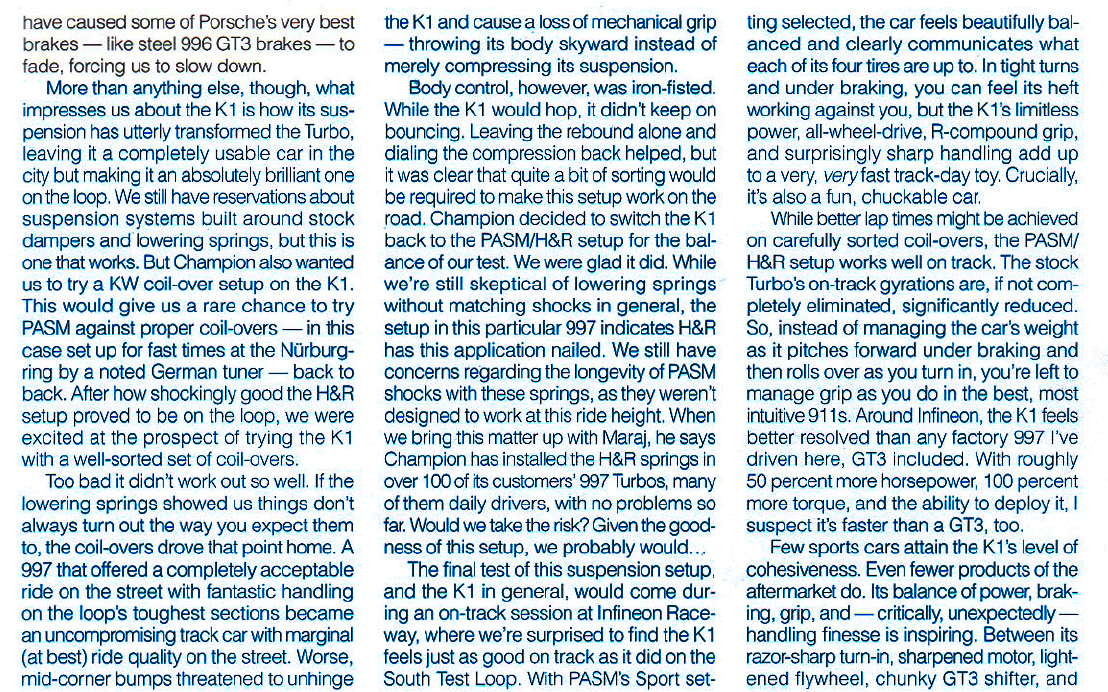
What are your main intentions for the car, street or track?
See attached scan...the stuff in blue...
Registered User
Joined: Jul 2010
Posts: 4,848
Rep Power: 457
How do you know that you are NOT hitting the bump stops? Does the car feel unsettled when the road is smooth or only when the road is a little rough?