


Engine rebuild questions...

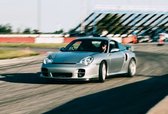
think it comes down to roadcourse vs straight-line driving, on the roadcourse we don't necessarily need the extra ~500rpm for added 'power' but rather for the ability to not need to shift into another gear before the next turn/apex/braking zone etc...it's quicker to stay in one particular gear than use the next gear up and then very shortly after shift back down
Look at 3.6L 996tt dyno charts for 600 hp motors (stock cams) from let's say 6800 to 7500 rpm's, how much gain in hp do you see in this range? The torque has long since gone into decline! How would spending any time in this range instead of shifting to the next gear make the car quicker? In lower/mid rpm's torque accelerates. In higher rpm's hp accelerates. With the above described motor there would be no torque gain and very little hp gain above 6800 rpm's. When shifting wouldn't one want to shift at a level where rpm's would be near peak torque? Am I missing something?
Example..If you shift 1st to 2nd at 6500pm the gear drop is around 2500rpm you would be at 4,000 ,,If you shift at 7500 rpm the gear drop would be to 5,000rpm..So,,,At 4,000rpm I am at 370hp,,at 5,000 rpm 570hp,,200 hp better..PLUS I will be hitting my peak HP of 6,000 rpm much quicker with the higher shift RPM....And in almost all cases RPM climbs faster after Peak HP then before,,thus most vehicles redlines are 10% min. over peak power drop because of the acceleration curve..
Most of the other gear spreads are around 2,000rpm..
I have many articles and tech stuff explaining this,,,It might not be 100% correct for turbo applications in road racing...But it has been proven in all my past race vehicles..
As I said ,,I am sharing and giving my knowledge ,as you do yours which we all learn from..


Moderator


Joined: Jul 2003
Posts: 22,235
Rep Power: 1227


OK,,I am looking at my dyno sheets right now...
Example..If you shift 1st to 2nd at 6500pm the gear drop is around 2500rpm you would be at 4,000 ,,If you shift at 7500 rpm the gear drop would be to 5,000rpm..So,,,At 4,000rpm I am at 370hp,,at 5,000 rpm 570hp,,200 hp better..PLUS I will be hitting my peak HP of 6,000 rpm much quicker with the higher shift RPM....And in almost all cases RPM climbs faster after Peak HP then before,,thus most vehicles redlines are 10% min. over peak power drop because of the acceleration curve..
Most of the other gear spreads are around 2,000rpm..
I have many articles and tech stuff explaining this,,,It might not be 100% correct for turbo applications in road racing...But it has been proven in all my past race vehicles..
As I said ,,I am sharing and giving my knowledge ,as you do yours which we all learn from..
Example..If you shift 1st to 2nd at 6500pm the gear drop is around 2500rpm you would be at 4,000 ,,If you shift at 7500 rpm the gear drop would be to 5,000rpm..So,,,At 4,000rpm I am at 370hp,,at 5,000 rpm 570hp,,200 hp better..PLUS I will be hitting my peak HP of 6,000 rpm much quicker with the higher shift RPM....And in almost all cases RPM climbs faster after Peak HP then before,,thus most vehicles redlines are 10% min. over peak power drop because of the acceleration curve..
Most of the other gear spreads are around 2,000rpm..
I have many articles and tech stuff explaining this,,,It might not be 100% correct for turbo applications in road racing...But it has been proven in all my past race vehicles..
As I said ,,I am sharing and giving my knowledge ,as you do yours which we all learn from..
Last edited by cjv; Nov 12, 2013 at 09:38 PM.
HI,,I also have to share this,, I beat others in drag races in vehicles which were pretty equal that I knew had a little more HP then me,, I am not just talking about this car.
BUT they shifted at PEAK HP and I shifted past my Peak HP just because of that gear recovery,,,thats why close ratio is the hot set-up once you leave the line its HP that takes over TQ once you are moving..
But then again I am not a road racer, so that has different power bands needed?
You are a very smart man and I am not arguing ..
I am just sharing what has worked..
BUT they shifted at PEAK HP and I shifted past my Peak HP just because of that gear recovery,,,thats why close ratio is the hot set-up once you leave the line its HP that takes over TQ once you are moving..
But then again I am not a road racer, so that has different power bands needed?
You are a very smart man and I am not arguing ..
I am just sharing what has worked..
Moderator
Joined: Jul 2003
Posts: 22,235
Rep Power: 1227
HI,,I also have to share this,, I beat others in drag races in vehicles which were pretty equal that I knew had a little more HP then me,, I am not just talking about this car.
BUT they shifted at PEAK HP and I shifted past my Peak HP just because of that gear recovery,,,thats why close ratio is the hot set-up once you leave the line its HP that takes over TQ once you are moving..
But then again I am not a road racer, so that has different power bands needed?
You are a very smart man and I am not arguing ..
I am just sharing what has worked..
BUT they shifted at PEAK HP and I shifted past my Peak HP just because of that gear recovery,,,thats why close ratio is the hot set-up once you leave the line its HP that takes over TQ once you are moving..
But then again I am not a road racer, so that has different power bands needed?
You are a very smart man and I am not arguing ..
I am just sharing what has worked..
Appreciate your attitude. Let's clarify this a bit. Are you saying with a 600 hp 996tt with a redline of 7500. Going thru all the gears or simply the top of each gear to redline that the acceleration would be quicker by shifting at 7500 rather than shifting where the hp curve starts to flatten out/decline?
Then it climbs after that again to that 7500 and I do make a few more HP there then at my previous 5800rpm peak..
BUT know matter what happens during that dip and raise,,a flat power curve would be great though, still at the 550 hp dip I am better off then at the lower rpm before that iif I shifted sooner then 7500..
I hope that makes sense?
[QUOTE=cjv;3979348]Question, granted gear ratio play an important part. When you are making this comparison I am assuming you comparing stock 996tt geared car to stock 996tt geared car?[/QUOTE
Yes Apples to Apples have to be the comparison,,
Yes changing gear ratios changes gear shift spreads which I would think,,IMO,,it still is always beneficial to get the close ratio gear box unless TQ is more important then a wide ratio would be better..
I don't know every thing and I am still learning this Porsche Turbo power bands and the different ways our members use their cars..
One size doesn't fit all here..
Yes Apples to Apples have to be the comparison,,
Yes changing gear ratios changes gear shift spreads which I would think,,IMO,,it still is always beneficial to get the close ratio gear box unless TQ is more important then a wide ratio would be better..
I don't know every thing and I am still learning this Porsche Turbo power bands and the different ways our members use their cars..
One size doesn't fit all here..
Moderator
Joined: Jul 2003
Posts: 22,235
Rep Power: 1227
[QUOTE=johnspeed;3979352]
Cool, thanks for the exchange of information. My experience is not with the stock gear ratio's. For comparison purposes the following is stock 996tt Porsche tranny ratio's, the tranny ratio's for KA and the tranny ratio's for a Carrera GT.
996tt Manual
1st 3.82:1
2nd 2.05:1
3rd 1.41:1
4th 1.12:1
5th 0.92:1
6th 0.75:1
Gear ratio's we use (KA)
1st 3.167:1
2nd 1.938:1
3rd 1.474:1
4th 0.174:1
5th 0.968:1
6th 0.821:1
CGT
1st 3.20:1
2nd 1.870:1
3rd 1.360:1
4th 1.070:1
5th 0.900:1
6th 0.750:1
Question, granted gear ratio play an important part. When you are making this comparison I am assuming you comparing stock 996tt geared car to stock 996tt geared car?[/QUOTE
Yes Apples to Apples have to be the comparison,,
Yes changing gear ratios changes gear shift spreads which I would think,,IMO,,it still is always beneficial to get the close ratio gear box unless TQ is more important then a wide ratio would be better..
I don't know every thing and I am still learning this Porsche Turbo power bands and the different ways our members use their cars..
One size doesn't fit all here..
Yes Apples to Apples have to be the comparison,,
Yes changing gear ratios changes gear shift spreads which I would think,,IMO,,it still is always beneficial to get the close ratio gear box unless TQ is more important then a wide ratio would be better..
I don't know every thing and I am still learning this Porsche Turbo power bands and the different ways our members use their cars..
One size doesn't fit all here..
996tt Manual
1st 3.82:1
2nd 2.05:1
3rd 1.41:1
4th 1.12:1
5th 0.92:1
6th 0.75:1
Gear ratio's we use (KA)
1st 3.167:1
2nd 1.938:1
3rd 1.474:1
4th 0.174:1
5th 0.968:1
6th 0.821:1
CGT
1st 3.20:1
2nd 1.870:1
3rd 1.360:1
4th 1.070:1
5th 0.900:1
6th 0.750:1
Last edited by cjv; Nov 12, 2013 at 10:36 PM.
Moderator
Joined: Jul 2003
Posts: 22,235
Rep Power: 1227
As for the GT3 crank the 2002 GT3RS manual lists the part # as 996.102.021.91, 04 RSR is 996.102.021.92 and the 2003 cup is same as 04 RSR.
Pic of knife edged GT3 RSR crank (with NASCAR oval bearings) in a 996tt w/ Pauter rods and GT1 oil pump.
I think the difference is in the way the harmonic damper attaches (press on for 996tt vs. bolt on for GT3). GT3R should be the same number as the 02 RS. Note these numbers are the same as for street GT3s (2001 except for the .91 number and 2003-2005 except for .92 number).
Hope this helps. I have used the GT1 3 index pump but have no direct experience with the GT3 2 index pump. I have experience with the GT3 crank in a 996tt.
Last edited by cjv; May 6, 2022 at 03:25 PM.
[QUOTE=cjv;3979361]
Cool, thanks for the exchange of information. My experience is not with the stock gear ratio's. For comparison purposes the following is stock 996tt Porsche tranny ratio's, the tranny ratio's for KA and the tranny ratio's for a Carrera GT.
996tt Manual(stock tranny gear ratio)
1st 3.82:1
2nd 2.05:1
3rd 1.41:1
4th 1.12:1
5th 0.92:1
6th 0.75:1
Gear ratio's we use (KA)
1st 3.167:1
2nd 1.938:1
3rd 1.474:1
4th 0.174:1
5th 0.968:1
6th 0.821:1
CGT (stock gear ratio)
1st 3.20:1
2nd 1.870:1
3rd 1.360:1
4th 1.070:1
5th 0.900:1
6th 0.750:1
.................................................. ............... (from gear ratio - to gear ratio)
First have to get >> Percentage of Gear Change = ----------------------------------------------
.................................................. .............................. from gear ratio
Then >>RPM Reduction after gear change = shift rpm x (1.0 - Percentage of gear change)
Cool, thanks for the exchange of information. My experience is not with the stock gear ratio's. For comparison purposes the following is stock 996tt Porsche tranny ratio's, the tranny ratio's for KA and the tranny ratio's for a Carrera GT.
996tt Manual(stock tranny gear ratio)
1st 3.82:1
2nd 2.05:1
3rd 1.41:1
4th 1.12:1
5th 0.92:1
6th 0.75:1
Gear ratio's we use (KA)
1st 3.167:1
2nd 1.938:1
3rd 1.474:1
4th 0.174:1
5th 0.968:1
6th 0.821:1
CGT (stock gear ratio)
1st 3.20:1
2nd 1.870:1
3rd 1.360:1
4th 1.070:1
5th 0.900:1
6th 0.750:1
First have to get >> Percentage of Gear Change = ----------------------------------------------
.................................................. .............................. from gear ratio
Then >>RPM Reduction after gear change = shift rpm x (1.0 - Percentage of gear change)
Last edited by cjv; Nov 13, 2013 at 08:38 AM.
Moderator
Joined: Jul 2003
Posts: 22,235
Rep Power: 1227
[QUOTE=johnspeed;3979396]
Our shift points vary depending on gear. A shift light is interfaced with the Motec Management and Traction Control, Launch Control, Gear Change Ignition Cut (flat shifts) and Overrun Boost Enhancement (anti-Lag) can be individually engaged of disengaged.
Car is not setup or designed for standing starts although she is fitted with LSD's in both front and rear differentials. Once she is rolling you cannot just put your foot into it in any of the first five gears. First gear at redline takes her to about 70 mph, second to about 110 mph.
.................................................. ............... (from gear ratio - to gear ratio)
First have to get >> Percentage of Gear Change = ----------------------------------------------
.................................................. .............................. from gear ratio
Then >>RPM Reduction after gear change = shift rpm x (1.0 - Percentage of gear change)
First have to get >> Percentage of Gear Change = ----------------------------------------------
.................................................. .............................. from gear ratio
Then >>RPM Reduction after gear change = shift rpm x (1.0 - Percentage of gear change)
Car is not setup or designed for standing starts although she is fitted with LSD's in both front and rear differentials. Once she is rolling you cannot just put your foot into it in any of the first five gears. First gear at redline takes her to about 70 mph, second to about 110 mph.
Last edited by cjv; Nov 13, 2013 at 08:36 AM.
[QUOTE=cjv;3979402]
True .. Maybe it would help in black and write to do the RPM drop of each gear with the math and then plot it on the dyno sheet??..Just a thought to double check to see if it falls in the power curve with the gear changes..
Moderator
Joined: Jul 2003
Posts: 22,235
Rep Power: 1227
[QUOTE=johnspeed;3979408]
I actually that those calc's although I would have to dig them up. The gears are the 1/4" wider square cut race gears. The ratio's were jointly designed for our motor by the gentleman who owned Guard Gear or Transmissions in Hawaii, I can't remember his name now (i want to say Paul).  He sold his compny awhile back and I believe it was bought by Matt who now goes by GT Gears. Brian Copans worked with Paul. Copans was responsible for total assembly (bmc&g porsche transaxle specialist). He can be found on the internet. If I remember correctly he is out of Athens, Ohio. In a recent Le Mans his company was responsible for the winner's transmission plus 23 of the 24 entry's.
I deferred the tranny work to these two guy because I considered them to be among the best.
He sold his compny awhile back and I believe it was bought by Matt who now goes by GT Gears. Brian Copans worked with Paul. Copans was responsible for total assembly (bmc&g porsche transaxle specialist). He can be found on the internet. If I remember correctly he is out of Athens, Ohio. In a recent Le Mans his company was responsible for the winner's transmission plus 23 of the 24 entry's.I deferred the tranny work to these two guy because I considered them to be among the best.
Last edited by cjv; Nov 13, 2013 at 11:59 AM.


[QUOTE=cjv;3979402]
Our shift points vary depending on gear. A shift light is interfaced with the Motec Management and Traction Control, Launch Control, Gear Change Ignition Cut (flat shifts) and Overrun Boost Enhancement (anti-Lag) can be individually engaged of disengaged.
Car is not setup or designed for standing starts although she is fitted with LSD's in both front and rear differentials. Once she is rolling you cannot just put your foot into it in any of the first five gears. First gear at redline takes her to about 70 mph, second to about 110 mph.
How high are you revving that motor? I have a 3.15 first which is a tad lower than yours and on a 27" drag tire it will only take me to 60mph at 8000 rpm.
Our shift points vary depending on gear. A shift light is interfaced with the Motec Management and Traction Control, Launch Control, Gear Change Ignition Cut (flat shifts) and Overrun Boost Enhancement (anti-Lag) can be individually engaged of disengaged.
Car is not setup or designed for standing starts although she is fitted with LSD's in both front and rear differentials. Once she is rolling you cannot just put your foot into it in any of the first five gears. First gear at redline takes her to about 70 mph, second to about 110 mph.
__________________
#TeamAIM
997TT SilverSpool - 210.8 mph 1/2 Mile WR Apr 2019, 9.2 @ 168 mph 1/4 Mile Manual World Record , 3.15 60-130 mph , 2.72 100-150 mph , 1400whp E85
996TT SpoolBus - 204.6 mph 1/2 Mile 996TT WR Aug 2018, 9.5 @ 154 mph, 3.23 60-130 mph, 2.5 100-150 mph Manual Porsche World Record, 1400whp E85
997TT SlowBerry - 205.0 mph 1/2 Mile WR Nov 2018, 9.7 @ 170 mph 1/4 Mile , 3.2 60-130 mph , 2.4 100-150 mph , 1420whp E85
ESMOTOR | DO88 | TPC DSC | SYVECS | COBB | IPD | KLINE | XONA | AMS | ID | ERP | SACHS | TURBOSMART | CSF | DODSON |
#TeamAIM
997TT SilverSpool - 210.8 mph 1/2 Mile WR Apr 2019, 9.2 @ 168 mph 1/4 Mile Manual World Record , 3.15 60-130 mph , 2.72 100-150 mph , 1400whp E85
996TT SpoolBus - 204.6 mph 1/2 Mile 996TT WR Aug 2018, 9.5 @ 154 mph, 3.23 60-130 mph, 2.5 100-150 mph Manual Porsche World Record, 1400whp E85
997TT SlowBerry - 205.0 mph 1/2 Mile WR Nov 2018, 9.7 @ 170 mph 1/4 Mile , 3.2 60-130 mph , 2.4 100-150 mph , 1420whp E85
ESMOTOR | DO88 | TPC DSC | SYVECS | COBB | IPD | KLINE | XONA | AMS | ID | ERP | SACHS | TURBOSMART | CSF | DODSON |
Last edited by cjv; Nov 13, 2013 at 08:39 AM.
Moderator
Joined: Jul 2003
Posts: 22,235
Rep Power: 1227
[QUOTE=prodigymb;3979588]Motor was designed for 9400 redline. We will keep it below 8700 due to piston/rod ratio. When we had the 80.4 mm crank built we made a mistake by offset grinding for the NASCAR oval bearings so as to gain the additional 2 mm or 82.4 mm. Those extra 2 mm would ideally require a rod length of just under 134 mm. There is simply no way of getting there short of increasing deck height. Cost wise we didn't want to go there. We were able, through a number of modifications to obtain a rod length of just under 130 mm. I believe this lowered our designed PR ratio from about 1.60-1 to about 1.58-1. Stock 996tt motors use a 1.63-1. We believe we are fine due to the added design strength of the pistons and liners along with the related components, yet decided to error on rpm's due to longevity and safety.
Last edited by cjv; Nov 13, 2013 at 09:47 AM.