


Pics & Review of My Bilstein PSS10 Lowered Red Turbo



Registered User
Joined: May 2008
Posts: 915
From: SF Bay Area
Rep Power: 111


Are you attending a 90, 92, or a 105db event?
If a 92db you should be fine with a Tubi Street system. To be safe you just need to hug the inside of T5 while exiting, short shift, and track left up the hill. You can get back on it just before the bridge while approaching T6.
Regarding your suspension set-up, you'll be fine until your skill sets improve and you start prematurely wearing out the outside edges of your tires versus the insides.
I'll be there on the 20th...105db date!!!!
Have fun and be safe!
VID
If a 92db you should be fine with a Tubi Street system. To be safe you just need to hug the inside of T5 while exiting, short shift, and track left up the hill. You can get back on it just before the bridge while approaching T6.
Regarding your suspension set-up, you'll be fine until your skill sets improve and you start prematurely wearing out the outside edges of your tires versus the insides.
I'll be there on the 20th...105db date!!!!
Have fun and be safe!
VID
Its a 92db day, so I think I should be fine.
Agreed on the supsension, excited to get out there.

Thread Starter
|
Registered User
Joined: Dec 2006
Posts: 3,116
From: Palos Verdes
Rep Power: 256
Tom would check out the completely even wear of my tire, then look at me with a wink and a smile in his eyes "you don't need more negative camber grandma."


Have you ever thought of putting a summary of your car's settings and components in a summary on the first page of your Rain or Shine thread? (You could add to the first post of the thread - similar to what I do to this thread, and edit as things and opinions change.) It would be of interest to many people, track junkies or not, as you seem to have many interesting things to share from your obviously quite serious track experience.
Last edited by cannga; Apr 25, 2013 at 03:54 PM.

Registered User
Joined: Mar 2010
Posts: 2,273
From: San Jose, CA
Rep Power: 193
Mainly because most camber plates have a built in position of offset which allows for an expanded range of camber adjustment and is progressively based on vehicle ride height, typically you can see -1 to - 1.5 degrees. Some plates offer two options...a stock setting or then rotate the plate to get the other pre determined setting by the given manufacturer. However, some camber plates (like Ground Control) have an infinite amount of adjustability which in turn can be like opening a can of worms, also more things to keep an eye on and maintain. The other drawback is most of the aftermarket plates are solid and will increase road and cabin noise. Not to mention a harsher feel/ride when DD'ing.
By going with adjustable control arms you now have the ability to go from -0.5 to -XX depending on the number of shims you add. The adjustable control arms also give you a platform to build off of or grow into over time and will not limit you to one or two fixed points. When running the ACR's with the stock camber plates you will not feel or hear increased road noise and all the clunking around of your suspension components. A bonus for those who DD their vehicles.
The above is based off my personal experience and the advice I have received from various shops I have worked with and purchased parts through. I'm not claiming to be an expert in the field of suspension set-up and components.

LOL! I need more time in my life to manage that thread already... ...however, not a bad idea. I'll take a look at your first page for reference.
Cheers & have a fantastic weekend!
VID
By going with adjustable control arms you now have the ability to go from -0.5 to -XX depending on the number of shims you add. The adjustable control arms also give you a platform to build off of or grow into over time and will not limit you to one or two fixed points. When running the ACR's with the stock camber plates you will not feel or hear increased road noise and all the clunking around of your suspension components. A bonus for those who DD their vehicles.
The above is based off my personal experience and the advice I have received from various shops I have worked with and purchased parts through. I'm not claiming to be an expert in the field of suspension set-up and components.
Have you ever thought of putting a summary of your car's settings and components in a summary on the first page of your Rain or Shine thread? (You could add to the first post of the thread - similar to what I do to this thread, and edit as things and opinions change.) It would be of interest to many people, track junkies or not, as you seem to have many interesting things to share from your obviously quite serious track experience.
LOL! I need more time in my life to manage that thread already...
...however, not a bad idea. I'll take a look at your first page for reference.Cheers & have a fantastic weekend!
VID
Last edited by VID997; Apr 26, 2013 at 05:50 PM.
Thread Starter
|
Registered User
Joined: Dec 2006
Posts: 3,116
From: Palos Verdes
Rep Power: 256
VID, thanks for the answer; *very* interesting.
Weekend + spring time = hard labor in the garden pruning roses etc. (yeah I'm an old fart LOL), not too fantastic but fun and physically healthier than surfing the net.
The 1st page info/summary is really easy to do because you only do it once and update maybe once, twice or year, maybe never again. It really does not take much time at all. I believe it has been helpful to others because people do PM and ask me questions about what I post there.
But what I've discussed is mostly basic daily-driver suspension mod, whereas what you do is no doubt more advanced/hard core, my Chem 1A vs. your Chem 200 Quantum Mechanics so to speak . I made above suggestion because it's obvious, to me anyway, you do have a treasure trove of information to share about your track experience: suspension (who did your Ohlins, alignment settings, what else is installed in the suspension), tire, brake, recording system, etc. I myself am curious about your car so this is probably a self-serving suggestion :-). But anyway, thanks again and you too have a nice weekend!
Weekend + spring time = hard labor in the garden pruning roses etc. (yeah I'm an old fart LOL), not too fantastic but fun and physically healthier than surfing the net.
The 1st page info/summary is really easy to do because you only do it once and update maybe once, twice or year, maybe never again. It really does not take much time at all. I believe it has been helpful to others because people do PM and ask me questions about what I post there.
But what I've discussed is mostly basic daily-driver suspension mod, whereas what you do is no doubt more advanced/hard core, my Chem 1A vs. your Chem 200 Quantum Mechanics so to speak
. I made above suggestion because it's obvious, to me anyway, you do have a treasure trove of information to share about your track experience: suspension (who did your Ohlins, alignment settings, what else is installed in the suspension), tire, brake, recording system, etc. I myself am curious about your car so this is probably a self-serving suggestion :-). But anyway, thanks again and you too have a nice weekend!
Last edited by cannga; Apr 27, 2013 at 09:19 PM.
Registered User
Joined: May 2008
Posts: 915
From: SF Bay Area
Rep Power: 111
Are you attending a 90, 92, or a 105db event?
If a 92db you should be fine with a Tubi Street system. To be safe you just need to hug the inside of T5 while exiting, short shift, and track left up the hill. You can get back on it just before the bridge while approaching T6.
Regarding your suspension set-up, you'll be fine until your skill sets improve and you start prematurely wearing out the outside edges of your tires versus the insides.
I'll be there on the 20th...105db date!!!!
Have fun and be safe!
VID
If a 92db you should be fine with a Tubi Street system. To be safe you just need to hug the inside of T5 while exiting, short shift, and track left up the hill. You can get back on it just before the bridge while approaching T6.
Regarding your suspension set-up, you'll be fine until your skill sets improve and you start prematurely wearing out the outside edges of your tires versus the insides.
I'll be there on the 20th...105db date!!!!
Have fun and be safe!
VID

Thread Starter
|
Registered User
Joined: Dec 2006
Posts: 3,116
From: Palos Verdes
Rep Power: 256
A few months after buying my Turbo, I nearly traded the Turbo for the GT3. Turbo was fast, but something about the handling had started to bother me big time once the power novelty wore off. A subsequent test drive in the GT2 then confirmed my fear and broke my heart
. After actually driving Turbo vs. GT2 back to back, I could not believe how the 2 cars felt so completely different from each other. While the Turbo is extremely fast in straightline, its handling is so soft that it feels soulless and boring next to its more race-oriented 911 siblings, GT2 and GT3. Admittedly I was comparing apple to orange, but to me, the Turbo's stock suspension had gone too far in the soft direction. Way too far.The Bilstein Damptronic coilover saved me a lot of $$$ and offered a perfect compromise. I feel now I have the best of both worlds: a car that is midway between the stock Turbo and a GT3 in handling, so very fast and tight, and yet still comfortable enough for me to drive 10,000 miles/year in the not so perfect streets of Los Angeles. For what it does - a transformation of the car's dynamics, to think that it cost a mere 2500, half that of my exhaust (!), is quite mind boggling. Once the suspension is modded, the Turbo to me is finally a world- class daily driver, and one without peer. All is well again and I am such a happy camper because of that
.
Last edited by cannga; May 2, 2013 at 02:50 AM.

Thread Starter
|
Registered User
Joined: Dec 2006
Posts: 3,116
From: Palos Verdes
Rep Power: 256
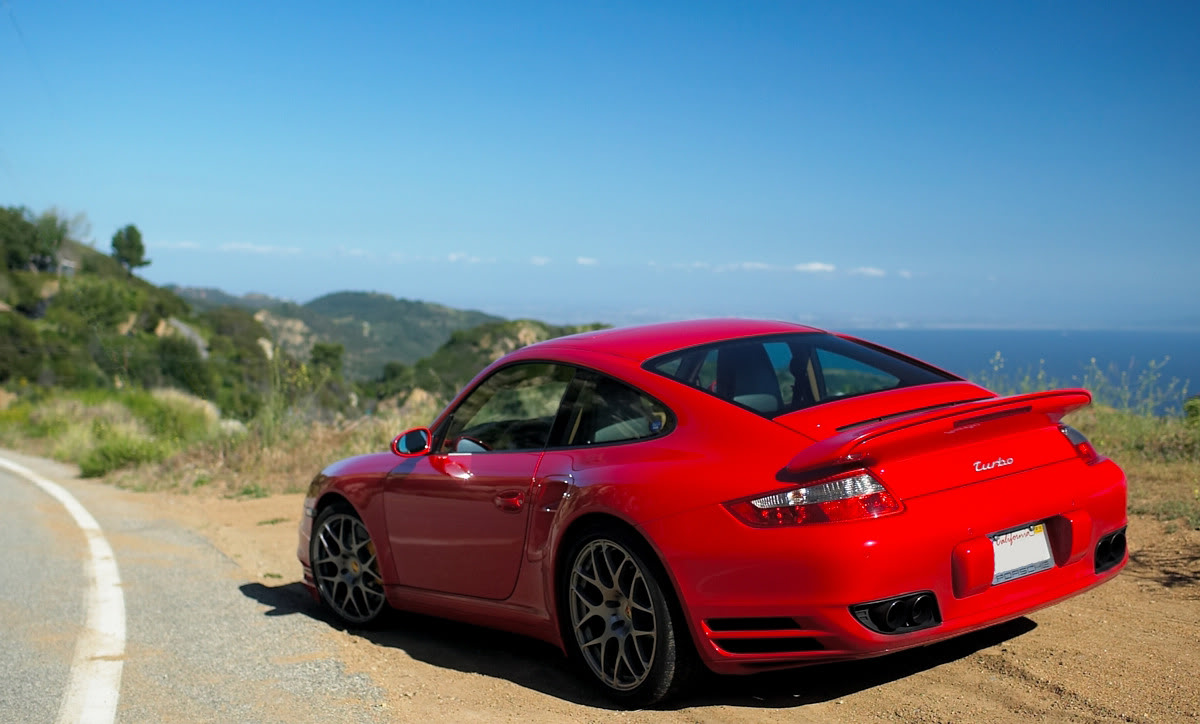
^^Ha ha, I love it. Glad my crazy photography hobby is useful to someone. BTW, this was in Mailbu, So Cal; yes scenery is that spectacular. Only problem with this area is brush fire.

Last edited by cannga; May 12, 2013 at 11:25 AM.
Thread Starter
|
Registered User
Joined: Dec 2006
Posts: 3,116
From: Palos Verdes
Rep Power: 256
Interesting article from another thread, from Tirerack:
http://www.tirerack.com/tires/tiretech/techpage.jsp?techid=161
Tire Inspections Between Sessions
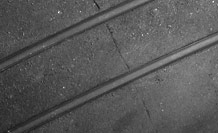
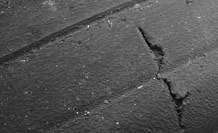
Tire inspections between sessions should be used to remove all rubber pickup from the wheels and tire treads, as well as offer an opportunity to examine the tires for punctures or cuts that might lead to compound tearing or air pressure loss. The inspection should also confirm if each tire's tread compound splice (that runs perpendicular to the direction of travel across the tread area) has become visible.
 Visible Tread Splice: Rotate Tire
 Torn Tread Splice: Replace Tire
A visible tread splice is caused by tearing open the tread compound junction at the tread splice. Visible tread splices are caused by the torque of the engine spinning the tires during acceleration or the stopping power of the brakes briefly sliding the tires when slowing from high speeds. Front-wheel drive and most all-wheel drive vehicles place extreme stress on the front tires from both acceleration and braking forces and are therefore more likely to see these visible signs of use than more balanced rear-wheel drive vehicles.
If a visible tread splice is detected during tire inspections, the tire should be rotated side-to-side on the same axle. This will then use the vehicle's wheel spin to close the splice rather than continuing to open it. While this may cause the tread splice to become visible on the other tire used on the same axle, the inspections and side-to-side rotations should be repeated until the tire has worn out.
NOTE: Continued use of a tire with a visible tread splice in the same wheel position will cause the tread compound to tear downstream from the splice, forcing the tire to be removed from service.
http://www.tirerack.com/tires/tiretech/techpage.jsp?techid=161
Tire Inspections Between Sessions
Tire inspections between sessions should be used to remove all rubber pickup from the wheels and tire treads, as well as offer an opportunity to examine the tires for punctures or cuts that might lead to compound tearing or air pressure loss. The inspection should also confirm if each tire's tread compound splice (that runs perpendicular to the direction of travel across the tread area) has become visible.
A visible tread splice is caused by tearing open the tread compound junction at the tread splice. Visible tread splices are caused by the torque of the engine spinning the tires during acceleration or the stopping power of the brakes briefly sliding the tires when slowing from high speeds. Front-wheel drive and most all-wheel drive vehicles place extreme stress on the front tires from both acceleration and braking forces and are therefore more likely to see these visible signs of use than more balanced rear-wheel drive vehicles.
If a visible tread splice is detected during tire inspections, the tire should be rotated side-to-side on the same axle. This will then use the vehicle's wheel spin to close the splice rather than continuing to open it. While this may cause the tread splice to become visible on the other tire used on the same axle, the inspections and side-to-side rotations should be repeated until the tire has worn out.
NOTE: Continued use of a tire with a visible tread splice in the same wheel position will cause the tread compound to tear downstream from the splice, forcing the tire to be removed from service.
Thread Starter
|
Registered User
Joined: Dec 2006
Posts: 3,116
From: Palos Verdes
Rep Power: 256
Turn up the speaker volume control first: Walter Rohrl in the Bilstein ClubSport - a more track oriented shock than my Damptronic, with independent bump and rebound damping adjustment.
http://www.awe-tuning.com/bilstein-c...pension-system
(If you don't know: Walter Rohrl is Porsche's chief test driver and consultant to Bilstein. The reason Porsche allow this is because Bilstein makes the OEM suspension as well.)
http://www.awe-tuning.com/bilstein-c...pension-system
(If you don't know: Walter Rohrl is Porsche's chief test driver and consultant to Bilstein. The reason Porsche allow this is because Bilstein makes the OEM suspension as well.)
Last edited by cannga; May 16, 2013 at 08:43 PM.
Thread Starter
|
Registered User
Joined: Dec 2006
Posts: 3,116
From: Palos Verdes
Rep Power: 256
Shock dyno of Bilstein PSS10 and simple video of how it's done. On the shock dyno graph, note that the x axis is the speed of the shock shaft, *not* of the vehicle. High speed is the equivalence of hitting a sudden bump on the road, low speed is the equivalence of taking a curve.
For those with Bilstein Damptronic - you don't have to worry about this; it does everything automatically and I am only posting for anyone curious about this topic.
Each of these curves represent one of those clicks that you set on Bilstein PSS10, in other words, forces are manually adjusted, versus Bilstein Damptronic, where the "clicks" are performed by the ECU. The higher the forces the stiffer and less compliant the system becomes (for example high rebound damping will cause car to become quite jittery and I suspect this is the flaw of first generation PASM in our Turbo that Porsche corrected in gen 2 PASM). Every setting will have pluses and minuses, therefore in general, for amateur level street driving IMHO it's best to stay in middle/moderate settings.
Pro racers use different curves for different types of racing/racing surfaces, etc. Besides stiffness, damper adjustment also affect understeer/oversteer. This is a complicated process and I am just posting the tip of the iceberg. As always, any expert feel free to chime in as needed.

For those with Bilstein Damptronic - you don't have to worry about this; it does everything automatically and I am only posting for anyone curious about this topic.
Each of these curves represent one of those clicks that you set on Bilstein PSS10, in other words, forces are manually adjusted, versus Bilstein Damptronic, where the "clicks" are performed by the ECU. The higher the forces the stiffer and less compliant the system becomes (for example high rebound damping will cause car to become quite jittery and I suspect this is the flaw of first generation PASM in our Turbo that Porsche corrected in gen 2 PASM). Every setting will have pluses and minuses, therefore in general, for amateur level street driving IMHO it's best to stay in middle/moderate settings.
Pro racers use different curves for different types of racing/racing surfaces, etc. Besides stiffness, damper adjustment also affect understeer/oversteer. This is a complicated process and I am just posting the tip of the iceberg. As always, any expert feel free to chime in as needed.

Last edited by cannga; May 26, 2013 at 11:07 AM.
Thread Starter
|
Registered User
Joined: Dec 2006
Posts: 3,116
From: Palos Verdes
Rep Power: 256
Track Oriented JRZ/Moton vs. Street Oriented Bilstein - which is "better"?
This is a repost of a discussion in another thread that I thought was somewhat interesting.
When one looks at coilovers, there are in general two main classes on market:
a. Very expensive, all-out design that is geared for extreme conditions (high spring rate, high temperature, extreme ruggedness) of the track such as JRZ/Moton
b. Street oriented design such as Bilstein Damptronic.
You probably already know the obvious answer - neither is better. The primary reason is that JRZ is a very stiff system that is designed for smooth surface of the track, whereas Bilstein is a more compliant system designed for street driving. You pick the coilover depends on what you like to do with the car.
Road surface condition is a critical factor in selecting suspension & spring rates. Stiffer is better for weight transfer reduction, but it's bad when road surface is imperfect - this is one of the many trade-off's involved in suspension tuning, and there is never a best suspension for all conditions. The reason is that as suspension gains stiffness, it actually loses traction when road gets bumpy, with tire and car leaving road surface on road bumps at high speed. And really there is nothing more dangerous and scary than going airborne from a bump in a curve. Without steering input momentum carries the car straight, while the road is curving, you get the picture.
At the track, with smooth surface, for **very** advanced track driver, and with an experienced tuner, JRZ is indeed "best." On regular road however you are better off, might even be faster, with a more compliant suspension designed for "regular" road. Professional race tuners do de-tune the suspension with softer springs when they see bumpy road surface; this rule applies to pro's and amateurs alike.
Note that when you are tuning a suspension system, you are not just changing the coilvoer, there are other things to add depending on what you are looking for, such as R comp tire, sway bar, drop link, rear toe link, etc. If stiffness and ultra-precision is what you are looking for, even with a moderate system like Bilstein, you could add components to the point that you and your dental fillings have more than you could handle.
Of course, the problem with precise and stiff suspension components is that they *all* will add vibration and harshness as well. Stiffness is fun for short drive and at the track but actually wear on you and become extremely unpleasant for road driving; people have had to remove JRZ because of its stiffness (real example, not rumor).
It is impossible to "soften" a track system like Moton, first why would you want to do it and defeat the very purpose of its existence, second, even with the lower spring rates they still are very stiff; it has to do with the damper and how the shock is made (less rubber, more metal at interfaces), but that's another discussion altogether. For this reason, for the amateur drivers that most of us are, it's much better to start medium, then go stiffer (Bilstein + components), than to start out very stiff and got stuck with it (JRZ).
This is a repost of a discussion in another thread that I thought was somewhat interesting.
When one looks at coilovers, there are in general two main classes on market:
a. Very expensive, all-out design that is geared for extreme conditions (high spring rate, high temperature, extreme ruggedness) of the track such as JRZ/Moton
b. Street oriented design such as Bilstein Damptronic.
You probably already know the obvious answer - neither is better. The primary reason is that JRZ is a very stiff system that is designed for smooth surface of the track, whereas Bilstein is a more compliant system designed for street driving. You pick the coilover depends on what you like to do with the car.
Road surface condition is a critical factor in selecting suspension & spring rates. Stiffer is better for weight transfer reduction, but it's bad when road surface is imperfect - this is one of the many trade-off's involved in suspension tuning, and there is never a best suspension for all conditions. The reason is that as suspension gains stiffness, it actually loses traction when road gets bumpy, with tire and car leaving road surface on road bumps at high speed. And really there is nothing more dangerous and scary
than going airborne from a bump in a curve. Without steering input momentum carries the car straight, while the road is curving, you get the picture.At the track, with smooth surface, for **very** advanced track driver, and with an experienced tuner, JRZ is indeed "best." On regular road however you are better off, might even be faster, with a more compliant suspension designed for "regular" road. Professional race tuners do de-tune the suspension with softer springs when they see bumpy road surface; this rule applies to pro's and amateurs alike.
Note that when you are tuning a suspension system, you are not just changing the coilvoer, there are other things to add depending on what you are looking for, such as R comp tire, sway bar, drop link, rear toe link, etc. If stiffness and ultra-precision is what you are looking for, even with a moderate system like Bilstein, you could add components to the point that you and your dental fillings have more than you could handle.
Of course, the problem with precise and stiff suspension components is that they *all* will add vibration and harshness as well. Stiffness is fun for short drive and at the track but actually wear on you and become extremely unpleasant for road driving; people have had to remove JRZ because of its stiffness (real example, not rumor).
It is impossible to "soften" a track system like Moton, first why would you want to do it and defeat the very purpose of its existence, second, even with the lower spring rates they still are very stiff; it has to do with the damper and how the shock is made (less rubber, more metal at interfaces), but that's another discussion altogether. For this reason, for the amateur drivers that most of us are, it's much better to start medium, then go stiffer (Bilstein + components), than to start out very stiff and got stuck with it (JRZ).
Last edited by cannga; May 26, 2013 at 11:10 AM.
Registered User
Joined: Mar 2010
Posts: 2,273
From: San Jose, CA
Rep Power: 193
^^^
I would like to add to this. Since upgrading to a very high end system my vehicle really isn't that enjoyable to drive on the street and really isn't set-up to deal with the highly traveled public roads in northern California. However, once outside the bigger cities the road surfaces do smooth out and it becomes more palatable.
In the last three months I have been to four different tracks on the west coast, all four require a different setting to get the car to perform adequately. Not to mention different "street" settings to get there comfortably.
I must say my stock OEM struts in conjunction with a tuned CMS suspension package handled everything quite well, until my skill sets out perform this system.
That being said, the vehicle is an absolute joy to drive on the track and does so rather effortlessly now. It's almost like cheating. Keep in mind, I have built and developed my vehicle for track use and not as a canyon runner or a daily driver.
When choosing a package, you really need to be honest with yourself and how you are going to actually use the vehicle, not as you hope/dream to use the vehicle one day.
Live in the now....upgrade when you truly get to the point when you need it.
Sent from my iPad
I would like to add to this. Since upgrading to a very high end system my vehicle really isn't that enjoyable to drive on the street and really isn't set-up to deal with the highly traveled public roads in northern California. However, once outside the bigger cities the road surfaces do smooth out and it becomes more palatable.
In the last three months I have been to four different tracks on the west coast, all four require a different setting to get the car to perform adequately. Not to mention different "street" settings to get there comfortably.
I must say my stock OEM struts in conjunction with a tuned CMS suspension package handled everything quite well, until my skill sets out perform this system.
That being said, the vehicle is an absolute joy to drive on the track and does so rather effortlessly now. It's almost like cheating. Keep in mind, I have built and developed my vehicle for track use and not as a canyon runner or a daily driver.
When choosing a package, you really need to be honest with yourself and how you are going to actually use the vehicle, not as you hope/dream to use the vehicle one day.
Live in the now....upgrade when you truly get to the point when you need it.
Sent from my iPad
Last edited by VID997; May 27, 2013 at 12:52 AM.
Registered User
Joined: Apr 2009
Posts: 1,444
From: San Jose, CA
Rep Power: 101
I went the PSS9 route, added drop links, GT3 Lowers, R Comps, corner balanced and track aligned. Have to say this has been a great combo. Pretty compliant on the road and decent on the track. I prob need thicker sways and RSS engine/tranny mounts but that's as far as I'll go. If I wanted to move up to Hoosiers I'm not sure the PSS9s hold up to that much abuse. It's all a trade off as Vid and other point out.
For me I'm very happy with the trade offs and am fairly competitive on track, but you can certainly feel VIDs car is more planted at speed- and that was with his old system, can't imagine his new system under fury!
For me I'm very happy with the trade offs and am fairly competitive on track, but you can certainly feel VIDs car is more planted at speed- and that was with his old system, can't imagine his new system under fury!