


Engine Limits vs Power -- Sharing Some Knowledge


Banned
Joined: Apr 2011
Posts: 27
From: France
Rep Power: 0

What is the whp/wtq on the 93 octane??

Registered User

Joined: Jun 2009
Posts: 492
From: Cupertino
Rep Power: 47


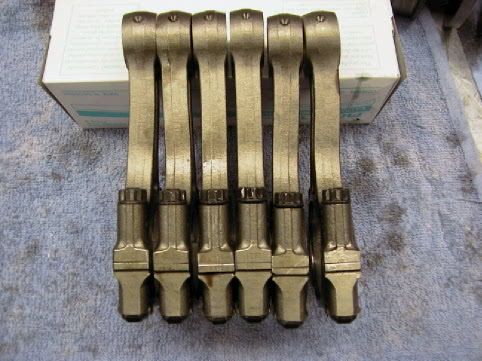
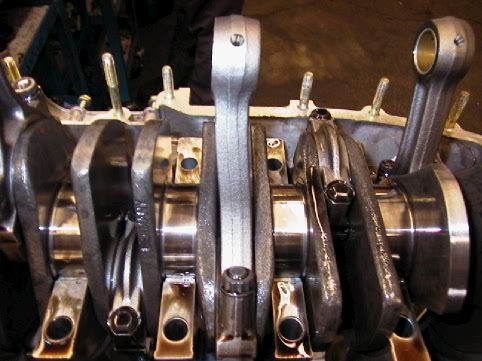
It's there a difference in strength of the rods between 996 and 997? Are the part numbers different for the 997.1 and 997.2 rods? Wondering if they changed parts mid production or at the time of facelift
Last edited by dyc1077; Apr 23, 2011 at 06:21 AM.

Registered User
Joined: Sep 2007
Posts: 374
From: New York
Rep Power: 52
It could be a bad batch of 93 octane that caused some knock, possibly? 700whp+ ON PUMP is a pretty stout number to be running on stock internals. Either way, I think Champion's thread is to warn those of us making these levels of power. You might get away with 800whp with stock internals for years. You might make a few passes down the track and notice something is up. Compression tests seem like a cheap way of saving your engine. God forbid the compression tests come back with off pressure numbers, at least you can save yourself a new block and a chunk of money. Thank you for sharing this with us Champion Motorsports!
Registered User
Joined: Aug 2008
Posts: 591
From: ny
Rep Power: 71
+1 ran my car for a year making 850 rwhp. then took motor apart all 6 rods were perfect . has alot to do with tuning .



Registered User
Joined: Dec 2007
Posts: 1,671
From: Athens
Rep Power: 135
Well...its all up to how your ECU is tuned...when internals are stock,programmer should set maximum torque at high rpm where engine has less stress occured from torque...On the other hand on a built engine programmer can overboost the engine at low rpm to take full advantage of (usually) garett turbos...Note that in both cases hp might be the same...but torque is what bents rods and as the higher rpm it is applied,the safier for stock rods...
Registered User
Joined: Jun 2008
Posts: 1,041
From: Warsaw
Rep Power: 93
they look the same but there is one bearing nose missing on the 996....

Registered User
Joined: Sep 2009
Posts: 118
From: in the ether
Rep Power: 21
if I recall correctly, Switzer's higher-horsepower (800+hp) motors use non-vtg turbos and AM rods. Don't know about Proto, but I think they also upgrade rods etc. in high h.p. builds. Also, Tom's statement re: no knock makes perfect sense, whether one chooses to read carefully or not. GIAC, and all other responsible tuners, leave all the Porsche safes in place. To remove or dilute them would be suicidal for the tuner. Torque seems the culprit here, doesn't it? Champion should be congratulated for their transparency and honesty. As they stated, this is THEIR car, THEIR motor. They did not have to say squat about this to anybody, but shared with us all. Thanks, Champion.

Registered User
Joined: Nov 2009
Posts: 1,021
From: Italy
Rep Power: 86
Congrats to CMS for the research job and for sharing the results with us. This is very interesting.
I think we cannot use one number (torque or power value) to determine how and when our rods will bend.
Otherwise we would be admitting that Porsche uses rods with tensile strenght that differs as much as 20-25% between some engines and others (taking the 700whp mark for example)...
If this is not the case, why didn't Powell blow his motor in a matter of miles at 850whp? And why does Sledgehammer still run?Divexxtreme's GT2 runs strong, etc....
Too many cars run at 700+whp to put them into the "safety factor and/or production tolerance" gap I think.
Sure torque is one key, but not the only one imo. There has to be something else that plays a role. Maybe, as someone suggested, "where" torque is produced is another key. I'm not a fan of this theory though.
My 2 cents.
I think we cannot use one number (torque or power value) to determine how and when our rods will bend.
Otherwise we would be admitting that Porsche uses rods with tensile strenght that differs as much as 20-25% between some engines and others (taking the 700whp mark for example)...
If this is not the case, why didn't Powell blow his motor in a matter of miles at 850whp? And why does Sledgehammer still run?Divexxtreme's GT2 runs strong, etc....
Too many cars run at 700+whp to put them into the "safety factor and/or production tolerance" gap I think.
Sure torque is one key, but not the only one imo. There has to be something else that plays a role. Maybe, as someone suggested, "where" torque is produced is another key. I'm not a fan of this theory though.
My 2 cents.
Last edited by emadelta86; Apr 23, 2011 at 06:39 PM.
Registered User
Joined: Feb 2004
Posts: 4,880
From: In a Canyon - Really :)
Rep Power: 290
700 Crank or Wheel?
I'm not an engineer, but the idea that torque (not HP) bend rods makes a lot of sense.
One thing that seems very consistent in the factory cars is that they do not seem to eclipse the 500 ft/lb torque threshold. Essentially, they have RPM dependent boost and only increase boost past the natural torque peak. The result is bigger and bigger HP numbers but relatively constant and very flat TQ numbers across the rev range. This is very different than most tuned engines running 1.6 BAR as soon as the turbos are capable of producing that much torque.
Behind the wheel, The factory cars will feel lot smoother as they build HP with RPMs. Much more like a naturally aspirated engine on steroids.
I think that 996/997.1 turbos with the metzger engines have a good chance of remaining highly desirable in the long run when the stoutness and tunability of the stock engines become more widely accepted.
I'm not an engineer, but the idea that torque (not HP) bend rods makes a lot of sense.
One thing that seems very consistent in the factory cars is that they do not seem to eclipse the 500 ft/lb torque threshold. Essentially, they have RPM dependent boost and only increase boost past the natural torque peak. The result is bigger and bigger HP numbers but relatively constant and very flat TQ numbers across the rev range. This is very different than most tuned engines running 1.6 BAR as soon as the turbos are capable of producing that much torque.
Behind the wheel, The factory cars will feel lot smoother as they build HP with RPMs. Much more like a naturally aspirated engine on steroids.
I think that 996/997.1 turbos with the metzger engines have a good chance of remaining highly desirable in the long run when the stoutness and tunability of the stock engines become more widely accepted.

Former Vendor
Joined: Nov 2009
Posts: 1,183
From: South Florida
Rep Power: 0
TQ is more the reason for killing motors than HP.. Reason why we try to oversize the turbo on many applications pushing the limits.. Also the reason why we opt for 3071s over 28s to keep the TQ down.. We do the same with all the evos we build.. I have 1 evo running 635whp on a 2.0L engine.. Do the math on that, thats 150+ per cyl.. which would be over 900whp on a 6cyl.. and trust me the rods in an evo are nothing to write home about either.. But we dial out the TQ on them with longer runner manifolds and turbos and they hold ok but are a ticking time bomb at 600+ dont get me wrong.. I have seen rods fly from the blocks with 100 less HP because the TQ will pull the rod bolts right out..
Here is what we find.. The main engine killer is this.. And i am NOT suggesting anything about Champions engine im just sharing some of my knowledge.. In no particular order..
1. Poor tune
2. Bad tank of gas ( only takes 1 bad tank and its WAY MORE COMMON than you think to get bad gas )
3. Torque
4. HIGH RPM ( not so much an issue with Porsche as they dont rev too high but an overrev will do it )
The engine i mentioned above making 635whp is on ethanol as is every car i own.. Ethanol will keep a motor alive with a poor tune longer than 93 octane will.. Its less prone to knock of course.. Its also dependent upon how you feed boost into the powerband.. If you have the HUGE peak of TQ that hits down low its more prone to hurting the motor and that has a lot to do with boost request.. its easy to get an idea on how much boost is run based on low end TQ.. if you feed the boost on gradually itll last longer..
Here is what we find.. The main engine killer is this.. And i am NOT suggesting anything about Champions engine im just sharing some of my knowledge.. In no particular order..
1. Poor tune
2. Bad tank of gas ( only takes 1 bad tank and its WAY MORE COMMON than you think to get bad gas )
3. Torque
4. HIGH RPM ( not so much an issue with Porsche as they dont rev too high but an overrev will do it )
The engine i mentioned above making 635whp is on ethanol as is every car i own.. Ethanol will keep a motor alive with a poor tune longer than 93 octane will.. Its less prone to knock of course.. Its also dependent upon how you feed boost into the powerband.. If you have the HUGE peak of TQ that hits down low its more prone to hurting the motor and that has a lot to do with boost request.. its easy to get an idea on how much boost is run based on low end TQ.. if you feed the boost on gradually itll last longer..
Last edited by AWD Motorsports; Apr 23, 2011 at 11:44 PM.

Banned
Joined: Feb 2010
Posts: 2,634
Rep Power: 249
What methods did you use to determine if there was no knock/detonation? Visual inspection does not tell the full story.