


Shifting Technique with Manual Transmission?


Thread Starter
|
Registered User
Joined: Jun 2011
Posts: 2,670
Rep Power: 195


 Shifting Technique with Manual Transmission?
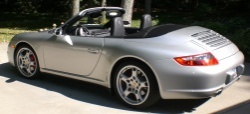
My new 911S cab is my first car with manual transmission. I feel that I made the right choice (for me) in going manual over PDK, and am handling the manual fine, but I'd appreciate input from those with more experience with the manual. Here are my main questions:
1. At what rpm do you typically shift from 1st to 2nd? I find 1st to be kind of annoying because you have to shift fairly soon to 2nd, whereas the car needs decent speed to handle 2nd without bogging, so getting the car off the line fast is a bit of chore. But maybe I'll get much better at it with practice (which is certainly my goal).
2. When you're approaching a tight curve at high speed, how do you handle downshifting? Seems that heel/toe would be best, so that the car's already in the lower gear before entering the curve, but it doesn't seem easy to heel/toe, especially if you don't have ideal shoes. An alternative is to downshift while braking while holding the clutch, then release the clutch in the curve when switching from braking to acceleration, but this can throw off the balance of the car if not done really well.
Thanks for any and all input.
1. At what rpm do you typically shift from 1st to 2nd? I find 1st to be kind of annoying because you have to shift fairly soon to 2nd, whereas the car needs decent speed to handle 2nd without bogging, so getting the car off the line fast is a bit of chore. But maybe I'll get much better at it with practice (which is certainly my goal).
2. When you're approaching a tight curve at high speed, how do you handle downshifting? Seems that heel/toe would be best, so that the car's already in the lower gear before entering the curve, but it doesn't seem easy to heel/toe, especially if you don't have ideal shoes. An alternative is to downshift while braking while holding the clutch, then release the clutch in the curve when switching from braking to acceleration, but this can throw off the balance of the car if not done really well.
Thanks for any and all input.
Registered User
Joined: Jan 2008
Posts: 2,759
From: NJ
Rep Power: 185
Brake first...then shift...then turn...(foregoing trailing braking at the moment.
You shouldn't let the clutch out or shift in the turn.
To me, heel-toeing on the street is not that easy since you typically are not braking hard enough to have the pedals lined up properly.
I heel-toe on the track now using the method of actually moving my heel over to the throttle and blipping.
On the street I use the method were I use the outside of my foot the give the throttle a little blip. But I rarely really need it. I do it more to practice.
Shoes may help or pedal extenders.
You shouldn't let the clutch out or shift in the turn.
To me, heel-toeing on the street is not that easy since you typically are not braking hard enough to have the pedals lined up properly.
I heel-toe on the track now using the method of actually moving my heel over to the throttle and blipping.
On the street I use the method were I use the outside of my foot the give the throttle a little blip. But I rarely really need it. I do it more to practice.
Shoes may help or pedal extenders.
Thread Starter
|
Registered User
Joined: Jun 2011
Posts: 2,670
Rep Power: 195
I agree with that for "normal" driving, and my question is more for the scenario of spirited driving with hard braking into corners, including trail braking.
Registered User
Joined: Jan 2008
Posts: 2,759
From: NJ
Rep Power: 185
if you want to be fast...(and I guess spirited) you dont want to be breaking hard into corners...you want to be on the throttle thru the corner....get your breaking done before the corner.
Thread Starter
|
Registered User
Joined: Jun 2011
Posts: 2,670
Rep Power: 195
For sharper curves, my understanding is that performance driving will usually mean some trail braking before getting back on the throttle in the curve. That's assuming that the approach to the curve was fast enough to require heavy braking in the first place.
Registered User

Joined: Jan 2008
Posts: 9,108
From: South Florida
Rep Power: 529
1st to be kind of annoying because you have to shift fairly soon to 2nd, whereas the car needs decent speed to handle 2nd without bogging,
The 997 time to get to second is less than the M3 but far greater than the Turbo (which seems like a nanosecond).

Registered User
Joined: Jul 2011
Posts: 115
Rep Power: 21
Are you familiar with understeer under heavy braking? Where you stomp on the brakes and turn the wheel, but the car still keeps going straight? It's because you've allotted 100% of traction to braking by stomping on the brakes - there is no traction left to change direction.
This is where trail braking comes in - by easing off the brakes, you release x percent of traction - that x percent of traction is immediately available for cornering (turning in). Trail braking is the management of grip between braking and cornering.
I say don't worry about what gear to be in, just worry about managing your tires first. Hell, drive the whole track at low RPM'S just learning how to take turns at speed - a 50mph turn has the same amount of grip available whether you take it in 2nd or 5th.
Once you've mastered grip, the rule to shifting is basically that if at any point you can be in a lower gear at a higher RPM, then you should already be in that lower gear. There are of course scenarios where this isn't desirable. Two common ones are when the time spent downshifting to a lower gear, accelerating, and then upshifting again may not be as efficient as simply staying in the higher gear (this may be applicable to what you are describing), and also in low grip scenarios, such as in the rain, where being in a lower gear is more likely to produce undesirable wheelspin.
Trending Topics
Registered User
Joined: Mar 2007
Posts: 1,870
From: San Diego, San Francisco
Rep Power: 116
Brake first...then shift...then turn...(foregoing trailing braking at the moment.
You shouldn't let the clutch out or shift in the turn.
To me, heel-toeing on the street is not that easy since you typically are not braking hard enough to have the pedals lined up properly.
I heel-toe on the track now using the method of actually moving my heel over to the throttle and blipping.
On the street I use the method were I use the outside of my foot the give the throttle a little blip. But I rarely really need it. I do it more to practice.
Shoes may help or pedal extenders.
You shouldn't let the clutch out or shift in the turn.
To me, heel-toeing on the street is not that easy since you typically are not braking hard enough to have the pedals lined up properly.
I heel-toe on the track now using the method of actually moving my heel over to the throttle and blipping.
On the street I use the method were I use the outside of my foot the give the throttle a little blip. But I rarely really need it. I do it more to practice.
Shoes may help or pedal extenders.
I agree pedal extenders and the proper shoes do wonders. On the street you don't really need to heal and toe but it's good practice.
Registered User
Joined: Nov 2009
Posts: 764
From: California
Rep Power: 67
The trick is to get smooth enough in the transition from braking to cornering to shifting to accelerating. As you get smoother, they begin to overlap. (Well, braking and accelerating won't overlap unless you progress clear to European-style rally driving or learn some rare autocross techniques, but the others do. You brake going into the corner and gradually come off the brake as you increase the cornering load. When you get really experienced (and really fast), braking continues nearly all the way to the apex and doesn't quit completely until the tires are fully committed to cornering and have no surplus grip to be used for braking. The ideal for racing is have the tires giving their all, never delivering partial grip, so the sum of braking and cornering force is always right at the plateau of performance for the tires being run.
But all that is the goal and it has to be reached with training. If not professional, then self-training after instructors teach you the goal. What someone mentioned is correct: you learn to do all those things smoothly by doing them separately first. Then you start to combine them. Usually it's easiest to learn to overlap acceleration with cornering because cars have much more powerful brakes than engines. Even a 427 Corvette or Cobra from the seventies is easier to balance (in this sense) on the throttle than it is on the brakes. So once you get smoothness down pat, learn to tail off the cornering force as the power comes up leaving a corner. That's a better first objective than blending shifting, braking and cornering. You want to learn those too, but not first.
Done just right (on a track, not public roads), you feel the tires wanting to go over that 'plateau' of performance as you roll on the power, so you have to compensate by giving up steering lock while you add still more power and then give up a little more lock. You end up with low to zero cornering force and all acceleration just as the car reaches the track-out point. The reason this is easier to learn is that almost any car in any corner not dead slow will have too little power to use all of the tire capability. What that means is you still have tire performance left to save your tail if you misjudge the exit of the corner. In other words, you can 'pinch' the corner if you must and if seriously pressed you just back off the throttle. You won't be as fast, but you won't be wrapped around the Armco (or a tree).
People rarely over-power the car coming out of a corner, but coming into one is different. Brakes are much more powerful than the engine and learning to balance braking and cornering the same way is what separates the front of the pack from the backmarkers on a race track. On the public road, it's what determines smoothness. Learn to do this, but leave it for later after your gut has absorbed the lesson of balancing use of tire grip between cornering and accelerating away in a car as powerful as a Carrera. That instinct will carry over to trail braking and help with that more difficult goal.
Now when you get all those sorted out, you can worry about smoother shifts wherever a gear change fits in the sequence for particular corners. For now, I'd suggest just changing down without letting out the clutch until you're ready to accelerate out of the corner. Or just leave the car in the higher gear for that matter. As you suggested yourself, when you do need a lower gear to leave the corner, just allow a moment between braking and accelerating to complete the shift by matching engine speed and letting out the clutch. It isn't the smoothest way, but it lets you concentrate on the more important control issues for now. That means your transition from braking to acceleration won't blend. Not yet, because you'll need a second or so to blip the engine to match the road speed in the gear you selected before letting out the clutch. But later you can learn to get the car ready to accelerate while still in the midst of trail braking. Believe me, it is both more important and more difficult to learn to blend braking and cornering effectively. Leaving for later the combination of braking, shifting, and cornering also gives you time to learn just what engine speed is needed to smoothly engage the clutch for different gears at different road speeds.
Heel-and-toe is the operation that carries a lot of pride of course and it's fun and very satisfying when you learn it, but it really doesn't work well on the road. I almost never bother. For one thing, just as someone said, you have to braking very heavily to get the brake pedal, the throttle, and your stars all lined up. Performance drivers don't do that on public roads unless they've been cleared for a rally or street race and kept that way with law enforcement help. Even then, it's not a comfortable technique. I used to race that way on roads in Europe and being committed to 100% tire performance to get around a corner you approach at three-digit speeds with trees and drop-offs lining your trajectory... Well, I kept a reserve in hand, thank you. That's why I did it as a hobby and never begrudged whatever they pay professional rally drivers.
The trouble is what I implied above. Blending heavy braking into cornering force involves two directions of thrust, either one of which can absorb all the grip the tires have to offer. That means you have no reserve if you fully commit. On a track, no big deal. You paid for all the pavement and if you have to give up the racing line and finish braking on the wrong side of the track, it's only a lap time you lost. Watch road races and notice how often one driver or the other ends up sliding to the outside of the corner when two are 'dicing' for position. No big deal, as I say. But if you let that happen on a public road the other side of "the track" is pavement someone else might be using. Often a motorhome. Sigh.
It is always good advice to stay well back from a car's limits on public roads, but a final note about Porsches. These cars have very high limits. I know how to find the limits of a car and I've explored most of the envelope with this C2S we bought, but I did it on a race track. These cars are going so fast when you find those limits that only a damn fool would try it on public roads.
Just a thought.
Gary
Thread Starter
|
Registered User
Joined: Jun 2011
Posts: 2,670
Rep Power: 195

Thread Starter
|
Registered User
Joined: Jun 2011
Posts: 2,670
Rep Power: 195
You're right.
The trick is to get smooth enough in the transition from braking to cornering to shifting to accelerating. As you get smoother, they begin to overlap. (Well, braking and accelerating won't overlap unless you progress clear to European-style rally driving or learn some rare autocross techniques, but the others do. You brake going into the corner and gradually come off the brake as you increase the cornering load. When you get really experienced (and really fast), braking continues nearly all the way to the apex and doesn't quit completely until the tires are fully committed to cornering and have no surplus grip to be used for braking. The ideal for racing is have the tires giving their all, never delivering partial grip, so the sum of braking and cornering force is always right at the plateau of performance for the tires being run.
But all that is the goal and it has to be reached with training. If not professional, then self-training after instructors teach you the goal. What someone mentioned is correct: you learn to do all those things smoothly by doing them separately first. Then you start to combine them. Usually it's easiest to learn to overlap acceleration with cornering because cars have much more powerful brakes than engines. Even a 427 Corvette or Cobra from the seventies is easier to balance (in this sense) on the throttle than it is on the brakes. So once you get smoothness down pat, learn to tail off the cornering force as the power comes up leaving a corner. That's a better first objective than blending shifting, braking and cornering. You want to learn those too, but not first.
Done just right (on a track, not public roads), you feel the tires wanting to go over that 'plateau' of performance as you roll on the power, so you have to compensate by giving up steering lock while you add still more power and then give up a little more lock. You end up with low to zero cornering force and all acceleration just as the car reaches the track-out point. The reason this is easier to learn is that almost any car in any corner not dead slow will have too little power to use all of the tire capability. What that means is you still have tire performance left to save your tail if you misjudge the exit of the corner. In other words, you can 'pinch' the corner if you must and if seriously pressed you just back off the throttle. You won't be as fast, but you won't be wrapped around the Armco (or a tree).
People rarely over-power the car coming out of a corner, but coming into one is different. Brakes are much more powerful than the engine and learning to balance braking and cornering the same way is what separates the front of the pack from the backmarkers on a race track. On the public road, it's what determines smoothness. Learn to do this, but leave it for later after your gut has absorbed the lesson of balancing use of tire grip between cornering and accelerating away in a car as powerful as a Carrera. That instinct will carry over to trail braking and help with that more difficult goal.
Now when you get all those sorted out, you can worry about smoother shifts wherever a gear change fits in the sequence for particular corners. For now, I'd suggest just changing down without letting out the clutch until you're ready to accelerate out of the corner. Or just leave the car in the higher gear for that matter. As you suggested yourself, when you do need a lower gear to leave the corner, just allow a moment between braking and accelerating to complete the shift by matching engine speed and letting out the clutch. It isn't the smoothest way, but it lets you concentrate on the more important control issues for now. That means your transition from braking to acceleration won't blend. Not yet, because you'll need a second or so to blip the engine to match the road speed in the gear you selected before letting out the clutch. But later you can learn to get the car ready to accelerate while still in the midst of trail braking. Believe me, it is both more important and more difficult to learn to blend braking and cornering effectively. Leaving for later the combination of braking, shifting, and cornering also gives you time to learn just what engine speed is needed to smoothly engage the clutch for different gears at different road speeds.
Heel-and-toe is the operation that carries a lot of pride of course and it's fun and very satisfying when you learn it, but it really doesn't work well on the road. I almost never bother. For one thing, just as someone said, you have to braking very heavily to get the brake pedal, the throttle, and your stars all lined up. Performance drivers don't do that on public roads unless they've been cleared for a rally or street race and kept that way with law enforcement help. Even then, it's not a comfortable technique. I used to race that way on roads in Europe and being committed to 100% tire performance to get around a corner you approach at three-digit speeds with trees and drop-offs lining your trajectory... Well, I kept a reserve in hand, thank you. That's why I did it as a hobby and never begrudged whatever they pay professional rally drivers.
The trouble is what I implied above. Blending heavy braking into cornering force involves two directions of thrust, either one of which can absorb all the grip the tires have to offer. That means you have no reserve if you fully commit. On a track, no big deal. You paid for all the pavement and if you have to give up the racing line and finish braking on the wrong side of the track, it's only a lap time you lost. Watch road races and notice how often one driver or the other ends up sliding to the outside of the corner when two are 'dicing' for position. No big deal, as I say. But if you let that happen on a public road the other side of "the track" is pavement someone else might be using. Often a motorhome. Sigh.
It is always good advice to stay well back from a car's limits on public roads, but a final note about Porsches. These cars have very high limits. I know how to find the limits of a car and I've explored most of the envelope with this C2S we bought, but I did it on a race track. These cars are going so fast when you find those limits that only a damn fool would try it on public roads.
Just a thought.
Gary
The trick is to get smooth enough in the transition from braking to cornering to shifting to accelerating. As you get smoother, they begin to overlap. (Well, braking and accelerating won't overlap unless you progress clear to European-style rally driving or learn some rare autocross techniques, but the others do. You brake going into the corner and gradually come off the brake as you increase the cornering load. When you get really experienced (and really fast), braking continues nearly all the way to the apex and doesn't quit completely until the tires are fully committed to cornering and have no surplus grip to be used for braking. The ideal for racing is have the tires giving their all, never delivering partial grip, so the sum of braking and cornering force is always right at the plateau of performance for the tires being run.
But all that is the goal and it has to be reached with training. If not professional, then self-training after instructors teach you the goal. What someone mentioned is correct: you learn to do all those things smoothly by doing them separately first. Then you start to combine them. Usually it's easiest to learn to overlap acceleration with cornering because cars have much more powerful brakes than engines. Even a 427 Corvette or Cobra from the seventies is easier to balance (in this sense) on the throttle than it is on the brakes. So once you get smoothness down pat, learn to tail off the cornering force as the power comes up leaving a corner. That's a better first objective than blending shifting, braking and cornering. You want to learn those too, but not first.
Done just right (on a track, not public roads), you feel the tires wanting to go over that 'plateau' of performance as you roll on the power, so you have to compensate by giving up steering lock while you add still more power and then give up a little more lock. You end up with low to zero cornering force and all acceleration just as the car reaches the track-out point. The reason this is easier to learn is that almost any car in any corner not dead slow will have too little power to use all of the tire capability. What that means is you still have tire performance left to save your tail if you misjudge the exit of the corner. In other words, you can 'pinch' the corner if you must and if seriously pressed you just back off the throttle. You won't be as fast, but you won't be wrapped around the Armco (or a tree).
People rarely over-power the car coming out of a corner, but coming into one is different. Brakes are much more powerful than the engine and learning to balance braking and cornering the same way is what separates the front of the pack from the backmarkers on a race track. On the public road, it's what determines smoothness. Learn to do this, but leave it for later after your gut has absorbed the lesson of balancing use of tire grip between cornering and accelerating away in a car as powerful as a Carrera. That instinct will carry over to trail braking and help with that more difficult goal.
Now when you get all those sorted out, you can worry about smoother shifts wherever a gear change fits in the sequence for particular corners. For now, I'd suggest just changing down without letting out the clutch until you're ready to accelerate out of the corner. Or just leave the car in the higher gear for that matter. As you suggested yourself, when you do need a lower gear to leave the corner, just allow a moment between braking and accelerating to complete the shift by matching engine speed and letting out the clutch. It isn't the smoothest way, but it lets you concentrate on the more important control issues for now. That means your transition from braking to acceleration won't blend. Not yet, because you'll need a second or so to blip the engine to match the road speed in the gear you selected before letting out the clutch. But later you can learn to get the car ready to accelerate while still in the midst of trail braking. Believe me, it is both more important and more difficult to learn to blend braking and cornering effectively. Leaving for later the combination of braking, shifting, and cornering also gives you time to learn just what engine speed is needed to smoothly engage the clutch for different gears at different road speeds.
Heel-and-toe is the operation that carries a lot of pride of course and it's fun and very satisfying when you learn it, but it really doesn't work well on the road. I almost never bother. For one thing, just as someone said, you have to braking very heavily to get the brake pedal, the throttle, and your stars all lined up. Performance drivers don't do that on public roads unless they've been cleared for a rally or street race and kept that way with law enforcement help. Even then, it's not a comfortable technique. I used to race that way on roads in Europe and being committed to 100% tire performance to get around a corner you approach at three-digit speeds with trees and drop-offs lining your trajectory... Well, I kept a reserve in hand, thank you. That's why I did it as a hobby and never begrudged whatever they pay professional rally drivers.
The trouble is what I implied above. Blending heavy braking into cornering force involves two directions of thrust, either one of which can absorb all the grip the tires have to offer. That means you have no reserve if you fully commit. On a track, no big deal. You paid for all the pavement and if you have to give up the racing line and finish braking on the wrong side of the track, it's only a lap time you lost. Watch road races and notice how often one driver or the other ends up sliding to the outside of the corner when two are 'dicing' for position. No big deal, as I say. But if you let that happen on a public road the other side of "the track" is pavement someone else might be using. Often a motorhome. Sigh.
It is always good advice to stay well back from a car's limits on public roads, but a final note about Porsches. These cars have very high limits. I know how to find the limits of a car and I've explored most of the envelope with this C2S we bought, but I did it on a race track. These cars are going so fast when you find those limits that only a damn fool would try it on public roads.
Just a thought.
Gary
To give a little background, I've had some professional instruction on the track and have done a good bit of reading (just finished "Speed Secrets"), so I'm not starting from scratch, but I know that there's much more to learn and I'm planning to get more instruction on the track as soon as I can fit it in my schedule. Meanwhile, I'm trying to learn and practice proper performance driving techniques on the road, even if the speeds don't require it and the limits of the car aren't being approached, so that my road habits will translate to the track and I won't have to relearn things.
On to your more specific points:
- That's good advice about focusing on acceleration/cornering first. What are your thoughts on beginning to accelerate before the apex? Seems like, for some corners (not all), that's preferable.
- As far as trail braking, I've been doing that routinely, though I'm usually fully off the brakes well before the apex.
- For downshifting into corners, I've been doing what you've suggested: shifting to the lower gear while braking on the approach, then blipping and letting out the clutch after trail braking. My transitions have been reasonably smooth, but there's always room for improvement, and of course it will take practice to do this consistently well at varying speeds. I'd prefer to downshift on the approach (as easily done with paddle shifters), and I did try heel/toe once, but I found it difficult, so I'm saving that for later ...
Thanks again!
Registered User
Joined: Jun 2008
Posts: 1,342
From: USA
Rep Power: 104
You're right.
The trick is to get smooth enough in the transition from braking to cornering to shifting to accelerating. As you get smoother, they begin to overlap. (Well, braking and accelerating won't overlap unless you progress clear to European-style rally driving or learn some rare autocross techniques, but the others do. You brake going into the corner and gradually come off the brake as you increase the cornering load. When you get really experienced (and really fast), braking continues nearly all the way to the apex and doesn't quit completely until the tires are fully committed to cornering and have no surplus grip to be used for braking. The ideal for racing is have the tires giving their all, never delivering partial grip, so the sum of braking and cornering force is always right at the plateau of performance for the tires being run.
But all that is the goal and it has to be reached with training. If not professional, then self-training after instructors teach you the goal. What someone mentioned is correct: you learn to do all those things smoothly by doing them separately first. Then you start to combine them. Usually it's easiest to learn to overlap acceleration with cornering because cars have much more powerful brakes than engines. Even a 427 Corvette or Cobra from the seventies is easier to balance (in this sense) on the throttle than it is on the brakes. So once you get smoothness down pat, learn to tail off the cornering force as the power comes up leaving a corner. That's a better first objective than blending shifting, braking and cornering. You want to learn those too, but not first.
Done just right (on a track, not public roads), you feel the tires wanting to go over that 'plateau' of performance as you roll on the power, so you have to compensate by giving up steering lock while you add still more power and then give up a little more lock. You end up with low to zero cornering force and all acceleration just as the car reaches the track-out point. The reason this is easier to learn is that almost any car in any corner not dead slow will have too little power to use all of the tire capability. What that means is you still have tire performance left to save your tail if you misjudge the exit of the corner. In other words, you can 'pinch' the corner if you must and if seriously pressed you just back off the throttle. You won't be as fast, but you won't be wrapped around the Armco (or a tree).
People rarely over-power the car coming out of a corner, but coming into one is different. Brakes are much more powerful than the engine and learning to balance braking and cornering the same way is what separates the front of the pack from the backmarkers on a race track. On the public road, it's what determines smoothness. Learn to do this, but leave it for later after your gut has absorbed the lesson of balancing use of tire grip between cornering and accelerating away in a car as powerful as a Carrera. That instinct will carry over to trail braking and help with that more difficult goal.
Now when you get all those sorted out, you can worry about smoother shifts wherever a gear change fits in the sequence for particular corners. For now, I'd suggest just changing down without letting out the clutch until you're ready to accelerate out of the corner. Or just leave the car in the higher gear for that matter. As you suggested yourself, when you do need a lower gear to leave the corner, just allow a moment between braking and accelerating to complete the shift by matching engine speed and letting out the clutch. It isn't the smoothest way, but it lets you concentrate on the more important control issues for now. That means your transition from braking to acceleration won't blend. Not yet, because you'll need a second or so to blip the engine to match the road speed in the gear you selected before letting out the clutch. But later you can learn to get the car ready to accelerate while still in the midst of trail braking. Believe me, it is both more important and more difficult to learn to blend braking and cornering effectively. Leaving for later the combination of braking, shifting, and cornering also gives you time to learn just what engine speed is needed to smoothly engage the clutch for different gears at different road speeds.
Heel-and-toe is the operation that carries a lot of pride of course and it's fun and very satisfying when you learn it, but it really doesn't work well on the road. I almost never bother. For one thing, just as someone said, you have to braking very heavily to get the brake pedal, the throttle, and your stars all lined up. Performance drivers don't do that on public roads unless they've been cleared for a rally or street race and kept that way with law enforcement help. Even then, it's not a comfortable technique. I used to race that way on roads in Europe and being committed to 100% tire performance to get around a corner you approach at three-digit speeds with trees and drop-offs lining your trajectory... Well, I kept a reserve in hand, thank you. That's why I did it as a hobby and never begrudged whatever they pay professional rally drivers.
The trouble is what I implied above. Blending heavy braking into cornering force involves two directions of thrust, either one of which can absorb all the grip the tires have to offer. That means you have no reserve if you fully commit. On a track, no big deal. You paid for all the pavement and if you have to give up the racing line and finish braking on the wrong side of the track, it's only a lap time you lost. Watch road races and notice how often one driver or the other ends up sliding to the outside of the corner when two are 'dicing' for position. No big deal, as I say. But if you let that happen on a public road the other side of "the track" is pavement someone else might be using. Often a motorhome. Sigh.
It is always good advice to stay well back from a car's limits on public roads, but a final note about Porsches. These cars have very high limits. I know how to find the limits of a car and I've explored most of the envelope with this C2S we bought, but I did it on a race track. These cars are going so fast when you find those limits that only a damn fool would try it on public roads.
Just a thought.
Gary
The trick is to get smooth enough in the transition from braking to cornering to shifting to accelerating. As you get smoother, they begin to overlap. (Well, braking and accelerating won't overlap unless you progress clear to European-style rally driving or learn some rare autocross techniques, but the others do. You brake going into the corner and gradually come off the brake as you increase the cornering load. When you get really experienced (and really fast), braking continues nearly all the way to the apex and doesn't quit completely until the tires are fully committed to cornering and have no surplus grip to be used for braking. The ideal for racing is have the tires giving their all, never delivering partial grip, so the sum of braking and cornering force is always right at the plateau of performance for the tires being run.
But all that is the goal and it has to be reached with training. If not professional, then self-training after instructors teach you the goal. What someone mentioned is correct: you learn to do all those things smoothly by doing them separately first. Then you start to combine them. Usually it's easiest to learn to overlap acceleration with cornering because cars have much more powerful brakes than engines. Even a 427 Corvette or Cobra from the seventies is easier to balance (in this sense) on the throttle than it is on the brakes. So once you get smoothness down pat, learn to tail off the cornering force as the power comes up leaving a corner. That's a better first objective than blending shifting, braking and cornering. You want to learn those too, but not first.
Done just right (on a track, not public roads), you feel the tires wanting to go over that 'plateau' of performance as you roll on the power, so you have to compensate by giving up steering lock while you add still more power and then give up a little more lock. You end up with low to zero cornering force and all acceleration just as the car reaches the track-out point. The reason this is easier to learn is that almost any car in any corner not dead slow will have too little power to use all of the tire capability. What that means is you still have tire performance left to save your tail if you misjudge the exit of the corner. In other words, you can 'pinch' the corner if you must and if seriously pressed you just back off the throttle. You won't be as fast, but you won't be wrapped around the Armco (or a tree).
People rarely over-power the car coming out of a corner, but coming into one is different. Brakes are much more powerful than the engine and learning to balance braking and cornering the same way is what separates the front of the pack from the backmarkers on a race track. On the public road, it's what determines smoothness. Learn to do this, but leave it for later after your gut has absorbed the lesson of balancing use of tire grip between cornering and accelerating away in a car as powerful as a Carrera. That instinct will carry over to trail braking and help with that more difficult goal.
Now when you get all those sorted out, you can worry about smoother shifts wherever a gear change fits in the sequence for particular corners. For now, I'd suggest just changing down without letting out the clutch until you're ready to accelerate out of the corner. Or just leave the car in the higher gear for that matter. As you suggested yourself, when you do need a lower gear to leave the corner, just allow a moment between braking and accelerating to complete the shift by matching engine speed and letting out the clutch. It isn't the smoothest way, but it lets you concentrate on the more important control issues for now. That means your transition from braking to acceleration won't blend. Not yet, because you'll need a second or so to blip the engine to match the road speed in the gear you selected before letting out the clutch. But later you can learn to get the car ready to accelerate while still in the midst of trail braking. Believe me, it is both more important and more difficult to learn to blend braking and cornering effectively. Leaving for later the combination of braking, shifting, and cornering also gives you time to learn just what engine speed is needed to smoothly engage the clutch for different gears at different road speeds.
Heel-and-toe is the operation that carries a lot of pride of course and it's fun and very satisfying when you learn it, but it really doesn't work well on the road. I almost never bother. For one thing, just as someone said, you have to braking very heavily to get the brake pedal, the throttle, and your stars all lined up. Performance drivers don't do that on public roads unless they've been cleared for a rally or street race and kept that way with law enforcement help. Even then, it's not a comfortable technique. I used to race that way on roads in Europe and being committed to 100% tire performance to get around a corner you approach at three-digit speeds with trees and drop-offs lining your trajectory... Well, I kept a reserve in hand, thank you. That's why I did it as a hobby and never begrudged whatever they pay professional rally drivers.
The trouble is what I implied above. Blending heavy braking into cornering force involves two directions of thrust, either one of which can absorb all the grip the tires have to offer. That means you have no reserve if you fully commit. On a track, no big deal. You paid for all the pavement and if you have to give up the racing line and finish braking on the wrong side of the track, it's only a lap time you lost. Watch road races and notice how often one driver or the other ends up sliding to the outside of the corner when two are 'dicing' for position. No big deal, as I say. But if you let that happen on a public road the other side of "the track" is pavement someone else might be using. Often a motorhome. Sigh.
It is always good advice to stay well back from a car's limits on public roads, but a final note about Porsches. These cars have very high limits. I know how to find the limits of a car and I've explored most of the envelope with this C2S we bought, but I did it on a race track. These cars are going so fast when you find those limits that only a damn fool would try it on public roads.
Just a thought.
Gary
Registered User
Joined: Nov 2009
Posts: 764
From: California
Rep Power: 67
[...] I've had some professional instruction on the track and have done a good bit of reading (just finished "Speed Secrets"), so I'm not starting from scratch [...]
[...] What are your thoughts on beginning to accelerate before the apex? Seems like, for some corners (not all), that's preferable.
[...] What are your thoughts on beginning to accelerate before the apex? Seems like, for some corners (not all), that's preferable.
The brief answer to your question is yes. Less briefly, to justify that:
We need a brief diversion into terminology. To an R&D engineer, the pattern of the vehicle's thrust is more important than the edges of the road, so I tend to think of the apex as being the inflection point in that curve, the point where you transition from braking *** cornering to acceleration *** cornering. And if you have a cornering sequence that requires the tires' grip be devoted to maximum cornering, with neither braking nor acceleration (except from drag), than the apex would lie at the point where acceleration began again. If it was noticeable at all, then a second apex would precede that for analysis purposes. That would be the point where braking had to be abandoned to permit that maximum cornering grip. (Usually the point where a good driver completely releases brake pressure isn't noticeable at all. In geek terms, it doesn't cause an inflection.)
All very theoretical and not what my driver's intuition calls an apex of course. We think of our apex as the closest approach to the inside of the corner, which sometimes includes putting the inside wheels off the pavement. The theoretical approach is needed for analysis, if only because we often race on courses that compel an apex that may be a hundred feet from the edge of the pavement. Converted airport tracks are notorious for this. If I must achieve 200 degrees change in direction in a couple of hundred yards of WWII pavement, does the lack of an edge mean I had no apex? Of course not. And novices at such tracks are taught to pick up on the past rubber deposits and think of those as the track surface, planning their apex by the closest approach to the edge of that pattern of rubber on the much much wider pavement. For DE days, they add pylons of course to make these things more visible.
Okay, with that pettifogging out of the way, let's stick with a driver's intuitive meaning of apex. That's the one you'll see in books by non-engineers so we better use it. That means the answer is yes. Many corner complexes require acceleration to begin before reaching the inside edge of the track, before that intuitive apex. The reason in racing is that speed at different parts of the track has more effect on the lap time than others. If the section following the upcoming corner is one we want to take at the highest speed possible, then we take a "late apex" allowing us to accelerate before the apex and leave the corner at a higher speed. The apex comes after the "thrust inflection" of us engineers, but it also is positioned further down track because we did so much of the cornering before reaching it to allow early acceleration. That makes it 'late' even to drivers' intuition. I believe it was Graham Hill who first brought this to public notice back in the seventies. (By winning this way of course.)
The converse is also appropriate although it worries us when teaching novices. An early apex is one where the inside edge is reached before you finish trail braking, or at least before you can begin acceleration. We need an early apex when the preceding track segment, like a long straight perhaps, is more important to the lap time than the segment following. For the best lap time we need to carry the speed as deep into that corner as possible. We also use this to pass other cars, but that really isn't covered in early training. The early apex means a very delayed start of braking and that means using as much of the corner as possible to scrub off the rest of that oh-so-desirable speed that now is keeping us from getting the car turned and accelerated into the following segment. It may be less important than the preceding straight, but we do want to traverse it from the track surface instead of hanging on a tree limb or spinning off into the desert (where I live now, we don't keep trees. At least not around race tracks.). And when racing, if you use that late braking to pass, then you don't want the other driver to do an "over and under" move by using a late apex and early acceleration to blow past your desperately cornering car. (But I never mentioned that. You never read that here. This isn't race training by e-mail. Honest.)
On public roads, I don't even consider an early apex. And they are not taught to novices at DE days either. In fact, I think the PCA doctrine for instructors is not to teach trail braking either. It's that same issue of learning first to blend acceleration and cornering instead of learning the more difficult skills. You need to have building blocks in learning. Even when we know the theoretic basis for more advanced techniques, we need to let our motor skills progress by the one-step-at-a-time approach. Besides... if you get a late apex wrong, you simply blow your lap time. Backing off on acceleration saves you from departing the track for example. But if you blow an early apex, you're already committed and likely to need a vacuum cleaner to get the sand out of places you never knew it could reach. You will go faster if you get it right, but you must get it right or spend time communing with desert tortoises. Or a tree. Including "must do it right" segments isn't the way you teach a subject like driving or flying. Uses up students for one thing.
So the overall answer is yes, once you learn to hit your apex, which isn't a trivial skill, then you learn how to start acceleration beforehand or finish your braking afterward. Either skill should come later, but in fact the safety benefits of a late apex usually mean that that technique is the way people are taught "the racing line" even when real racers might be using an early apex at some of the same corners.
For now, just learn to hit the apex wherever an instructor tells you it should be. Learning to put the tires over particular spots on demand is itself a fundamental skill you want to learn. Later you can learn to pick the apex yourself for the best lap time.
Gary
Registered User
Joined: Jul 2008
Posts: 541
From: NJ
Rep Power: 50
I don't know if anyone could have said it better than Gary.
So, I would do what he says!
But, I do heal-toe on every braking/downshifting scenario. It is the only way for it to become second nature. After a while, you can do it with work boots if you have to, and it is hardly an issue!!
So, I would do what he says!
But, I do heal-toe on every braking/downshifting scenario. It is the only way for it to become second nature. After a while, you can do it with work boots if you have to, and it is hardly an issue!!
Registered User
Joined: Nov 2009
Posts: 764
From: California
Rep Power: 67

One of the compensations of being retired.

Gary

