


Heel/toe method


Thread Starter
|
Registered User
Joined: Jun 2011
Posts: 2,670
Rep Power: 195


I actually find a lot of opportunity to use HT on the road, since there are many times when I need to brake but also want to downshift at the same time, such as when making a turn and wanting to go down from 3rd to 2nd before the turn (I try very hard to avoid shifting in curves). My HT efforts so far suggest it's feasible to do that under moderate braking, if the foot is rolled enough, but I'll keep practicing and see how it plays out.

Thread Starter
|
Registered User
Joined: Jun 2011
Posts: 2,670
Rep Power: 195
Links to Rennline pedals:
http://www.rennline.com/Rennline-Alu...info/P45%2E21/
http://www.rennline.com/Rennline-Alu...info/P71%2E60/
Any thoughts on perforated vs rubber grip? Or other brands to consider?
http://www.rennline.com/Rennline-Alu...info/P45%2E21/
http://www.rennline.com/Rennline-Alu...info/P71%2E60/
Any thoughts on perforated vs rubber grip? Or other brands to consider?

In my honest opinion and choice, I would go with the perforated pedal set. What I have done previously is I buy grip tape from a skateboard shop, stencil the pedal on the back, cut it and apply it. With rubber, your feet slip when they are wet. Just my previous experience....
I already purchased a different set of Sport Pedals, but considering buying the Rennline Accelerator Pedal with Extensions to help with my Heel/Toe efforts. If I do, I'm going Perforated for a couple of reasons:
1) Slippage when it's wet. Since I'm one to use the Foot-Roll method (and thus more concerned about my foot slipping off of the brake pedal), I'd rather have the perforated design.
2) Absolutely no wear on the perforated pedal whereas the rubber version will wear.
3) Since the Rennline design has pop-in rubber plugs (and they sell replacements), there's obviously some history of those popping out. I'm not in the mood to have a stash of replacement plugs when I notice some missing.
1) Slippage when it's wet. Since I'm one to use the Foot-Roll method (and thus more concerned about my foot slipping off of the brake pedal), I'd rather have the perforated design.
2) Absolutely no wear on the perforated pedal whereas the rubber version will wear.
3) Since the Rennline design has pop-in rubber plugs (and they sell replacements), there's obviously some history of those popping out. I'm not in the mood to have a stash of replacement plugs when I notice some missing.

Registered User
Joined: Jul 2007
Posts: 3,122
From: Natick, MA
Rep Power: 163
The thing that makes me most nervous at this point is being inadvertently too far to the right on the brake pedal, to the extent of possibly slipping off the brake pedal under hard braking. To reduce this risk, can the pedals be shifted or extended, and is that a good idea?
http://www.rennline.com/Rennline-Thr...nfo/PE44_45HT/
on top of the stock gas pedal. brake off upper extender part. keep brake/clutch stock, unless you want same looks on all pedals.
what is crusial for heel&toe - you brake with a _ball_ of your foot. it has to be positioned on right part of brake pedal. if you still keep your heel rested on the floor (most likely) when you start braking you will not have enough space to rotate your foot and when you try to hit throttle you will hit floor.
you need to lift your foot from a floor when you brake. when brake pedal is lowered almost all the way down you twist your foot and kick throttle not with your heel but with outer edge of your foot like in a karate side kick.
you can practice it when you are not driving but trick is to make brake pedal to go low enough. rennline extender makes gas pedal somewhat 8mm higher than stock and it is enough to simplify whole ordeal.
for a track if you get high racing shoes that maintain angle of your ankle it also helps.
Last edited by utkinpol; Apr 27, 2012 at 02:54 PM.
Thread Starter
|
Registered User
Joined: Jun 2011
Posts: 2,670
Rep Power: 195
bolt on this
http://www.rennline.com/Rennline-Thr...nfo/PE44_45HT/
on top of the stock gas pedal. brake off upper extender part. keep brake/clutch stock, unless you want same looks on all pedals.
what is crusial for heel&toe - you brake with a _ball_ of your foot. it has to be positioned on right part of brake pedal. if you still keep your heel rested on the floor (most likely) when you start braking you will not have enough space to rotate your foot and when you try to hit throttle you will hit floor.
you need to lift your foot from a floor when you brake. when brake pedal is lowered almost all the way down you twist your foot and kick throttle not with your heel but with outer edge of your foot like in a karate side kick.
you can practice it when you are not driving but trick is to make brake pedal to go low enough. rennline extender makes gas pedal somewhat 8mm higher than stock and it is enough to simplify whole ordeal.
for a track if you get high racing shoes that maintain angle of your ankle it also helps.
http://www.rennline.com/Rennline-Thr...nfo/PE44_45HT/
on top of the stock gas pedal. brake off upper extender part. keep brake/clutch stock, unless you want same looks on all pedals.
what is crusial for heel&toe - you brake with a _ball_ of your foot. it has to be positioned on right part of brake pedal. if you still keep your heel rested on the floor (most likely) when you start braking you will not have enough space to rotate your foot and when you try to hit throttle you will hit floor.
you need to lift your foot from a floor when you brake. when brake pedal is lowered almost all the way down you twist your foot and kick throttle not with your heel but with outer edge of your foot like in a karate side kick.
you can practice it when you are not driving but trick is to make brake pedal to go low enough. rennline extender makes gas pedal somewhat 8mm higher than stock and it is enough to simplify whole ordeal.
for a track if you get high racing shoes that maintain angle of your ankle it also helps.
Registered User
Joined: Feb 2010
Posts: 1,889
From: SoCal
Rep Power: 161
if u have a manual tranny, learning to heel/toe is a must, IMO.
another thing to master is double-clutching (DC). DC is used more often in everyday driving.
the rennline pedal extension makes it easier to H/T (or toe/toe). but at times, i feel like its too easy. I have considered cutting off the upper extension so i can practice HT the correct way.
With the upper extension, i often find myself not braking hard enough because i am using my big toe to apply the brakes. There are also times, when i brake suddenly, i am applying pressure to the gas pedal (via the extension) at the same time.
i got the pedals without the rubber nubs since i felt the nubs are more slick when wet and i hate to replace the ones that pop out all the time. i suppose u can glue them on tho..
another thing to master is double-clutching (DC). DC is used more often in everyday driving.
the rennline pedal extension makes it easier to H/T (or toe/toe). but at times, i feel like its too easy. I have considered cutting off the upper extension so i can practice HT the correct way.
With the upper extension, i often find myself not braking hard enough because i am using my big toe to apply the brakes. There are also times, when i brake suddenly, i am applying pressure to the gas pedal (via the extension) at the same time.
i got the pedals without the rubber nubs since i felt the nubs are more slick when wet and i hate to replace the ones that pop out all the time. i suppose u can glue them on tho..
Registered User
Joined: Jul 2007
Posts: 3,122
From: Natick, MA
Rep Power: 163
with proper racing shoes upper extension is not in the way but with normal wide sole shoes you will hit throttle every time you step on brakes, so it has to be cut off. lower one must stay on - it will help you.
look on rennline web site - they have install instructions. you drill 3 or 4 holes in the stock pedal and screw extender pedal on top of it. it is quite easy.
if you have black stock pedals i would recommend to get solid black gas pedal extender. i personally do not like how brake and clutch rennline pedals look like and did not want to spend time mounting them and never needed them for anything.
look on rennline web site - they have install instructions. you drill 3 or 4 holes in the stock pedal and screw extender pedal on top of it. it is quite easy.
if you have black stock pedals i would recommend to get solid black gas pedal extender. i personally do not like how brake and clutch rennline pedals look like and did not want to spend time mounting them and never needed them for anything.
Registered User
Joined: Feb 2012
Posts: 96
From: Memphis
Rep Power: 18
Keep in mind that in the early days a main purpose of H&T was to rev match w/ unsynchronized transmissions. They blipped to raise the revs higher than it needed to be, put slight pressure on the shift lever, and when the the revs fell to the correct point, the transmission slipped into gear. We don't need to do that anymore, all we need to do is rev match so we don't tear up the equipment and cause a big jolt.
That said, the way I have taught myself both on the street and track is NOT the classic way - but the more natural way. I put the heel of my foot on the brake and the natural angle of my foot puts the toes right where they need to be. I don't have to rotate my ankle in a most unnatural way. And I don't blip, I simply give enough throttle as I feel is needed and hold it until the clutch is back out. That allows some minor throttle adjustments as you feel the clutch engaging. And your foot is already on the go pedal for the exit. It took awhile for my heel to become sensitive enough to modulate the brakes, but it works for me now. If I were learning from scratch I think I would give this some consideration.
That said, the way I have taught myself both on the street and track is NOT the classic way - but the more natural way. I put the heel of my foot on the brake and the natural angle of my foot puts the toes right where they need to be. I don't have to rotate my ankle in a most unnatural way. And I don't blip, I simply give enough throttle as I feel is needed and hold it until the clutch is back out. That allows some minor throttle adjustments as you feel the clutch engaging. And your foot is already on the go pedal for the exit. It took awhile for my heel to become sensitive enough to modulate the brakes, but it works for me now. If I were learning from scratch I think I would give this some consideration.
Thread Starter
|
Registered User
Joined: Jun 2011
Posts: 2,670
Rep Power: 195
That said, the way I have taught myself both on the street and track is NOT the classic way - but the more natural way. I put the heel of my foot on the brake and the natural angle of my foot puts the toes right where they need to be. I don't have to rotate my ankle in a most unnatural way. And I don't blip, I simply give enough throttle as I feel is needed and hold it until the clutch is back out. That allows some minor throttle adjustments as you feel the clutch engaging. And your foot is already on the go pedal for the exit. It took awhile for my heel to become sensitive enough to modulate the brakes, but it works for me now. If I were learning from scratch I think I would give this some consideration.
I'm actually up to better than 95% success rate with the standard method, which is encouraging given that I've only been at this for less than a week. Of course, it will probably take a lot more time to perfect the technique, but even now the ability to downshift while braking is adding another quantum level of satisfaction and enjoyment.
I'm finding the key to be proper positioning of the foot on the brake pedal. If that's off, it's difficult to impossible to rev. If that's good, revving is fairly easy.
If it continue to make steady progress, I may not even need to change or extend the pedals.
For any manual drivers reading this thread who haven't tried HT, I would really encourage you to go for it!
Registered User
Joined: Feb 2012
Posts: 96
From: Memphis
Rep Power: 18
Like I said, if I were starting from scratch. I agree it would be difficult to change at this point. In my Tahoe w/ AT I even brake w/ my heel so it remains second nature.
On blipping: reminds me of a story I heard about about a lady who folded a piece of meat in a certain way when she put it in the pan. Someone asked why and she replied that she grew up watching her mother do it that way. Next time she talked to her mother she asked what the theory was for folding the meat in that precise way. Her mother laughed and said something to the effect of: "That's the only way it would fit in my pan."
On blipping: reminds me of a story I heard about about a lady who folded a piece of meat in a certain way when she put it in the pan. Someone asked why and she replied that she grew up watching her mother do it that way. Next time she talked to her mother she asked what the theory was for folding the meat in that precise way. Her mother laughed and said something to the effect of: "That's the only way it would fit in my pan."

Thread Starter
|
Registered User
Joined: Jun 2011
Posts: 2,670
Rep Power: 195
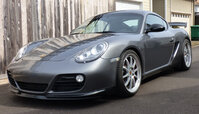
I tried HT in the Cayman R today, and generally found it a bit easier than in the 997. The pedals seem a bit closer together, and brake pedal doesn't need to be pushed as hard to line up more with the gas pedal. But the pedals in the 997 do feel like they have more 'well defined' locations, if you know what I mean, so I'm not yet sure which car I like HTing more in.
The thought crossed my mind today that maybe years of drumming are helping with picking up HT?
The thought crossed my mind today that maybe years of drumming are helping with picking up HT?

Thread
Thread Starter
Forum
Replies
Last Post
