


LSD buster



 Great info

Former Vendor
Joined: Oct 2009
Posts: 513
From: Boulder, CO
Rep Power: 0


You mean like this?
http://www.europeancarweb.com/tech/p...guard_lsd.html
Total 911 also did a bit on us in their Feb. 2011 issue.
http://www.europeancarweb.com/tech/p...guard_lsd.html
Total 911 also did a bit on us in their Feb. 2011 issue.

 I think no 3.9 should be without it

Registered User
Joined: May 2011
Posts: 3
From: Hawaii
Rep Power: 0
There ... fixed it.

Registered User
Joined: Jan 2011
Posts: 23
Rep Power: 0

Mikymu -- I know you have heard the same from many others, but let me add my own THANK YOU for the excellent post on this DIY !!! Your step by step instructions, plus the excellent pictures, made this a pretty routine project once I got into it. The toughest and most time consuming part for me, believe it or not, was removing the transmission fill plug on the side of the trans...had to drop the next-forward under body panels to get the right wrench angle, and fabricate a special tool combo because of how tight the factory had put it in. If not for that issue, my removal time was about 2 hours, and the install a little shorter. Anyone with the right tools, a normal amount of mechanical understanding, and your excellent article, can tackle this project on their own. Also, I also had a very positive experience with Guard Transmission -- Matt took plenty of time with me on several calls, explaining the options and the factors to consider in deciding which option to go with. His turnaround was 24 hours, just as promised. What a difference with the Guard rebuilt LSD!
Thanks again.
Thanks again.

Registered User
Joined: May 2011
Posts: 13
From: Germany
Rep Power: 0
hey matt,
thanks a lot for your detailed reply!!
i tried a no-preload 75% lsd and it works nicely on track! but i need to do some further testing to make some serious statements on it.
i also tried a 60% lsd with ~90Nm preload (breakaway torque) and i drove one side on grippy tarmac the other side on the slippy surface (i was on a driving center section). the car had pretty good grip and i could accelerate quite good but when i hit the gas a little harder, the wheel on the slippy surface lost its grip completely and spins up?!
can it be, that the preload is still to low for that particular situation?! but on the other hand: the lsd is under hravy load in that situation, so the preload should be irrelevant as the cup spring is on block in this situation and the pressure plates ramp angles are responsible for the locking! but then, why does the lsd open up and let the wheel spin freely under heavy load?
thanks a lot for your detailed reply!!
i tried a no-preload 75% lsd and it works nicely on track! but i need to do some further testing to make some serious statements on it.
i also tried a 60% lsd with ~90Nm preload (breakaway torque) and i drove one side on grippy tarmac the other side on the slippy surface (i was on a driving center section). the car had pretty good grip and i could accelerate quite good but when i hit the gas a little harder, the wheel on the slippy surface lost its grip completely and spins up?!
can it be, that the preload is still to low for that particular situation?! but on the other hand: the lsd is under hravy load in that situation, so the preload should be irrelevant as the cup spring is on block in this situation and the pressure plates ramp angles are responsible for the locking! but then, why does the lsd open up and let the wheel spin freely under heavy load?
Registered User
Joined: May 2011
Posts: 13
From: Germany
Rep Power: 0
and one more question i do not know where to get answered if not here:
i have got some sintered friction discs for my lsd and would like to know the difference between sintered and the standard molybdenum layered ones?!
as both friction discs were used with the same outer discs, they should fit vice-versa also in my lsd unit!
the manufacturer even states the same locking levels for both types of discs (i.e. 4x sinter clutches & 30° ramp angle means 75%, same setup with molybdenum also results in 75%)
what are the advantages and disadvantages of sinter vs. molybdenum on friction discs?
i have got some sintered friction discs for my lsd and would like to know the difference between sintered and the standard molybdenum layered ones?!
as both friction discs were used with the same outer discs, they should fit vice-versa also in my lsd unit!
the manufacturer even states the same locking levels for both types of discs (i.e. 4x sinter clutches & 30° ramp angle means 75%, same setup with molybdenum also results in 75%)
what are the advantages and disadvantages of sinter vs. molybdenum on friction discs?

Thread Starter
|
Registered User
Joined: Apr 2008
Posts: 1,120
From: Rocklin, California
Rep Power: 134
Mikymu -- I know you have heard the same from many others, but let me add my own THANK YOU for the excellent post on this DIY !!! Your step by step instructions, plus the excellent pictures, made this a pretty routine project once I got into it. The toughest and most time consuming part for me, believe it or not, was removing the transmission fill plug on the side of the trans...had to drop the next-forward under body panels to get the right wrench angle, and fabricate a special tool combo because of how tight the factory had put it in. If not for that issue, my removal time was about 2 hours, and the install a little shorter. Anyone with the right tools, a normal amount of mechanical understanding, and your excellent article, can tackle this project on their own. Also, I also had a very positive experience with Guard Transmission -- Matt took plenty of time with me on several calls, explaining the options and the factors to consider in deciding which option to go with. His turnaround was 24 hours, just as promised. What a difference with the Guard rebuilt LSD!
Thanks again.
Thanks again.

Former Vendor
Joined: Oct 2009
Posts: 513
From: Boulder, CO
Rep Power: 0
hey matt,
thanks a lot for your detailed reply!!
i tried a no-preload 75% lsd and it works nicely on track! but i need to do some further testing to make some serious statements on it.
i also tried a 60% lsd with ~90Nm preload (breakaway torque) and i drove one side on grippy tarmac the other side on the slippy surface (i was on a driving center section). the car had pretty good grip and i could accelerate quite good but when i hit the gas a little harder, the wheel on the slippy surface lost its grip completely and spins up?!
can it be, that the preload is still to low for that particular situation?! but on the other hand: the lsd is under hravy load in that situation, so the preload should be irrelevant as the cup spring is on block in this situation and the pressure plates ramp angles are responsible for the locking! but then, why does the lsd open up and let the wheel spin freely under heavy load?
thanks a lot for your detailed reply!!
i tried a no-preload 75% lsd and it works nicely on track! but i need to do some further testing to make some serious statements on it.
i also tried a 60% lsd with ~90Nm preload (breakaway torque) and i drove one side on grippy tarmac the other side on the slippy surface (i was on a driving center section). the car had pretty good grip and i could accelerate quite good but when i hit the gas a little harder, the wheel on the slippy surface lost its grip completely and spins up?!
can it be, that the preload is still to low for that particular situation?! but on the other hand: the lsd is under hravy load in that situation, so the preload should be irrelevant as the cup spring is on block in this situation and the pressure plates ramp angles are responsible for the locking! but then, why does the lsd open up and let the wheel spin freely under heavy load?
As for your sintered versus sprayed disc question I'm not sure I follow. Are you talking about old 993 carbon plates versus modern Cup Car plates? Can you explain your question in more detail?
Registered User
Joined: May 2011
Posts: 13
From: Germany
Rep Power: 0
thx a lot for the explanation.
concerning the friction disc material i don't mean a certain porsche but the zf stuff in general (964, 951... but also opel, bmw, alfa, ferrari, ... they all used the same friction discs in their zf lsd units).
and there were 2 options: sinter or molybdenum!
and i wonder what the differences are. and as there are not so many lsd-experts out there, i thought i just ask you, if you dont mind ;-)
concerning the friction disc material i don't mean a certain porsche but the zf stuff in general (964, 951... but also opel, bmw, alfa, ferrari, ... they all used the same friction discs in their zf lsd units).
and there were 2 options: sinter or molybdenum!
and i wonder what the differences are. and as there are not so many lsd-experts out there, i thought i just ask you, if you dont mind ;-)
Former Vendor
Joined: Oct 2009
Posts: 513
From: Boulder, CO
Rep Power: 0
OK,
I've got a little bit better idea of what you are working with. Sintered discs don't bite as hard, but tend to show more durability and are a bit quieter. This is why you see them in many OEM applications. For racing, moly or moly blend discs will offer ultimate performance. They just don't last as long.
But, and this is a big but, if you build an LSD to try to race using sintered discs you will need to readjust it often. The same features that make them more durable for OEM applications make them less effective with very little wear, as we've seen on the Porsche GKN OEM brass sintered discs. .1mm of wear on the Porsche discs and they start to lose effectiveness. Increasing the preload on them will aid in addressing this to a certain extent, but at the end of the day, I doubt that you'll see an LSD with sintered discs showing a longer lifespan at the track before you have to take it apart and fiddle with it.
I've got a little bit better idea of what you are working with. Sintered discs don't bite as hard, but tend to show more durability and are a bit quieter. This is why you see them in many OEM applications. For racing, moly or moly blend discs will offer ultimate performance. They just don't last as long.
But, and this is a big but, if you build an LSD to try to race using sintered discs you will need to readjust it often. The same features that make them more durable for OEM applications make them less effective with very little wear, as we've seen on the Porsche GKN OEM brass sintered discs. .1mm of wear on the Porsche discs and they start to lose effectiveness. Increasing the preload on them will aid in addressing this to a certain extent, but at the end of the day, I doubt that you'll see an LSD with sintered discs showing a longer lifespan at the track before you have to take it apart and fiddle with it.
Registered User
Joined: May 2011
Posts: 13
From: Germany
Rep Power: 0
ah, this is interesting!
i recently heard from an active pro-drifter who also rebuilds a lot of lsd units, that the sinter ones are the more durable and more motorsport-approved discs. he said, moly is used for street cars only.
another source told me, sinter has more "stick-slip" effect and make more noise (what would be no problem in racing environments but will be in normal street cars).
and to make it totally confusing for me, zf used the sinter discs only in no-preload lsd units for street cars! you said, due to the wear-problem you would set them up with some preload to avoid ongoing re-adjusting.
here are two pictures of the discs i am talking of:
sinter disc:

molybdenum disc:
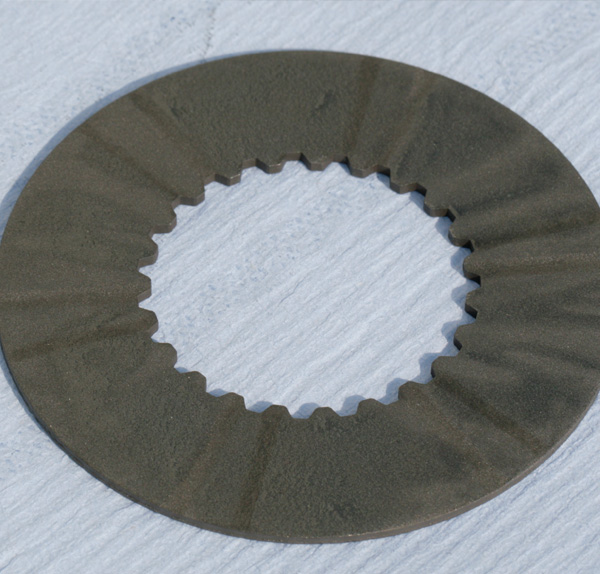
i recently heard from an active pro-drifter who also rebuilds a lot of lsd units, that the sinter ones are the more durable and more motorsport-approved discs. he said, moly is used for street cars only.
another source told me, sinter has more "stick-slip" effect and make more noise (what would be no problem in racing environments but will be in normal street cars).
and to make it totally confusing for me, zf used the sinter discs only in no-preload lsd units for street cars! you said, due to the wear-problem you would set them up with some preload to avoid ongoing re-adjusting.
here are two pictures of the discs i am talking of:
sinter disc:
molybdenum disc:
Last edited by coes; Aug 15, 2011 at 02:31 PM.
Former Vendor
Joined: Oct 2009
Posts: 513
From: Boulder, CO
Rep Power: 0
I mean no offense to your drifter friend, but what works well for drifting has nothing to do with what will work well for road racing. Unless your specific application is drifting, I'd take anything the guy tells you with a grain of salt.
For starters, drifters basically want a spool. If they aren't running a spool, they run a super tight stack. Whether that's a super high preload stack like a Porsche motorsports LSD or a low/no preload LSD like an OS Giken with 24 plates in it, the idea is the same. You want the LSD to lock pretty much immediately and not come unlocked until you rotate the car the other way, and immediately lock it again. Of course there's very little wear in that environment, if the LSD is stacked properly. If it's not, and is set like a 40% LSD, for example, there will be a lot of slip before it locks. That's where the wear in introduced. If you run an LSD in drifting at all loose or with low locking factors, you can shred the thing before the end of an event.
For road racing, most drivers don't have the requisite skills to handle a car with a spool. It will be faster in the right hands, but there are very few pairs of those hands in the world. And it's brutal on rubber as well. So what we have now, especially with significant improvements in recent years in chassis dynamics, rubber stickiness and ABS systems, is a desire for a less agressive LSD than has been favoured in the past. In fact, in just the last few years, Porsche has reduced the locking factor on the Cup Cars. They want the car to show more manueverability than it's had in the past. They have been systematically dialing out the corner entry push that has been the 911's trademark when it's got a lot of LSD tuned into it. Less is more now.
And in that environment, with steeper ramp angles and less locking factor, a sintered disc just doesn't work as effectively. It needs higher preload, and ultimately lower angle ramps to lock hard. And that's something the OEMs aren't putting in their LSDs. If you want to use sintered discs in your LSD, that's your right. I just don't consider it the maximum performance that you're able to get out of the LSD.
For starters, drifters basically want a spool. If they aren't running a spool, they run a super tight stack. Whether that's a super high preload stack like a Porsche motorsports LSD or a low/no preload LSD like an OS Giken with 24 plates in it, the idea is the same. You want the LSD to lock pretty much immediately and not come unlocked until you rotate the car the other way, and immediately lock it again. Of course there's very little wear in that environment, if the LSD is stacked properly. If it's not, and is set like a 40% LSD, for example, there will be a lot of slip before it locks. That's where the wear in introduced. If you run an LSD in drifting at all loose or with low locking factors, you can shred the thing before the end of an event.
For road racing, most drivers don't have the requisite skills to handle a car with a spool. It will be faster in the right hands, but there are very few pairs of those hands in the world. And it's brutal on rubber as well. So what we have now, especially with significant improvements in recent years in chassis dynamics, rubber stickiness and ABS systems, is a desire for a less agressive LSD than has been favoured in the past. In fact, in just the last few years, Porsche has reduced the locking factor on the Cup Cars. They want the car to show more manueverability than it's had in the past. They have been systematically dialing out the corner entry push that has been the 911's trademark when it's got a lot of LSD tuned into it. Less is more now.
And in that environment, with steeper ramp angles and less locking factor, a sintered disc just doesn't work as effectively. It needs higher preload, and ultimately lower angle ramps to lock hard. And that's something the OEMs aren't putting in their LSDs. If you want to use sintered discs in your LSD, that's your right. I just don't consider it the maximum performance that you're able to get out of the LSD.

Registered User
Joined: Mar 2010
Posts: 2,273
From: San Jose, CA
Rep Power: 193
Mikymu:
I'm glad this thread re-appeared. Just saw it over the weekend and checked my car...all is good thus far. Did you notice or recall if one side was a little more difficult to rotate than the other? Both sides were hard to move/rotate but the drivers side did seem to be a little stiffer/more difficult to do so.
Thanks for the great write-up and big props for being honest and posting your spins! That takes a real man...and scares me away from the sequential and a CUP for a while longer yet.
I'm glad this thread re-appeared. Just saw it over the weekend and checked my car...all is good thus far. Did you notice or recall if one side was a little more difficult to rotate than the other? Both sides were hard to move/rotate but the drivers side did seem to be a little stiffer/more difficult to do so.
Thanks for the great write-up and big props for being honest and posting your spins! That takes a real man...and scares me away from the sequential and a CUP for a while longer yet.
Thread Starter
|
Registered User
Joined: Apr 2008
Posts: 1,120
From: Rocklin, California
Rep Power: 134
Mikymu:
I'm glad this thread re-appeared. Just saw it over the weekend and checked my car...all is good thus far. Did you notice or recall if one side was a little more difficult to rotate than the other? Both sides were hard to move/rotate but the drivers side did seem to be a little stiffer/more difficult to do so.
Thanks for the great write-up and big props for being honest and posting your spins! That takes a real man...and scares me away from the sequential and a CUP for a while longer yet.
I'm glad this thread re-appeared. Just saw it over the weekend and checked my car...all is good thus far. Did you notice or recall if one side was a little more difficult to rotate than the other? Both sides were hard to move/rotate but the drivers side did seem to be a little stiffer/more difficult to do so.
Thanks for the great write-up and big props for being honest and posting your spins! That takes a real man...and scares me away from the sequential and a CUP for a while longer yet.
The wheel turning method I indicated tell you the state of your preload and it's an indirect way to gauge your LSD's health. Othr way to test is to do hard braking on the track - let's say right before turn 1 at Thunderhill. If you tail wag under hard braking then it usually means your LSD is long gone ...
I will be at Laguna Seca 9/9 to 9/11 ... stop by and should be a great show
Cheers
Mike
Last edited by mikymu; Aug 15, 2011 at 05:46 PM.