


Boost Leaks- how to find them... pics inside


Registered User

Joined: May 2009
Posts: 7,984
From: la
Rep Power: 608


perhaps the sound of the infamous and plastic #16 check valve leaking. all too common.

Registered User
Joined: Aug 2014
Posts: 544
From: Germany
Rep Power: 41
So, today i got some help to find the leak and it was one line from this cross connection sitting under the throttle body. No valve was damaged. Just this single line popped out at 1,8 bar . So we put everywhere zip ties and it holds the pressure now..no leak remaining, finally.
A friend of mine made a plate with a valve in it, to mount it directly onto the plenum, like the throttle body. Big advantage cause u can check all the lines while putting pressure into the system.
Just in time cause on sunday i drive at the hockenheimring again.
. So we put everywhere zip ties and it holds the pressure now..no leak remaining, finally. A friend of mine made a plate with a valve in it, to mount it directly onto the plenum, like the throttle body. Big advantage cause u can check all the lines while putting pressure into the system.
Just in time cause on sunday i drive at the hockenheimring again.



So, today i got some help to find the leak and it was one line from this cross connection sitting under the throttle body. No valve was damaged. Just this single line popped out at 1,8 bar. So we put everywhere zip ties and it holds the pressure now..no leak remaining, finally.
A friend of mine made a plate with a valve in it, to mount it directly onto the plenum, like the throttle body. Big advantage cause u can check all the lines while putting pressure into the system.
Just in time cause on sunday i drive at the hockenheimring again.
. So we put everywhere zip ties and it holds the pressure now..no leak remaining, finally. A friend of mine made a plate with a valve in it, to mount it directly onto the plenum, like the throttle body. Big advantage cause u can check all the lines while putting pressure into the system.
Just in time cause on sunday i drive at the hockenheimring again.

Registered User
Joined: Jan 2010
Posts: 874
From: Everywhere
Rep Power: 142
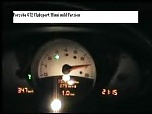
So I did a boost leak test from theY pipe. I had only done them from the turbos in the past. I videoed it...it looks like a pass to me. I couldn't hear anything. the pressure went down from 23psi relatively slowly. Once it went down to around 18psi it went down real slow it took about 10 minutes to get down to 10psi
20160327 092049 - YouTube
20160327 092049 - YouTube
So bringing this back a bit. So is there a concensus on what is considered acceptable when it comes to the example above? Should the system hold solid pressure when being pressurized from the Y-Pipe? What is considered a healthy system, 1 psi pressure drop over a 15-20 sec timeframe, 1 psi pressure drop over 30-40 sec timeframe, 1 psi pressure drop over 60 sec timeframe? Etc.

Banned
Joined: Dec 2008
Posts: 5,551
From: tn
Rep Power: 628
So bringing this back a bit. So is there a concensus on what is considered acceptable when it comes to the example above? Should the system hold solid pressure when being pressurized from the Y-Pipe? What is considered a healthy system, 1 psi pressure drop over a 15-20 sec timeframe, 1 psi pressure drop over 30-40 sec timeframe, 1 psi pressure drop over 60 sec timeframe? Etc.
i use a compressor and q/d on my testor. pressurize to 35 psi and cut the valve off. look for leaks and pressurize again. i find these testors to be awesome. just drilled and added a guage and quick disconnect in place of the schrader valve
Registered User
Joined: Jan 2010
Posts: 874
From: Everywhere
Rep Power: 142
Steve thanks for the response as always. Mechanically that makes sense to me, I kept reading members saying it was tight as a drum and most that reported back, rarely provided feedback on how the system held up pressure post the fixes. Mainly a way to quantify the results.

Registered User
Joined: Aug 2016
Posts: 105
From: CA
Rep Power: 27

Registered User
Joined: Jun 2007
Posts: 610
From: germany
Rep Power: 65
it is the most important thing....boost leak....how much money you ever invest...you loose at a boost leak...you are right and tell that evey one
since you will always have valves open there isnt a set time. what you are trying to accomplish is put pressure to the system and find the leaks that are external. oil cap and valves cant be stopped so you wont ever have a solid pressurized system. from 15-20 you will find leaks from 20 -35 you will find leaks you didnt find at 20 psi. soapy water is the key. bubbles equal leaks.
i use a compressor and q/d on my testor. pressurize to 35 psi and cut the valve off. look for leaks and pressurize again. i find these testors to be awesome. just drilled and added a guage and quick disconnect in place of the schrader valve
i use a compressor and q/d on my testor. pressurize to 35 psi and cut the valve off. look for leaks and pressurize again. i find these testors to be awesome. just drilled and added a guage and quick disconnect in place of the schrader valve

Registered User
Joined: May 2008
Posts: 417
From: Fayetteville, AR
Rep Power: 101
I just did this yesterday. Lowes - 2 two inch couplers, 2 pvc caps, a gauge, and a valve or quick connect. Use the existing black couplers on turbo inlets. Place those inside of the Lowes couplers for fit.
See this thread. Easy peezy.
https://www.6speedonline.com/forums/...ig-w-pics.html
See this thread. Easy peezy.
https://www.6speedonline.com/forums/...ig-w-pics.html

Registered User
Joined: Sep 2012
Posts: 282
Rep Power: 27
Wow... Long (and old) thread, but tons of GREAT info.
I've been working through boost testing, identifying leaks, ordering parts, installing, testing more, etc since right now the weather is crappy...
So far I've replaced:
Note that some of the parts that I replaced preventatively really weren't fully tested and might of in fact leaked under higher pressure... Can't really test for small leaks when you are having big ones like the #16 check valve, and it seemed crazy to pull everything apart to replace #16 and not replace the TB o-ring, etc. I did test my old diverter valves on the bench once they were out, they were fine, but for $100/pr, I swapped in the 710N's
Got everything installed, (some of those clamps and hoses are a #$&*%! to get off!) zip-tied all small vacuum/boost lines, replaced many of the existing worm drive clamps and spring clamps with German Norma worm drive clamps.
Still need to inspect and hopefully zip tie the fuel pressure regulator vacuum line, but it's buried with the air pump in the way and I just can't get to it... Will probably bite the bullet and unbolt the pump to improve access.
I'm still getting a bit of indeterminate pressure loss when pressure testing, but I'm pretty sure it's because I'm pressurizing from the intake side of the Turbo's. I hear hissing in the intake tube, but not from the diverters, so it sounds exactly like what is described above, pressure leaking from the turbo's themselves into the oil system and then into the intake plumbing.
I really would like to test from the turbo-to-intercooler pipes but I can't find anything locally the right size to make a tester out of and never plan far enough ahead to order Markski's test kit :-)
At any rate, thanks for all who have contributed the GREAT info in this thread. I now feel at one with my Turbo pressure/vacuum plumbing!
I've been working through boost testing, identifying leaks, ordering parts, installing, testing more, etc since right now the weather is crappy...
So far I've replaced:
- #16 check valve. Completely blown. (996.110.135.70)
- Venturi tube 'suction jet pump'. Bubbled under pressure. (996.110.652.70)
- Small check valve to diverter controller. Leaked under pressure (964.110.950.02)
- Small check valve to vacuum 4-way. Preventative. (964.110.950.02)
- N75 boost control/'frequency' valve. Didn't leak, but mounting tab was broken. (996.605.155.00)
- Diverter valves. Preventative, replaced with 710N diverters.
- F-pipe. Preventative, replaced with Forge silicone.
- Throttle body gasket. Preventative. (996.110.318.02)
- Airbox connector hose. Slight tear. (996.110.621.70)
- Boost hose to Y Pipe O-rings. Preventative. (996.106.801.06)
Note that some of the parts that I replaced preventatively really weren't fully tested and might of in fact leaked under higher pressure... Can't really test for small leaks when you are having big ones like the #16 check valve, and it seemed crazy to pull everything apart to replace #16 and not replace the TB o-ring, etc. I did test my old diverter valves on the bench once they were out, they were fine, but for $100/pr, I swapped in the 710N's
Got everything installed, (some of those clamps and hoses are a #$&*%! to get off!) zip-tied all small vacuum/boost lines, replaced many of the existing worm drive clamps and spring clamps with German Norma worm drive clamps.
Still need to inspect and hopefully zip tie the fuel pressure regulator vacuum line, but it's buried with the air pump in the way and I just can't get to it... Will probably bite the bullet and unbolt the pump to improve access.
I'm still getting a bit of indeterminate pressure loss when pressure testing, but I'm pretty sure it's because I'm pressurizing from the intake side of the Turbo's. I hear hissing in the intake tube, but not from the diverters, so it sounds exactly like what is described above, pressure leaking from the turbo's themselves into the oil system and then into the intake plumbing.
I really would like to test from the turbo-to-intercooler pipes but I can't find anything locally the right size to make a tester out of and never plan far enough ahead to order Markski's test kit :-)
At any rate, thanks for all who have contributed the GREAT info in this thread. I now feel at one with my Turbo pressure/vacuum plumbing!
Last edited by pfbz; Jan 16, 2018 at 10:11 PM.

Registered User
Joined: Feb 2011
Posts: 1,104
From: Orange County, CA
Rep Power: 182
Wow... Long (and old) thread, but tons of GREAT info.
I've been working through boost testing, identifying leaks, ordering parts, installing, testing more, etc since right now the weather is crappy...
So far I've replaced:
Note that some of the parts that I replaced preventatively really weren't fully tested and might of in fact leaked under higher pressure... Can't really test for small leaks when you are having big ones like the #16 check valve, and it seemed crazy to pull everything apart to replace #16 and not replace the TB o-ring, etc. I did test my old diverter valves on the bench once they were out, they were fine, but for $100/pr, I swapped in the 710N's
Got everything installed, (some of those clamps and hoses are a #$&*%! to get off!) zip-tied all small vacuum/boost lines, replaced many of the existing worm drive clamps and spring clamps with German Norma worm drive clamps.
Still need to inspect and hopefully zip tie the fuel pressure regulator vacuum line, but it's buried with the air pump in the way and I just can't get to it... Will probably bite the bullet and unbolt the pump to improve access.
I'm still getting a bit of indeterminate pressure loss when pressure testing, but I'm pretty sure it's because I'm pressurizing from the intake side of the Turbo's. I hear hissing in the intake tube, but not from the diverters, so it sounds exactly like what is described above, pressure leaking from the turbo's themselves into the oil system and then into the intake plumbing.
I really would like to test from the turbo-to-intercooler pipes but I can't find anything locally the right size to make a tester out of and never plan far enough ahead to order Markski's test kit :-)
At any rate, thanks for all who have contributed the GREAT info in this thread. I now feel at one with my Turbo pressure/vacuum plumbing!
I've been working through boost testing, identifying leaks, ordering parts, installing, testing more, etc since right now the weather is crappy...
So far I've replaced:
- #16 check valve. Completely blown. (996.110.135.70)
- Venturi tube 'suction jet pump'. Bubbled under pressure. (996.110.652.70)
- Small check valve to diverter controller. Leaked under pressure (964.110.950.02)
- Small check valve to vacuum 4-way. Preventative. (964.110.950.02)
- N75 boost control/'frequency' valve. Didn't leak, but mounting tab was broken. (996.605.155.00)
- Diverter valves. Preventative, replaced with 710N diverters.
- F-pipe. Preventative, replaced with Forge silicone.
- Throttle body gasket. Preventative. (996.110.318.02)
- Airbox connector hose. Slight tear. (996.110.621.70)
- Boost hose to Y Pipe O-rings. Preventative. (996.106.801.06)
Note that some of the parts that I replaced preventatively really weren't fully tested and might of in fact leaked under higher pressure... Can't really test for small leaks when you are having big ones like the #16 check valve, and it seemed crazy to pull everything apart to replace #16 and not replace the TB o-ring, etc. I did test my old diverter valves on the bench once they were out, they were fine, but for $100/pr, I swapped in the 710N's
Got everything installed, (some of those clamps and hoses are a #$&*%! to get off!) zip-tied all small vacuum/boost lines, replaced many of the existing worm drive clamps and spring clamps with German Norma worm drive clamps.
Still need to inspect and hopefully zip tie the fuel pressure regulator vacuum line, but it's buried with the air pump in the way and I just can't get to it... Will probably bite the bullet and unbolt the pump to improve access.
I'm still getting a bit of indeterminate pressure loss when pressure testing, but I'm pretty sure it's because I'm pressurizing from the intake side of the Turbo's. I hear hissing in the intake tube, but not from the diverters, so it sounds exactly like what is described above, pressure leaking from the turbo's themselves into the oil system and then into the intake plumbing.
I really would like to test from the turbo-to-intercooler pipes but I can't find anything locally the right size to make a tester out of and never plan far enough ahead to order Markski's test kit :-)
At any rate, thanks for all who have contributed the GREAT info in this thread. I now feel at one with my Turbo pressure/vacuum plumbing!

Thread
Thread Starter
Forum
Replies
Last Post
PelicanParts.com
Cayenne 955/957 Vendor Classifieds
0
Aug 26, 2015 04:25 PM
PelicanParts.com
Cayenne Turbo Vendor Classifieds
0
Aug 26, 2015 04:24 PM
