When you click on links to various merchants on this site and make a purchase, this can result in this site earning a commission. Affiliate programs and affiliations include, but are not limited to, the eBay Partner Network.
Is this as risky as it sounds? Assuming decent service history etc etc.
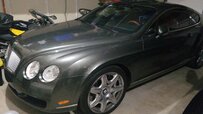
Looking at a 2006 car, so should have no vac pipe issues, I want to avoid anything 04-05.
In the UK, these are now under £20k for 100k mile cars.
I know there is a BIG psychological issue with 100k miles and I think that a Conti W12 should run perfectly, way past that, but there are not many cars about with over 100k miles for sale in the UK. I'd be interested in hearing from anyone who's owned on from say 75k to 150k miles.
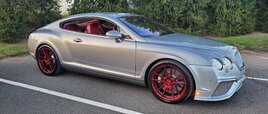
2nd Gen (20111) cars with under 75k miles are 'only' another £15-£20k. (OK thats double the price of an 06 but still a small fraction of the new price!). Is the extra money worth it or is a more expenive car just more money to lose when time comes to re-sell?
I am having trouble deciding whats a better bet.
Obviously an 06 with masses of history, that's had all the expensive stuff done (brakes, suspension, belts, sensors) is going to be a better bet than a 2011 which is about to need all these things doing but in general, are 2nd gen cars better?
Hello Rich,
I believe you are misinformed as to the vacuum lines on a 2006 GT, it's not just the lines that were over the transmission, the 2003 to early/mid 2006 GT's have the vacuum lines over the transmission that fail, BUT they also have lines at the rear of the intake and along the firewall behind the steering rack that fail, so even if you picked up a 2007 or newer GT with the vacuum lines and solenoids over the trans rerouted to up behind the intake under the "B" logo, you would still have the issue of these lines along the firewall and intake failing, as others on here have had fail, just for knowledge, the 2006 and up Flying Spur never had the lines or solenoids over the transmission, but still had the same lines as the GT along the firewall and behind the intake, and they have failed also.
Is this as risky as it sounds? Assuming decent service history etc etc.
Looking at a 2006 car, so should have no vac pipe issues, I want to avoid anything 04-05.
In the UK, these are now under £20k for 100k mile cars.
I know there is a BIG psychological issue with 100k miles and I think that a Conti W12 should run perfectly, way past that, but there are not many cars about with over 100k miles for sale in the UK. I'd be interested in hearing from anyone who's owned on from say 75k to 150k miles.
2nd Gen (20111) cars with under 75k miles are 'only' another £15-£20k. (OK thats double the price of an 06 but still a small fraction of the new price!). Is the extra money worth it or is a more expenive car just more money to lose when time comes to re-sell?
I am having trouble deciding whats a better bet.
Obviously an 06 with masses of history, that's had all the expensive stuff done (brakes, suspension, belts, sensors) is going to be a better bet than a 2011 which is about to need all these things doing but in general, are 2nd gen cars better?
Cheers!
Last edited by Johnny Hotspur GT; Jan 28, 2020 at 06:59 AM.
Hello Rich,
I believe you are misinformed as to the vacuum lines on a 2006 GT, it's not just the lines that were over the transmission, the 2003 to early/mid 2006 GT's have the vacuum lines over the transmission that fail, BUT they also have lines at the rear of the intake and along the firewall behind the steering rack that fail, so even if you picked up a 2007 or newer GT with the vacuum lines and solenoids over the trans rerouted to up behind the intake under the "B" logo, you would still have the issue of these lines along the firewall and intake failing, as others on here have had fail, just for knowledge, the 2006 and up Flying Spur never had the lines or solenoids over the transmission, but still had the same lines as the GT along the firewall and behind the intake, and they have failed also.
I didn't know about the OTHER vac pipes! Although I did read about removal of the rack instead of the engine. I assumed this was a cheaper method of repair over engine out. I see that some pipes have been patched with epoxy, probably on the end of a long stick!
So the Vac pipes can go on any model that hasn't had stainless pipes fitted? Do they fail with time or mileage or both? I would assume mileage as they go brittle with heat or do they deterioate with time too?
Just wondering if an an 06 car could still have this ticking timebomb or are most cars of 13 years plus age likely to have had them fail by now? If there's no sign of all the vac pipes being replaced on the service history, I should avoid like the plague then?
Do you have a gut feeling for the MTBF of these plastic pipes? Would it be possible for them to last 15 years without failing and then to fail a year later?
I see that some pipes have been patched with epoxy, probably on the end of a long stick!
Just a side comment here (and looking for verification or otherwise): I too have seen plastic vacuum lines patched with epoxy, and of those, my assessment was 100% failure... as in: bubble gum likely would have actually worked better. I understand there are epoxies specially formulated to bond with certain types of plastic... but to me: Seeing a generic epoxy bandaid on a plastic vacuum line (that you can flick the epoxy off with a pocket knife) raises questions about the relative skill of whoever would do that.
I'd just buy the best maintained yet fully depreciated car you can and stick $8k in the bank in case it ever needs vacuum lines. At the end of the day you're still getting a $165k+ car for like 25% of its original cost.
I'd just buy the best maintained yet fully depreciated car you can and stick $8k in the bank in case it ever needs vacuum lines. At the end of the day you're still getting a $165k+ car for like 25% of its original cost.
To add to that $8k, I would probably make it more like $10k for a cushion. Might as well change the starter, O2 sensors and a few other things I can’t remember but requires the engine to come out. (It’s a thread about it somewhere)
Try to get together a list of things that require the engine to be removed to change and go from there.
Here is a quote I received from a guy that is the go to guy in the NYC area. He is very respected in here but don’t post. Past members have used him and speaks highly of him.
Last edited by TeamJones1962; Jan 28, 2020 at 03:06 PM.
To add to that $8k, I would probably make it more like $10k for a cushion. Might as well change the starter, O2 sensors and a few other things I can’t remember but requires the engine to come out. (It’s a thread about it somewhere)
Try to get together a list of things that require the engine to be removed to change and go from there.
Here is a quote I received from a guy that is the go to guy in the NYC area. He is very respected in here but don’t post. Past members have used him and speaks highly of him.
Also the $2 seals in the water cooling pipes to the alternator! These fail and wreck the alternator...
Worth adding all the belts and tensioners to that list too?
To add to that $8k, I would probably make it more like $10k for a cushion. Might as well change the starter, O2 sensors and a few other things I can’t remember but requires the engine to come out. (It’s a thread about it somewhere)
Try to get together a list of things that require the engine to be removed to change and go from there.
Here is a quote I received from a guy that is the go to guy in the NYC area. He is very respected in here but don’t post. Past members have used him and speaks highly of him.
Who is this guy people recommend? Also does he cross reference parts with the equivalent VW/Audi parts? Ie a Bentley dealer may charge 600 for the batteries when same batteries are about half at a VW dealer.
Sure if you like to get siphoned by depreciation instead.
You can pay more upfront or pay less then pay it on the back end. The cars he's mentioned both are heavily depreciated already we aren't comparing a 2016 to a 2006.