997.2 Intercoolers - Wow!



Registered User

Joined: Jul 2008
Posts: 1,751
From: Warwickshire, England
Rep Power: 141


Earl, I have spoken with you previously regarding ICs and intake piping (albeit very briefly)
Would you consider testing air pressure before and after the intercooler, swell as testing their cfm rating on a flowbench? - you would then have all the relevant info you should require
Would you consider testing air pressure before and after the intercooler, swell as testing their cfm rating on a flowbench? - you would then have all the relevant info you should require

Registered User
Joined: Jul 2008
Posts: 1,751
From: Warwickshire, England
Rep Power: 141
[QUOTE=cjv;3003046]Here is a CAD/flow bench/pton IC designed, built and tested back in 2003. Unfortunately they we no longer handle KA's new requirements.  We require larger cores and tubing size, however the new IC's will follow the same tank principles and they will be coated.
Note the reduction incorporated for the last few rows, the vacuum principle along with the smooth reduced curve transition associated. Also note how they transition from the center to the outside along the width ..... all in the name of forcing air equally to all IC tubes. If you want to learn more about these principles read A. Graham Bell's book Forced Induction Tuning. There is a section dedicated to IC principle's that is a very good read.
OTE]
Good Lord!!
Given the fitment/application restrictions in our cars (ie, core width & pipe bends) those things look almost perfect!
Do you mind sharing their cfm rating?
Thanks
We require larger cores and tubing size, however the new IC's will follow the same tank principles and they will be coated.Note the reduction incorporated for the last few rows, the vacuum principle along with the smooth reduced curve transition associated. Also note how they transition from the center to the outside along the width ..... all in the name of forcing air equally to all IC tubes. If you want to learn more about these principles read A. Graham Bell's book Forced Induction Tuning. There is a section dedicated to IC principle's that is a very good read.
OTE]
Good Lord!!
Given the fitment/application restrictions in our cars (ie, core width & pipe bends) those things look almost perfect!
Do you mind sharing their cfm rating?
Thanks
Last edited by cjv; May 6, 2022 at 03:04 PM.


here is what I have on mine... 60 to 130 and 1/4 within a few weeks... we will see if bigger is not better lol

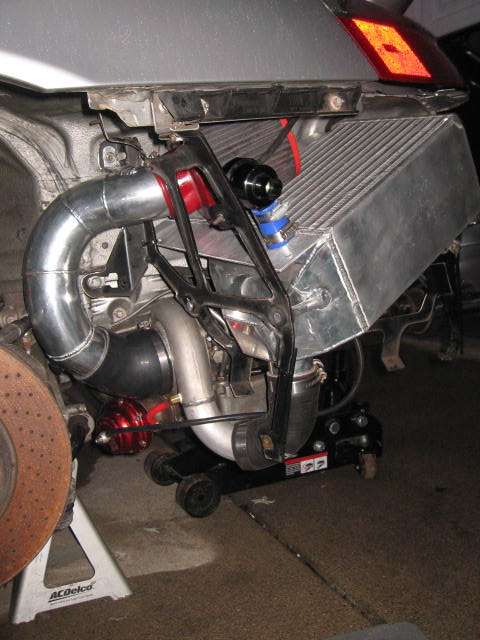
Uploaded with ImageShack.us


Uploaded with ImageShack.us
__________________

2001 996TT 3.6L and stock ECU
9.66 seconds @ 147.76 mph 1/4 mile click to view
160 mph @ 9.77 seconds in 1/4 mile click to view
50% OFF ON PORSCHE ECU TUNING BLACK FRIDAY SPECIAL
2001 996TT 3.6L and stock ECU
9.66 seconds @ 147.76 mph 1/4 mile click to view
160 mph @ 9.77 seconds in 1/4 mile click to view
50% OFF ON PORSCHE ECU TUNING BLACK FRIDAY SPECIAL

Registered User
Joined: Dec 2007
Posts: 1,671
From: Athens
Rep Power: 135
This is by far the best thread regarding ICs...In my car with stock ICs IAT climbed to 70c for a run from 50 to 250km...I had the chance to try two different aftermarket brands of ICs...and guess what...they were worse...However one of them was a real proffesional and refunded them for me...997,1TT ICs lower their temps very fast when let go off the gas...But they also raise their temp very fast...Small turbos like k16 or 16g or stock VTG units gets pushed hard to produce a lot of pressure and so they produce more heat than larger turbos...I believe by the end of the week i will have logs of these ICs compared to stock 997,1TT ICs on VTG units with APR software...
Registered User
Joined: Apr 2008
Posts: 5,214
From: Colorado
Rep Power: 398
This is by far the best thread regarding ICs...In my car with stock ICs IAT climbed to 70c for a run from 50 to 250km...I had the chance to try two different aftermarket brands of ICs...and guess what...they were worse...However one of them was a real proffesional and refunded them for me...997,1TT ICs lower their temps very fast when let go off the gas...But they also raise their temp very fast...Small turbos like k16 or 16g or stock VTG units gets pushed hard to produce a lot of pressure and so they produce more heat than larger turbos...I believe by the end of the week i will have logs of these ICs compared to stock 997,1TT ICs on VTG units with APR software...
I think that there can be inconsistency from IC to IC in the same brand. Plastic end tanks will not normally seal better than a welded aluminum end tank, so you have a greater chance for loss there.
Registered User
Joined: Apr 2008
Posts: 5,214
From: Colorado
Rep Power: 398
But the end tanks are not in a high heat area and since you want heat to transfer away from the media inside the tank, metal transfers better than plastic, so I would think metal construction adds a little more heat transfer to the mix.
Registered User
Joined: Jul 2008
Posts: 1,751
From: Warwickshire, England
Rep Power: 141
That would only be true if the end tanks are in a high heat area.
But the end tanks are not in a high heat area and since you want heat to transfer away from the media inside the tank, metal transfers better than plastic, so I would think metal construction adds a little more heat transfer to the mix.
But the end tanks are not in a high heat area and since you want heat to transfer away from the media inside the tank, metal transfers better than plastic, so I would think metal construction adds a little more heat transfer to the mix.
The metal end tanks would be better heat conductors than the plastic ones....but could this mean they heat themselves up? becoming heat soaked and saturated?
I think the metal items would take heat from the air to begin with, but may not be able to dissipate this heat into the surrounding atmosphere....the heat soaked end tanks would therefore no longer be as efficient as they once were
I may be completely wrong here, just trying to look at things from a different perspective
Registered User
Joined: Apr 2008
Posts: 5,214
From: Colorado
Rep Power: 398
Earls charts show the 997.1 intercoolers at over 60*c.....I do not know whether that is considered a high heat area or not?
The metal end tanks would be better heat conductors than the plastic ones....but could this mean they heat themselves up? becoming heat soaked and saturated?
I think the metal items would take heat from the air to begin with, but may not be able to dissipate this heat into the surrounding atmosphere....the heat soaked end tanks would therefore no longer be as efficient as they once were
I may be completely wrong here, just trying to look at things from a different perspective
The metal end tanks would be better heat conductors than the plastic ones....but could this mean they heat themselves up? becoming heat soaked and saturated?
I think the metal items would take heat from the air to begin with, but may not be able to dissipate this heat into the surrounding atmosphere....the heat soaked end tanks would therefore no longer be as efficient as they once were
I may be completely wrong here, just trying to look at things from a different perspective


Registered User
Joined: Apr 2010
Posts: 237
From: Ventura, CA
Rep Power: 27
The purpose of the IC is to cool /dissipate turbo heat as quick and efficient as possible. Naturally, one would want to have as much control as possible of how that is done. Flow restriction relates to the process being slowed down. Another issue is heat transfer into areas that can retain that heat, because this will slow down recovery. Plastic is a poor heat conductor and therefore keeps heat contained to the heat exchanger core, resulting in overall better efficiency in recovery /dissipation. Plastic end tank manufacture is cost prohibitive for other than OE development, very expensive tooling. Given a choice between metal and plastic, my vote is for plastic intake/exit - all else being equal.

Thread Starter
|
Registered User
Joined: Aug 2009
Posts: 823
From: Mojave, CA
Rep Power: 133
^ what he said I think we're in the weeds as far as the effects of heat transfer into/out of the end tanks on overall temps -you could argue it either way as both materials have pros & cons. IMO, as long as they distribute the air effectively into the core and physically withstand the rigors of forced induction, they're doing their job.
...finishing up the duct mod writeup now
I think we're in the weeds as far as the effects of heat transfer into/out of the end tanks on overall temps -you could argue it either way as both materials have pros & cons. IMO, as long as they distribute the air effectively into the core and physically withstand the rigors of forced induction, they're doing their job....finishing up the duct mod writeup now