


Underbody panel stud break--Pics


Thread Starter
|
Registered User
Joined: Aug 2005
Posts: 623
From: Monterey County
Rep Power: 56


Underbody panel stud break--Pics
One of the studs on the bottom of the car that allows fastening of one underpanel broke off. Is there any fix for this?

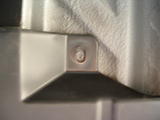


Last edited by dtmarsh; Feb 7, 2008 at 06:20 PM. Reason: pic was missing


Registered User
Joined: Dec 2006
Posts: 334
From: California
Rep Power: 37
These studs are spot welded on.
I would perform the following:
1. Clean off both sides of the pan/base metal. Maybe an area about 3-4" in diameter.
2. Find a screw or bolt and grind the head down to about .08 to .10" in height.
3. Strip the plating off the bold.
4. Fit the head to the body (More Grinding)
5. Spot weld, gas weld, or tig weld around the new stud. Electric Spot Welding would be the best. Much less heat is exposed to the area.
Note: If you gas weld, I suggest some heat block materials to keep heat from burning the surrounding area. Tack weld small spots and let it cool between tacks.
I would perform the following:
1. Clean off both sides of the pan/base metal. Maybe an area about 3-4" in diameter.
2. Find a screw or bolt and grind the head down to about .08 to .10" in height.
3. Strip the plating off the bold.
4. Fit the head to the body (More Grinding)
5. Spot weld, gas weld, or tig weld around the new stud. Electric Spot Welding would be the best. Much less heat is exposed to the area.
Note: If you gas weld, I suggest some heat block materials to keep heat from burning the surrounding area. Tack weld small spots and let it cool between tacks.

Thread Starter
|
Registered User
Joined: Aug 2005
Posts: 623
From: Monterey County
Rep Power: 56
It just popped off as I was tighteing after replacing the plastic underbody panel.


Registered User
Joined: Jan 2007
Posts: 2,981
From: N. California
Rep Power: 298
These studs are spot welded on.
I would perform the following:
1. Clean off both sides of the pan/base metal. Maybe an area about 3-4" in diameter.
2. Find a screw or bolt and grind the head down to about .08 to .10" in height.
3. Strip the plating off the bold.
4. Fit the head to the body (More Grinding)
5. Spot weld, gas weld, or tig weld around the new stud. Electric Spot Welding would be the best. Much less heat is exposed to the area.
Note: If you gas weld, I suggest some heat block materials to keep heat from burning the surrounding area. Tack weld small spots and let it cool between tacks.
I would perform the following:
1. Clean off both sides of the pan/base metal. Maybe an area about 3-4" in diameter.
2. Find a screw or bolt and grind the head down to about .08 to .10" in height.
3. Strip the plating off the bold.
4. Fit the head to the body (More Grinding)
5. Spot weld, gas weld, or tig weld around the new stud. Electric Spot Welding would be the best. Much less heat is exposed to the area.
Note: If you gas weld, I suggest some heat block materials to keep heat from burning the surrounding area. Tack weld small spots and let it cool between tacks.
Add:
Clean up welds with grinder as requried
Reapply rust inhibitive primer and undercoat
Trending Topics

Registered User
Joined: Jun 2005
Posts: 86
Rep Power: 24
That is quite the pain in the behind for what is a rather flimsy stud. Get access on both sides (as required for the welding approach). Get an appropriately sized bolt (length and diameter), nut, fender washer (if you please) and some sealer. Drill small hole install items with sealer. If you ever feel like it it can be welded later on in the meantime its fixed and you can forget about it.
Last edited by killerbee; Feb 7, 2008 at 11:42 PM.
Thread Starter
|
Registered User
Joined: Aug 2005
Posts: 623
From: Monterey County
Rep Power: 56
These studs are spot welded on.
I would perform the following:
1. Clean off both sides of the pan/base metal. Maybe an area about 3-4" in diameter.
2. Find a screw or bolt and grind the head down to about .08 to .10" in height.
3. Strip the plating off the bold.
4. Fit the head to the body (More Grinding)
5. Spot weld, gas weld, or tig weld around the new stud. Electric Spot Welding would be the best. Much less heat is exposed to the area.
Note: If you gas weld, I suggest some heat block materials to keep heat from burning the surrounding area. Tack weld small spots and let it cool between tacks.
I would perform the following:
1. Clean off both sides of the pan/base metal. Maybe an area about 3-4" in diameter.
2. Find a screw or bolt and grind the head down to about .08 to .10" in height.
3. Strip the plating off the bold.
4. Fit the head to the body (More Grinding)
5. Spot weld, gas weld, or tig weld around the new stud. Electric Spot Welding would be the best. Much less heat is exposed to the area.
Note: If you gas weld, I suggest some heat block materials to keep heat from burning the surrounding area. Tack weld small spots and let it cool between tacks.
Thread Starter
|
Registered User
Joined: Aug 2005
Posts: 623
From: Monterey County
Rep Power: 56
That is quite the pain in the behind for what is a rather flimsy stud. Get access on both sides (as required for the welding approach). Get an appropriately sized bolt (length and diameter), nut, fender washer (if you please) and some sealer. Drill small hole install items with sealer. If you ever feel like it it can be welded later on in the meantime its fixed and you can forget about it.
Another great idea.
Thread Starter
|
Registered User
Joined: Aug 2005
Posts: 623
From: Monterey County
Rep Power: 56


Thread
Thread Starter
Forum
Replies
Last Post
johnny.dangerous
996 Turbo / GT2
6
Sep 11, 2015 02:39 PM
