


Best INTERCOOLERS - PLUG & PLAY

Registered User
Joined: Dec 2003
Posts: 3,597
From: Texas
Rep Power: 205


Just for arguments sake, I would like to see some data like this to see what if any testing has actually been done.
A huge core and some fancy welds hardly make an effective intercooler.
This is taken directly from our web site:
Data was collected on our Mustang MD-AWD-500-SE AWD dynamometer, on the street, and on various race tracks, using dual Omega DPi temperature meters outputting to the dyno's integrated data acquisition, and via a portable lab grade datalogger. Several runs were made recording temperatures and pressures before and after the stock and AWE Tuning intercooler assemblies and then averaged, with graphs of the changes shown below. All tests were done on our in house 2007 997TT with a prototype 700S turbo kit installed. 93 octane fuel was used for all tests.
Below: Temperature drop is the measurement of how much heat the intercooler is able to remove from the intake air. The higher the temperature drop, the denser the air charge, resulting in more power and less tendency for detonation in the cylinders. Our design was able to hold intake air temperatures to a maximum of just 20F higher than the start of the run vs a 65F climb with the stock intercoolers.

Below: Large intercoolers can do well in reducing intake air temperatures, but they can also introduce a lot of restriction to the intake air. That restriction will result in power loss even with the improved temps. Too much intake flow restriction means the turbo cannot deliver as much boost to the engine. Bigger is not always better with intercoolers. Our design excells in temperature drops and also in how pressure restriction is minimized to levels 1 psi less than the stock configuration.

A huge core and some fancy welds hardly make an effective intercooler.
This is taken directly from our web site:
Data was collected on our Mustang MD-AWD-500-SE AWD dynamometer, on the street, and on various race tracks, using dual Omega DPi temperature meters outputting to the dyno's integrated data acquisition, and via a portable lab grade datalogger. Several runs were made recording temperatures and pressures before and after the stock and AWE Tuning intercooler assemblies and then averaged, with graphs of the changes shown below. All tests were done on our in house 2007 997TT with a prototype 700S turbo kit installed. 93 octane fuel was used for all tests.
Below: Temperature drop is the measurement of how much heat the intercooler is able to remove from the intake air. The higher the temperature drop, the denser the air charge, resulting in more power and less tendency for detonation in the cylinders. Our design was able to hold intake air temperatures to a maximum of just 20F higher than the start of the run vs a 65F climb with the stock intercoolers.
Below: Large intercoolers can do well in reducing intake air temperatures, but they can also introduce a lot of restriction to the intake air. That restriction will result in power loss even with the improved temps. Too much intake flow restriction means the turbo cannot deliver as much boost to the engine. Bigger is not always better with intercoolers. Our design excells in temperature drops and also in how pressure restriction is minimized to levels 1 psi less than the stock configuration.
Sincerely
Robert


From my experience and I have had a handful of P cars between myself and Bobby, Our 4.5 inch ICs work pretty well.... I dynoed almost 1000 rwhp with 900 rwtq. Bobbys has dynoed impressive numbers as well on 4.5 inch ICs... we have ran a 9 second run 3 years ago and currently stlll hold the 60 to 130 record... all this on the 4.5 inch IC....
The 4.5s are not for someone with a K24 turbo... it really is just one important and usually overlooked component on a kit that usually is pushing 700+ hp.... i do believe that the 3.5 inch ICs are great as well... but the restriction is not the thickness ... its in the the stock connection.... that is why using bigger OD hoses helps..
mark
The 4.5s are not for someone with a K24 turbo... it really is just one important and usually overlooked component on a kit that usually is pushing 700+ hp.... i do believe that the 3.5 inch ICs are great as well... but the restriction is not the thickness ... its in the the stock connection.... that is why using bigger OD hoses helps..
mark
__________________

2001 996TT 3.6L and stock ECU
9.66 seconds @ 147.76 mph 1/4 mile click to view
160 mph @ 9.77 seconds in 1/4 mile click to view
50% OFF ON PORSCHE ECU TUNING BLACK FRIDAY SPECIAL
2001 996TT 3.6L and stock ECU
9.66 seconds @ 147.76 mph 1/4 mile click to view
160 mph @ 9.77 seconds in 1/4 mile click to view
50% OFF ON PORSCHE ECU TUNING BLACK FRIDAY SPECIAL

What I am saying is, when you are looking to buy an intercooler, at the very least, the supplier should have data like this readily available.
Mike i am sure your IC' work very well for a stock replacement IC on a K16 or K24
I had the B6 before i went with 911Tuning's New street car package.
The B6 are a good, not amazing cooler to say the least. i had them on my K24 set up.
I went out and Data logged for Todd a run with the New IC's and at WOT i had a graph reading or a +1.5 degree intake charge, I don't care what anyone says but that is a very good flowing 4.5" core IC at 94 degrees outside air.
Your in a tough market to say the least because there are a few very good stock replacements out there from VIVID, Protomotive, EVOMS
Good luck with your product Mike.
I had the B6 before i went with 911Tuning's New street car package.
The B6 are a good, not amazing cooler to say the least. i had them on my K24 set up.
I went out and Data logged for Todd a run with the New IC's and at WOT i had a graph reading or a +1.5 degree intake charge, I don't care what anyone says but that is a very good flowing 4.5" core IC at 94 degrees outside air.
Your in a tough market to say the least because there are a few very good stock replacements out there from VIVID, Protomotive, EVOMS
Good luck with your product Mike.
Last edited by UrbanHotrod; Sep 21, 2009 at 10:36 AM.


With all that said, I do agree with Mike that bigger is not always better...especially for guys running smaller set ups... (my 4.5 inch ICs are not direct replacement either)... I But they do work on higher HP cars very well...
__________________
2001 996TT 3.6L and stock ECU
9.66 seconds @ 147.76 mph 1/4 mile click to view
160 mph @ 9.77 seconds in 1/4 mile click to view
50% OFF ON PORSCHE ECU TUNING BLACK FRIDAY SPECIAL
2001 996TT 3.6L and stock ECU
9.66 seconds @ 147.76 mph 1/4 mile click to view
160 mph @ 9.77 seconds in 1/4 mile click to view
50% OFF ON PORSCHE ECU TUNING BLACK FRIDAY SPECIAL
direct fit stock replacements will work well... Like Awe's....
__________________
2001 996TT 3.6L and stock ECU
9.66 seconds @ 147.76 mph 1/4 mile click to view
160 mph @ 9.77 seconds in 1/4 mile click to view
50% OFF ON PORSCHE ECU TUNING BLACK FRIDAY SPECIAL
2001 996TT 3.6L and stock ECU
9.66 seconds @ 147.76 mph 1/4 mile click to view
160 mph @ 9.77 seconds in 1/4 mile click to view
50% OFF ON PORSCHE ECU TUNING BLACK FRIDAY SPECIAL
Registered User
Joined: Apr 2008
Posts: 5,214
From: Colorado
Rep Power: 398
that stock IC end tank is horrible. I have two sets of stock IC's and my end tanks are much larger than that. Why is there such a difference. was that the first year turbo or something?


Moderator


Joined: Jul 2003
Posts: 22,235
Rep Power: 1227
Mike i am sure your IC' work very well for a stock replacement IC on a K16 or K24
I had the B6 before i went with 911Tuning's New street car package.
The B6 are a good, not amazing cooler to say the least. i had them on my K24 set up.
I went out and Data logged for Todd a run with the New IC's and at WOT i had a graph reading or a +1.5 degree intake charge, I don't care what anyone says but that is a very good flowing 4.5" core IC at 94 degrees outside air.
Your in a tough market to say the least because there are a few very good stock replacements out there from VIVID, Protomotive, EVOMS
Good luck with your product Mike.
I had the B6 before i went with 911Tuning's New street car package.
The B6 are a good, not amazing cooler to say the least. i had them on my K24 set up.
I went out and Data logged for Todd a run with the New IC's and at WOT i had a graph reading or a +1.5 degree intake charge, I don't care what anyone says but that is a very good flowing 4.5" core IC at 94 degrees outside air.
Your in a tough market to say the least because there are a few very good stock replacements out there from VIVID, Protomotive, EVOMS
Good luck with your product Mike.
The way the tanks taper plays an important part. In addition, there is a point where thickness of the core actually does more damage than good.
Point is with anyone who makes this product. Show me the graphs and numbers. Then tell me how good they are. This is not a slight against anyone, but without this information you really can't tell a thing.
Last edited by cjv; Sep 21, 2009 at 07:24 PM.

Registered User
Joined: Dec 2006
Posts: 1,771
From: NYC
Rep Power: 136
Keep in mind that Toby, the genius that he is, likes to spend £7500 a pair for his "aerospace quality" cores. It doesn't take a lot of intelligence to understand that these or the Secans are completely unnecessary unless you're running a factory race car and tearing down the engine after every track session, and last time i checked 996TTs don't take flight - so there you go. 
Bell cores are well-known to be best in class when it comes to effeciency and design, and I'll go out on a limb to say that they're more than enough for whatever we can throw at them.
Bell cores are well-known to be best in class when it comes to effeciency and design, and I'll go out on a limb to say that they're more than enough for whatever we can throw at them.
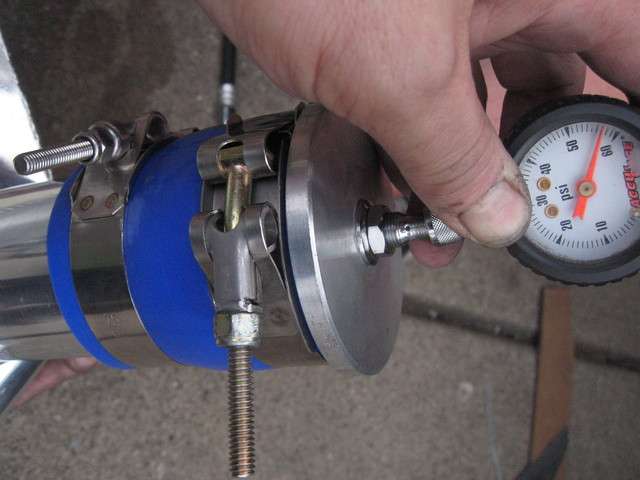
For whatever it's worth.. here is my 6 inch thick BELL IC being tested for leaks...

__________________
2001 996TT 3.6L and stock ECU
9.66 seconds @ 147.76 mph 1/4 mile click to view
160 mph @ 9.77 seconds in 1/4 mile click to view
50% OFF ON PORSCHE ECU TUNING BLACK FRIDAY SPECIAL
2001 996TT 3.6L and stock ECU
9.66 seconds @ 147.76 mph 1/4 mile click to view
160 mph @ 9.77 seconds in 1/4 mile click to view
50% OFF ON PORSCHE ECU TUNING BLACK FRIDAY SPECIAL

Registered User
Joined: Dec 2005
Posts: 567
From: Oceania
Rep Power: 64
Realistically any product needs real information data to support it ( btw I do not think it helps anyone being banned for asking for back up data)
Any supplier/manufacturer that wants to peddle their wares should be prepared to do so.
I might add - those with big dyno claims should offer some other supporting cross referencing eg 60-130's to avoid more dyno debates.Real information leads to confirmation of a good thing- anecdotal testimonials are short on facts.
None of the above is aimed at anyone specifically-it is a general comment.
I have been posting the same data since the products release. I recall only one thread where a newer user asked us to supply data and we offered what we had. I even offline pointed him to other threads where this was posted. In a phone converstaion we had after the fact he apologized then applauded us.
Please don't take this as an attack, nor I am not trying to start an argument with you, I just want to know who and what you are talking about.
Realistically any product needs real information data to support it ( btw I do not think it helps anyone being banned for asking for back up data)
Any supplier/manufacturer that wants to peddle their wares should be prepared to do so.
I might add - those with big dyno claims should offer some other supporting cross referencing eg 60-130's to avoid more dyno debates.Real information leads to confirmation of a good thing- anecdotal testimonials are short on facts.
None of the above is aimed at anyone specifically-it is a general comment.
Any supplier/manufacturer that wants to peddle their wares should be prepared to do so.
I might add - those with big dyno claims should offer some other supporting cross referencing eg 60-130's to avoid more dyno debates.Real information leads to confirmation of a good thing- anecdotal testimonials are short on facts.
None of the above is aimed at anyone specifically-it is a general comment.
Our knight in shining armor on the 997TT forums has been eclou. An end user that not only installed our 750R kit in his own garage, but has gone to great lengths collecting data to prove to other users that the kit performs as advertised.

Registered User
Joined: Jan 2009
Posts: 81
From: MD
Rep Power: 21
Mike/AWE,
Being an engineer I love data. My suggestion to provide more useful (and repeatable) data is to change the psi vs rpm graph to psi vs volume using a flow bench. RPM "flow" depends on engine size, rpm, boost levels, variable intake temp, etc. Flow bench/Volume takes out all those other variables.
It would be also excellent to provide that exact same graph for the external flow too. By making a core simply thicker, it will flow more internally obviously but it will also flow less externally (for the same differential pressure.) At some point that cancels out any benefit as the internal drop is diminishing return while the external drop will increase forever.
Would allow real apples to apples comparisons of flow. I know there are still differences in heat transfer based on internal turbulence (or even lack of it) but at least two dP vs V graphs would take a big step towards providing standardized comparisons.
Being an engineer I love data. My suggestion to provide more useful (and repeatable) data is to change the psi vs rpm graph to psi vs volume using a flow bench. RPM "flow" depends on engine size, rpm, boost levels, variable intake temp, etc. Flow bench/Volume takes out all those other variables.
It would be also excellent to provide that exact same graph for the external flow too. By making a core simply thicker, it will flow more internally obviously but it will also flow less externally (for the same differential pressure.) At some point that cancels out any benefit as the internal drop is diminishing return while the external drop will increase forever.
Would allow real apples to apples comparisons of flow. I know there are still differences in heat transfer based on internal turbulence (or even lack of it) but at least two dP vs V graphs would take a big step towards providing standardized comparisons.