


Just bought another Aston today


Thread Starter
|
Registered User

Joined: Apr 2011
Posts: 2,358
From: Melbourne
Rep Power: 214


Last edited by karlfranz; Oct 12, 2014 at 08:25 PM.


Thread Starter
|
Registered User
Joined: Apr 2011
Posts: 2,358
From: Melbourne
Rep Power: 214
The Porterfields are in!
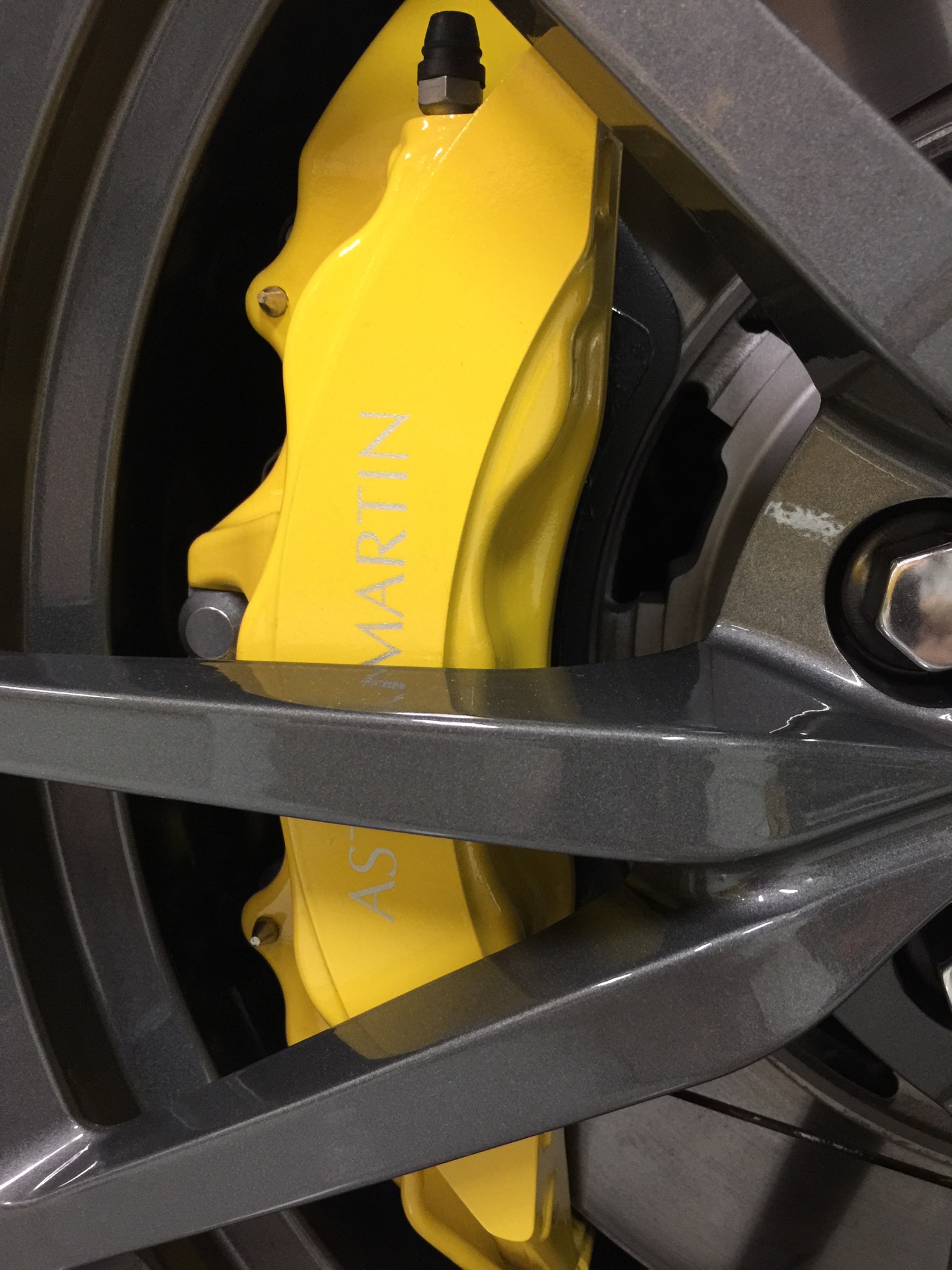
Well, I couldn't take it any more. I don't know what it is about Brembo, but they seem to make some of the dustiest pads I have ever seen for a car. One drive and the tires, wheels and calipers are covered in a dark layer of soot. My wheels are anthracite so it doesn't show as much as on silver wheels, but it does give it a matte finish. The bright yellow calipers, however, show how totally filthy everything gets.
So, thanks to Stuart, I just got a set of R4-S pads for my GT4. Installation was a breeze as usual, but I do have a few observations:
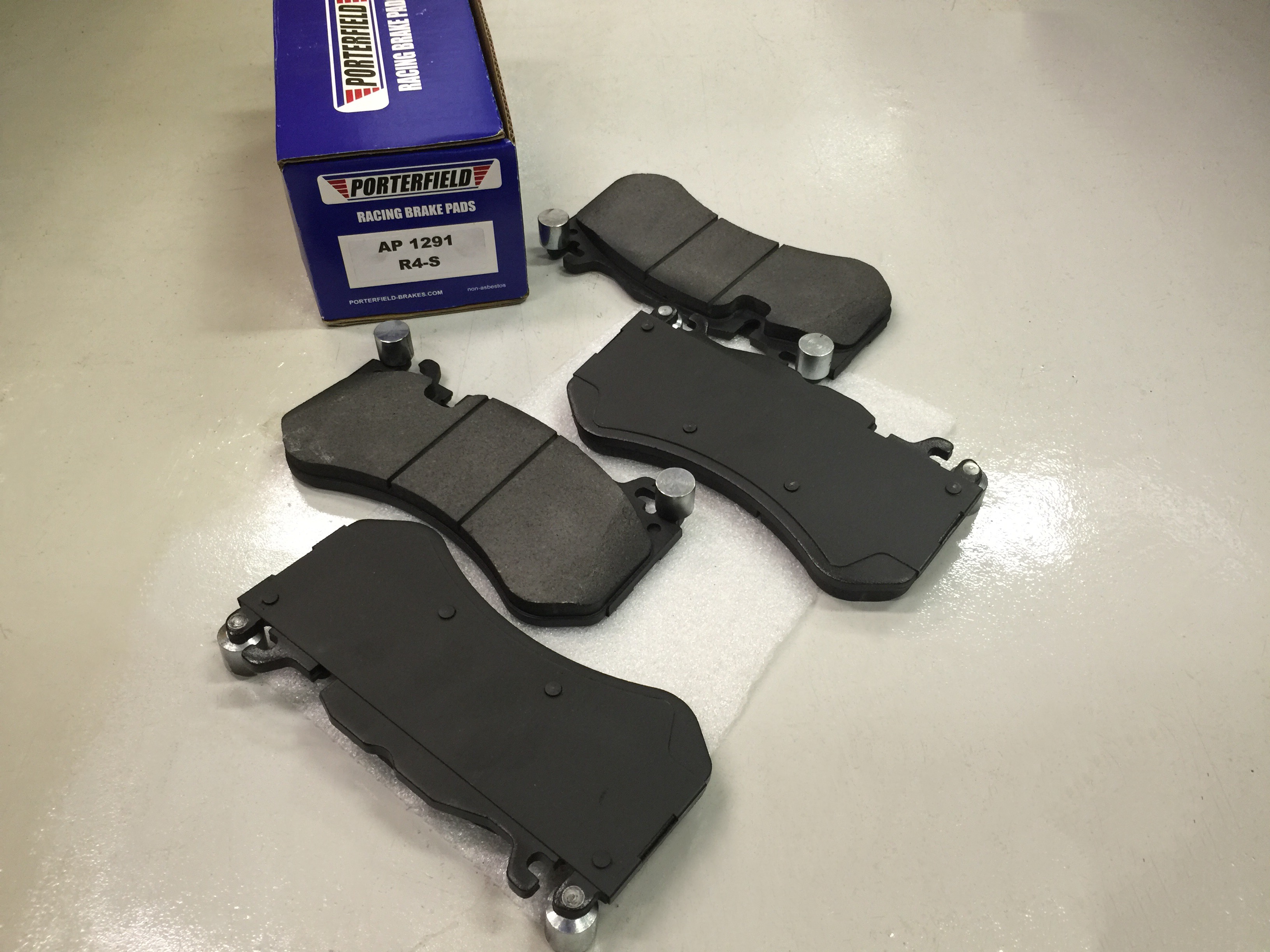
As usual, here are a few pics:
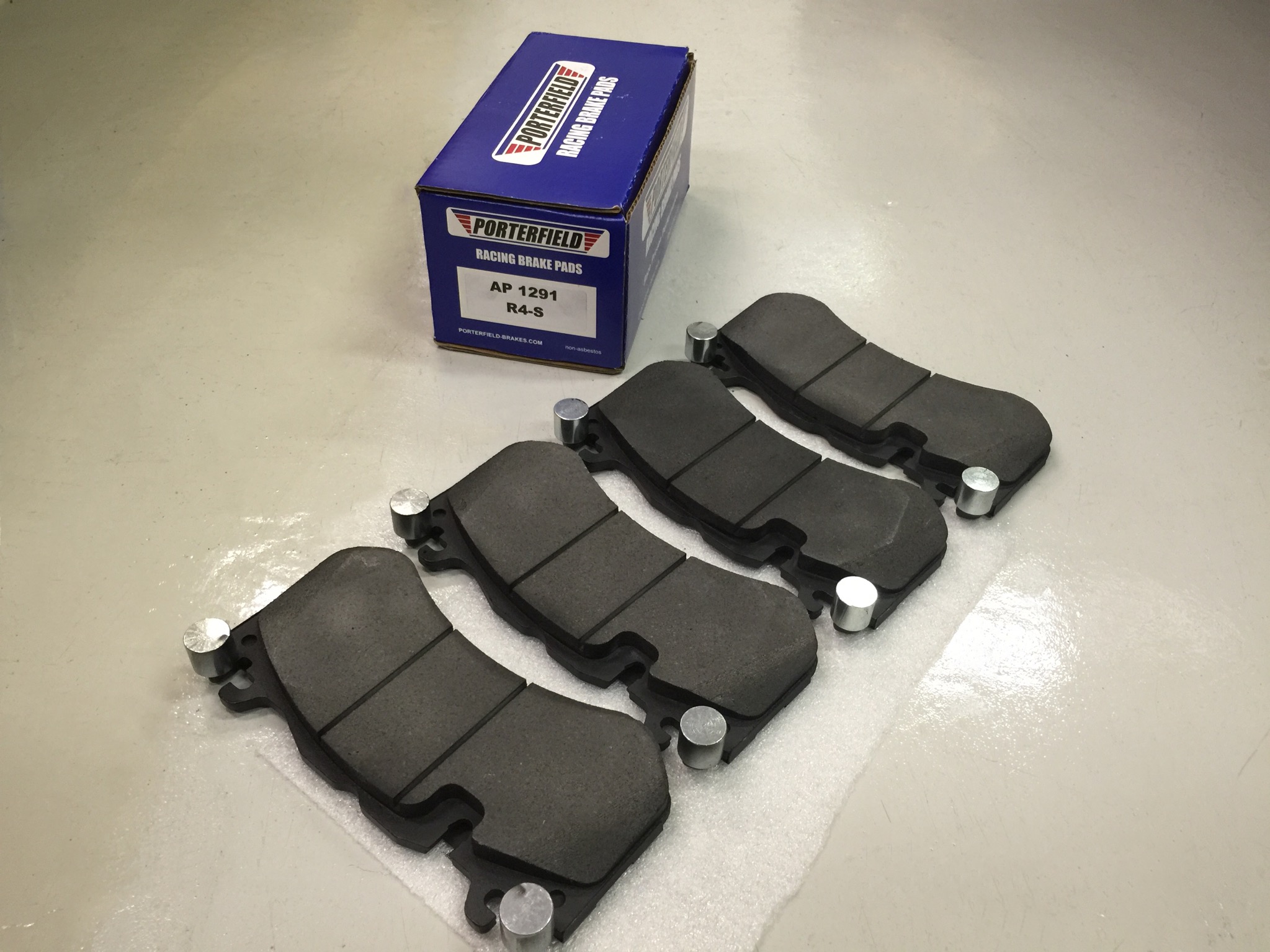
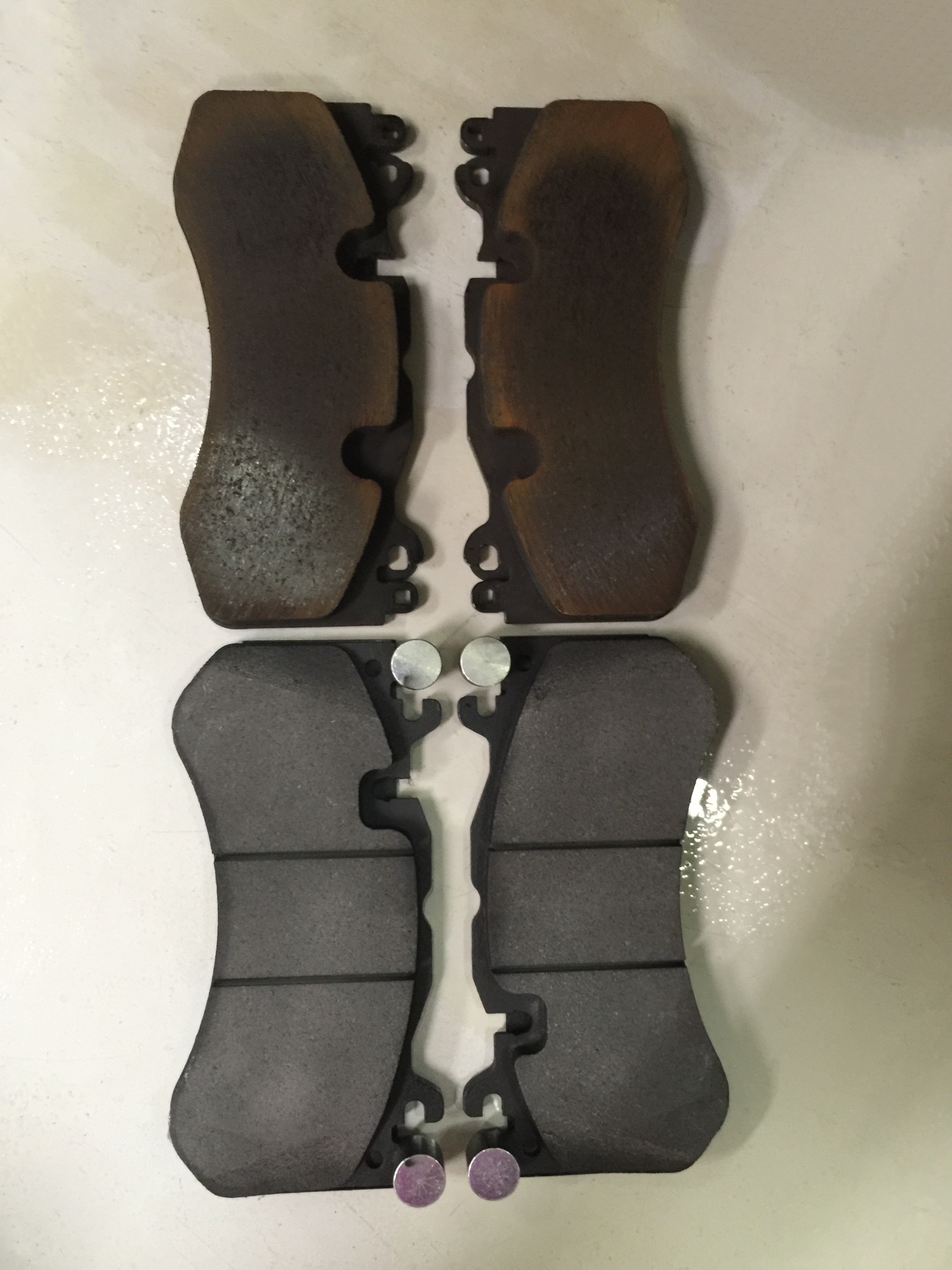
R4-S pads left, Brembo right

R4-S pads bottom, Brembo top (notice size difference)
Wheel and OEM pads off

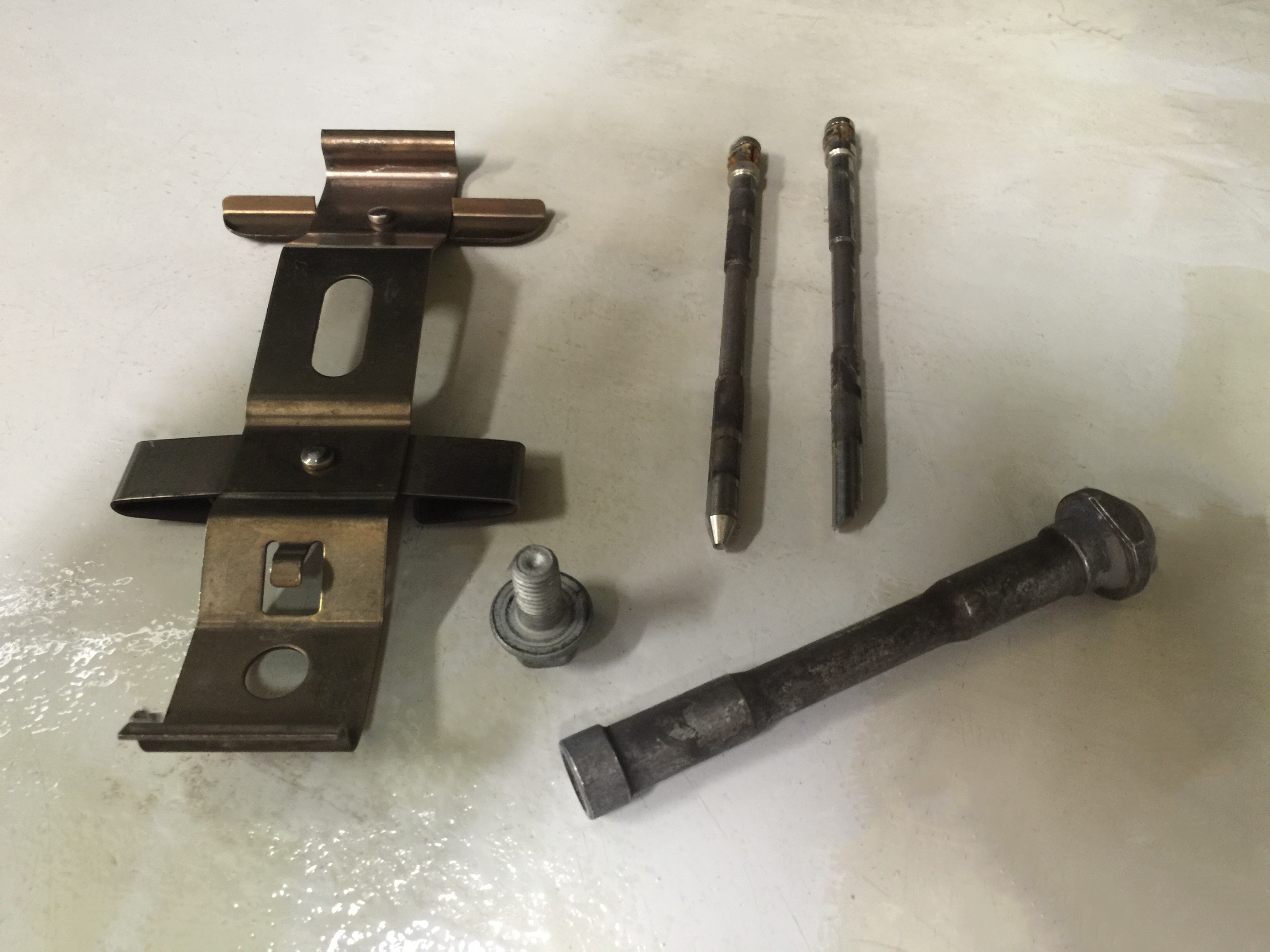
Retaining pins and clips
New R4-S installed
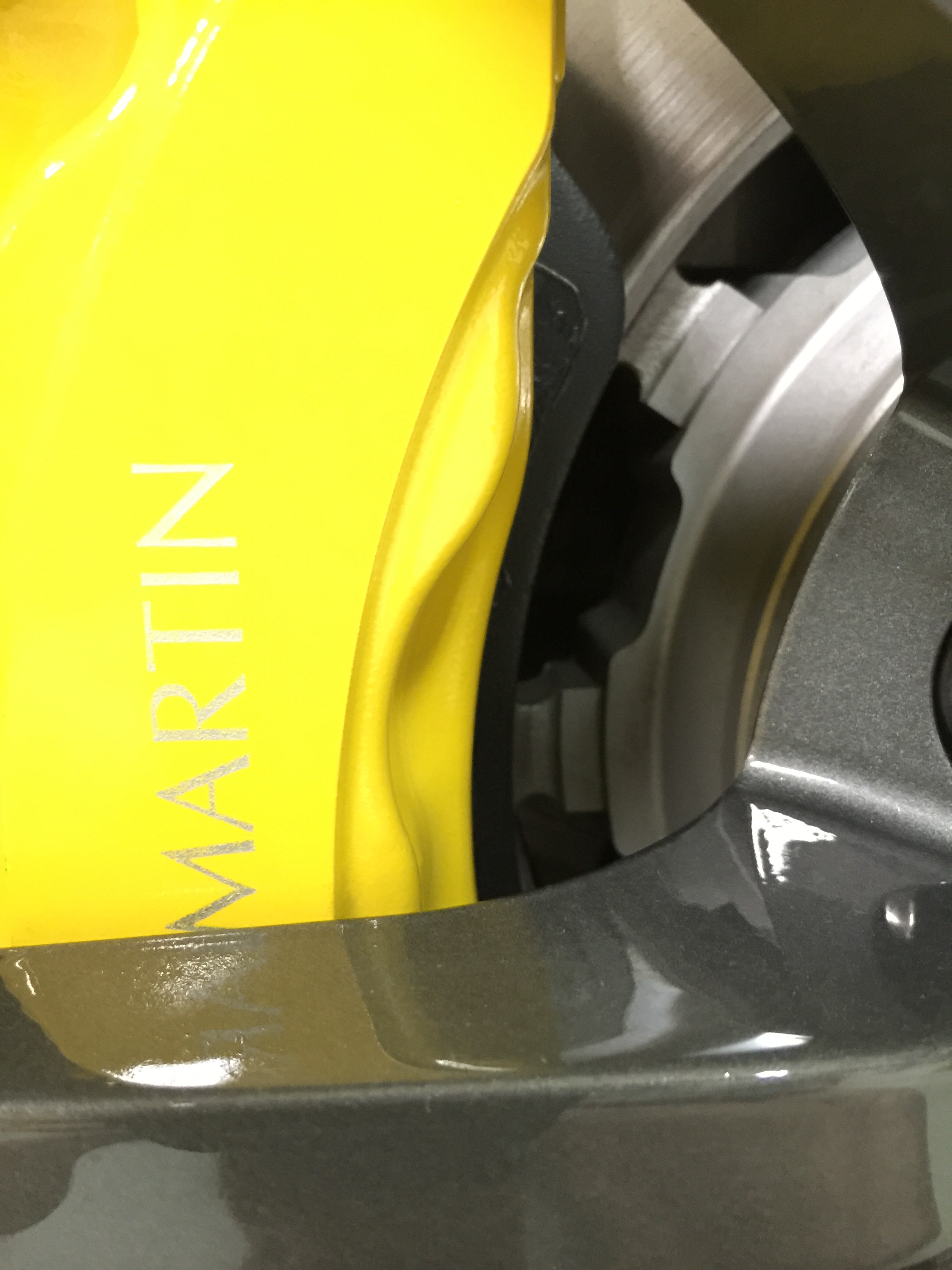
Closeup of larger pad portion near disc hub
So, thanks to Stuart, I just got a set of R4-S pads for my GT4. Installation was a breeze as usual, but I do have a few observations:
- The pads are larger than the OEM pads. Most of the increased size is in the area nearest the hub. This means that more of the pad backing plate shows outside the caliper. Not really a big deal, and it doesn't seem to affect anything.
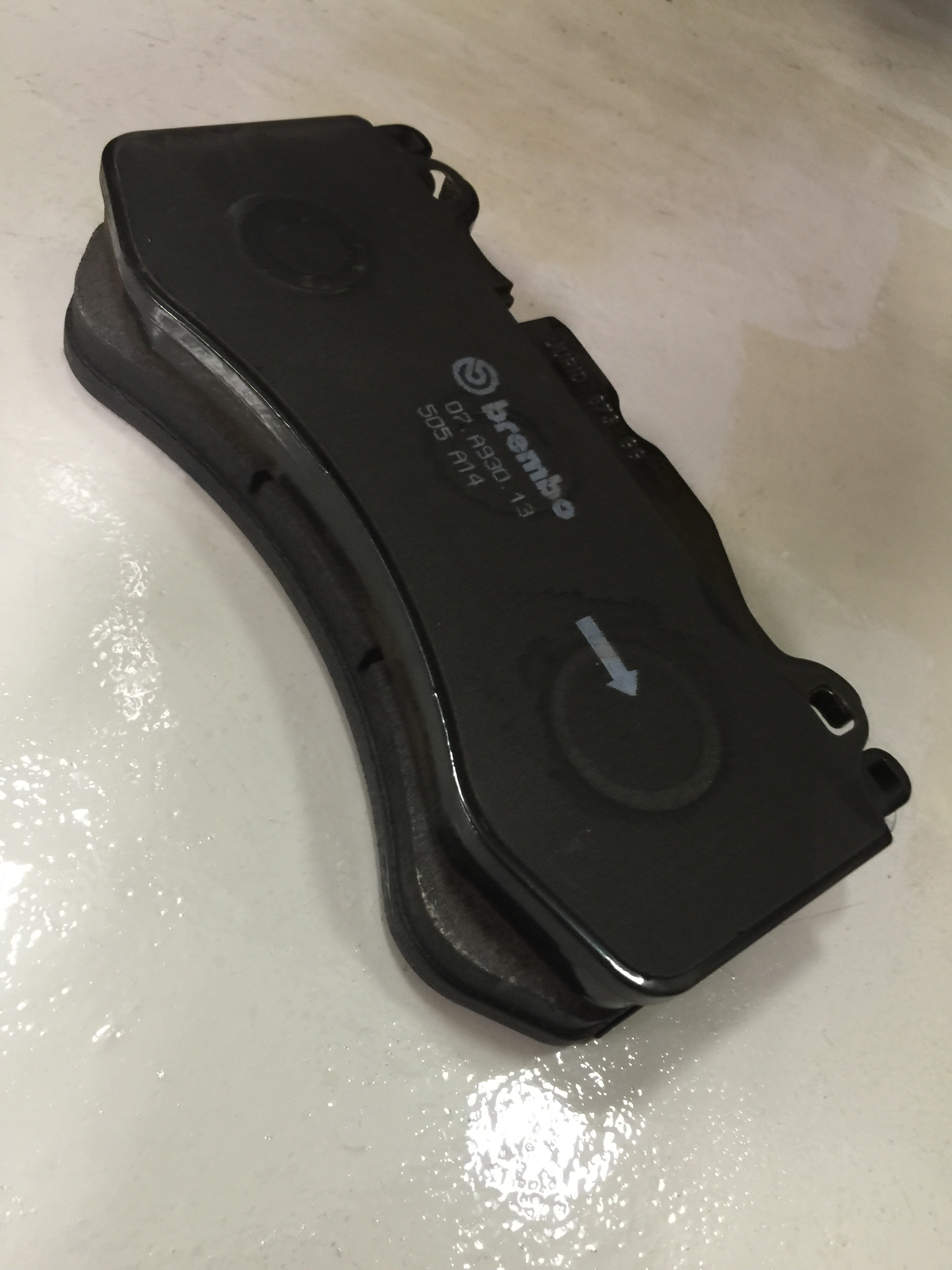
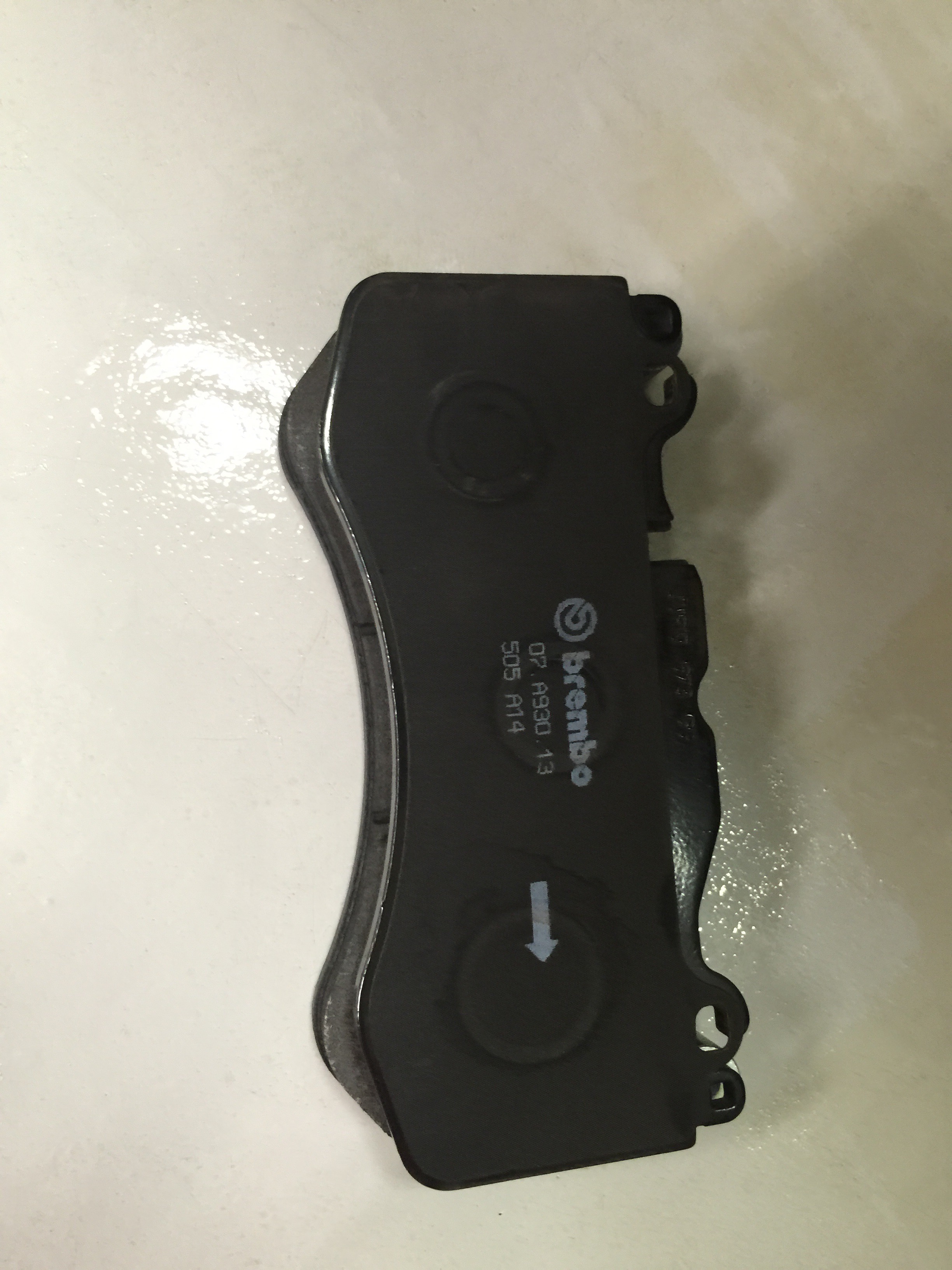
- Each new pad has two thick silver metal discs on the trailing edge. Not sure I know what the heck those are for.
- The R4-S pads come with metal shims. The OEM pads have a composite, cloth-like shim and the rear pads (but not the fronts) have metal shims on top of that as well.
- I applied a thin layer of blue anti-squeal paste to the back of each new pad's metal shim.
- I also removed the metal shims from the OEM rear pads and attached them to the new pads. They have an adhesive layer to keep them from moving around. I didn't remove the existing shims which means it now has a double-thickness shim for each pad like the OEM ones did.
- The new six-piston front pads are not mirrored. All four individual pads are identical and that means that the slot for the wear sensor is at the bottom of the inboard pad on one side of the car and on the top of the inboard pad on the other. Not a big deal. I simply tied back the excess sensor wire length on the driver side brakes using a cable tie.
- The rear pads are matched pairs with only the inboard pads having the wear sensor slot. Again, the pads are not mirrored so the slot is at the bottom one one side and the top on the other.
- There is no bedding-in procedure necessary for the R4-S pads. Just install and go. Unlike pads others here have recommended, there is no 500 mile period of squealing before they quiet down. These pads are quiet from mile one.
- The dust is dramatically less. I took the car out tonight and did a few hard stops and the drove for about 40 miles. This kind of drive would have made my calipers look filthy with the Brembo pads. However, they looked spotless. Very pleased.
As usual, here are a few pics:
R4-S pads left, Brembo right
R4-S pads bottom, Brembo top (notice size difference)
Wheel and OEM pads off
Retaining pins and clips
New R4-S installed
Closeup of larger pad portion near disc hub
Registered User
Joined: Aug 2014
Posts: 1,038
From: Oxnard, Ca
Rep Power: 62
Cool, I've noticed exactly what you're talking about with the brake dust it's really bad. I wish I was half as talented as you are with a wrench .
Ron
Ron
Last edited by Ron Avery; Sep 22, 2016 at 08:00 PM.
Thread Starter
|
Registered User
Joined: Apr 2011
Posts: 2,358
From: Melbourne
Rep Power: 214
^^^^ I got together with Porterfield almost 20 years ago to help develop an application for the Lotus Esprit because I found the level of dust on the stock Brembo pads unbearable. After a single drive on the Brembo pads, you could run your finger over the edge of a wheel and your finger would be pitch black.
So when I bought my first Aston and realized that the stock pad was the same dusty compound I dealt with on the Esprit, I contacted them about doing an application for the Vantage/DB9 as well. It was literally the first modification I made to that car.
Since installing the new pads that Stuart helped source this time around I have done quite a bit more driving and, not only are they completely silent, I would say that dust is about 5% or less of what it is with the OEM pads.
Replacing them is really a rather easy task but, if you don't feel comfortable doing it, most places should be able to do it for you in a short amount of time.
So when I bought my first Aston and realized that the stock pad was the same dusty compound I dealt with on the Esprit, I contacted them about doing an application for the Vantage/DB9 as well. It was literally the first modification I made to that car.
Since installing the new pads that Stuart helped source this time around I have done quite a bit more driving and, not only are they completely silent, I would say that dust is about 5% or less of what it is with the OEM pads.
Replacing them is really a rather easy task but, if you don't feel comfortable doing it, most places should be able to do it for you in a short amount of time.

Registered User
Joined: Apr 2009
Posts: 4,366
From: NoVa
Rep Power: 295
Since installing the new pads that Stuart helped source this time around I have done quite a bit more driving and, not only are they completely silent, I would say that dust is about 5% or less of what it is with the OEM pads.
Replacing them is really a rather easy task but, if you don't feel comfortable doing it, most places should be able to do it for you in a short amount of time.
Replacing them is really a rather easy task but, if you don't feel comfortable doing it, most places should be able to do it for you in a short amount of time.

Thread Starter
|
Registered User
Joined: Apr 2011
Posts: 2,358
From: Melbourne
Rep Power: 214
I bought the lights from someone on eBay. They were designed as a direct replacement for the Vantage/DB9 front corner lights. However, the vendor only had one pair for sale. If you look around, maybe you can find someone else selling them.
I paid around $120 for them but I think most places where I had seen them for sale before were charging a ridiculous $300 or more for the pair. What made it more annoying was they also had pairs for other, more common vehicles like Hondas and Toyotas for around $50/pair--which means they are just charging more because they know Aston owners will pay more for them.
I paid around $120 for them but I think most places where I had seen them for sale before were charging a ridiculous $300 or more for the pair. What made it more annoying was they also had pairs for other, more common vehicles like Hondas and Toyotas for around $50/pair--which means they are just charging more because they know Aston owners will pay more for them.
Last edited by karlfranz; Oct 20, 2014 at 08:05 PM.

Registered User
Joined: Jan 2011
Posts: 760
From: On a hill
Rep Power: 60
Brake dust fix
I found the cheaper answer to brake dust - ArmourAll Wheel Protectant. I first saw it in this video on a V8V:
So I tried it on mine, and it works very well indeed. I have a couple of curbed areas on my wheels which had been repaired by the PO and they are invisible but are slightly matt finish to touch. The dust is repelled very well off those areas too.
I also have it applied on my wife's Lexus RX330 which is notorious for front wheel black dust in just a couple of drives. The Protectant has kept it clean for nearly 2 weeks. I'm amazed.
So I tried it on mine, and it works very well indeed. I have a couple of curbed areas on my wheels which had been repaired by the PO and they are invisible but are slightly matt finish to touch. The dust is repelled very well off those areas too.
I also have it applied on my wife's Lexus RX330 which is notorious for front wheel black dust in just a couple of drives. The Protectant has kept it clean for nearly 2 weeks. I'm amazed.
Thread Starter
|
Registered User
Joined: Apr 2011
Posts: 2,358
From: Melbourne
Rep Power: 214
I used the Armor All Wheel Protectant several times on my previous Aston Martin and it does work, but I will make some observations for those who are contemplating using it:
- The protectant works sort of like a Teflon coating. It forms a thin film that prevents the brake dust from adhering to the surface. When you are driving, the tiny particles of dust that land on the coated surfaces get flung off because they cannot stick.
- The above being the case, the brake dust has to go somewhere. This usually means that the dust winds up landing on the uncoated trailing surfaces on the wheel fenders and sticking to them instead.
- You must be really careful to coat all surfaces of the wheel during application, otherwise the areas that you miss will not repel the brake dust and will be even more noticeable because of the stark contrast to the coated surfaces. It's probably best to roll the car forward a little bit and re-apply the product to make sure you get even coating.
- The coated surface is very delicate. Anything that touches it will disturb it and reduce its effectiveness dramatically. That means that if you touch it with your finger or your pants leg brushes up against it that area will no longer will be protected and will show brake dust more.
- The coating is not permanent. It only lasts a few weeks and then must be re-applied. Even if part of the wheel coating gets disturbed as above, you must recoat the entire wheel which means that you must wash the entire wheel first.
- Application requires the surface to be completely dry. If any water is on the surface, it will prevent the coating from adhering and that will become an unprotected area later. That means you must take care that there is no water pooling in the lug nut holes or the tire bead area. If some of the water runs out in a little stream from those areas, you will later have a line of brake dust in a shape mimicking where the water dripped down.
- A strong, steady stream of water, or even driving through puddles will cause some of the coating to wash off.
- Honestly, the reduction in the amount of brake dust from the stock OEM Brembo pads to the Porterfields is so dramatic, that I wouldn't bother with the Armor All product and the constant maintenance it requires.
- Brake dust shows a lot less on my anthracite sport pack wheels than it did on the silver sport pack wheels on my previous Aston.
- I applied a layer of DP Wheel Coating to my wheels as soon as I got the car home. It doesn't repel the brake dust like the Armor All product does, but most of the brake dust simply washes off with a steady stream of water and no scrubbing necessary.
- Due to the stability control on the Vantage, the rear wheels get dirtier more quickly than the fronts. This is opposite of what I have observed in other cars and opposite of what logic would dictate since you would imagine the front brakes would get more use. However, this is corroborated by several owners who have replaced the rear pads twice for every one set of front pads.
- The guy who did the video above (which is the same one I saw a couple of years ago) should be commended. It was very well done and highly professional. I watch a lot of videos on Youtube and I must say this guy did an excellent job both with his narration and his camera work.
Last edited by karlfranz; Oct 22, 2014 at 08:12 AM.
Registered User
Joined: Jan 2011
Posts: 760
From: On a hill
Rep Power: 60
Nice info Karl.
I've not had the problem of the film wearing away, and I wipe the wheels every couple of drives with a microfibre, so I wonder if putting on a heavy coating initially has saved it. I certainly sprayed a lot of it using almost a full can for the four wheels.
And I don't drive in rain or wet so I will probably get a good life beyond the couple of weeks so far.
I've not had the problem of the film wearing away, and I wipe the wheels every couple of drives with a microfibre, so I wonder if putting on a heavy coating initially has saved it. I certainly sprayed a lot of it using almost a full can for the four wheels.
And I don't drive in rain or wet so I will probably get a good life beyond the couple of weeks so far.