


LSD buster


Former Vendor
Joined: Oct 2009
Posts: 513
From: Boulder, CO
Rep Power: 0


Rebuilding the differential is actually not that difficult. I hadn't done a differential since high school auto shop, but I figured it out. If one can remove the diff from the trans, I think one can rebuild a diff.
Most of the parts only go in one way. The only problem was getting the ring gear bolts off. I made soft jaws to hold the diff body from 2x10 lumber and clamped it all in my bench vise.
Most of the parts only go in one way. The only problem was getting the ring gear bolts off. I made soft jaws to hold the diff body from 2x10 lumber and clamped it all in my bench vise.
This is why I hesitate to put out a "kit" that I just send out to people for rebuilding their own differentials. What if you're that guy who's internal body height measures 95mm versus the 94.6 or 94.7mm that the vast majority of them come out at? Then I've sent you a "kit" that's .4mm too lose and your LSD isn't going to lock properly. If you didn't measure the body and just took it on faith that my kit fit and don't figure it out in advance of installation who ends up getting blamed on the internet for the LSD that's not working because it was assembled out of spec? I do. When I've got it here in my hands I can change out that 2.3mm plain plate for a 2.5mm plain plate on each side and suck up that .4mm gap on the fly. The home rebuilder doesn't have a pile of diff parts there to make those microadjustments as needed.
This is the same reason that we are very discerning who we will actually call an authorized installer of our gearbox parts. My dealer list contains more than 500 names of shops around the country and the world. Of that list, I will only put my name to and recommend about 10% of those shops to do your work for you. If a shop or an end user wants to buy from us we'll sell them the parts and tell them specialist installation is required. But if you want me to make a recommendation on who I trust to do the work, the list is pretty short. I've seen too many instances where a shop forgot a 1mm spacer on one of our 4th gears or didn't use the right spacer between 5th and 6th and didn't have the good sense to measure the stack before they sealed up the box. For a good mechanic, if it's wrong, it's wrong and they don't go any further until they make a phone call or figure it out themselves. But too many people out there just assume they can rip it apart and just throw it back together in the same order it came apart and it's going to be right. That's often not the case with this sort of thing.

Registered User
Joined: Jun 2005
Posts: 19
Rep Power: 0
You're correct, of course.
What I should have said was, "it is not that difficult to dis- and reassemble the unit".
I wasn't actually rebuilding my unit. I was only replacing gears.
What I should have said was, "it is not that difficult to dis- and reassemble the unit".
I wasn't actually rebuilding my unit. I was only replacing gears.
The actual rebuilding isn't really the issue. It's measuring and then having the proper thickness parts for the right stack height that's the issue. While we would like to think Porsche was consistent across the manufacturing range I have seen discrepancies as great as 1mm between identical part numbered differential bodies from Porsche.
This is why I hesitate to put out a "kit" that I just send out to people for rebuilding their own differentials. What if you're that guy who's internal body height measures 95mm versus the 94.6 or 94.7mm that the vast majority of them come out at? Then I've sent you a "kit" that's .4mm too lose and your LSD isn't going to lock properly. If you didn't measure the body and just took it on faith that my kit fit and don't figure it out in advance of installation who ends up getting blamed on the internet for the LSD that's not working because it was assembled out of spec? I do. When I've got it here in my hands I can change out that 2.3mm plain plate for a 2.5mm plain plate on each side and suck up that .4mm gap on the fly. The home rebuilder doesn't have a pile of diff parts there to make those microadjustments as needed.
This is the same reason that we are very discerning who we will actually call an authorized installer of our gearbox parts. My dealer list contains more than 500 names of shops around the country and the world. Of that list, I will only put my name to and recommend about 10% of those shops to do your work for you. If a shop or an end user wants to buy from us we'll sell them the parts and tell them specialist installation is required. But if you want me to make a recommendation on who I trust to do the work, the list is pretty short. I've seen too many instances where a shop forgot a 1mm spacer on one of our 4th gears or didn't use the right spacer between 5th and 6th and didn't have the good sense to measure the stack before they sealed up the box. For a good mechanic, if it's wrong, it's wrong and they don't go any further until they make a phone call or figure it out themselves. But too many people out there just assume they can rip it apart and just throw it back together in the same order it came apart and it's going to be right. That's often not the case with this sort of thing.
This is why I hesitate to put out a "kit" that I just send out to people for rebuilding their own differentials. What if you're that guy who's internal body height measures 95mm versus the 94.6 or 94.7mm that the vast majority of them come out at? Then I've sent you a "kit" that's .4mm too lose and your LSD isn't going to lock properly. If you didn't measure the body and just took it on faith that my kit fit and don't figure it out in advance of installation who ends up getting blamed on the internet for the LSD that's not working because it was assembled out of spec? I do. When I've got it here in my hands I can change out that 2.3mm plain plate for a 2.5mm plain plate on each side and suck up that .4mm gap on the fly. The home rebuilder doesn't have a pile of diff parts there to make those microadjustments as needed.
This is the same reason that we are very discerning who we will actually call an authorized installer of our gearbox parts. My dealer list contains more than 500 names of shops around the country and the world. Of that list, I will only put my name to and recommend about 10% of those shops to do your work for you. If a shop or an end user wants to buy from us we'll sell them the parts and tell them specialist installation is required. But if you want me to make a recommendation on who I trust to do the work, the list is pretty short. I've seen too many instances where a shop forgot a 1mm spacer on one of our 4th gears or didn't use the right spacer between 5th and 6th and didn't have the good sense to measure the stack before they sealed up the box. For a good mechanic, if it's wrong, it's wrong and they don't go any further until they make a phone call or figure it out themselves. But too many people out there just assume they can rip it apart and just throw it back together in the same order it came apart and it's going to be right. That's often not the case with this sort of thing.
Former Vendor
Joined: Oct 2009
Posts: 513
From: Boulder, CO
Rep Power: 0
No harm, no foul. I just figured it was a good opportunity to explain why I don't market a "kit" since I get asked it a lot. Over on Rennlist someone pointed out this thread had 13,000 views, so I figured posting this information here would cut down on the questions.
I am more than happy to sell the parts to someone who has disassembled the LSD and measured it before I ship the stuff. I just don't want to get involved in the back and forth shipping and what not on a bunch of $50 spacers.
I am more than happy to sell the parts to someone who has disassembled the LSD and measured it before I ship the stuff. I just don't want to get involved in the back and forth shipping and what not on a bunch of $50 spacers.

Registered User
Joined: Apr 2009
Posts: 19
From: rochester ny
Rep Power: 0
more understanding
hello
i have a 996 gt3 and i am relatively new to this forum. i am trying to understand lsd's. i read completely through this post . it is fantastic.and i have read other sources
i still am confused as to how preload works. i think it allows he plates to be close together at rest(for instance switching between brake and throttle).but then what happens after the preload limit is reached . also if preload is such a small number (2 or 20 or 200) which is so easily reached then why have it at all
if the above sounds dumb please excuse me i am just trying to understand and i have a feeling that i have a misunderstanding about one key concept
thanks
i have a 996 gt3 and i am relatively new to this forum. i am trying to understand lsd's. i read completely through this post . it is fantastic.and i have read other sources
i still am confused as to how preload works. i think it allows he plates to be close together at rest(for instance switching between brake and throttle).but then what happens after the preload limit is reached . also if preload is such a small number (2 or 20 or 200) which is so easily reached then why have it at all
if the above sounds dumb please excuse me i am just trying to understand and i have a feeling that i have a misunderstanding about one key concept
thanks
Registered User
Joined: Oct 2009
Posts: 10
From: Rockville, MD
Rep Power: 0
First you have to think about how the LSD works in the first place, bear with me for a minute. As the torque difference increases between the input shaft to the differential and the output shafts, (say under either hard acceleration or hard deceleration) the spider gear shafts climb up the ramps, either forward or reverse. As they do this, they cause the cage they live in, which is split down the middle, to separate, which increases the force the two halves apply on the clutch packs. The clutch packs are the stacks made up of spacer disks and friction plates. This force causes the two output shafts, one to each rear wheel, to "lock" together.
Once you can visualize that, think about "preload". This is essentially the amount of pressure already on the clutch plates when the car is standing still. So, imagine the clutch packs had 10 millimeters of space, or "play". The spider gears would have to ride up the ramps a long way to eliminate the 10 millimeters of free play before they would apply any friction force at all to lock the rear wheels together.
Now say the clutch pack had a small fraction of a millimeter of play. Under low load conditions, say around town on the street, the spider gears would not ride up the ramps much at all and the differential would essentially act like an open differential most of the time. Only when you accelerate (or decelerate) hard would they ride up the ramps enough to apply friction force and "lock" the two output shafts together.
Now say the clutch pack had no play at all and actually had some pressure already applied to the clutch packs (negative "play"). The differential would always want to drive both rear wheels at the same speed. Only when you accelerated slowly, and also had different force on the rear wheels (going around a turn) would it overcome the preload and "break away". If you accelerated or decelerated hard, then again the spiders would climb up the ramps, increasing the force applied to the clutch packs even more, and locking the two rears wheels together.
Certainly someone more knowledgeable than me will add to this post, but this is the way I visualize the operation of the unit.
Once you can visualize that, think about "preload". This is essentially the amount of pressure already on the clutch plates when the car is standing still. So, imagine the clutch packs had 10 millimeters of space, or "play". The spider gears would have to ride up the ramps a long way to eliminate the 10 millimeters of free play before they would apply any friction force at all to lock the rear wheels together.
Now say the clutch pack had a small fraction of a millimeter of play. Under low load conditions, say around town on the street, the spider gears would not ride up the ramps much at all and the differential would essentially act like an open differential most of the time. Only when you accelerate (or decelerate) hard would they ride up the ramps enough to apply friction force and "lock" the two output shafts together.
Now say the clutch pack had no play at all and actually had some pressure already applied to the clutch packs (negative "play"). The differential would always want to drive both rear wheels at the same speed. Only when you accelerated slowly, and also had different force on the rear wheels (going around a turn) would it overcome the preload and "break away". If you accelerated or decelerated hard, then again the spiders would climb up the ramps, increasing the force applied to the clutch packs even more, and locking the two rears wheels together.
Certainly someone more knowledgeable than me will add to this post, but this is the way I visualize the operation of the unit.
Registered User
Joined: Apr 2009
Posts: 19
From: rochester ny
Rep Power: 0
fantastic explanation . thank you .
so it seems like there is a bimodal aspect to the lsd. at low acceleration or decelleration the preload keeps the difference in spin between the 2 wheels at a certain limit and then at higher acceleration or deccelartion the plates are pushed together by the spider gear climbing up the ramps?? is that correct
also , i thought the lsd came into play only when the car was turning so the 2 wheels are locked to some degree. but your explanation would have the 2 wheels "locked" even if the car is going in a straight line but at a high enough torque to push the plates out do i have this right
thanks for the patience
so it seems like there is a bimodal aspect to the lsd. at low acceleration or decelleration the preload keeps the difference in spin between the 2 wheels at a certain limit and then at higher acceleration or deccelartion the plates are pushed together by the spider gear climbing up the ramps?? is that correct
also , i thought the lsd came into play only when the car was turning so the 2 wheels are locked to some degree. but your explanation would have the 2 wheels "locked" even if the car is going in a straight line but at a high enough torque to push the plates out do i have this right
thanks for the patience
Registered User
Joined: Oct 2009
Posts: 10
From: Rockville, MD
Rep Power: 0
You have it right. The preload is why you can test the LSD by jacking up the car and spinning one wheel by hand. The preload is what locks the two wheels together in that case. The ramps only come into play under hard acceleration or deceleration. As others have said in this post, having little or no preload does not necessarily mean the LSD is totally non-functional, and it may well lock up under hard acceleration as the spiders climb further up the ramps, but it also may be worn to the point that the lockup would not be as effective as it was when new.
Also, the LSD does indeed function even when you are travelling in a straight line. Under hard acceleration it locks the rear wheels together such that power is equally applied to both wheels. That keeps the wheel that has less friction with the road surface from spinning.
Under hard braking force it has a similar effect, locking the two rear wheels together and helping to keep the car from squirming in the braking zone.
Also, the LSD does indeed function even when you are travelling in a straight line. Under hard acceleration it locks the rear wheels together such that power is equally applied to both wheels. That keeps the wheel that has less friction with the road surface from spinning.
Under hard braking force it has a similar effect, locking the two rear wheels together and helping to keep the car from squirming in the braking zone.
Last edited by ttrew; Jul 4, 2010 at 09:57 AM.
Registered User
Joined: Apr 2009
Posts: 19
From: rochester ny
Rep Power: 0
thanks
so based on what i read here i asked our local expert to look at my lsd. it had about 8 lbs of preload or at least it took 8 ft/lbs of torque to make the wheels "break apart" when the car was up on a lift. the car is a 996 gt3 about 25k miles. when we opened the lsd the plates all looked pretty much like new and there was very little metal in the fluid. we put in a larger (more concave ) belliville washer .
my assumtion was that the space between the plates was so great that there really wasnt much plate interaction therefor accounting for why the plates looked so good (taken from matts post of 11/18/090)
so now it takes 35 ft/lbs to break the wheels apart. i assume then that the preload is higher and that the lsd will function more appropriatly at higher torque levels
when i drive the car now i can here the gears turn especially at low speeds
i know this is not expert tuning of the lsd but at my level of driving i think it will not hurt and possibly help
comments??
so based on what i read here i asked our local expert to look at my lsd. it had about 8 lbs of preload or at least it took 8 ft/lbs of torque to make the wheels "break apart" when the car was up on a lift. the car is a 996 gt3 about 25k miles. when we opened the lsd the plates all looked pretty much like new and there was very little metal in the fluid. we put in a larger (more concave ) belliville washer .
my assumtion was that the space between the plates was so great that there really wasnt much plate interaction therefor accounting for why the plates looked so good (taken from matts post of 11/18/090)
so now it takes 35 ft/lbs to break the wheels apart. i assume then that the preload is higher and that the lsd will function more appropriatly at higher torque levels
when i drive the car now i can here the gears turn especially at low speeds
i know this is not expert tuning of the lsd but at my level of driving i think it will not hurt and possibly help
comments??
Registered User
Joined: Oct 2009
Posts: 10
From: Rockville, MD
Rep Power: 0
I am sure Matt will chime in, but here are my thoughts. By adding the larger belleville washer you did increase the preload...at least for now.
I believe the problem with the stock LSD is twofold: the friction plates just don't hold up well, and the ramps are not aggressive enough to create significant increased force in the clutch pack. My guess is that if you test your LSD after a dozen track events you will find that the preload is down to nothing again. That is because the friction plates will just wear down enough to release the preload you added and then start slipping once again. Since the ramps are so steep, it takes a great deal of force (acceleration or deceleration) to create much force on the plates, so the amount of lockup is limited.
What you did was a smart stop gap, but my guess is before long you will be thinking about an improved differential, and a Guard rebuild of your stock differential cage is a fairly inexpensive but big improvement.
I believe the problem with the stock LSD is twofold: the friction plates just don't hold up well, and the ramps are not aggressive enough to create significant increased force in the clutch pack. My guess is that if you test your LSD after a dozen track events you will find that the preload is down to nothing again. That is because the friction plates will just wear down enough to release the preload you added and then start slipping once again. Since the ramps are so steep, it takes a great deal of force (acceleration or deceleration) to create much force on the plates, so the amount of lockup is limited.
What you did was a smart stop gap, but my guess is before long you will be thinking about an improved differential, and a Guard rebuild of your stock differential cage is a fairly inexpensive but big improvement.
Registered User
Joined: Apr 2009
Posts: 19
From: rochester ny
Rep Power: 0
thank you
yes my goal was to get through this season and then evaluate over the off season up here in upstate new york. it is kind of interesting. the person i bought the car from did not track it .that plus the fact that the plates were relatively far apart means that these plates were kept for me like new untile i made the modification
besides more understeer is there anything else i should be wary of my first time out
thanks
yes my goal was to get through this season and then evaluate over the off season up here in upstate new york. it is kind of interesting. the person i bought the car from did not track it .that plus the fact that the plates were relatively far apart means that these plates were kept for me like new untile i made the modification
besides more understeer is there anything else i should be wary of my first time out
thanks
Registered User
Joined: Oct 2009
Posts: 10
From: Rockville, MD
Rep Power: 0
Other than a little more noise, there is not much that you will notice when you rebuild the diff. There is some increased push under power, but it is not a great problem. I did notice more push at Mid Ohio (which is typical anyway in Carousel and Key Hole) and increased front tire wear. As the tires got to the end of their life, the push got even more significant. I think a sway bar adjustment will be in order for my next trip there.
One funny thing, my driveway has a slope, not great but certainly enough to get the car rolling down hill easily. It also has a slight curve such that you have to turn the wheel some to roll down. After I reinstalled the differential I let the car roll out of the garage in neutral, turned the steering wheel, and the car stopped. I realized that with the new diff and the significant amount of preload Matt built in, gravity alone was not enough to uncouple the rear wheels. I now have to shift to reverse to get out of the garage. Makes me smile.
One funny thing, my driveway has a slope, not great but certainly enough to get the car rolling down hill easily. It also has a slight curve such that you have to turn the wheel some to roll down. After I reinstalled the differential I let the car roll out of the garage in neutral, turned the steering wheel, and the car stopped. I realized that with the new diff and the significant amount of preload Matt built in, gravity alone was not enough to uncouple the rear wheels. I now have to shift to reverse to get out of the garage. Makes me smile.
Registered User
Joined: Nov 2008
Posts: 431
From: Reno NV
Rep Power: 59
GT3/RS LSD from the factory are crap. My 2010 RS LSD is shot in less than 4000 miles and 6 weeks use. No warranty coverage from Porsche either. It is shameful they put the same weak LSD in a 2010 RS as they put in a 5 year old 911. Just fought this battle with PCNA.
If you own a 911 just understand your LSD is shot and call Matt at Guard to hook you up. I have a full post to get up soon including video as soon as I tie up some loose ends.
Porsche- shame on you. "Racing, not Posing" eh? Might want to hook the marketing people up with your engineers on this aspect of your cars
The LSD is one glaring weak link that has never been addressed by the factory.
If you own a 911 just understand your LSD is shot and call Matt at Guard to hook you up. I have a full post to get up soon including video as soon as I tie up some loose ends.
Porsche- shame on you. "Racing, not Posing" eh? Might want to hook the marketing people up with your engineers on this aspect of your cars
The LSD is one glaring weak link that has never been addressed by the factory.
Registered User
Joined: Sep 2007
Posts: 118
From: Oklahoma
Rep Power: 23
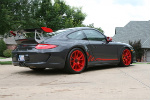
This probably shows poor judgement on my part, after our 4th of July Celebration and a few ****tails I read this thread. Then I decide to go jack up my new GT3 RS to get a baseline before I track the car. The wheels spin like a freaking Roulette wheel. WTF. If this preload test works then this car has never had a good LSD because its never been driven hard!
This car has less than 500 miles on it and been babied for break-in especially leaving at a stoplight or aroud corners. It's never even spun a wheel.
Matt; what do you think????
This car has less than 500 miles on it and been babied for break-in especially leaving at a stoplight or aroud corners. It's never even spun a wheel.
Matt; what do you think????

