


Boost Leaks- how to find them... pics inside



Registered User

Joined: Sep 2014
Posts: 295
From: SD
Rep Power: 70


Thanks to this thread, and having to deal with multiple vacuum leaks and check valve issues recently, I've gotten pretty good at setting up the compressor and fittings for a boost leak test.
I find that having that along with an automotive stethoscope makes the job that much easier. Having an inspection camera really helps as well in the tight confines of this engine bay.
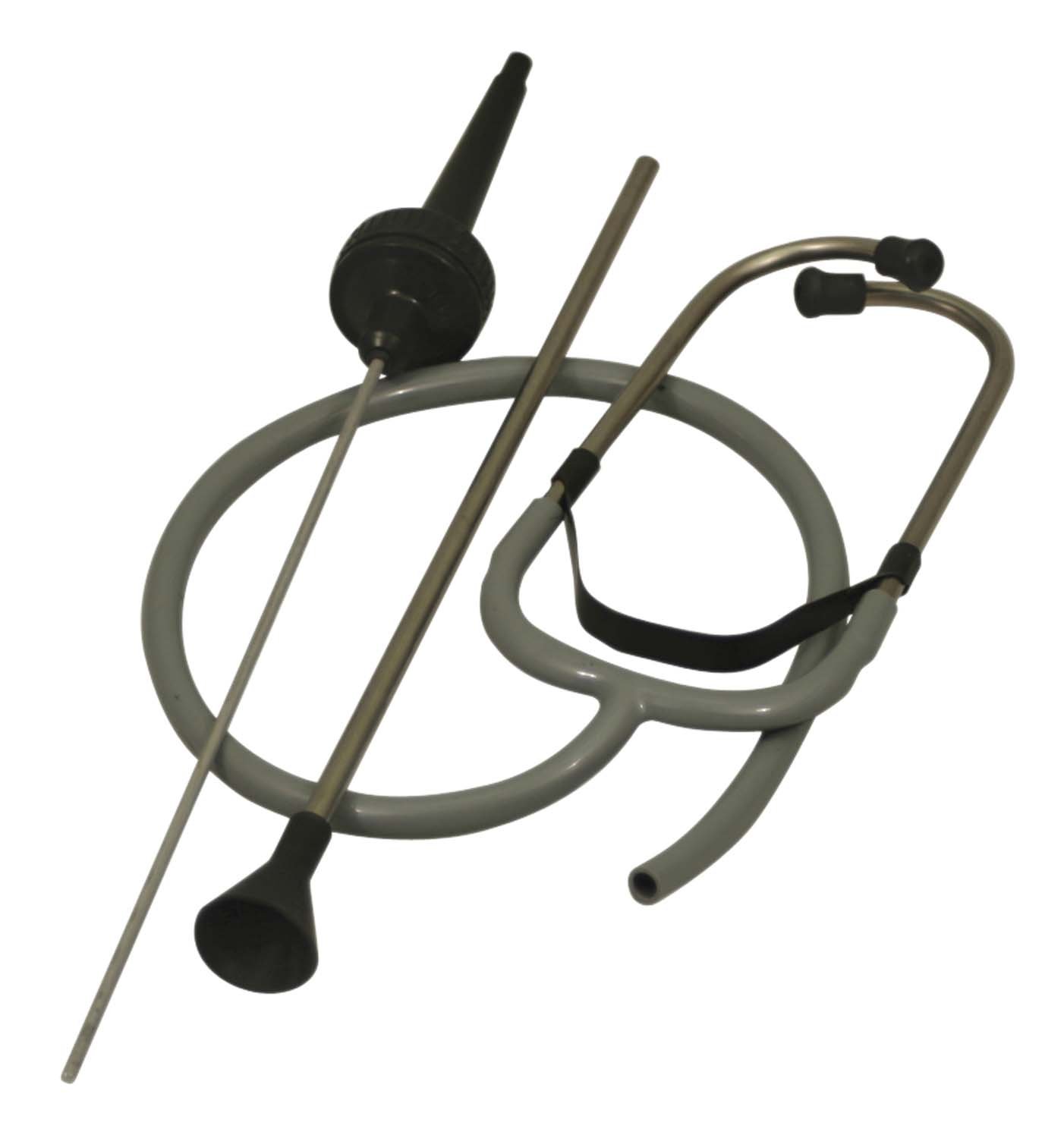
I find that having that along with an automotive stethoscope makes the job that much easier. Having an inspection camera really helps as well in the tight confines of this engine bay.


Registered User
Joined: Apr 2014
Posts: 24
From: California
Rep Power: 0

Boost leak inside intake manifold
I found a boost leak coming out of the second port inside the intake plenum, right after the MAF. If you stick your hand in there you can actually plug the hole with your fingers and feel the air escaping. In other words the leak is coming through the oil tank. So, off I went and replaced the intermediate piece as described by Earl. The thing is after replacing the part, I still get a leak through the second port. The pressure bleeds down from 20 psi down to 7.5 psi in 60 seconds. If I rotate the engine the leak down rate slows down to 10.5 psi from 20 psi in 60 seconds. It looks to me as if the air leak is coming through the engine and back into the oil tank via the bottom end? I can't seem to see any check valve that would be part of that pathway. Does any body have any pointers? All the usual culprits seem to fine. Venturi tube, check valve # 16.
Thanks.
Thanks.
Hey guys,
Did my semi-annual boost leak check and found a few things...one torn o-ring on the intercooler inlet (fixed), and now one unknown. I could hear air escaping through the airbox but it is NOT the #16 checkvalve. The only thing I can figure is that the flow/leak into the airbox is coming in from the oil vent line on the back of the turbo plenum on the driver's side. Does anyone have a diagram of what happens off of the RIGHT nipple (circled in red) on top of the intermediate piece (commonly referred to as the "plenum")? I can see a hose turn back and then tee into 2 hoses that appear to go around either side of the oil tank. Is there a checkvalve somewhere in that series? I can't seem to find it anywhere in the parts diagrams.
Thanks!
Edit: That check valve is apparently built into the intermediate piece itself...new "plenum" on the way!
Did my semi-annual boost leak check and found a few things...one torn o-ring on the intercooler inlet (fixed), and now one unknown. I could hear air escaping through the airbox but it is NOT the #16 checkvalve. The only thing I can figure is that the flow/leak into the airbox is coming in from the oil vent line on the back of the turbo plenum on the driver's side. Does anyone have a diagram of what happens off of the RIGHT nipple (circled in red) on top of the intermediate piece (commonly referred to as the "plenum")? I can see a hose turn back and then tee into 2 hoses that appear to go around either side of the oil tank. Is there a checkvalve somewhere in that series? I can't seem to find it anywhere in the parts diagrams.
Thanks!
Edit: That check valve is apparently built into the intermediate piece itself...new "plenum" on the way!


Registered User

Joined: May 2010
Posts: 1,668
From: Scotland
Rep Power: 106
I found a boost leak coming out of the second port inside the intake plenum, right after the MAF. If you stick your hand in there you can actually plug the hole with your fingers and feel the air escaping. In other words the leak is coming through the oil tank. So, off I went and replaced the intermediate piece as described by Earl. The thing is after replacing the part, I still get a leak through the second port. The pressure bleeds down from 20 psi down to 7.5 psi in 60 seconds. If I rotate the engine the leak down rate slows down to 10.5 psi from 20 psi in 60 seconds. It looks to me as if the air leak is coming through the engine and back into the oil tank via the bottom end? I can't seem to see any check valve that would be part of that pathway. Does any body have any pointers? All the usual culprits seem to fine. Venturi tube, check valve # 16.
Thanks.
Thanks.
If you think air is passing the rings into the block too quickly then you need to do a proper cylinder leak down test pressurising from the spark plug on the power cylinder cycle. ie both valves closed. Then your testing any pressure drop through the valves, head gasket and rings.
Frank
Registered User
Joined: Apr 2014
Posts: 24
From: California
Rep Power: 0
Frank,
your explanation makes sense. I think I fixated too much on the 60 seconds at 20 psi part. The leakage is not linear. It will move down from 20 to 15 and then hang with the needle not moving and it will start going down again. The pressure will drop from 10 down to 5psi in 60 seconds and it can hoover around the 5 psi mark for another minute or so. It sounds as if the "system" can't really take 20 psi and hold it there. The good thing is no other leaks!
I did remove the oil cap because I could feel air escaping. I cleaned the O'ring and put it back on. No more air. I may want to figure out how to do a leak down the next time I change spark plugs.
Thanks.
your explanation makes sense. I think I fixated too much on the 60 seconds at 20 psi part. The leakage is not linear. It will move down from 20 to 15 and then hang with the needle not moving and it will start going down again. The pressure will drop from 10 down to 5psi in 60 seconds and it can hoover around the 5 psi mark for another minute or so. It sounds as if the "system" can't really take 20 psi and hold it there. The good thing is no other leaks!
I did remove the oil cap because I could feel air escaping. I cleaned the O'ring and put it back on. No more air. I may want to figure out how to do a leak down the next time I change spark plugs.
Thanks.



Frank,
your explanation makes sense. I think I fixated too much on the 60 seconds at 20 psi part. The leakage is not linear. It will move down from 20 to 15 and then hang with the needle not moving and it will start going down again. The pressure will drop from 10 down to 5psi in 60 seconds and it can hoover around the 5 psi mark for another minute or so. It sounds as if the "system" can't really take 20 psi and hold it there. The good thing is no other leaks!
I did remove the oil cap because I could feel air escaping. I cleaned the O'ring and put it back on. No more air. I may want to figure out how to do a leak down the next time I change spark plugs.
Thanks.
your explanation makes sense. I think I fixated too much on the 60 seconds at 20 psi part. The leakage is not linear. It will move down from 20 to 15 and then hang with the needle not moving and it will start going down again. The pressure will drop from 10 down to 5psi in 60 seconds and it can hoover around the 5 psi mark for another minute or so. It sounds as if the "system" can't really take 20 psi and hold it there. The good thing is no other leaks!
I did remove the oil cap because I could feel air escaping. I cleaned the O'ring and put it back on. No more air. I may want to figure out how to do a leak down the next time I change spark plugs.
Thanks.
Here is a link to some good info on my blog with video
Last edited by markski@markskituning; Nov 13, 2015 at 12:30 AM.
Registered User
Joined: May 2010
Posts: 1,668
From: Scotland
Rep Power: 106
If you do it from the lower boost hoses you will not get blow by via the oil cap. I make the boost leak testers for that.
Here is a link to some good info on my blog with video
https://markskituning.com/pressure-t...d-boost-leaks/
Here is a link to some good info on my blog with video
https://markskituning.com/pressure-t...d-boost-leaks/


Registered User
Joined: Apr 2014
Posts: 24
From: California
Rep Power: 0
Well,
there goes my answer as to why I am getting blow by through the oil tank. I am capping the compressor side to the turbos when pressurising the system. I suppose it means that air enters the oil return lines via the center section of the turbos and ends up in the oil tank and eventually in the intake manifold. Next time I'll do it from the lower intercooler hoses.
Thanks for the heads up Marksi.
there goes my answer as to why I am getting blow by through the oil tank. I am capping the compressor side to the turbos when pressurising the system. I suppose it means that air enters the oil return lines via the center section of the turbos and ends up in the oil tank and eventually in the intake manifold. Next time I'll do it from the lower intercooler hoses.
Thanks for the heads up Marksi.
If you do it from the lower boost hoses you will not get blow by via the oil cap. I make the boost leak testers for that.
Here is a link to some good info on my blog with video
https://markskituning.com/pressure-t...d-boost-leaks/
Here is a link to some good info on my blog with video
https://markskituning.com/pressure-t...d-boost-leaks/
Usually clients get to me when it's too late. I offer all This support for free with my tuning and include the tester but more importantly prevent you from paying a shop $1200 to drop a motor to fix a leak lol. I can't be fooled.
Some sell tunes, I tune cars but more importantly I make sure your car is 100%. A simple vscu line off your fpr can cause a dangerous lean condition.
A pressure test will find it. Data logs , which I make you do , will find it.
Don't believe a $600 OTC tune , some eBay turbos will get you 700 hp like a many believe. That's a long process and 8 out of 10 cars have leaks all over. A simple dv swap in most cases created leaks- human error. That's when you get the torque exceeded limit error code. Take that to a Indy shop and they are replacing mafs and o2s then drop the motor lol. Smh.
Last edited by markski@markskituning; Nov 12, 2015 at 09:13 PM.
Registered User
Joined: Jan 2014
Posts: 57
From: Sydney Australia
Rep Power: 18
I found a significant boost leak with Markski's kit. A boost hose had half popped out of the intercooler and it wouldn't hold pressure. Took the rear bumper off and managed to fix the problem. Car runs heaps better now.
 that's what it's about.