


Got a problem with running a bigger fuel pump...


Thread Starter
|
Registered User
Joined: Jul 2010
Posts: 4,848
Rep Power: 457


Got a problem with running a Walbro 450 fuel pump...
So I figured I'd ask the guys here since there are plenty running larger fuel pump systems. Ever since recently switching to a larger flow capacity Walbro 450 fuel pump, I've noticed that I'm boiling fuel in my tank even at modest 50-55ºF outside temperatures. The only difference that I have made is going from the stock OEM pump/fuel system to a Walbro 450 and a -6AN supply line to the fuel rail. I am running the supply line down the center of the tunnel with a large fuel filter in the middle of the tunnel (car is RWD) away from the engine heat unlike the OEM filter set up which is right in the engine bay acting as a heat sink. My supply line is mounted on standoffs so that is is not touching any hot coolant pipes. The -6AN line is then shielded with a temperature insulating fire sleeve to keep it from heat soaking easily as it enters the engine bay and follow the same routing to the rail as the factory fuel line. Despite this, the fuel in the tank heats up and boils evidently from the combination of the Walbro putting off much more heat due to drawing 3x the amps of the OEM pump and also from the fact that there is much more fuel being continually circulated though the system now due to the much larger flow capacity of the Walbro. I noticed this today as I went to fuel up and opened the fuel cap. I could hear an audible hissing coming from the fuel tank and as I lightly depressed the metal flap valve in the fuel port, I could feel hot moist fuel vapors audibly escaping. This continued for over 15 minutes indicating that it is not simply a high fuel pressure situation but rather the fuel boiling and continually building pressure. I also disconnected the vent line from the fuel cover in the trunk and could also hear hissing coming from it and could hear bubbling sounds coming from the tank. As a comparison, with the OEM fuel system, I have never had any boiling issues even at +120F track temperatures...
So, this has me a bit perplexed as this is clearly caused by the elevated temperature of the larger capacity pump and increased fuel flow though the system. I can only imaging that this would be much worse if running dual pump systems which are transferring 2x the heat into fuel and by passing huge amounts of fuel that is getting continuously heated when the engine is not in a high fuel demand state, for example while idling, or just cruising down the highway. Mind you, in my case, this is happening in relatively low outside temperatures of 50-55F that we had today and I can only imagine the problem would be compounded in high 100+ summer temperatures. At this point I'm looking at possibly reinstalling the OEM low Amperage VDO pump (or a low amperage Bosch 040) and retaining the -6AN supply line for enhanced flow as it seems that at my modest 650whp I really don't need the rather huge flow of the high amperage Walbro.
I did datalog the car and there is zero ignition retard or knock and everything looks, feels, and runs great. Obviously once the fuel is pressurized by the fuel pump there can be no more boiling but under ambient pressure fuel is clearly boiling in the tank. The less fuel that is in the tank, the worse the problem will be. This problem is compounded in my case since I'm at +5000' elevation where the static air pressure is lower thus resulting in a lower boiling point of fuel and any other fluids. I am just curious is anyone has encountered this especially the guys running the large capacity Walbro 400/450 or other high flow high amp draw pumps in single and dual configurations. I'm not sure what other options I have for pumps that would run cooler and circulate less fuel through the return system thus transferring less heat to the fuel. Any input, thought and suggestions are appreciated....Thanks..
[url=https://flic.kr/p/rKhLH4]
[url=https://flic.kr/p/s4yke2]
[url=https://flic.kr/p/r7Bxjm]
[url=https://flic.kr/p/s4BGBv]
So, this has me a bit perplexed as this is clearly caused by the elevated temperature of the larger capacity pump and increased fuel flow though the system. I can only imaging that this would be much worse if running dual pump systems which are transferring 2x the heat into fuel and by passing huge amounts of fuel that is getting continuously heated when the engine is not in a high fuel demand state, for example while idling, or just cruising down the highway. Mind you, in my case, this is happening in relatively low outside temperatures of 50-55F that we had today and I can only imagine the problem would be compounded in high 100+ summer temperatures. At this point I'm looking at possibly reinstalling the OEM low Amperage VDO pump (or a low amperage Bosch 040) and retaining the -6AN supply line for enhanced flow as it seems that at my modest 650whp I really don't need the rather huge flow of the high amperage Walbro.
I did datalog the car and there is zero ignition retard or knock and everything looks, feels, and runs great. Obviously once the fuel is pressurized by the fuel pump there can be no more boiling but under ambient pressure fuel is clearly boiling in the tank. The less fuel that is in the tank, the worse the problem will be. This problem is compounded in my case since I'm at +5000' elevation where the static air pressure is lower thus resulting in a lower boiling point of fuel and any other fluids. I am just curious is anyone has encountered this especially the guys running the large capacity Walbro 400/450 or other high flow high amp draw pumps in single and dual configurations. I'm not sure what other options I have for pumps that would run cooler and circulate less fuel through the return system thus transferring less heat to the fuel. Any input, thought and suggestions are appreciated....Thanks..
[url=https://flic.kr/p/rKhLH4]
[url=https://flic.kr/p/s4yke2]
[url=https://flic.kr/p/r7Bxjm]
[url=https://flic.kr/p/s4BGBv]
Last edited by pwdrhound; Apr 12, 2015 at 10:18 AM.
Registered User

Joined: Oct 2006
Posts: 2,040
From: Seattle
Rep Power: 130
https://www.6speedonline.com/forums/...el-cooler.html
A large fuel cooler and a naca duct directing air over it is what I plan on doing. Check my old thread above for a pic of what the cooler looks like. With the driveshaft removed there should be a good amount of room for a large cooler.
A large fuel cooler and a naca duct directing air over it is what I plan on doing. Check my old thread above for a pic of what the cooler looks like. With the driveshaft removed there should be a good amount of room for a large cooler.
Last edited by dgreen78; Apr 11, 2015 at 02:25 AM.
Thread Starter
|
Registered User
Joined: Jul 2010
Posts: 4,848
Rep Power: 457
https://www.6speedonline.com/forums/...el-cooler.html
A large fuel cooler and a naca duct directing air over it is what I plan on doing. Check my old thread above for a pic of what the cooler looks like. With the driveshaft removed there should be a good amount of room for a large cooler.
A large fuel cooler and a naca duct directing air over it is what I plan on doing. Check my old thread above for a pic of what the cooler looks like. With the driveshaft removed there should be a good amount of room for a large cooler.

Registered User
Joined: Sep 2011
Posts: 1,266
From: Colorado
Rep Power: 94
What about running a 8AN feed line and retrun? Also do they make those insulator socks for the 450lph pump like they do for the smaller pumps? Im running those on my dual 320lph pumps in the stock basket along with a 8an feed and return. Good luck man! Hopefully you get it figured out!
Scot
Scot
Registered User
Joined: Nov 2011
Posts: 891
From: Alberta, Canada
Rep Power: 155
You are moving way more fuel than you need through small lines. For the power you are making you could get away with a smaller pump with zero worries of starvation. The fluid friction through the restrictive lines is what is hurting you.
Call me if you want and I will give you some info on a much better set upt.
Call me if you want and I will give you some info on a much better set upt.
Thread Starter
|
Registered User
Joined: Jul 2010
Posts: 4,848
Rep Power: 457
You are moving way more fuel than you need through small lines. For the power you are making you could get away with a smaller pump with zero worries of starvation. The fluid friction through the restrictive lines is what is hurting you.
Call me if you want and I will give you some info on a much better set upt.
Call me if you want and I will give you some info on a much better set upt.
Last edited by pwdrhound; Apr 11, 2015 at 12:53 PM.
Registered User
Joined: Oct 2006
Posts: 2,040
From: Seattle
Rep Power: 130
When I was running dual 044 in-tank my feed was -8 and return -6. I think my problem with the fuel boiling was because of the 2 large pumps creating the heat. This is why I am going to a single pump (Walbro 450lph) & retaining my -8/-6 lines. With a large cooler I am hoping to eliminate the boiling problem.
Trending Topics

Registered User
Joined: Mar 2011
Posts: 456
Rep Power: 71
Just checked my car - single walbro -8/-6 running through stock rails, FPR and fuel cooler. 58 out and between half and 1/4 tank and when I took the lid off there was no boiling or heat. The return line didn't feel hot.

 glad to hear it. Some type of tank pressurization issue??

Thread Starter
|
Registered User
Joined: Jul 2010
Posts: 4,848
Rep Power: 457
After trouble shooting my fuel "boiling" issues extensively today, I realized that my fuel was not boiling after all. Actually, the fuel temperature in the tank was measured right at 115ºF which is far from pump gas boiling point of around 250ºF. What I did find was the fact that my fuel tank was not venting properly via the vent in the cap at the top of the fuel tank thus creating extreme pressure inside the tank. Looks like Earl wins the gold star!
The hissing that I was hearing escaping the fueling port was the high internal tank pressure overcoming the flapper valve seal in the fueling neck. When I removed the plastic cover in the trunk that covers the fuel tank cap, I removed the rubber hose that is connected to the vent nipple (picture 1) and again heard a high pitched "whine". When I examined everything up close, I realized that the whole fuel tank was highly pressurized and looked slightly swollen. Actually pretty scary. I ended up slowly unscrewing the black plastic lid locking ring and this started releasing all the built up pressure in the fuel tank. There was a lot. The tank has thick plastic walls and I would say there was a good 30psi of pressure or or more since I could see the top of the tank lower about a 1/4" as the "bloating" went away. I count myself extremely lucky that the tank did not rupture spewing gas everywhere while I was driving the car.
Once I relieved all the pressure in the tank, I started looking at the cause of this problem. After about a half an hour of trouble shooting I realized that the vent valve on my set up contains a check valve which allows air to go into the tank, but not escape out of the tank. I could easily blow into the vent and into the tank, but when I applied suction to the line, I could immediately feel a check valve close off the port. I started thinking about this as this had me a little puzzled as it seemed the exact opposite of what should be happening. Someone please correct me if I'm wrong, but expanding gas vapors need to have a way to escape the tank and if I'm not mistaken they are routed through this nipple to the charcoal canister where the vapors are consumed by the engine (EPA requirements I think, no venting to the atmosphere). My set up however seemed totally backwards. I ended up digging out my old OEM hat for comparison and examined the nipple on it (picture 3). I could easily blow into it, and I could easily suck air through it. In other words, it was open both directions to air flow to allow vapors to escape the tank. After playing with it more, I realized that the OEM set up has a check valve there which shuts the nipple closed when ever the top hat is tilted greater that what appeared to be about 45º in any direction. You could actually feel it closing when blowing or sucking though it and slowly tilting it through 45º. I am assuming this is set up so the the fuel would not be able to escape the tank in case of a rollover or crash. So seems my problem has been solved as it looks like the check valve on my set up is installed backward or not working the way it should. I removed my top hat and it appears that the check valve part of the plastic nipple itself rather than something external mounted below the hat.
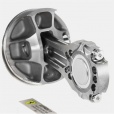
Finally, after mulling this over, I was a little disturbed by the fact that in case the vent valve failed, Porsche did not install some type of an overpressure relief valve on the fuel tank to prevent an overpressure situation which could lead to eventual tank rupture. Upon closer examination of my old OEM top hat, I realized that there is not an overpressure valve on the fuel tank itself but instead there is a spring loaded overpressure relief valve built into the OEM top hat that pops open with a few PSI differential (picture 4). This is the safety backup which is not present on my system and thus allowed this situation to happen. Hopefully this is an isolated issue with just my system and one we can correct quickly. I will also look into incorporating some type of an overpressure relief valve into the top hat which would prevent something like this from occurring in the future. I believe that having an overpressure relief valve in the fuel pump hat is imperative from a safety standpoint if a check valve is incorporated in the vent nipple and that check valve were to malfunction, as in my case. I am just glad the tank did not rupture....
Moral of the story, if you ever hear any hissing or gurgling sounds coming out of your fuel port when you remove your fuel cap, be very very cautious as you are likely dealing with an over pressure situation of your fuel tank. I would like to thank all those that replied as it made me realize that fuel boiling is highly unlikely and the problem lies elsewhere. Without your posts, I might have blown this off and continued driving around with a fuel tank that could burst any moment. This is what makes these forums great... Thanks again..
Picture 1: My set up. The vent valve has the rubber hose attached to it which connects to the OEM vent line quick disconnect.
Picture 2: Vent hose removed. I could blow into the fuel tank through the vent but not suck air out of it.
Picture 3: OEM plastic "gun turret" vent valve. Air can move both ways freely unless the top hat is tilted past 45º.
Picture 4: OEM red disc spring loaded tank over pressure relief valve.
The hissing that I was hearing escaping the fueling port was the high internal tank pressure overcoming the flapper valve seal in the fueling neck. When I removed the plastic cover in the trunk that covers the fuel tank cap, I removed the rubber hose that is connected to the vent nipple (picture 1) and again heard a high pitched "whine". When I examined everything up close, I realized that the whole fuel tank was highly pressurized and looked slightly swollen. Actually pretty scary. I ended up slowly unscrewing the black plastic lid locking ring and this started releasing all the built up pressure in the fuel tank. There was a lot. The tank has thick plastic walls and I would say there was a good 30psi of pressure or or more since I could see the top of the tank lower about a 1/4" as the "bloating" went away. I count myself extremely lucky that the tank did not rupture spewing gas everywhere while I was driving the car.
Once I relieved all the pressure in the tank, I started looking at the cause of this problem. After about a half an hour of trouble shooting I realized that the vent valve on my set up contains a check valve which allows air to go into the tank, but not escape out of the tank. I could easily blow into the vent and into the tank, but when I applied suction to the line, I could immediately feel a check valve close off the port. I started thinking about this as this had me a little puzzled as it seemed the exact opposite of what should be happening. Someone please correct me if I'm wrong, but expanding gas vapors need to have a way to escape the tank and if I'm not mistaken they are routed through this nipple to the charcoal canister where the vapors are consumed by the engine (EPA requirements I think, no venting to the atmosphere). My set up however seemed totally backwards. I ended up digging out my old OEM hat for comparison and examined the nipple on it (picture 3). I could easily blow into it, and I could easily suck air through it. In other words, it was open both directions to air flow to allow vapors to escape the tank. After playing with it more, I realized that the OEM set up has a check valve there which shuts the nipple closed when ever the top hat is tilted greater that what appeared to be about 45º in any direction. You could actually feel it closing when blowing or sucking though it and slowly tilting it through 45º. I am assuming this is set up so the the fuel would not be able to escape the tank in case of a rollover or crash. So seems my problem has been solved as it looks like the check valve on my set up is installed backward or not working the way it should. I removed my top hat and it appears that the check valve part of the plastic nipple itself rather than something external mounted below the hat.
Finally, after mulling this over, I was a little disturbed by the fact that in case the vent valve failed, Porsche did not install some type of an overpressure relief valve on the fuel tank to prevent an overpressure situation which could lead to eventual tank rupture. Upon closer examination of my old OEM top hat, I realized that there is not an overpressure valve on the fuel tank itself but instead there is a spring loaded overpressure relief valve built into the OEM top hat that pops open with a few PSI differential (picture 4). This is the safety backup which is not present on my system and thus allowed this situation to happen. Hopefully this is an isolated issue with just my system and one we can correct quickly. I will also look into incorporating some type of an overpressure relief valve into the top hat which would prevent something like this from occurring in the future. I believe that having an overpressure relief valve in the fuel pump hat is imperative from a safety standpoint if a check valve is incorporated in the vent nipple and that check valve were to malfunction, as in my case. I am just glad the tank did not rupture....
Moral of the story, if you ever hear any hissing or gurgling sounds coming out of your fuel port when you remove your fuel cap, be very very cautious as you are likely dealing with an over pressure situation of your fuel tank. I would like to thank all those that replied as it made me realize that fuel boiling is highly unlikely and the problem lies elsewhere. Without your posts, I might have blown this off and continued driving around with a fuel tank that could burst any moment. This is what makes these forums great... Thanks again..
Picture 1: My set up. The vent valve has the rubber hose attached to it which connects to the OEM vent line quick disconnect.
Picture 2: Vent hose removed. I could blow into the fuel tank through the vent but not suck air out of it.
Picture 3: OEM plastic "gun turret" vent valve. Air can move both ways freely unless the top hat is tilted past 45º.
Picture 4: OEM red disc spring loaded tank over pressure relief valve.
Last edited by pwdrhound; Apr 12, 2015 at 12:12 AM.

Registered User
Joined: Oct 2014
Posts: 331
Rep Power: 65
The check valve we used on the cap is actually a Dorman OE Roll Over Valve. It should only block up when upside down. If yours is blocking while right way up, it is likely damaged/defective. We check roll over valve functionality as it is crucial that the tank vents correctly.
Thread Starter
|
Registered User
Joined: Jul 2010
Posts: 4,848
Rep Power: 457
R
Yes, mine is obviously defective as it is blocking right side up as described in my post above. It never occurred to me to check its functionality prior to installing the system straight out of the box we received it in. Can you please call me Sean so we can get this rectified as my car is down because of this with a track event coming up next week? I tried to reach you yesterday when I called your cell phone and left you a voice message while trying to trouble shoot the problem. I would also like to find out the feasibility of installing an over pressure relief valve as on the OEM system. As evidenced here, it seems that this is an absolutely crucial feature from a safety standpoint as a simple failure / malfunction of the Dorman rollover valve can have nearly catastrophic results as in my case. When that valve fails, without a safety over pressure relief valve installed, the fuel tank reaches a dizzying internal pressure within less than 30 minutes of operating the car as the fuel is sloshing around giving off vapors. In hot +100F outside temperatures this could be a matter of minutes without any warning whatsoever. Take a partially filled tightly capped 5 gallon plastic fuel can, shake it a little and then set it out in the sun. It will blow up like a balloon within minutes. Without an over pressure relief safety valve, I would almost prefer to give up the roll over protection by not having a roll over check valve that may fail and instead just have a vent port in its place that is open and has no way of failing and blocking off the vent. What do you think? You can reach me anytime on my phone at your convenience to discuss. It's much easier over the phone than via email, text etc. Thank you very much Sean..
The check valve we used on the cap is actually a Dorman OE Roll Over Valve. It should only block up when upside down. If yours is blocking while right way up, it is likely damaged/defective. We check roll over valve functionality as it is crucial that the tank vents correctly.
Last edited by pwdrhound; Apr 12, 2015 at 09:56 AM.

Thread
Thread Starter
Forum
Replies
Last Post
eclip5e
Automobiles For Sale
6
Jul 29, 2019 11:13 AM