

Engine Limits vs Power -- Sharing Some Knowledge


Engine Limits vs Power -- Sharing Some Knowledge
So there’s been a bit of talk lately about exactly what power levels the 997.1 and 997.2 Turbo motors are capable of handling in their completely stock form. Having done quite a bit of research and accumulated quite a bit of experience on the matter, I thought it might be time to share some of what we’ve learned, about both engine platforms. The good, the bad, and the ugly…
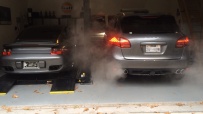
There story starts here, everyone remember this car?
http://www.youtube.com/watch?v=6HjodyfW95c
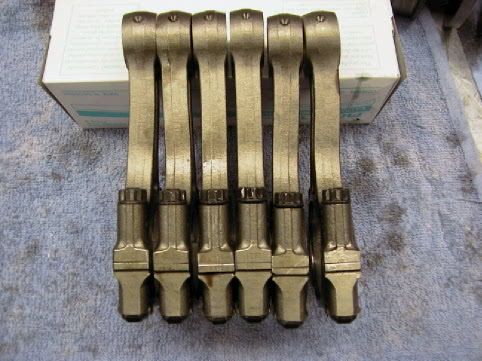
This car was built with the intention of testing both the upper limit of the stock engine internals, as well as our new (at the time) 68mm VTG turbochargers. Not too long after the 777 awhp dyno run was done, we noticed that the car was starting to feel down on power. (As a footnote, that dyno run was done at a 3rd party facility, not ours, and was run by the dyno owner, not us). So, noticing the car was down on power, we decided to trouble shoot the typical areas….hoses, vacuum leaks, etc., but everything was fine. The next step was to perform a compression test on all 6 cylinders, which is when the reality set in. Each cylinder displayed a dramatically different psi number, which is when we knew the engine had to come apart because there was internal damage. After a day or two of removal and tear-down, this is what we saw:


*note: There are only 4 rods pictures because the worst two were sent out for analysis*. The cylinder pressure created by generating this amount of power has obviously caused some serious damage to the rods. Once the rods become deformed in any way, you’ve basically got a ticking time bomb in your engine, and they’re not likely to last much longer at all. Luckily, we became suspicious early enough to prevent any further damage, like a total engine failure. Keep in mind, this is after only a few dynos run at this power level. During it’s daily use and prior dyno testing, the car was running a pump gas program at 725awhp, which is what we’re confident caused the damage.
At this point we decided that we had to try to transfer some of this experience to the new 997.2 TT engine that we’ve been working so hard to make power with. The PDK and fuel system were already a known problem, but in order to prevent any potential issues, we thought it would be wise to make a comparison between the stock 997.1 and stock 997.2 rods. So were ordered up a complete set of both and had them sent out to an third party facility to conduct some strength test analysis.
Unfortunately what we suspected about the .2 rods is true. They proved to have about a 11-12% lower tensil strength then their .1 counterparts, which unfortunately also means that a lower cylinder pressure will cause them to deform. Right now, we’re guessing that that level is unfortunately somewhere around the 650 awhp range. Now, before anyone asks the question….no, we did not do any damage to the stock rods or engine internals in our 997.2 PDK test car or “blow up” any .2 Turbo engines. Strangely, this one of the few occasions that we’re actually glad the PDK and fuel system limited the amount of power we could put down. If it wasn’t for those two roadblocks, there’s a good chance we would have already pushed that engine far beyond that power level and done some serious damage. Moving forward, we plan to upgrade the internals before adding any more power. The upgraded parts are already here and ready to go into our new PDK test vehicle. The War Admiral has retired to greener pastures and the entire project has moved on to a new test car, one which you’ll see a lot more of soon.
Moral of the story: if you’re out there on a completely stock engine with a power kit capable of making over 700 wheel horsepower, and you just don’t think the car feels quite as stout as it used to, now might be the best time to invest in an engine build.
As always, thanks for reading, and if you have any questions feel free to post ‘em up.
There story starts here, everyone remember this car?
http://www.youtube.com/watch?v=6HjodyfW95c
This car was built with the intention of testing both the upper limit of the stock engine internals, as well as our new (at the time) 68mm VTG turbochargers. Not too long after the 777 awhp dyno run was done, we noticed that the car was starting to feel down on power. (As a footnote, that dyno run was done at a 3rd party facility, not ours, and was run by the dyno owner, not us). So, noticing the car was down on power, we decided to trouble shoot the typical areas….hoses, vacuum leaks, etc., but everything was fine. The next step was to perform a compression test on all 6 cylinders, which is when the reality set in. Each cylinder displayed a dramatically different psi number, which is when we knew the engine had to come apart because there was internal damage. After a day or two of removal and tear-down, this is what we saw:
*note: There are only 4 rods pictures because the worst two were sent out for analysis*. The cylinder pressure created by generating this amount of power has obviously caused some serious damage to the rods. Once the rods become deformed in any way, you’ve basically got a ticking time bomb in your engine, and they’re not likely to last much longer at all. Luckily, we became suspicious early enough to prevent any further damage, like a total engine failure. Keep in mind, this is after only a few dynos run at this power level. During it’s daily use and prior dyno testing, the car was running a pump gas program at 725awhp, which is what we’re confident caused the damage.
At this point we decided that we had to try to transfer some of this experience to the new 997.2 TT engine that we’ve been working so hard to make power with. The PDK and fuel system were already a known problem, but in order to prevent any potential issues, we thought it would be wise to make a comparison between the stock 997.1 and stock 997.2 rods. So were ordered up a complete set of both and had them sent out to an third party facility to conduct some strength test analysis.
Unfortunately what we suspected about the .2 rods is true. They proved to have about a 11-12% lower tensil strength then their .1 counterparts, which unfortunately also means that a lower cylinder pressure will cause them to deform. Right now, we’re guessing that that level is unfortunately somewhere around the 650 awhp range. Now, before anyone asks the question….no, we did not do any damage to the stock rods or engine internals in our 997.2 PDK test car or “blow up” any .2 Turbo engines. Strangely, this one of the few occasions that we’re actually glad the PDK and fuel system limited the amount of power we could put down. If it wasn’t for those two roadblocks, there’s a good chance we would have already pushed that engine far beyond that power level and done some serious damage. Moving forward, we plan to upgrade the internals before adding any more power. The upgraded parts are already here and ready to go into our new PDK test vehicle. The War Admiral has retired to greener pastures and the entire project has moved on to a new test car, one which you’ll see a lot more of soon.
Moral of the story: if you’re out there on a completely stock engine with a power kit capable of making over 700 wheel horsepower, and you just don’t think the car feels quite as stout as it used to, now might be the best time to invest in an engine build.
As always, thanks for reading, and if you have any questions feel free to post ‘em up.


Registered User
Joined: Mar 2011
Posts: 79
From: Massachusetts
Rep Power: 20

I figured you guys would have some better methods than the old "lets keep increasing the power until it blows up" approach I've seen people use (though on much less expensive cars where the complete engine might be <$10k). Excellent write up as usual, thank you.



Registered User
Joined: Jun 2005
Posts: 8,509
From: Virginia, USA
Rep Power: 789

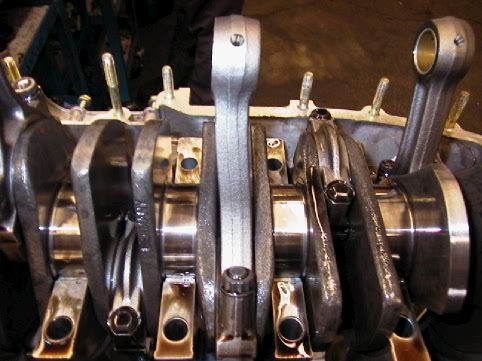
Took the words right out my mouth. Either knock or too much torque. My GT2 had been running 750-800 rwhp at 1.6-1.8 BAR before I built the motor. The stock rods were perfect when we opened her up:
Last edited by Divexxtreme; Apr 22, 2011 at 04:30 PM.
Trending Topics


The 777 awhp dyno runs were done with race gas. The car otherwise was driven daily with 93 octane pump gas at a much lower power level.



Registered User

Joined: Mar 2009
Posts: 886
From: In my garage
Rep Power: 123
According to local build/test ( 996 turbo ) rods start to bend over 1 000 newton meter = 737 pound foot torque, especially at low rpm. Engine was running on an engine dyno.
Talked this about the builder an year ago, can't rememeber exact rpm-figures.
Talked this about the builder an year ago, can't rememeber exact rpm-figures.

Registered User
Joined: Oct 2008
Posts: 2,321
From: Fastlane USA
Rep Power: 246
Nope...no knock whatsoever. All of our tuning is done completely through the ECU with GIAC. Every tune we provide, whether in pump or race mode, is completely without knock (with full control intact), and with full lambda control.
The 777 awhp dyno runs were done with race gas. The car otherwise was driven daily with 93 octane pump gas at a much lower power level.
The 777 awhp dyno runs were done with race gas. The car otherwise was driven daily with 93 octane pump gas at a much lower power level.

It seems to me that it's not the pressure per se at that power level but rather uncontrolled pressure due to detonation from wrong fuel use.